
Hungarian Halászlé - Spicy Fish Soup Recipe
Hungarian Halászlé - Spicy Fish Soup Recipe
- Serves: 6 People
- Prepare Time: 30 minutes
- Cooking Time: 1 hour 30 m
- Calories: -
- Difficulty: Medium
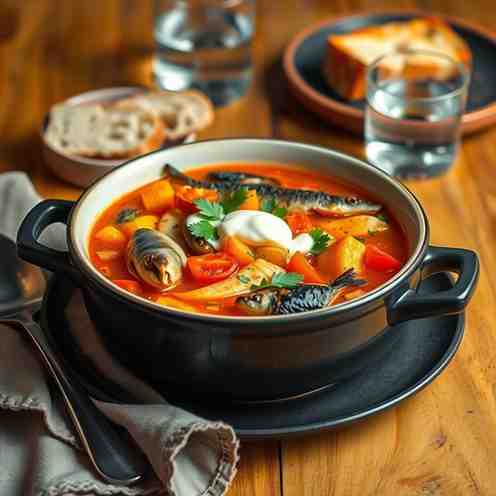
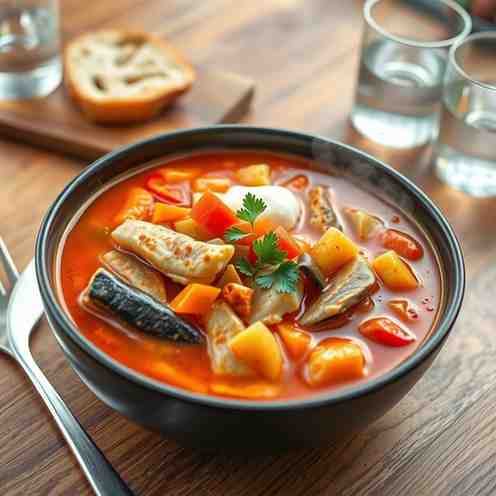
Get ready for a flavor explosion! This isn't just any fish soup recipe; this is Halászlé, Hungary's legendary spicy fisherman's soup. Imagine a vibrant, brick-red broth, rich with paprika, deeply savory, and with a delightful kick of heat, all without a hint of smoked paprika. It’s a dish that truly sings, and once you taste it, you'll understand why it's a national treasure.
I've spent countless hours perfecting this recipe, diving deep into traditional methods while ensuring it's completely practical for a US kitchen. This isn't just a recipe; it's an authentic-style guide designed to give you that true Hungarian experience, whether you're a seasoned chef or trying your hand at this iconic dish for the first time.
At its heart, Halászlé (pronounced hah-lahs-leh) is a deeply flavorful Hungarian fish stew recipe that stands apart from typical fish soups. It’s not a light, clear broth; it's a robust, often fiery, and always comforting meal. Its roots run deep along Hungary's great rivers, the Danube and the Tisza, where fishermen would cook their catch right on the riverbanks. This Hungarian traditional food is more than just a meal; it's a celebration, often enjoyed during special occasions like Christmas Eve or Lent. The magic lies in two key ingredients: copious amounts of sweet and hot paprika, combined with a generous base of slow-cooked onions, which together create an unparalleled depth and a stunning, natural red hue. This combination is the backbone of the soup, making it distinctively Hungarian and utterly delicious.
Making a truly authentic and delicious Halászlé comes down to mastering a few core principles. Get these right, and you'll be making a hot and spicy soup that tastes like it came straight from a Hungarian kitchen.
1. Paprika Quality + How You Add It: This isn't just about using Hungarian paprika; it's about using good quality sweet and hot paprika. More importantly, knowing when to add it to the pot ensures that vivid, bright red color without any bitter aftertaste. Timing is everything here!
2. Fish Choice: The type of fish you use and how you prepare it greatly impacts the final flavor. Traditional carp offers a unique richness, but knowing the best US swaps and what fish to avoid is crucial for preventing a "muddy" or overly "fishy" flavor.
3. Broth Technique: The secret to Halászlé's signature silky, full-bodied texture isn't just simmering. It involves a specific technique of building a rich stock from fish bones and then thickening it naturally by pressing the cooked onions and fish bits back into the broth. This step ensures your soup is perfectly smooth and never watery.
Here’s your definitive, canonical recipe for Traditional Hungarian Halászlé, designed to bring the authentic flavors of Hungary right to your table.
Ingredients
Directions
- Equipment You’ll Need:
- Large heavy pot or Dutch oven (at least 6-quart)
- Fine mesh strainer
- Ladle
- Food mill (or an immersion blender as a practical alternative)
- Fish tweezers/pliers (optional, but helpful for removing pin bones)
- Prep the Fish: If using whole fish, scale, gut, and clean it thoroughly. Separate the fish: cut the heads and bones into large pieces for the stock, and cut the fillets or larger pieces of fish into 1.5-inch serving chunks. If using fillets only, save any trimmings or ask your fishmonger for heads/bones for stock. Briefly salt the serving pieces (about 1 teaspoon per pound) and let them rest in the fridge while you make the broth; this helps firm them up and prevents them from falling apart. Rinse lightly before adding to the soup.
- Start the Onion Base: In your large heavy pot, heat the neutral oil over medium heat. Add the finely chopped onions and sweat them gently, stirring occasionally, until they are very soft, translucent, and glossy – about 10-15 minutes. Do not let them brown. This slow cooking is key to their sweetness and ability to melt into the broth.
- Build the Broth (Stock): Remove the pot from the heat. Immediately stir in half of the sweet paprika and half of the hot paprika. Stir vigorously for about 30 seconds to "bloom" the paprika, ensuring it doesn't burn (which would make it bitter). Quickly add the 8 cups of cold water and the fish heads/bones. Bring the mixture to a gentle simmer over medium-high heat, then reduce the heat to low, cover, and let it simmer for at least 45 minutes to 1 hour. You'll notice the broth turning a beautiful brick-red color.
- Strain + Thicken the Broth: Carefully pour the entire contents of the pot through a fine mesh strainer set over a clean, second large pot or bowl. Press down firmly on the solids (onions, fish bones, and bits) with the back of a ladle to extract as much liquid and softened pulp as possible. For an even smoother, thicker broth, pass these strained solids through a food mill directly into the broth. If you don't have a food mill, you can return the strained onions and fish bits to the broth and use an immersion blender for just a few seconds to break them down into a smooth consistency, then strain again if desired for ultimate smoothness. The broth should now be smooth and lightly thickened. Discard any remaining bones or tough bits.
- Finish with Fish + Paprika: Return the clean broth to a gentle simmer over medium-low heat. Add the reserved fish pieces, the remaining sweet paprika, the remaining hot paprika, and the chopped tomato (if using). If using, add the sliced hot peppers. Simmer gently for about 8-12 minutes, or just until the fish is opaque, cooked through, and flakes easily with a fork. Be careful not to overcook, as the fish will become dry and fall apart.
- Season and Serve: Taste the soup and season generously with salt and black pepper. Halászlé should be well-seasoned. To serve, gently ladle the fish pieces into individual bowls first, then pour the rich, red broth over them to keep the fish intact and presentable. Serve immediately with crusty bread or simple noodles.
Hungarian Halászlé - Spicy Fish Soup Recipe
- Serves: 6 People
- Prepare Time: 30 minutes
- Cooking Time: 1 hour 30 m
- Calories: -
- Difficulty: Medium
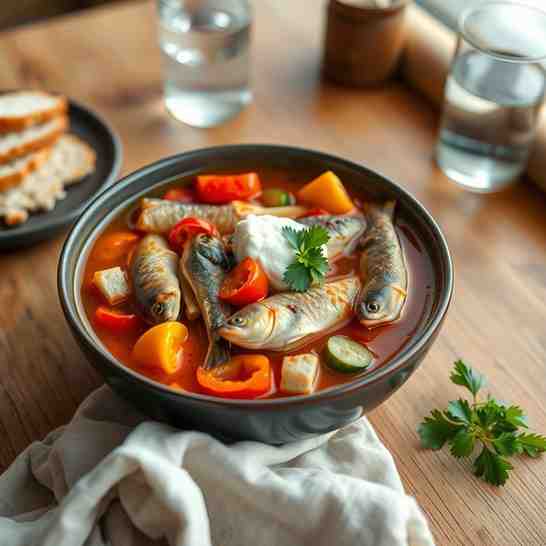
Get ready for a flavor explosion! This isn't just any fish soup recipe; this is Halászlé, Hungary's legendary spicy fisherman's soup. Imagine a vibrant, brick-red broth, rich with paprika, deeply savory, and with a delightful kick of heat, all without a hint of smoked paprika. It’s a dish that truly sings, and once you taste it, you'll understand why it's a national treasure.
I've spent countless hours perfecting this recipe, diving deep into traditional methods while ensuring it's completely practical for a US kitchen. This isn't just a recipe; it's an authentic-style guide designed to give you that true Hungarian experience, whether you're a seasoned chef or trying your hand at this iconic dish for the first time.
At its heart, Halászlé (pronounced hah-lahs-leh) is a deeply flavorful Hungarian fish stew recipe that stands apart from typical fish soups. It’s not a light, clear broth; it's a robust, often fiery, and always comforting meal. Its roots run deep along Hungary's great rivers, the Danube and the Tisza, where fishermen would cook their catch right on the riverbanks. This Hungarian traditional food is more than just a meal; it's a celebration, often enjoyed during special occasions like Christmas Eve or Lent. The magic lies in two key ingredients: copious amounts of sweet and hot paprika, combined with a generous base of slow-cooked onions, which together create an unparalleled depth and a stunning, natural red hue. This combination is the backbone of the soup, making it distinctively Hungarian and utterly delicious.
Making a truly authentic and delicious Halászlé comes down to mastering a few core principles. Get these right, and you'll be making a hot and spicy soup that tastes like it came straight from a Hungarian kitchen.
1. Paprika Quality + How You Add It: This isn't just about using Hungarian paprika; it's about using good quality sweet and hot paprika. More importantly, knowing when to add it to the pot ensures that vivid, bright red color without any bitter aftertaste. Timing is everything here!
2. Fish Choice: The type of fish you use and how you prepare it greatly impacts the final flavor. Traditional carp offers a unique richness, but knowing the best US swaps and what fish to avoid is crucial for preventing a "muddy" or overly "fishy" flavor.
3. Broth Technique: The secret to Halászlé's signature silky, full-bodied texture isn't just simmering. It involves a specific technique of building a rich stock from fish bones and then thickening it naturally by pressing the cooked onions and fish bits back into the broth. This step ensures your soup is perfectly smooth and never watery.
Here’s your definitive, canonical recipe for Traditional Hungarian Halászlé, designed to bring the authentic flavors of Hungary right to your table.
Ingredients
Directions
- Equipment You’ll Need:
- Large heavy pot or Dutch oven (at least 6-quart)
- Fine mesh strainer
- Ladle
- Food mill (or an immersion blender as a practical alternative)
- Fish tweezers/pliers (optional, but helpful for removing pin bones)
- Prep the Fish: If using whole fish, scale, gut, and clean it thoroughly. Separate the fish: cut the heads and bones into large pieces for the stock, and cut the fillets or larger pieces of fish into 1.5-inch serving chunks. If using fillets only, save any trimmings or ask your fishmonger for heads/bones for stock. Briefly salt the serving pieces (about 1 teaspoon per pound) and let them rest in the fridge while you make the broth; this helps firm them up and prevents them from falling apart. Rinse lightly before adding to the soup.
- Start the Onion Base: In your large heavy pot, heat the neutral oil over medium heat. Add the finely chopped onions and sweat them gently, stirring occasionally, until they are very soft, translucent, and glossy – about 10-15 minutes. Do not let them brown. This slow cooking is key to their sweetness and ability to melt into the broth.
- Build the Broth (Stock): Remove the pot from the heat. Immediately stir in half of the sweet paprika and half of the hot paprika. Stir vigorously for about 30 seconds to "bloom" the paprika, ensuring it doesn't burn (which would make it bitter). Quickly add the 8 cups of cold water and the fish heads/bones. Bring the mixture to a gentle simmer over medium-high heat, then reduce the heat to low, cover, and let it simmer for at least 45 minutes to 1 hour. You'll notice the broth turning a beautiful brick-red color.
- Strain + Thicken the Broth: Carefully pour the entire contents of the pot through a fine mesh strainer set over a clean, second large pot or bowl. Press down firmly on the solids (onions, fish bones, and bits) with the back of a ladle to extract as much liquid and softened pulp as possible. For an even smoother, thicker broth, pass these strained solids through a food mill directly into the broth. If you don't have a food mill, you can return the strained onions and fish bits to the broth and use an immersion blender for just a few seconds to break them down into a smooth consistency, then strain again if desired for ultimate smoothness. The broth should now be smooth and lightly thickened. Discard any remaining bones or tough bits.
- Finish with Fish + Paprika: Return the clean broth to a gentle simmer over medium-low heat. Add the reserved fish pieces, the remaining sweet paprika, the remaining hot paprika, and the chopped tomato (if using). If using, add the sliced hot peppers. Simmer gently for about 8-12 minutes, or just until the fish is opaque, cooked through, and flakes easily with a fork. Be careful not to overcook, as the fish will become dry and fall apart.
- Season and Serve: Taste the soup and season generously with salt and black pepper. Halászlé should be well-seasoned. To serve, gently ladle the fish pieces into individual bowls first, then pour the rich, red broth over them to keep the fish intact and presentable. Serve immediately with crusty bread or simple noodles.
You may also like

.jpg)


Hey there! I’m just someone who seriously loves good food and believes that cooking doesn’t have to be complicated to be amazing. Whether it’s a quick weeknight dinner or a cozy weekend meal, I’m all about sharing easy, tasty recipes that actually work.