
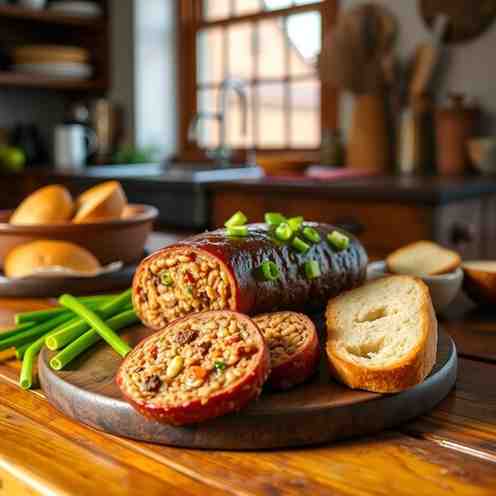
Creole Boudin - Rice Sausage
Creole Boudin - Rice Sausage


- Serves: 8 People
- Prepare Time: 45 minutes
- Cooking Time: 30 minutes
- Calories: -
- Difficulty: Easy
Welcome to the heart of Creole cooking, where flavor reigns supreme and every dish tells a story! If you're searching for `recipes using boudin`, you've landed in the right spot. Today, we're diving deep into the rich, savory world of Creole Boudin, a beloved `pork sausage meat` delicacy that holds a special place in both Louisiana and Caribbean culinary traditions. Often compared to its Cajun cousin, `boudin cajun sausage`, this Creole version from places like Guadeloupe offers a unique blend of spices and a distinct flavor profile that sets it apart.
Forget everything you thought you knew about traditional sausages. `Louisiana boudin sausage` and its Caribbean counterparts are more than just meat; they're a symphony of seasoned rice, tender pork, and aromatic vegetables, all lovingly encased. While `new orleans sausage boudin` often evokes images of classic Cajun rice and pork sausages, our focus today is on the vibrant, earthy notes of Creole Boudin. You'll learn the secrets to crafting this authentic dish, from preparing the perfect filling to stuffing and cooking your own delicious sausages. Get ready to explore the true essence of `cajun food boudin` with a delightful Creole twist!
Ingredients
Directions
- Prep Meat & Aromatics
- Begin by preparing your pork shoulder and optional pork liver. Trim any excess fat or sinew and cut the meat into 1-inch cubes.
- Finely chop the onion, celery, and bell pepper. Mince the garlic and optional jalapeño/hot pepper. Chop the fresh parsley and green onions. Set aside.
- Cook & Grind Filling
- In a large Dutch oven or heavy-bottomed pot, heat the olive oil or lard over medium-high heat.
- Add the cubed pork shoulder and liver (if using). Brown the meat on all sides, about 5-7 minutes. It doesn't need to be cooked through, just nicely browned.
- Add the chopped onion, celery, bell pepper, and minced garlic to the pot. Sauté until the vegetables soften, about 8-10 minutes.
- Stir in the Creole spice blend, cayenne pepper, black pepper, salt, dried thyme, and dried oregano. Cook for 1-2 minutes, stirring constantly, until fragrant.
- Add ½ cup of water or chicken broth to the pot, scraping up any browned bits from the bottom. Reduce heat to low, cover, and simmer for 45 minutes to 1 hour, or until the pork is very tender.
- While the meat simmers, cook your rice. In a separate pot, combine 2 cups of long-grain white rice with 4 cups of water or chicken broth. Bring to a boil, then reduce heat to low, cover, and simmer for 15-20 minutes, or until all water is absorbed and rice is tender. Fluff with a fork and set aside.
- Once the meat is tender, remove it from the pot. Reserve any cooking liquid. Allow the meat and vegetables to cool slightly.
- Using a meat grinder with a coarse plate, grind the cooked pork and vegetables. If you don't have a grinder, you can finely chop the mixture by hand or pulse it in a food processor until it has a coarse, uniform texture (be careful not to over-process into a paste).
- Mix with Rice + Seasoning
- In a very large mixing bowl, combine the ground meat and vegetable mixture with the cooked rice.
- Add the chopped fresh parsley, green onions, and minced jalapeño (if using).
- Pour in about ½ cup of the reserved cooking liquid from the meat. Mix everything thoroughly by hand, ensuring the rice is evenly distributed and the mixture is well seasoned. The mixture should be moist but not mushy. Taste and adjust salt and spice levels as needed.
- Prepare Casings
- Thoroughly rinse the hog casings under cool running water, both inside and out, to remove any salt.
- Soak them in a bowl of warm water for at least 30 minutes, or until they are pliable and easy to handle.
- Stuffing Tips (with/without stuffer)
- With a Sausage Stuffer: Attach the casing to the stuffing horn, leaving a small "tail" at the end. Begin feeding the boudin mixture into the stuffer, cranking slowly and evenly. Guide the casing off the horn, being careful not to overfill, which can cause bursting. Aim for a firm but not taut sausage.
- Without a Sausage Stuffer (using a funnel): Secure a large funnel to your workspace. Carefully slide the prepared casing onto the funnel spout, gathering it up like an accordion. Using your fingers or a wooden spoon, gently push the boudin mixture through the funnel into the casing. This method requires patience and a gentle touch to prevent air pockets and tears.
- Once the casing is filled, twist the sausage into 6-8 inch links. You can either tie off the ends with kitchen twine or twist them securely. Be gentle to avoid tearing.
- Cooking the Sausages (Poach / Steam / Bake)
- Poach (Traditional Method): Bring a large pot of water to a gentle simmer (around 170-180°F / 77-82°C). Do not boil, as this can cause the casings to burst. Carefully add the boudin links to the simmering water. Poach for 20-30 minutes, or until the internal temperature reaches 160°F (71°C).
- Steam: Place boudin links in a steamer basket over simmering water. Cover and steam for 25-35 minutes, or until heated through.
- Bake: Preheat oven to 350°F (175°C). Place boudin links on a baking sheet. Bake for 25-35 minutes, turning halfway through, until the casings are lightly browned and the boudin is heated through.
- Serve immediately.
Creole Boudin - Rice Sausage
- Serves: 8 People
- Prepare Time: 45 minutes
- Cooking Time: 30 minutes
- Calories: -
- Difficulty: Easy
Welcome to the heart of Creole cooking, where flavor reigns supreme and every dish tells a story! If you're searching for `recipes using boudin`, you've landed in the right spot. Today, we're diving deep into the rich, savory world of Creole Boudin, a beloved `pork sausage meat` delicacy that holds a special place in both Louisiana and Caribbean culinary traditions. Often compared to its Cajun cousin, `boudin cajun sausage`, this Creole version from places like Guadeloupe offers a unique blend of spices and a distinct flavor profile that sets it apart.
Forget everything you thought you knew about traditional sausages. `Louisiana boudin sausage` and its Caribbean counterparts are more than just meat; they're a symphony of seasoned rice, tender pork, and aromatic vegetables, all lovingly encased. While `new orleans sausage boudin` often evokes images of classic Cajun rice and pork sausages, our focus today is on the vibrant, earthy notes of Creole Boudin. You'll learn the secrets to crafting this authentic dish, from preparing the perfect filling to stuffing and cooking your own delicious sausages. Get ready to explore the true essence of `cajun food boudin` with a delightful Creole twist!
Ingredients
Directions
- Prep Meat & Aromatics
- Begin by preparing your pork shoulder and optional pork liver. Trim any excess fat or sinew and cut the meat into 1-inch cubes.
- Finely chop the onion, celery, and bell pepper. Mince the garlic and optional jalapeño/hot pepper. Chop the fresh parsley and green onions. Set aside.
- Cook & Grind Filling
- In a large Dutch oven or heavy-bottomed pot, heat the olive oil or lard over medium-high heat.
- Add the cubed pork shoulder and liver (if using). Brown the meat on all sides, about 5-7 minutes. It doesn't need to be cooked through, just nicely browned.
- Add the chopped onion, celery, bell pepper, and minced garlic to the pot. Sauté until the vegetables soften, about 8-10 minutes.
- Stir in the Creole spice blend, cayenne pepper, black pepper, salt, dried thyme, and dried oregano. Cook for 1-2 minutes, stirring constantly, until fragrant.
- Add ½ cup of water or chicken broth to the pot, scraping up any browned bits from the bottom. Reduce heat to low, cover, and simmer for 45 minutes to 1 hour, or until the pork is very tender.
- While the meat simmers, cook your rice. In a separate pot, combine 2 cups of long-grain white rice with 4 cups of water or chicken broth. Bring to a boil, then reduce heat to low, cover, and simmer for 15-20 minutes, or until all water is absorbed and rice is tender. Fluff with a fork and set aside.
- Once the meat is tender, remove it from the pot. Reserve any cooking liquid. Allow the meat and vegetables to cool slightly.
- Using a meat grinder with a coarse plate, grind the cooked pork and vegetables. If you don't have a grinder, you can finely chop the mixture by hand or pulse it in a food processor until it has a coarse, uniform texture (be careful not to over-process into a paste).
- Mix with Rice + Seasoning
- In a very large mixing bowl, combine the ground meat and vegetable mixture with the cooked rice.
- Add the chopped fresh parsley, green onions, and minced jalapeño (if using).
- Pour in about ½ cup of the reserved cooking liquid from the meat. Mix everything thoroughly by hand, ensuring the rice is evenly distributed and the mixture is well seasoned. The mixture should be moist but not mushy. Taste and adjust salt and spice levels as needed.
- Prepare Casings
- Thoroughly rinse the hog casings under cool running water, both inside and out, to remove any salt.
- Soak them in a bowl of warm water for at least 30 minutes, or until they are pliable and easy to handle.
- Stuffing Tips (with/without stuffer)
- With a Sausage Stuffer: Attach the casing to the stuffing horn, leaving a small "tail" at the end. Begin feeding the boudin mixture into the stuffer, cranking slowly and evenly. Guide the casing off the horn, being careful not to overfill, which can cause bursting. Aim for a firm but not taut sausage.
- Without a Sausage Stuffer (using a funnel): Secure a large funnel to your workspace. Carefully slide the prepared casing onto the funnel spout, gathering it up like an accordion. Using your fingers or a wooden spoon, gently push the boudin mixture through the funnel into the casing. This method requires patience and a gentle touch to prevent air pockets and tears.
- Once the casing is filled, twist the sausage into 6-8 inch links. You can either tie off the ends with kitchen twine or twist them securely. Be gentle to avoid tearing.
- Cooking the Sausages (Poach / Steam / Bake)
- Poach (Traditional Method): Bring a large pot of water to a gentle simmer (around 170-180°F / 77-82°C). Do not boil, as this can cause the casings to burst. Carefully add the boudin links to the simmering water. Poach for 20-30 minutes, or until the internal temperature reaches 160°F (71°C).
- Steam: Place boudin links in a steamer basket over simmering water. Cover and steam for 25-35 minutes, or until heated through.
- Bake: Preheat oven to 350°F (175°C). Place boudin links on a baking sheet. Bake for 25-35 minutes, turning halfway through, until the casings are lightly browned and the boudin is heated through.
- Serve immediately.
You may also like



Hey there! I’m just someone who seriously loves good food and believes that cooking doesn’t have to be complicated to be amazing. Whether it’s a quick weeknight dinner or a cozy weekend meal, I’m all about sharing easy, tasty recipes that actually work.