Lao Green Papaya Salad Recipe - Make Tam Mak Hoong
Lao Green Papaya Salad Recipe - Make Tam Mak Hoong

- Serves: 4 People
- Prepare Time: 25 minutes
- Cooking Time: 10 minutes
- Calories: -
- Difficulty: Medium
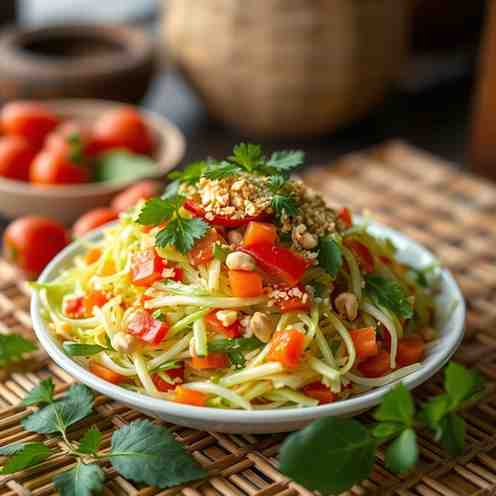
Hey there, fellow food adventurers! If you’ve ever experienced the vibrant, punchy flavors of Southeast Asian cuisine, you know there’s nothing quite like a really good papaya salad. But today, we're diving deep into the world of authentic Lao papaya salad, known as Tam Mak Hoong (or Thum Mak Hoong). This isn't just any salad; it's an explosion of taste that hits all the right notes: fiery spice, invigorating sourness, deep saltiness, a unique funk, and just a hint of sweetness. It’s truly a symphony for your taste buds!
What sets the Lao version apart from its Thai cousin? It’s all about the sauce, baby. Our secret weapon is padaek (fermented fish sauce) and a touch of fermented shrimp paste, which gives it a darker, richer color and an incredibly complex, savory depth that you won't find anywhere else. Don't worry if you're new to these ingredients; we'll guide you on how to introduce them to your palate, even if you’re a beginner. This recipe is designed for everyone, whether you’re a seasoned cook or just starting your journey with green papaya salad. We'll even share clever ingredient swaps so you can enjoy this unripe papaya salad no matter what you have on hand. Get ready to master the art of this incredible dish, because once you try this recipe using papaya, there’s no going back!
At its heart, Tam Mak Hoong (also spelled Tum Mak Hoong or Thum Mak Hoong) is a vibrant, spicy, and incredibly flavorful salad originating from Laos. It translates literally to "pounded papaya." The star of the show is green papaya, which isn't ripe or sweet like the fruit you might eat for breakfast. Instead, it’s firm, crunchy, and has a wonderfully neutral flavor, making it the perfect canvas to absorb all the bold tastes of the dressing.
The true "signature" flavor of this green papaya salad comes from a unique combination: the potent, umami-rich fermented fish sauce (padaek), bright lime juice, and a generous kick from fresh Thai chiles. It’s a dish that’s meant to awaken your senses and leave you craving more!
While both Lao and Thai papaya salad are absolutely delicious, they have distinct personalities. Here’s a quick side-by-side to help you understand the differences:
Sauce Base:
Lao: Heavily relies on padaek (fermented fish sauce), giving it a deeper, funkier, and more complex umami profile.
Thai: Often uses regular clear fish sauce and a higher amount of palm sugar, resulting in a sweeter, tangier, and less "funky" flavor.
Funk Level:
Lao: High! The padaek and sometimes fermented crab or shrimp paste bring an unmistakable savory funk.
Thai: Lower to medium, generally brighter and fresher tasting.
Color:
Lao: Tends to be darker and cloudier due to the padaek.
Thai: Usually lighter and clearer.
Common Add-ins:
Lao: Often includes salted crab, pork rinds, or a wider variety of vegetables like long beans.
Thai: Frequently features peanuts, green beans, and sometimes dried shrimp.
Which one you’re making here: Today, we’re diving headfirst into the authentic Lao delight, focusing on the rich, complex flavors of Tam Mak Hoong!
To truly nail that authentic Lao flavor, some ingredients are simply non-negotiable. Don't worry, we'll tell you where to find them and what to look for!
Green Papaya: The foundation! Look for a firm, fully green papaya with no yellow spots. It should feel heavy for its size. This is the papaya for papaya salad.
Garlic + Thai Chiles: These are the aromatics and the heat. Use fresh Thai chiles (also known as bird's eye chiles) for that signature kick. Adjust to your spice preference!
Lime: Fresh lime juice is essential for the sour element, balancing the richness and spice.
Fish Sauce: A good quality clear fish sauce provides a baseline of salty umami.
Padaek: This is the heart and soul of Lao papaya salad. It's a fermented fish sauce, distinct from regular fish sauce, offering a deeper, funkier, and more intensely savory flavor. If you're new to it, start with a smaller amount and adjust to your taste. You can find it bottled in most Asian grocery stores.
Shrimp Paste: A small amount of this intensely savory, fermented paste adds another layer of umami and funk. A little goes a long way!
Palm Sugar: Provides a crucial touch of sweetness that balances the sour, salty, and spicy elements.
Tamarind (optional but recommended for rounded sour): While lime provides a sharp sourness, tamarind paste (or fresh tamarind pulp) adds a more complex, fruity, and rounded sour note. It really elevates the depth of flavor. Look for seedless tamarind paste.
Cherry/Grape Tomatoes: Adds a burst of freshness and a slight sweetness.
MSG: A pinch can enhance the overall savory "umami" experience, but it's completely optional.
Preserved/Salted Crab or Fermented Crab: For those who truly love the extreme funk and umami, these are classic additions in Laos. They're an acquired taste but provide incredible depth.
Lao Plum/Ambarella: If you can find these sour, crunchy fruits at a specialty Asian market, they add another authentic layer of tartness and texture.
Asian Grocery Stores: Your best bet for almost all these ingredients! You'll find green papaya, Thai chiles, padaek, shrimp paste, palm sugar, tamarind paste, and fresh produce.
What to look for when choosing green papaya: As mentioned, firm, fully green, and heavy. Avoid any with soft spots or yellowing.
The magic of green papaya salad largely happens through pounding. Here’s what you’ll need:
Best: Large Mortar and Pestle: A traditional lao mortar and pestle (often made of clay or granite) is the ideal tool. It allows you to bruise and break down ingredients, releasing their flavors, without pureeing them. This is the papaya salad mortar and pestle.
Helpful: Julienne Peeler/Papaya Shredder + Cut-Resistant Glove: A specialized papaya shredder or a sturdy julienne peeler makes quick work of preparing the papaya into long, thin strips. A cut-resistant glove is a smart safety tip when working with sharp tools.
No mortar workaround: If you don't have a mortar and pestle, you can still make this! Use a large, sturdy bowl. Mash the garlic, chiles, and palm sugar with the back of a heavy spoon or a muddler. Then add the liquid ingredients and whisk to combine. Finally, add the papaya and tomatoes, and use a "press and toss" technique with a spoon to gently bruise the papaya and coat it in the dressing. The texture will be slightly different, but the flavor will still be fantastic!
Getting the papaya just right is key to a great green papaya salad. We want it crunchy, not limp!
Peel, seed, shred (quick safety tips): First, peel the tough green skin from the papaya using a vegetable peeler. Cut it in half lengthwise and scoop out the seeds. Now, carefully shred the papaya using a julienne peeler or a specialized papaya shredder into long, thin strips. Always shred away from your body and use a cut-resistant glove for safety if you're new to this.
Rinse/ice bath to remove sap + boost crunch: Green papaya contains a milky sap that can sometimes be bitter. After shredding, rinse the papaya strips thoroughly under cold water. For extra crunch, transfer the shredded papaya to a bowl of ice water and let it soak for 10-15 minutes.
Drain WELL (how to avoid watery salad): This step is crucial! After the ice bath, drain the papaya thoroughly. You can use a salad spinner or gently squeeze handfuls of papaya to remove excess water. A watery papaya salad is a sad papaya salad!
Get ready to pound, mix, and savor the incredible flavors of authentic Lao delight!
Ingredients
Directions
- Pound Garlic + Chiles + Palm Sugar: In your lao mortar and pestle, combine the Thai chiles, garlic, and palm sugar. Pound them together until you have a rough, fragrant paste. Checkpoint: The mixture should be well-bruised and fragrant, not a smooth puree.
- Add Shrimp Paste + Padaek + Fish Sauce + Tamarind + Lime: Add the shrimp paste (if using), padaek, fish sauce, tamarind paste (if using), and lime juice to the mortar. Gently pound and stir everything together until the sugar is dissolved and you have a well-combined, strong, funky, and balanced dressing. Taste and adjust the liquid components here – it should be potent! Checkpoint: The dressing should have a powerful aroma and a complex balance of spicy, sour, salty, and funky flavors.
- Add Papaya and Gently Pound/Toss: Add the shredded papaya for papaya salad to the mortar. Using the pestle, gently pound and toss the papaya with the dressing. The goal is to bruise the papaya slightly, allowing it to absorb the flavors, but not to completely break it down. Use a spoon to help toss and turn the papaya so it gets evenly coated. Checkpoint: Papaya should be coated in the dressing but still wonderfully crunchy.
- Add Tomatoes Last; Light Smash; Final Toss: Finally, add the halved cherry or grape tomatoes to the mortar. Give them a few light smashes with the pestle – just enough to release their juices – then gently toss everything one last time. If using long beans, add them here too.
- Taste and Adjust: This is the most important step! Taste a piece of papaya with some dressing.
- Too salty? Add more lime juice or a tiny pinch of sugar.
- Too sour? Add more palm sugar.
- Too sweet? Add more lime juice or a tiny splash of fish sauce.
- Not funky enough? Add a tiny bit more padaek.
- Not spicy enough? Add another chile or a pinch of chili flakes.
- Serve Immediately: Transfer the green papaya salad to a serving plate.How to Serve It (the Lao Way)Lao papaya salad is best enjoyed immediately and traditionally served family-style with:
- Sticky rice (Khao Niao): This is non-negotiable! Use your hands to scoop up the salad with sticky rice.
- Cabbage wedges: For scooping up the extra sauce and providing a fresh, crunchy counterpoint.
- Classic Pairings: Serve alongside grilled chicken (ping gai), Lao pork rinds, or Lao beef jerky for a complete and authentic meal.
Lao Green Papaya Salad Recipe - Make Tam Mak Hoong

- Serves: 4 People
- Prepare Time: 25 minutes
- Cooking Time: 10 minutes
- Calories: -
- Difficulty: Medium
Hey there, fellow food adventurers! If you’ve ever experienced the vibrant, punchy flavors of Southeast Asian cuisine, you know there’s nothing quite like a really good papaya salad. But today, we're diving deep into the world of authentic Lao papaya salad, known as Tam Mak Hoong (or Thum Mak Hoong). This isn't just any salad; it's an explosion of taste that hits all the right notes: fiery spice, invigorating sourness, deep saltiness, a unique funk, and just a hint of sweetness. It’s truly a symphony for your taste buds!
What sets the Lao version apart from its Thai cousin? It’s all about the sauce, baby. Our secret weapon is padaek (fermented fish sauce) and a touch of fermented shrimp paste, which gives it a darker, richer color and an incredibly complex, savory depth that you won't find anywhere else. Don't worry if you're new to these ingredients; we'll guide you on how to introduce them to your palate, even if you’re a beginner. This recipe is designed for everyone, whether you’re a seasoned cook or just starting your journey with green papaya salad. We'll even share clever ingredient swaps so you can enjoy this unripe papaya salad no matter what you have on hand. Get ready to master the art of this incredible dish, because once you try this recipe using papaya, there’s no going back!
At its heart, Tam Mak Hoong (also spelled Tum Mak Hoong or Thum Mak Hoong) is a vibrant, spicy, and incredibly flavorful salad originating from Laos. It translates literally to "pounded papaya." The star of the show is green papaya, which isn't ripe or sweet like the fruit you might eat for breakfast. Instead, it’s firm, crunchy, and has a wonderfully neutral flavor, making it the perfect canvas to absorb all the bold tastes of the dressing.
The true "signature" flavor of this green papaya salad comes from a unique combination: the potent, umami-rich fermented fish sauce (padaek), bright lime juice, and a generous kick from fresh Thai chiles. It’s a dish that’s meant to awaken your senses and leave you craving more!
While both Lao and Thai papaya salad are absolutely delicious, they have distinct personalities. Here’s a quick side-by-side to help you understand the differences:
Sauce Base:
Lao: Heavily relies on padaek (fermented fish sauce), giving it a deeper, funkier, and more complex umami profile.
Thai: Often uses regular clear fish sauce and a higher amount of palm sugar, resulting in a sweeter, tangier, and less "funky" flavor.
Funk Level:
Lao: High! The padaek and sometimes fermented crab or shrimp paste bring an unmistakable savory funk.
Thai: Lower to medium, generally brighter and fresher tasting.
Color:
Lao: Tends to be darker and cloudier due to the padaek.
Thai: Usually lighter and clearer.
Common Add-ins:
Lao: Often includes salted crab, pork rinds, or a wider variety of vegetables like long beans.
Thai: Frequently features peanuts, green beans, and sometimes dried shrimp.
Which one you’re making here: Today, we’re diving headfirst into the authentic Lao delight, focusing on the rich, complex flavors of Tam Mak Hoong!
To truly nail that authentic Lao flavor, some ingredients are simply non-negotiable. Don't worry, we'll tell you where to find them and what to look for!
Green Papaya: The foundation! Look for a firm, fully green papaya with no yellow spots. It should feel heavy for its size. This is the papaya for papaya salad.
Garlic + Thai Chiles: These are the aromatics and the heat. Use fresh Thai chiles (also known as bird's eye chiles) for that signature kick. Adjust to your spice preference!
Lime: Fresh lime juice is essential for the sour element, balancing the richness and spice.
Fish Sauce: A good quality clear fish sauce provides a baseline of salty umami.
Padaek: This is the heart and soul of Lao papaya salad. It's a fermented fish sauce, distinct from regular fish sauce, offering a deeper, funkier, and more intensely savory flavor. If you're new to it, start with a smaller amount and adjust to your taste. You can find it bottled in most Asian grocery stores.
Shrimp Paste: A small amount of this intensely savory, fermented paste adds another layer of umami and funk. A little goes a long way!
Palm Sugar: Provides a crucial touch of sweetness that balances the sour, salty, and spicy elements.
Tamarind (optional but recommended for rounded sour): While lime provides a sharp sourness, tamarind paste (or fresh tamarind pulp) adds a more complex, fruity, and rounded sour note. It really elevates the depth of flavor. Look for seedless tamarind paste.
Cherry/Grape Tomatoes: Adds a burst of freshness and a slight sweetness.
MSG: A pinch can enhance the overall savory "umami" experience, but it's completely optional.
Preserved/Salted Crab or Fermented Crab: For those who truly love the extreme funk and umami, these are classic additions in Laos. They're an acquired taste but provide incredible depth.
Lao Plum/Ambarella: If you can find these sour, crunchy fruits at a specialty Asian market, they add another authentic layer of tartness and texture.
Asian Grocery Stores: Your best bet for almost all these ingredients! You'll find green papaya, Thai chiles, padaek, shrimp paste, palm sugar, tamarind paste, and fresh produce.
What to look for when choosing green papaya: As mentioned, firm, fully green, and heavy. Avoid any with soft spots or yellowing.
The magic of green papaya salad largely happens through pounding. Here’s what you’ll need:
Best: Large Mortar and Pestle: A traditional lao mortar and pestle (often made of clay or granite) is the ideal tool. It allows you to bruise and break down ingredients, releasing their flavors, without pureeing them. This is the papaya salad mortar and pestle.
Helpful: Julienne Peeler/Papaya Shredder + Cut-Resistant Glove: A specialized papaya shredder or a sturdy julienne peeler makes quick work of preparing the papaya into long, thin strips. A cut-resistant glove is a smart safety tip when working with sharp tools.
No mortar workaround: If you don't have a mortar and pestle, you can still make this! Use a large, sturdy bowl. Mash the garlic, chiles, and palm sugar with the back of a heavy spoon or a muddler. Then add the liquid ingredients and whisk to combine. Finally, add the papaya and tomatoes, and use a "press and toss" technique with a spoon to gently bruise the papaya and coat it in the dressing. The texture will be slightly different, but the flavor will still be fantastic!
Getting the papaya just right is key to a great green papaya salad. We want it crunchy, not limp!
Peel, seed, shred (quick safety tips): First, peel the tough green skin from the papaya using a vegetable peeler. Cut it in half lengthwise and scoop out the seeds. Now, carefully shred the papaya using a julienne peeler or a specialized papaya shredder into long, thin strips. Always shred away from your body and use a cut-resistant glove for safety if you're new to this.
Rinse/ice bath to remove sap + boost crunch: Green papaya contains a milky sap that can sometimes be bitter. After shredding, rinse the papaya strips thoroughly under cold water. For extra crunch, transfer the shredded papaya to a bowl of ice water and let it soak for 10-15 minutes.
Drain WELL (how to avoid watery salad): This step is crucial! After the ice bath, drain the papaya thoroughly. You can use a salad spinner or gently squeeze handfuls of papaya to remove excess water. A watery papaya salad is a sad papaya salad!
Get ready to pound, mix, and savor the incredible flavors of authentic Lao delight!
Ingredients
Directions
- Pound Garlic + Chiles + Palm Sugar: In your lao mortar and pestle, combine the Thai chiles, garlic, and palm sugar. Pound them together until you have a rough, fragrant paste. Checkpoint: The mixture should be well-bruised and fragrant, not a smooth puree.
- Add Shrimp Paste + Padaek + Fish Sauce + Tamarind + Lime: Add the shrimp paste (if using), padaek, fish sauce, tamarind paste (if using), and lime juice to the mortar. Gently pound and stir everything together until the sugar is dissolved and you have a well-combined, strong, funky, and balanced dressing. Taste and adjust the liquid components here – it should be potent! Checkpoint: The dressing should have a powerful aroma and a complex balance of spicy, sour, salty, and funky flavors.
- Add Papaya and Gently Pound/Toss: Add the shredded papaya for papaya salad to the mortar. Using the pestle, gently pound and toss the papaya with the dressing. The goal is to bruise the papaya slightly, allowing it to absorb the flavors, but not to completely break it down. Use a spoon to help toss and turn the papaya so it gets evenly coated. Checkpoint: Papaya should be coated in the dressing but still wonderfully crunchy.
- Add Tomatoes Last; Light Smash; Final Toss: Finally, add the halved cherry or grape tomatoes to the mortar. Give them a few light smashes with the pestle – just enough to release their juices – then gently toss everything one last time. If using long beans, add them here too.
- Taste and Adjust: This is the most important step! Taste a piece of papaya with some dressing.
- Too salty? Add more lime juice or a tiny pinch of sugar.
- Too sour? Add more palm sugar.
- Too sweet? Add more lime juice or a tiny splash of fish sauce.
- Not funky enough? Add a tiny bit more padaek.
- Not spicy enough? Add another chile or a pinch of chili flakes.
- Serve Immediately: Transfer the green papaya salad to a serving plate.How to Serve It (the Lao Way)Lao papaya salad is best enjoyed immediately and traditionally served family-style with:
- Sticky rice (Khao Niao): This is non-negotiable! Use your hands to scoop up the salad with sticky rice.
- Cabbage wedges: For scooping up the extra sauce and providing a fresh, crunchy counterpoint.
- Classic Pairings: Serve alongside grilled chicken (ping gai), Lao pork rinds, or Lao beef jerky for a complete and authentic meal.
You may also like


Hey there! I’m just someone who seriously loves good food and believes that cooking doesn’t have to be complicated to be amazing. Whether it’s a quick weeknight dinner or a cozy weekend meal, I’m all about sharing easy, tasty recipes that actually work.