
Mulgikapsad - Pearl Barley Pork Recipe
Mulgikapsad - Pearl Barley Pork Recipe


- Serves: 6 People
- Prepare Time: 30 minutes
- Cooking Time: 2 hours 30
- Calories: -
- Difficulty: Medium
Welcome to the ultimate guide for creating Authentic Estonian Mulgikapsad! If you're looking for a cozy, tangy, and hearty recipe using pearl barley, pork, and sauerkraut, you've come to the right place. Today, you'll learn how to master this traditional Estonian comfort food, perfect for a chilly evening or a gathering with loved ones.
Mulgikapsad is more than just a stew; it's a taste of Estonian heritage. This delightful dish combines the rich flavors of slow-cooked pork, tangy sauerkraut, and the unique texture of pearl barley, making it a truly authentic experience. The use of pearl barley is key here, contributing to the stew's signature thickness and satisfying chew. Get ready to discover a new favorite pork dish recipe that will warm you from the inside out!
At its heart, Mulgikapsad is a traditional Estonian sauerkraut stew, deeply rooted in the historical Mulgimaa region of Southern Estonia. It's the kind of dish that evokes feelings of home and warmth, a true comfort food that has nourished generations. Imagine tender pork, tangy fermented cabbage, and plump pearl barley all slow-cooked together until they meld into a wonderfully savory and slightly sour symphony.
What truly sets Mulgikapsad apart from other sauerkraut stews is its signature combination: the distinct tang of sauerkraut, the rich, savory depth of pork, and the earthy, thickening power of pearl barley. This trio creates a unique flavor and texture profile that is undeniably Estonian. It's a fantastic recipe using pork that showcases how simple ingredients can create something extraordinary.
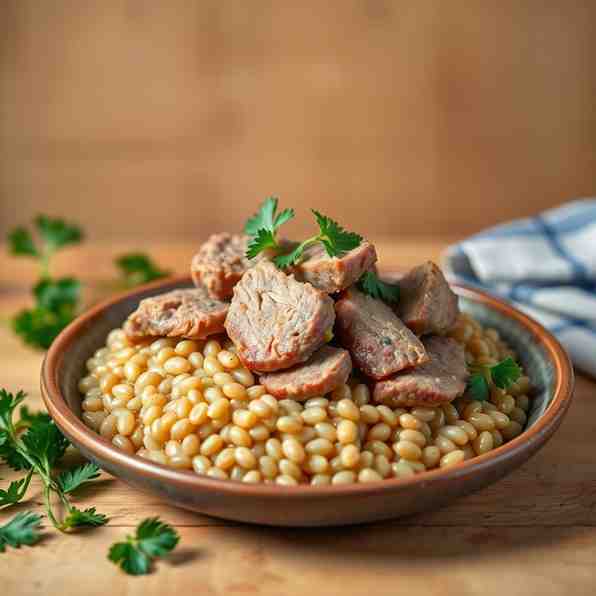
Taste/Texture Expectations: Expect a thick, wonderfully tangy, and deeply savory stew. The pork will be fork-tender, the sauerkraut soft, and the pearl barley plump and creamy, adding body to the dish.
Best Served With: Traditionally, Mulgikapsad is served simply with boiled potatoes (think boiled potatoes recipe or new potatoes recipe), perhaps a dollop of sour cream, and a sprinkle of fresh dill.
Ingredients
Directions
- Before You Start (Prep & setup)
- Taste Your Sauerkraut: Take a small bite of your sauerkraut. If it’s intensely sour or very salty, you might want to rinse it lightly under cold water. Rinsing reduces the tang and saltiness, resulting in a milder stew. If you prefer a very strong, sour flavor, don't rinse it!
- Rinse Pearl Barley: Place the pearl barley in a fine-mesh sieve and rinse it under cold running water until the water runs clear. For slightly faster tenderness, you can optionally soak the rinsed barley in cold water for 30 minutes before cooking, then drain.
- Cut Pork: Cut your pork shoulder or belly into chunky 1-2 inch pieces. If you prefer, you can keep larger pieces and shred them later once they are fork-tender.
- Potato Plan: Don't start cooking your serving potatoes yet. Plan to put a pot of salted water on to boil about 20-30 minutes before you expect the Mulgikapsad to be finished, so they cook fresh and are ready to serve alongside the stew.
- Step-by-Step Method (One unified workflow)
- Build the Pot (Traditional Layering Style): In your heavy-bottomed Dutch oven, spread about half of the drained sauerkraut evenly across the bottom. Next, sprinkle the rinsed pearl barley over the sauerkraut. Arrange the pork chunks on top of the barley. Finally, cover everything with the remaining sauerkraut. If using, tuck the bay leaves and caraway seeds among the layers.
- Add Liquid (Measured): Pour enough water or broth into the pot to just cover the contents. "Just cover" means the liquid level should reach the top of the ingredients, but not significantly drown them. You should still be able to see the top layer of sauerkraut peeking through.
- Low Simmer (Long and Slow): Bring the pot to a gentle simmer over medium-high heat. Once simmering, reduce the heat to very low, cover the pot tightly, and let it cook. The goal is a lazy, barely perceptible bubble. Stir the stew every 30-45 minutes, making sure to scrape the bottom of the pot to prevent any sticking, especially as the barley begins to thicken the liquid. This slow cooking allows the flavors to meld beautifully and the pork to become incredibly tender.
- Adjust as You Go:
- Water: If the stew becomes too dry or thick during cooking, add a little more hot water or broth, about ½ cup at a time, to maintain the desired consistency.
- Sugar/Salt: After about 1.5-2 hours of cooking, taste the stew. If it's too sour, add a tiny pinch of sugar (¼ tsp at a time) to balance the acidity. If it needs more seasoning, add salt and pepper to taste. Remember, the flavors deepen as it cooks.
- Onion: If you're using onion, you can sauté it separately until translucent and add it to the stew during the last hour of cooking, or simply add it raw with the initial layers.
- Finish: Continue simmering until the pearl barley is fully tender and creamy, the pork is fork-tender and easily shreds, and the stew has thickened to a rich, hearty consistency. This typically takes 2 to 2.5 hours, but can vary. Once done, remove from heat and let the stew rest, covered, for 10 minutes. This allows the flavors to settle and the stew to thicken slightly more.
- Boil Potatoes for Serving: While the mulgikapsad rests, place your potatoes (whole or halved, depending on size) in a pot of cold, salted water. Bring to a boil, then reduce heat and simmer until fork-tender, about 15-20 minutes. Drain well and, if desired, toss with a pat of butter and a sprinkle of dill.
- Serve: Ladle generous portions of warm Mulgikapsad into bowls. Serve alongside the boiled potatoes. Offer sour cream and fresh dill as optional garnishes for a truly authentic experience.
Mulgikapsad - Pearl Barley Pork Recipe
- Serves: 6 People
- Prepare Time: 30 minutes
- Cooking Time: 2 hours 30
- Calories: -
- Difficulty: Medium
Welcome to the ultimate guide for creating Authentic Estonian Mulgikapsad! If you're looking for a cozy, tangy, and hearty recipe using pearl barley, pork, and sauerkraut, you've come to the right place. Today, you'll learn how to master this traditional Estonian comfort food, perfect for a chilly evening or a gathering with loved ones.
Mulgikapsad is more than just a stew; it's a taste of Estonian heritage. This delightful dish combines the rich flavors of slow-cooked pork, tangy sauerkraut, and the unique texture of pearl barley, making it a truly authentic experience. The use of pearl barley is key here, contributing to the stew's signature thickness and satisfying chew. Get ready to discover a new favorite pork dish recipe that will warm you from the inside out!
At its heart, Mulgikapsad is a traditional Estonian sauerkraut stew, deeply rooted in the historical Mulgimaa region of Southern Estonia. It's the kind of dish that evokes feelings of home and warmth, a true comfort food that has nourished generations. Imagine tender pork, tangy fermented cabbage, and plump pearl barley all slow-cooked together until they meld into a wonderfully savory and slightly sour symphony.
What truly sets Mulgikapsad apart from other sauerkraut stews is its signature combination: the distinct tang of sauerkraut, the rich, savory depth of pork, and the earthy, thickening power of pearl barley. This trio creates a unique flavor and texture profile that is undeniably Estonian. It's a fantastic recipe using pork that showcases how simple ingredients can create something extraordinary.
Taste/Texture Expectations: Expect a thick, wonderfully tangy, and deeply savory stew. The pork will be fork-tender, the sauerkraut soft, and the pearl barley plump and creamy, adding body to the dish.
Best Served With: Traditionally, Mulgikapsad is served simply with boiled potatoes (think boiled potatoes recipe or new potatoes recipe), perhaps a dollop of sour cream, and a sprinkle of fresh dill.
Ingredients
Directions
- Before You Start (Prep & setup)
- Taste Your Sauerkraut: Take a small bite of your sauerkraut. If it’s intensely sour or very salty, you might want to rinse it lightly under cold water. Rinsing reduces the tang and saltiness, resulting in a milder stew. If you prefer a very strong, sour flavor, don't rinse it!
- Rinse Pearl Barley: Place the pearl barley in a fine-mesh sieve and rinse it under cold running water until the water runs clear. For slightly faster tenderness, you can optionally soak the rinsed barley in cold water for 30 minutes before cooking, then drain.
- Cut Pork: Cut your pork shoulder or belly into chunky 1-2 inch pieces. If you prefer, you can keep larger pieces and shred them later once they are fork-tender.
- Potato Plan: Don't start cooking your serving potatoes yet. Plan to put a pot of salted water on to boil about 20-30 minutes before you expect the Mulgikapsad to be finished, so they cook fresh and are ready to serve alongside the stew.
- Step-by-Step Method (One unified workflow)
- Build the Pot (Traditional Layering Style): In your heavy-bottomed Dutch oven, spread about half of the drained sauerkraut evenly across the bottom. Next, sprinkle the rinsed pearl barley over the sauerkraut. Arrange the pork chunks on top of the barley. Finally, cover everything with the remaining sauerkraut. If using, tuck the bay leaves and caraway seeds among the layers.
- Add Liquid (Measured): Pour enough water or broth into the pot to just cover the contents. "Just cover" means the liquid level should reach the top of the ingredients, but not significantly drown them. You should still be able to see the top layer of sauerkraut peeking through.
- Low Simmer (Long and Slow): Bring the pot to a gentle simmer over medium-high heat. Once simmering, reduce the heat to very low, cover the pot tightly, and let it cook. The goal is a lazy, barely perceptible bubble. Stir the stew every 30-45 minutes, making sure to scrape the bottom of the pot to prevent any sticking, especially as the barley begins to thicken the liquid. This slow cooking allows the flavors to meld beautifully and the pork to become incredibly tender.
- Adjust as You Go:
- Water: If the stew becomes too dry or thick during cooking, add a little more hot water or broth, about ½ cup at a time, to maintain the desired consistency.
- Sugar/Salt: After about 1.5-2 hours of cooking, taste the stew. If it's too sour, add a tiny pinch of sugar (¼ tsp at a time) to balance the acidity. If it needs more seasoning, add salt and pepper to taste. Remember, the flavors deepen as it cooks.
- Onion: If you're using onion, you can sauté it separately until translucent and add it to the stew during the last hour of cooking, or simply add it raw with the initial layers.
- Finish: Continue simmering until the pearl barley is fully tender and creamy, the pork is fork-tender and easily shreds, and the stew has thickened to a rich, hearty consistency. This typically takes 2 to 2.5 hours, but can vary. Once done, remove from heat and let the stew rest, covered, for 10 minutes. This allows the flavors to settle and the stew to thicken slightly more.
- Boil Potatoes for Serving: While the mulgikapsad rests, place your potatoes (whole or halved, depending on size) in a pot of cold, salted water. Bring to a boil, then reduce heat and simmer until fork-tender, about 15-20 minutes. Drain well and, if desired, toss with a pat of butter and a sprinkle of dill.
- Serve: Ladle generous portions of warm Mulgikapsad into bowls. Serve alongside the boiled potatoes. Offer sour cream and fresh dill as optional garnishes for a truly authentic experience.
You may also like




Hey there! I’m just someone who seriously loves good food and believes that cooking doesn’t have to be complicated to be amazing. Whether it’s a quick weeknight dinner or a cozy weekend meal, I’m all about sharing easy, tasty recipes that actually work.