
Cassava Leaves Food - Central African Stew
Cassava Leaves Food - Central African Stew
- Serves: 6 People
- Prepare Time: 60 minutes
- Cooking Time: 2 hours 30
- Calories: -
- Difficulty: Medium
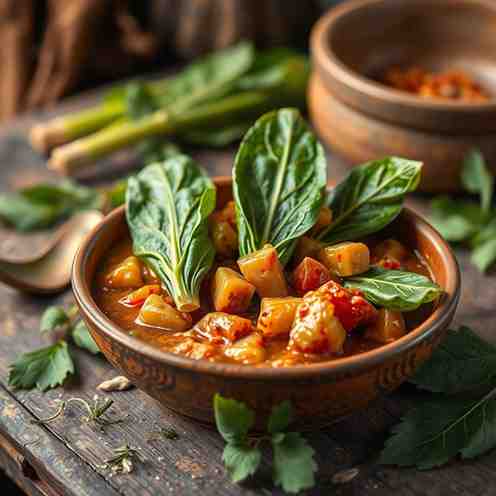
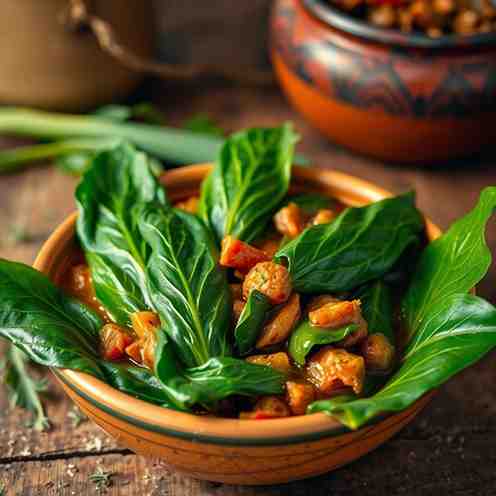
Imagine stepping into a bustling Central African market, the air thick with the aroma of spices, earthy greens, and slow-simmering stews. One bite of a rich, thick, and nutty cassava leaves food stew, scooped generously over fluffy rice or fufu, and you’re transported. It’s a taste that lingers – smoky, savory, deeply comforting. This isn't just a meal; it's an experience, a cornerstone of Central African cuisine.
This recipe guides you through making a truly traditional-style Central African or Congolese cassava leaf stew, known as Sombe, Pondu, or Saka Saka. It’s built on a foundation of tender cassava leaves, vibrant red palm oil, creamy peanut butter, and your choice of savory meat, often enhanced with a touch of smoked fish. You’ll love this recipe for its incredibly deep and rich flavor profile, the simplicity of its ingredients, and the fact that it all comes together in one pot – perfect for feeding a crowd or enjoying a cozy Sunday dinner. Whether you’re a new cook curious about African cuisine or a diaspora reader seeking a reliable, well-tested version of this beloved dish, get ready to discover the magic of cooking with palm oil and fresh peanut butter in this unforgettable meal with peanut butter.
Ingredients
Directions
- Equipment You’ll Need:
- Large heavy-bottomed pot or Dutch oven (4-6 quart)
- Cutting board and sharp knife
- Wooden spoon or spatula
- Measuring cups and spoons
- Optional: Mortar and pestle or food processor for chopping fresh leaves.
- Prep the Cassava Leaves:
- If using Fresh Cassava Leaves:
- Thoroughly rinse the leaves.
- Strip the leaves from their tough central stems. Discard stems.
- Finely chop the leaves with a knife, or use a mortar and pestle or food processor to pound/chop them into a fine, almost paste-like consistency.
- Place chopped leaves in a large pot, cover with plenty of water, and bring to a rolling boil. Boil vigorously for at least 30-45 minutes. This is crucial for removing bitterness and ensuring food safety.
- Drain the leaves in a colander and rinse under cold water. Squeeze out as much excess liquid as possible. The leaves should be soft and finely chopped, not stringy.
- If using Frozen Cassava Leaves:
- Thaw the frozen leaves completely.
- Drain any accumulated liquid and squeeze out excess moisture from the thawed leaves.
- Build the Meat & Broth Base:
- Place your chosen beef stew meat in the large heavy-bottomed pot. Add 1 teaspoon of salt and a pinch of black pepper.
- Brown the meat over medium-high heat, stirring occasionally, until well-colored on all sides. This builds flavor.
- Add 4 cups of water or beef broth to the pot. Bring to a simmer, then reduce heat to low, cover, and cook for 60-90 minutes, or until the meat is almost tender. Skim off any foam that rises to the surface.
- Once the meat is almost tender, ensure about 2-3 cups of liquid remain in the pot with the meat. If there's too much, remove some. If too little, add a splash more.
- Make the Palm Oil Aromatic Sauce:
- In the same pot with the meat and broth (or a separate pan if you prefer to build the sauce separately and then combine), add the red palm oil. Warm it over medium heat until fragrant, but do not let it smoke.
- Add the chopped onion, minced garlic, and bell pepper to the palm oil. Sauté for 5-7 minutes, stirring occasionally, until the vegetables are soft and lightly golden.
- Stir in the minced chili (Scotch bonnet/habanero or chili flakes). Cook for another minute until fragrant.
- Optional: If using, stir in the stewed tomatoes or tomato paste and cook for 2-3 minutes, stirring, until slightly darkened.
- Combine Leaves, Meat, and Sauce:
- Add the prepared (pre-boiled and squeezed) cassava leaves to the pot with the aromatics and meat. Stir everything together gently.
- Add reserved broth or additional water as needed, ensuring the liquid just covers the leaves and meat. You want a stew, not a soup, so don't overdo the liquid.
- Bring the mixture to a steady, gentle simmer.
- Add Peanut Butter & Optional Smoked Fish:
- In a small bowl, whisk the peanut butter with a ladleful of the hot broth from the stew until it forms a smooth, lump-free paste.
- Stir the smooth peanut butter mixture into the pot. Stir well to ensure it fully emulsifies and thickens the stew.
- If using, gently stir in the flaked smoked fish.
- Reduce the heat to low, cover the pot partially (leaving a small gap for steam to escape), and simmer gently for at least 60 minutes, stirring occasionally to prevent sticking. The stew should become thick, glossy, and the flavors deeply melded.
- Taste, Adjust & Finish:
- Taste the stew. Adjust seasoning with more salt, black pepper, or chili to your preference. If using bouillon cubes, add them now and let them dissolve.
- If the stew is too thick, add a splash more broth or water until it reaches your desired consistency. If it's too thin, simmer uncovered for a bit longer to allow it to reduce.
- The final texture should be creamy, spoonable, and rich, easily clinging to rice or fufu.
Cassava Leaves Food - Central African Stew
- Serves: 6 People
- Prepare Time: 60 minutes
- Cooking Time: 2 hours 30
- Calories: -
- Difficulty: Medium
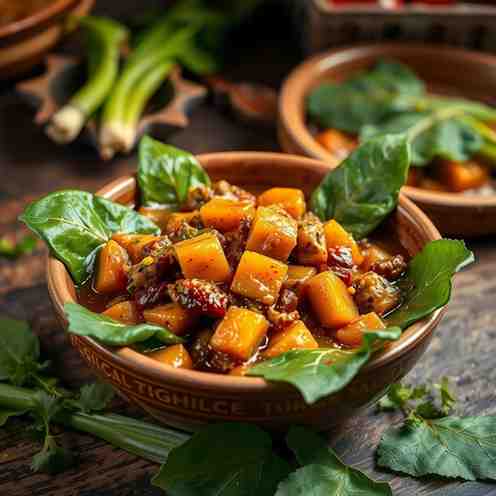
Imagine stepping into a bustling Central African market, the air thick with the aroma of spices, earthy greens, and slow-simmering stews. One bite of a rich, thick, and nutty cassava leaves food stew, scooped generously over fluffy rice or fufu, and you’re transported. It’s a taste that lingers – smoky, savory, deeply comforting. This isn't just a meal; it's an experience, a cornerstone of Central African cuisine.
This recipe guides you through making a truly traditional-style Central African or Congolese cassava leaf stew, known as Sombe, Pondu, or Saka Saka. It’s built on a foundation of tender cassava leaves, vibrant red palm oil, creamy peanut butter, and your choice of savory meat, often enhanced with a touch of smoked fish. You’ll love this recipe for its incredibly deep and rich flavor profile, the simplicity of its ingredients, and the fact that it all comes together in one pot – perfect for feeding a crowd or enjoying a cozy Sunday dinner. Whether you’re a new cook curious about African cuisine or a diaspora reader seeking a reliable, well-tested version of this beloved dish, get ready to discover the magic of cooking with palm oil and fresh peanut butter in this unforgettable meal with peanut butter.
Ingredients
Directions
- Equipment You’ll Need:
- Large heavy-bottomed pot or Dutch oven (4-6 quart)
- Cutting board and sharp knife
- Wooden spoon or spatula
- Measuring cups and spoons
- Optional: Mortar and pestle or food processor for chopping fresh leaves.
- Prep the Cassava Leaves:
- If using Fresh Cassava Leaves:
- Thoroughly rinse the leaves.
- Strip the leaves from their tough central stems. Discard stems.
- Finely chop the leaves with a knife, or use a mortar and pestle or food processor to pound/chop them into a fine, almost paste-like consistency.
- Place chopped leaves in a large pot, cover with plenty of water, and bring to a rolling boil. Boil vigorously for at least 30-45 minutes. This is crucial for removing bitterness and ensuring food safety.
- Drain the leaves in a colander and rinse under cold water. Squeeze out as much excess liquid as possible. The leaves should be soft and finely chopped, not stringy.
- If using Frozen Cassava Leaves:
- Thaw the frozen leaves completely.
- Drain any accumulated liquid and squeeze out excess moisture from the thawed leaves.
- Build the Meat & Broth Base:
- Place your chosen beef stew meat in the large heavy-bottomed pot. Add 1 teaspoon of salt and a pinch of black pepper.
- Brown the meat over medium-high heat, stirring occasionally, until well-colored on all sides. This builds flavor.
- Add 4 cups of water or beef broth to the pot. Bring to a simmer, then reduce heat to low, cover, and cook for 60-90 minutes, or until the meat is almost tender. Skim off any foam that rises to the surface.
- Once the meat is almost tender, ensure about 2-3 cups of liquid remain in the pot with the meat. If there's too much, remove some. If too little, add a splash more.
- Make the Palm Oil Aromatic Sauce:
- In the same pot with the meat and broth (or a separate pan if you prefer to build the sauce separately and then combine), add the red palm oil. Warm it over medium heat until fragrant, but do not let it smoke.
- Add the chopped onion, minced garlic, and bell pepper to the palm oil. Sauté for 5-7 minutes, stirring occasionally, until the vegetables are soft and lightly golden.
- Stir in the minced chili (Scotch bonnet/habanero or chili flakes). Cook for another minute until fragrant.
- Optional: If using, stir in the stewed tomatoes or tomato paste and cook for 2-3 minutes, stirring, until slightly darkened.
- Combine Leaves, Meat, and Sauce:
- Add the prepared (pre-boiled and squeezed) cassava leaves to the pot with the aromatics and meat. Stir everything together gently.
- Add reserved broth or additional water as needed, ensuring the liquid just covers the leaves and meat. You want a stew, not a soup, so don't overdo the liquid.
- Bring the mixture to a steady, gentle simmer.
- Add Peanut Butter & Optional Smoked Fish:
- In a small bowl, whisk the peanut butter with a ladleful of the hot broth from the stew until it forms a smooth, lump-free paste.
- Stir the smooth peanut butter mixture into the pot. Stir well to ensure it fully emulsifies and thickens the stew.
- If using, gently stir in the flaked smoked fish.
- Reduce the heat to low, cover the pot partially (leaving a small gap for steam to escape), and simmer gently for at least 60 minutes, stirring occasionally to prevent sticking. The stew should become thick, glossy, and the flavors deeply melded.
- Taste, Adjust & Finish:
- Taste the stew. Adjust seasoning with more salt, black pepper, or chili to your preference. If using bouillon cubes, add them now and let them dissolve.
- If the stew is too thick, add a splash more broth or water until it reaches your desired consistency. If it's too thin, simmer uncovered for a bit longer to allow it to reduce.
- The final texture should be creamy, spoonable, and rich, easily clinging to rice or fufu.
You may also like



Hey there! I’m just someone who seriously loves good food and believes that cooking doesn’t have to be complicated to be amazing. Whether it’s a quick weeknight dinner or a cozy weekend meal, I’m all about sharing easy, tasty recipes that actually work.



