Cochinillo Asado - Roast Suckling Pig Guide
Cochinillo Asado - Roast Suckling Pig Guide
- Serves: 6 People
- Prepare Time: 45 minutes
- Cooking Time: 2.5 - 3 hou
- Calories: -
- Difficulty: Hard
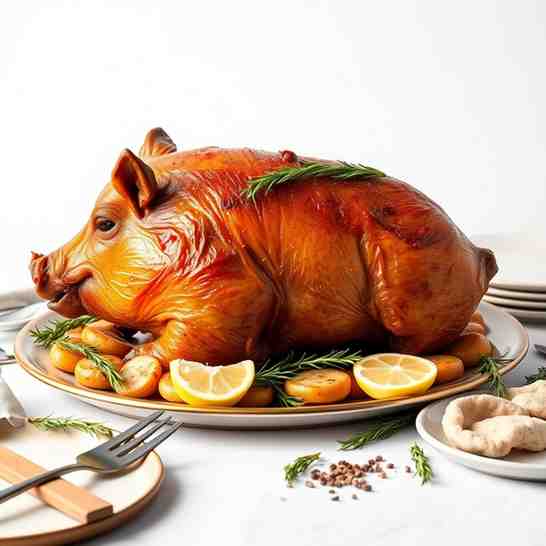
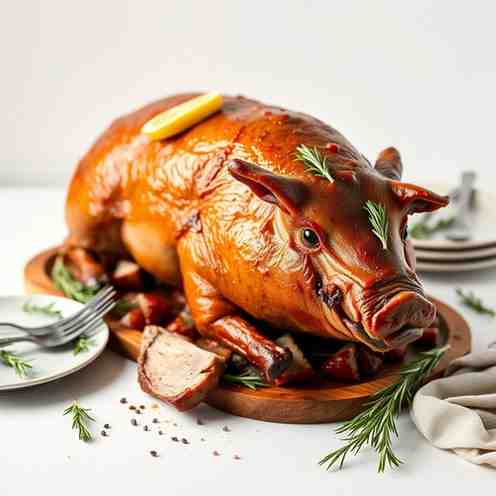
Welcome, fellow food lovers! Get ready to dive into the world of Cochinillo Asado, Spain's legendary roast suckling pig. Imagine: unbelievably crispy, crackly skin giving way to succulent, tender meat that practically melts in your mouth. This isn't just any pork roast; it's a culinary experience, a showstopper, and a tradition straight from the heart of Segovia. While it might sound intimidating, we're here to show you exactly how to achieve this masterpiece in your home kitchen. We'll walk you through everything, from picking the perfect pig and setting up your roasting dish for success, to mastering the unique Segovian technique that ensures even roasting and that coveted, shatteringly crisp skin. Get ready to impress!
Ingredients
Directions
- Day-of Prep:
- Once thawed, unwrap the pig and use paper towels to pat it thoroughly dry, especially the skin. This is critical for crispiness!
- Generously season the interior (meat side) with coarse sea salt. For the skin, a light sprinkle is sufficient later.
- Let the pig rest at room temperature for about 1-2 hours before roasting. This helps it cook more evenly. Ensure it stays within food-safe boundaries (not more than 2 hours).
- Key Technique: Steam the Meat, Keep the Skin DryThis is the secret to Segovian Cochinillo. You want to create a steamy environment for the meat to become tender while simultaneously ensuring the skin gets super crisp.
- Explain the Setup: You'll place water in the bottom of your roasting dish. The pig must sit above this water on a rack or your chosen wooden slats. This setup generates steam, which tenderizes the meat.
- Don't Splash: Be extremely careful not to splash water onto the pig's skin at any point during this process. A wet skin will never crisp up properly.
- Step-by-step: How to Cook Cochinillo Asado (Single Canonical Method)
- Preheat + Set Up the Pan: Preheat your oven to a baseline of 300°F (150°C). Place your rack or wooden slats in the bottom of your large roasting dish. Pour 4-6 cups of water into the pan, ensuring it doesn't touch the rack/slats or the pig itself. If using optional aromatics, add smashed garlic and bay leaves to the water.
- Season + Fat Application: Place the butterflied pig, skin-side up, on the rack in the roasting dish. Pat the skin dry one last time. Lightly sprinkle the skin with salt. Using a basting brush, apply a very thin, even layer of softened lard (or butter) over the entire skin. This helps promote even browning and crisping without making it greasy.
- First Roast (Tenderness Phase): Roast the pig for 2 to 2.5 hours, skin-side up. You're looking for the skin to start turning a pale golden color and the meat to become tender. Check the water level every 45-60 minutes; if it's getting low, carefully add more hot water to the pan, being mindful not to splash the skin. Baste the skin occasionally with the rendered fat and pan juices (but not the water).
- Flip + Prick (Bubble Prevention): Carefully remove the roasting dish from the oven. Using sturdy tongs and spatulas (or oven mitts), gently flip the pig so it's skin-side down. This allows the underside of the pig to cook more evenly and the fat to render further. Using a sharp fork or a dedicated skin pricker, prick the skin all over, especially in fattier areas. This helps release trapped air and fat, preventing large bubbles and promoting uniform crispiness. Avoid pricking too deeply into the meat.
- Final Roast (Crisping Phase): Increase the oven temperature to 375°F (190°C). Return the pig to the oven, still skin-side down, for another 30-45 minutes. Then, carefully flip the pig back to skin-side up. Continue roasting at 375°F (190°C) for another 30-45 minutes, or until the skin is deeply golden brown, blistered, and sounds hollow and crisp when tapped. If needed, for the last 10-15 minutes, you can raise the temperature to 400°F (200°C) or even use the broiler for a few minutes (watch very carefully to prevent burning) to achieve ultimate crispiness.
- Rest + Carve: Once the skin is perfectly crisp and the internal temperature reaches 145°F (63°C) in the thickest part of the thigh (avoiding bone), remove the pig from the oven.
- Rest it uncovered on a cutting board or serving platter for at least 15-20 minutes. This is crucial for the juices to redistribute and for the skin to maintain its crispness.
- Carving Map: Start by separating the shoulders from the body. Then, cut along the ribs to remove sections of the loin. Finally, separate the legs.
- The "Cut with a Plate" Tradition: In Segovia, a cochinillo so tender is often cut with the edge of a ceramic plate to demonstrate its exceptional tenderness. While you don't have to do this at home, it's a fun tradition to describe!
- How to Know It’s Done (Thermometer + Visual Cues)
- Probe Locations: Insert an instant-read thermometer into the thickest part of the thigh and shoulder, avoiding bone.
- Pull Temp + Carryover + Rest Window: You're looking for an internal temperature of 145°F (63°C). The temperature will rise a few degrees as it rests. The resting period is non-negotiable for juicy meat.
- Skin Cues: The skin should be deeply golden to reddish-brown, beautifully blistered, and when tapped with a spoon, it should sound hollow and crisp, not soft or chewy.
Cochinillo Asado - Roast Suckling Pig Guide
- Serves: 6 People
- Prepare Time: 45 minutes
- Cooking Time: 2.5 - 3 hou
- Calories: -
- Difficulty: Hard
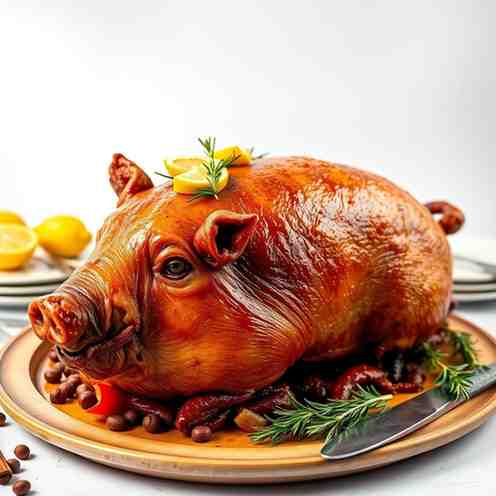
Welcome, fellow food lovers! Get ready to dive into the world of Cochinillo Asado, Spain's legendary roast suckling pig. Imagine: unbelievably crispy, crackly skin giving way to succulent, tender meat that practically melts in your mouth. This isn't just any pork roast; it's a culinary experience, a showstopper, and a tradition straight from the heart of Segovia. While it might sound intimidating, we're here to show you exactly how to achieve this masterpiece in your home kitchen. We'll walk you through everything, from picking the perfect pig and setting up your roasting dish for success, to mastering the unique Segovian technique that ensures even roasting and that coveted, shatteringly crisp skin. Get ready to impress!
Ingredients
Directions
- Day-of Prep:
- Once thawed, unwrap the pig and use paper towels to pat it thoroughly dry, especially the skin. This is critical for crispiness!
- Generously season the interior (meat side) with coarse sea salt. For the skin, a light sprinkle is sufficient later.
- Let the pig rest at room temperature for about 1-2 hours before roasting. This helps it cook more evenly. Ensure it stays within food-safe boundaries (not more than 2 hours).
- Key Technique: Steam the Meat, Keep the Skin DryThis is the secret to Segovian Cochinillo. You want to create a steamy environment for the meat to become tender while simultaneously ensuring the skin gets super crisp.
- Explain the Setup: You'll place water in the bottom of your roasting dish. The pig must sit above this water on a rack or your chosen wooden slats. This setup generates steam, which tenderizes the meat.
- Don't Splash: Be extremely careful not to splash water onto the pig's skin at any point during this process. A wet skin will never crisp up properly.
- Step-by-step: How to Cook Cochinillo Asado (Single Canonical Method)
- Preheat + Set Up the Pan: Preheat your oven to a baseline of 300°F (150°C). Place your rack or wooden slats in the bottom of your large roasting dish. Pour 4-6 cups of water into the pan, ensuring it doesn't touch the rack/slats or the pig itself. If using optional aromatics, add smashed garlic and bay leaves to the water.
- Season + Fat Application: Place the butterflied pig, skin-side up, on the rack in the roasting dish. Pat the skin dry one last time. Lightly sprinkle the skin with salt. Using a basting brush, apply a very thin, even layer of softened lard (or butter) over the entire skin. This helps promote even browning and crisping without making it greasy.
- First Roast (Tenderness Phase): Roast the pig for 2 to 2.5 hours, skin-side up. You're looking for the skin to start turning a pale golden color and the meat to become tender. Check the water level every 45-60 minutes; if it's getting low, carefully add more hot water to the pan, being mindful not to splash the skin. Baste the skin occasionally with the rendered fat and pan juices (but not the water).
- Flip + Prick (Bubble Prevention): Carefully remove the roasting dish from the oven. Using sturdy tongs and spatulas (or oven mitts), gently flip the pig so it's skin-side down. This allows the underside of the pig to cook more evenly and the fat to render further. Using a sharp fork or a dedicated skin pricker, prick the skin all over, especially in fattier areas. This helps release trapped air and fat, preventing large bubbles and promoting uniform crispiness. Avoid pricking too deeply into the meat.
- Final Roast (Crisping Phase): Increase the oven temperature to 375°F (190°C). Return the pig to the oven, still skin-side down, for another 30-45 minutes. Then, carefully flip the pig back to skin-side up. Continue roasting at 375°F (190°C) for another 30-45 minutes, or until the skin is deeply golden brown, blistered, and sounds hollow and crisp when tapped. If needed, for the last 10-15 minutes, you can raise the temperature to 400°F (200°C) or even use the broiler for a few minutes (watch very carefully to prevent burning) to achieve ultimate crispiness.
- Rest + Carve: Once the skin is perfectly crisp and the internal temperature reaches 145°F (63°C) in the thickest part of the thigh (avoiding bone), remove the pig from the oven.
- Rest it uncovered on a cutting board or serving platter for at least 15-20 minutes. This is crucial for the juices to redistribute and for the skin to maintain its crispness.
- Carving Map: Start by separating the shoulders from the body. Then, cut along the ribs to remove sections of the loin. Finally, separate the legs.
- The "Cut with a Plate" Tradition: In Segovia, a cochinillo so tender is often cut with the edge of a ceramic plate to demonstrate its exceptional tenderness. While you don't have to do this at home, it's a fun tradition to describe!
- How to Know It’s Done (Thermometer + Visual Cues)
- Probe Locations: Insert an instant-read thermometer into the thickest part of the thigh and shoulder, avoiding bone.
- Pull Temp + Carryover + Rest Window: You're looking for an internal temperature of 145°F (63°C). The temperature will rise a few degrees as it rests. The resting period is non-negotiable for juicy meat.
- Skin Cues: The skin should be deeply golden to reddish-brown, beautifully blistered, and when tapped with a spoon, it should sound hollow and crisp, not soft or chewy.
You may also like

Hey there! I’m just someone who seriously loves good food and believes that cooking doesn’t have to be complicated to be amazing. Whether it’s a quick weeknight dinner or a cozy weekend meal, I’m all about sharing easy, tasty recipes that actually work.