
Rabbit Dinner - Conejo al Salmorejo with Olive Oil & Red Wine Vinegar
Rabbit Dinner - Conejo al Salmorejo with Olive Oil & Red Wine Vinegar
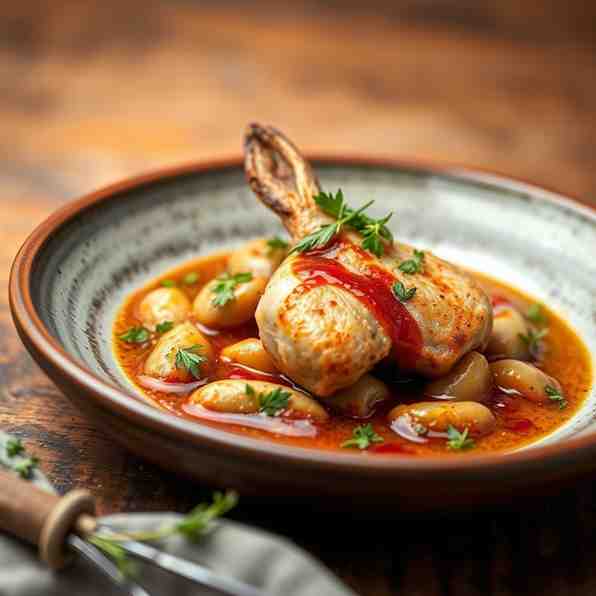
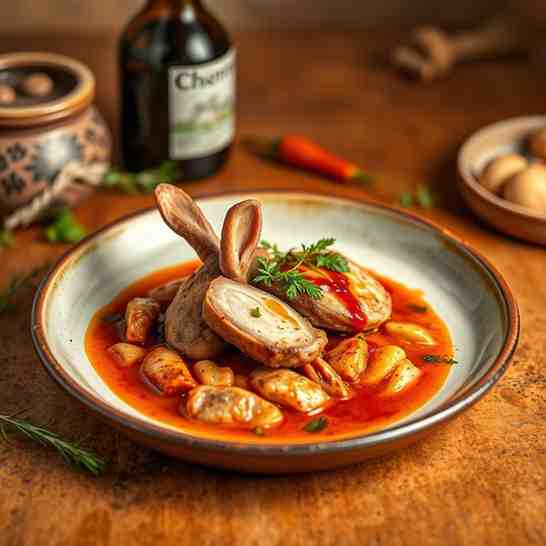
- Serves: 4 People
- Prepare Time: 30 minutes
- Cooking Time: 1 hour 15 m
- Calories: -
- Difficulty: Medium
Craving a dinner that's bursting with bold flavors and feels like a warm hug? Look no further than Conejo en Salmorejo! This incredible Spanish rabbit dish, hailing from the sun-drenched Canary Islands, is a true gem. Forget everything you think you know about "salmorejo" because here, it's not a chilled tomato soup. Instead, it's a vibrant, garlicky, and smoky marinade that transforms humble rabbit into an unforgettable meal.
This recipe is all about that perfect balance: the punchy garlic, the warmth of smoked paprika, and the bright tang of red wine vinegar and dry white wine, all mellowed out by rich olive oil. The result? A cozy, braise-like finish that's just begging for a piece of crusty bread. Whether you're an adventurous cook looking to expand your repertoire or simply want a delicious, home-cooked dinner that feels special, this Conejo en Salmorejo is for you. It's surprisingly approachable and a fantastic way to explore cooking with olive oil and other essential Mediterranean ingredients. Get ready to impress your taste buds!
Key Mediterranean Ingredients: Olive oil, garlic, paprika, oregano, thyme, dry white wine, red wine vinegar
Best Side: Papas arrugadas (Canarian wrinkled salty potatoes) or roasted potatoes + crusty bread
Conejo en Salmorejo is a cornerstone of Canarian cuisine, a savory rabbit dish that showcases the islands' rich culinary heritage.
It's a classic Canarian rabbit dish, deeply flavorful and comforting.
The rabbit is first marinated in a potent blend of garlic, paprika, herbs, wine, and red wine vinegar, then browned, and finally simmered gently in that very marinade until melt-in-your-mouth tender.
Authentic versions often include rabbit liver in the marinade, which adds incredible depth and helps naturally thicken the sauce, boosting its savory appeal. Don't worry, it's optional!
It's most commonly served with papas arrugadas, the iconic Canary Islands wrinkled salty potatoes, which are perfect for soaking up every last drop of the rich sauce.
(Not an alternate ingredient list — just clarifying notes for a perfect dish.)
Rabbit: Look for a whole rabbit, about 2.5–3.5 lb, or pre-cut pieces if available. Don't hesitate to ask your butcher to cut it into 6-8 pieces for you, especially if you're new to cooking rabbit.
Garlic: Yes, it's a lot, and that's the point! To avoid any harshness, make sure your garlic is well-blended or very finely minced in the marinade. Slow simmering will mellow it beautifully.
Paprika: Smoked paprika (pimentón ahumado) is highly recommended for its distinctive smoky depth, which is traditional. If you only have sweet paprika, that's perfectly fine too; the dish will still be delicious.
Herbs: A classic trio of dried oregano, thyme, and bay leaves provides an aromatic backbone to the sauce.
Vinegar: Red wine vinegar is standard and provides a lovely bright tang. If you happen to have sherry vinegar on hand, it's an excellent, authentic alternative.
Wine: Use a dry white wine, something you'd enjoy drinking, like a Sauvignon Blanc or Pinot Grigio. If you prefer not to cook with wine, you can substitute it with an equal amount of chicken broth and a tiny splash of additional red wine vinegar for acidity.
Chile: A small dried red chile (like an arbol or a small bird's eye) adds a subtle kick. Adjust to your heat preference; remove seeds for less spice.
Optional: Rabbit Liver: If using, it's usually blended directly into the marinade. It adds a rich, earthy flavor and helps to naturally thicken the sauce, giving it a more luxurious texture. If you skip it, the dish will still be fantastic, just with a slightly thinner sauce.
Best: A heavy-bottomed Dutch oven or a large, heavy sauté pan with a tight-fitting lid is ideal for browning the rabbit evenly and simmering it gently.
Optional: A blender or food processor makes quick work of the marinade, ensuring all those garlic cloves and herbs are perfectly smooth.
Alternative: For a more traditional feel, a large mortar and pestle can be used to grind the marinade ingredients into a rustic paste. It's a bit more work but adds to the charm!
Ingredients
Directions
- Make the Marinade: In a blender or food processor, combine the peeled garlic cloves, ½ cup olive oil, dry white wine, red wine vinegar, smoked paprika, cumin, oregano, thyme, a pinch of salt, and black pepper. If using the optional rabbit liver and/or roasted red pepper, add them now. Blend until completely smooth. The marinade should be a beautiful brick-red color and smell boldly, deliciously garlicky. If using a mortar and pestle, mince the garlic and chile very finely, then crush with salt. Gradually add the dry spices, herbs, and then the liquids and olive oil, mixing until a paste forms.
- Marinate the Rabbit: Place the rabbit pieces in a non-reactive bowl or a large zip-top bag. Pour the prepared marinade over the rabbit, ensuring all pieces are well coated. Add the bay leaves. Cover or seal the bag and refrigerate for a minimum of 4 hours, ideally overnight (8-12 hours), and up to 24 hours. Keep it cold for food safety!
- Brown the Rabbit: When ready to cook, remove the rabbit from the marinade, shaking off any excess. Pat the rabbit pieces thoroughly dry with paper towels – this is crucial for good browning! Reserve the marinade. Heat 2 tablespoons of fresh olive oil in your Dutch oven or heavy sauté pan over medium-high heat. Working in batches to avoid overcrowding, brown the rabbit pieces deeply on all sides until golden. This step builds significant flavor. Remove browned rabbit to a plate and set aside.
- Build the Sauce and Simmer: If using the optional onion, add another tablespoon of olive oil to the pot (if needed) and sauté the diced onion over medium heat until softened and translucent, about 5-7 minutes. Pour the reserved marinade into the pot, scraping up any browned bits from the bottom. Bring the marinade to a gentle simmer. Return the browned rabbit pieces (and any accumulated juices) to the pot, ensuring they are nestled into the sauce. If the sauce doesn't quite cover the rabbit halfway, add a splash of water or chicken broth, but typically the liquid from the marinade and rabbit is enough. Bring to a gentle simmer, then reduce the heat to low, cover, and cook for 1 hour to 1 hour 15 minutes, or until the rabbit is fall-off-the-bone tender. The real test is tenderness – it should yield easily when poked with a fork.
- Finish and Adjust: Once the rabbit is tender, remove the bay leaves. Taste the sauce for seasoning. You might need a bit more salt, a dash of red wine vinegar for brightness, or a pinch of chile for more heat. If the sauce is too thin, you can remove the rabbit, increase the heat, and reduce the sauce to your desired consistency. For an extra layer of richness and a beautiful sheen, stir in a small drizzle of fresh extra virgin olive oil just before serving.
Rabbit Dinner - Conejo al Salmorejo with Olive Oil & Red Wine Vinegar

- Serves: 4 People
- Prepare Time: 30 minutes
- Cooking Time: 1 hour 15 m
- Calories: -
- Difficulty: Medium
Craving a dinner that's bursting with bold flavors and feels like a warm hug? Look no further than Conejo en Salmorejo! This incredible Spanish rabbit dish, hailing from the sun-drenched Canary Islands, is a true gem. Forget everything you think you know about "salmorejo" because here, it's not a chilled tomato soup. Instead, it's a vibrant, garlicky, and smoky marinade that transforms humble rabbit into an unforgettable meal.
This recipe is all about that perfect balance: the punchy garlic, the warmth of smoked paprika, and the bright tang of red wine vinegar and dry white wine, all mellowed out by rich olive oil. The result? A cozy, braise-like finish that's just begging for a piece of crusty bread. Whether you're an adventurous cook looking to expand your repertoire or simply want a delicious, home-cooked dinner that feels special, this Conejo en Salmorejo is for you. It's surprisingly approachable and a fantastic way to explore cooking with olive oil and other essential Mediterranean ingredients. Get ready to impress your taste buds!
Key Mediterranean Ingredients: Olive oil, garlic, paprika, oregano, thyme, dry white wine, red wine vinegar
Best Side: Papas arrugadas (Canarian wrinkled salty potatoes) or roasted potatoes + crusty bread
Conejo en Salmorejo is a cornerstone of Canarian cuisine, a savory rabbit dish that showcases the islands' rich culinary heritage.
It's a classic Canarian rabbit dish, deeply flavorful and comforting.
The rabbit is first marinated in a potent blend of garlic, paprika, herbs, wine, and red wine vinegar, then browned, and finally simmered gently in that very marinade until melt-in-your-mouth tender.
Authentic versions often include rabbit liver in the marinade, which adds incredible depth and helps naturally thicken the sauce, boosting its savory appeal. Don't worry, it's optional!
It's most commonly served with papas arrugadas, the iconic Canary Islands wrinkled salty potatoes, which are perfect for soaking up every last drop of the rich sauce.
(Not an alternate ingredient list — just clarifying notes for a perfect dish.)
Rabbit: Look for a whole rabbit, about 2.5–3.5 lb, or pre-cut pieces if available. Don't hesitate to ask your butcher to cut it into 6-8 pieces for you, especially if you're new to cooking rabbit.
Garlic: Yes, it's a lot, and that's the point! To avoid any harshness, make sure your garlic is well-blended or very finely minced in the marinade. Slow simmering will mellow it beautifully.
Paprika: Smoked paprika (pimentón ahumado) is highly recommended for its distinctive smoky depth, which is traditional. If you only have sweet paprika, that's perfectly fine too; the dish will still be delicious.
Herbs: A classic trio of dried oregano, thyme, and bay leaves provides an aromatic backbone to the sauce.
Vinegar: Red wine vinegar is standard and provides a lovely bright tang. If you happen to have sherry vinegar on hand, it's an excellent, authentic alternative.
Wine: Use a dry white wine, something you'd enjoy drinking, like a Sauvignon Blanc or Pinot Grigio. If you prefer not to cook with wine, you can substitute it with an equal amount of chicken broth and a tiny splash of additional red wine vinegar for acidity.
Chile: A small dried red chile (like an arbol or a small bird's eye) adds a subtle kick. Adjust to your heat preference; remove seeds for less spice.
Optional: Rabbit Liver: If using, it's usually blended directly into the marinade. It adds a rich, earthy flavor and helps to naturally thicken the sauce, giving it a more luxurious texture. If you skip it, the dish will still be fantastic, just with a slightly thinner sauce.
Best: A heavy-bottomed Dutch oven or a large, heavy sauté pan with a tight-fitting lid is ideal for browning the rabbit evenly and simmering it gently.
Optional: A blender or food processor makes quick work of the marinade, ensuring all those garlic cloves and herbs are perfectly smooth.
Alternative: For a more traditional feel, a large mortar and pestle can be used to grind the marinade ingredients into a rustic paste. It's a bit more work but adds to the charm!
Ingredients
Directions
- Make the Marinade: In a blender or food processor, combine the peeled garlic cloves, ½ cup olive oil, dry white wine, red wine vinegar, smoked paprika, cumin, oregano, thyme, a pinch of salt, and black pepper. If using the optional rabbit liver and/or roasted red pepper, add them now. Blend until completely smooth. The marinade should be a beautiful brick-red color and smell boldly, deliciously garlicky. If using a mortar and pestle, mince the garlic and chile very finely, then crush with salt. Gradually add the dry spices, herbs, and then the liquids and olive oil, mixing until a paste forms.
- Marinate the Rabbit: Place the rabbit pieces in a non-reactive bowl or a large zip-top bag. Pour the prepared marinade over the rabbit, ensuring all pieces are well coated. Add the bay leaves. Cover or seal the bag and refrigerate for a minimum of 4 hours, ideally overnight (8-12 hours), and up to 24 hours. Keep it cold for food safety!
- Brown the Rabbit: When ready to cook, remove the rabbit from the marinade, shaking off any excess. Pat the rabbit pieces thoroughly dry with paper towels – this is crucial for good browning! Reserve the marinade. Heat 2 tablespoons of fresh olive oil in your Dutch oven or heavy sauté pan over medium-high heat. Working in batches to avoid overcrowding, brown the rabbit pieces deeply on all sides until golden. This step builds significant flavor. Remove browned rabbit to a plate and set aside.
- Build the Sauce and Simmer: If using the optional onion, add another tablespoon of olive oil to the pot (if needed) and sauté the diced onion over medium heat until softened and translucent, about 5-7 minutes. Pour the reserved marinade into the pot, scraping up any browned bits from the bottom. Bring the marinade to a gentle simmer. Return the browned rabbit pieces (and any accumulated juices) to the pot, ensuring they are nestled into the sauce. If the sauce doesn't quite cover the rabbit halfway, add a splash of water or chicken broth, but typically the liquid from the marinade and rabbit is enough. Bring to a gentle simmer, then reduce the heat to low, cover, and cook for 1 hour to 1 hour 15 minutes, or until the rabbit is fall-off-the-bone tender. The real test is tenderness – it should yield easily when poked with a fork.
- Finish and Adjust: Once the rabbit is tender, remove the bay leaves. Taste the sauce for seasoning. You might need a bit more salt, a dash of red wine vinegar for brightness, or a pinch of chile for more heat. If the sauce is too thin, you can remove the rabbit, increase the heat, and reduce the sauce to your desired consistency. For an extra layer of richness and a beautiful sheen, stir in a small drizzle of fresh extra virgin olive oil just before serving.
You may also like



Hey there! I’m just someone who seriously loves good food and believes that cooking doesn’t have to be complicated to be amazing. Whether it’s a quick weeknight dinner or a cozy weekend meal, I’m all about sharing easy, tasty recipes that actually work.