
Costa Rican Pork Tamales - Banana Leaves
Costa Rican Pork Tamales - Banana Leaves
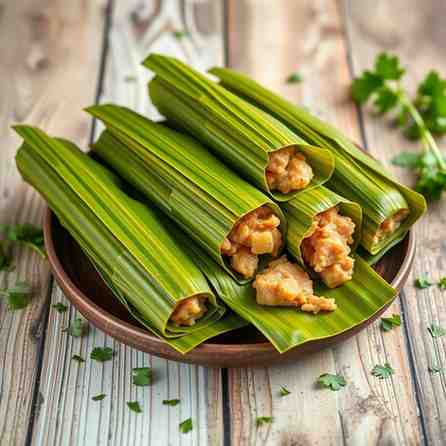
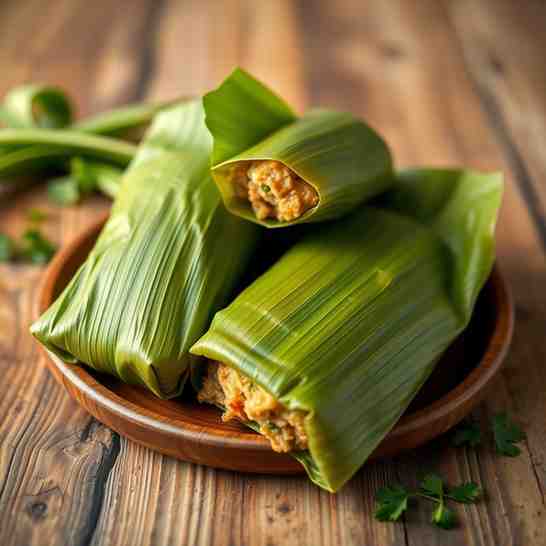
- Serves: 25 People
- Prepare Time: 2 hours 30
- Cooking Time: 2 hours
- Calories: -
- Difficulty: Easy
Ever dreamt of bringing the vibrant flavors of Central America to your kitchen? Get ready to embark on a delightful culinary journey with our authentic Costa Rican Pork Tamales recipe! These aren't just any tamales; they're a cherished tradition, especially around Christmas, lovingly wrapped in fragrant `banana leaves` and bursting with savory pork, rice, and vegetables. If you've been searching for the definitive guide to these incredible `Christmas tamales`, you've found it.
Our step-by-step guide will walk you through creating these traditional `food recipe` bundles, ensuring your tamale-making experience is as enjoyable as it is delicious. We'll cover everything from preparing the tender pork and flavorful masa to mastering the art of wrapping in `banana leaves`, making sure you achieve that perfect, melt-in-your-mouth texture. Whether you're a seasoned chef or a curious beginner looking to expand your `cooking recipe` repertoire, this guide is designed for you. Let's get started on making a batch of these unforgettable `tamales recipe` treasures!
Costa Rican tamales, or tamales de puerco tico, are more than just a dish; they're a symbol of family, celebration, and tradition. Imagine tender pork, seasoned rice, and a medley of vegetables, all encased in a soft, savory masa, then lovingly wrapped in `banana leaves` and steamed to perfection. The `banana leaves` impart a unique, subtle aroma and keep the tamales incredibly moist.
Costa Rican Tamales vs. Mexican Red Chile Tamales: The most striking difference is the wrapper! Costa Rican tamales use `banana leaves` and feature a masa made with rice and potatoes, often less spicy. Mexican tamales typically use corn husks and a corn-based masa, often with a prominent chili flavor.
Costa Rican Tamales vs. Colombian Tamales: Both utilize `banana leaves` for wrapping, giving them a similar rustic appeal. However, the fillings and seasoning profiles differ. Colombian tamales often include whole chicken pieces, hard-boiled eggs, and garbanzo beans, with distinct regional spices. Costa Rican tamales focus on shredded pork, `arroz con pollo recipe`-style rice, and a milder, savory seasoning.
In Costa Rica, these tamales are a festive staple, especially during Christmas and New Year's. Families gather for a "tamaleada" – a tamale-making party – sharing stories and laughter as they prepare dozens of these delicious bundles. They're also enjoyed year-round for special occasions, Sunday brunches, or simply with a cup of hot coffee (`agua dulce`) as a comforting afternoon snack.
Get ready to create delightful `banana-leaf` bundles of masa, pork, veggies, and rice – a true taste of Costa Rica!
Active Time: Approximately 3 hours (spread over 2-3 days)
Total Time: Approximately 6-8 hours (including simmering, resting, and steaming)
Resting Time: Masa: 15 minutes; Cooked Tamales: 10-15 minutes
Yield: 25-30 tamales
Difficulty Level: Advanced. While not overly complicated, the process involves multiple steps and takes time, often spread over several days, making it a labor of love perfect for those who enjoy a culinary project.
Who this recipe is perfect for: Families who want to experience a real Costa Rican tamaleada without feeling lost, or anyone eager to master the art of traditional tamale making, especially with `banana leaves`.
Ingredients
Directions
- Step 1 – Cook the Pork & Make the BrothBrown or Boil Pork: If desired, brown the pork shoulder pieces in a large pot with a little oil over medium-high heat for added flavor. Alternatively, for a simpler approach, you can skip browning and proceed directly to boiling.
- Add Aromatics & Simmer: Add the chopped onion, smashed garlic, and bell pepper to the pot with the pork. Sauté for a few minutes until fragrant. Pour in the water or stock, ensuring the pork is mostly submerged. Add 2 teaspoons of salt, black pepper, and optional bouillon.
- Cook Until Tender: Bring to a boil, then reduce heat to low, cover, and simmer for 2-3 hours, or until the pork is fork-tender and easily shredded.
- Shred Pork & Reserve Broth: Carefully remove the pork from the pot and let it cool slightly. Shred the pork into small, manageable pieces. Strain the cooking broth through a fine-mesh sieve into a separate bowl, pressing on the solids to extract all liquid. Discard the solids. You should have 4-5 cups of richly flavored broth; if you have less, add water or stock to reach the desired amount.
- Season Broth: Taste the reserved broth and adjust seasoning if necessary. This will be the flavorful liquid for your masa.
- Step 2 – Make the Rice & Veggie Mix
- Cook Rice: In a medium saucepan, combine the uncooked rice with 2 cups of the reserved pork broth (or water if you prefer). Bring to a boil, then reduce heat to low, cover, and simmer for 15-20 minutes, or until the liquid is absorbed and the rice is cooked.
- Fold in Veggies & Achiote: Once the rice is cooked, fluff it with a fork. Gently fold in the diced carrots, peas, and bell pepper. Stir in the achiote oil, which will give the rice a beautiful golden color and a subtle, earthy flavor.
- Season Lightly: Season the rice and veggie mix lightly with salt and pepper. Remember, this mix should complement, not overpower, the pork and masa, so don't over-season.
- Step 3 – Prepare the Masa
- Whisk Fat into Broth: In a very large mixing bowl, whisk the pork fat or margarine into 4 cups of the warm reserved pork broth until well combined. The warmth helps the fat melt and integrate.
- Add Masa Harina: Gradually add the masa harina to the liquid mixture, stirring continuously with a sturdy spoon or your hands.
- Achieve Spreadable Consistency: Work the masa until it forms a soft, pliable, and spreadable dough. It should be smooth and not sticky. A good visual cue: it should feel like thick hummus or a soft play-dough. To perform the "pinch test," take a small amount of masa and try to spread it thinly; it should spread easily without cracking.
- Rest the Masa: Cover the bowl and let the masa rest for 10-15 minutes. This allows the masa harina to fully hydrate. If, after resting, the masa feels too stiff, add small splashes of warm broth, one tablespoon at a time, until the desired consistency is reached. Season with salt and optional bouillon/achiote.
- Step 4 – Prep the Banana Leaves & Workspace
- Trim Leaves: If using large `banana leaves`, trim them into manageable rectangles, roughly 10x12 inches (or larger if you prefer bigger tamales). You'll need about 25-30 pieces, plus a few extra for patching.
- Wipe & Soften: Wipe both sides of each `banana leaf` piece with a damp cloth to remove any debris. To make them pliable and prevent cracking, briefly pass each leaf over an open flame (like a gas burner) until it changes color slightly and becomes more flexible, or dip them in very hot water for a few seconds. Be careful not to burn them.
- Set Up Stations: Organize your workspace like an assembly line: a stack of prepared `banana leaves`, the bowl of masa, the rice and veggie mix, the shredded pork, and your kitchen string.
- Step 5 – Fill & Wrap the Tamales
- Lay Leaves: Lay down one or two overlapping `banana leaves` on your clean work surface. Overlapping helps create a stronger seal and prevents leaks.
- Spread Masa: Take about 1/4 to 1/3 cup of masa and spread it into a thin rectangle (about 4x6 inches) in the center of the leaf(s). The masa should be about 1/8 to 1/4 inch thick.
- Add Filling: Place a spoonful (about 1-2 tablespoons) of the rice and veggie mix on top of the masa, followed by a strip or small spoonful of shredded pork.
- Fold & Tie:
- Fold one long side of the `banana leaf` over the filling, bringing the masa with it to cover the contents.
- Fold the other long side over, creating a log.
- Fold the two short ends towards the center, like you're wrapping a gift.
- Secure the bundle tightly with kitchen string, wrapping it crosswise and then lengthwise to form a neat package.
- Small Tips:
- Don’t overfill, or they will burst during `cooking recipe`.
- If a `banana leaf` has a small tear, simply double-wrap it with another piece.
- Step 6 – Cook the Tamales
- Arrange in Pot: Place the steaming rack (or improvised base) at the bottom of your large stockpot. Arrange the wrapped tamale bundles snugly on the rack, stacking them if necessary, but ensuring steam can circulate.
- Add Liquid: Pour hot water or broth into the pot, just up to the base of the tamales, but not covering them. You want to steam, not boil, them directly.
- Steam: Cover the pot tightly with a lid. Bring the water to a gentle boil, then reduce heat to medium-low and steam the tamales for approximately 1.5 to 2 hours.
- Visual Doneness Cues: The tamales are done when the masa pulls cleanly away from the `banana leaf` wrapper, and the bundle feels firm, not squishy, when pressed.
- Step 7 – Rest, Serve & Store
- Rest: Once cooked, remove the tamales from the pot and let them rest for 10-15 minutes. This allows the masa to firm up further.
- Serve: Unwrap the tamales carefully and serve them directly in the `banana leaf` for an authentic presentation.
- Cool & Store: Allow any leftover tamales to cool completely before refrigerating or freezing.
Costa Rican Pork Tamales - Banana Leaves
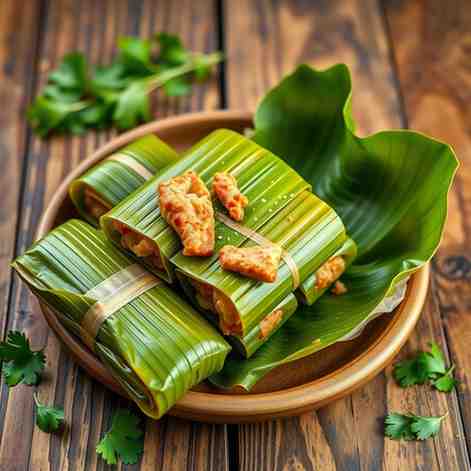
- Serves: 25 People
- Prepare Time: 2 hours 30
- Cooking Time: 2 hours
- Calories: -
- Difficulty: Easy
Ever dreamt of bringing the vibrant flavors of Central America to your kitchen? Get ready to embark on a delightful culinary journey with our authentic Costa Rican Pork Tamales recipe! These aren't just any tamales; they're a cherished tradition, especially around Christmas, lovingly wrapped in fragrant `banana leaves` and bursting with savory pork, rice, and vegetables. If you've been searching for the definitive guide to these incredible `Christmas tamales`, you've found it.
Our step-by-step guide will walk you through creating these traditional `food recipe` bundles, ensuring your tamale-making experience is as enjoyable as it is delicious. We'll cover everything from preparing the tender pork and flavorful masa to mastering the art of wrapping in `banana leaves`, making sure you achieve that perfect, melt-in-your-mouth texture. Whether you're a seasoned chef or a curious beginner looking to expand your `cooking recipe` repertoire, this guide is designed for you. Let's get started on making a batch of these unforgettable `tamales recipe` treasures!
Costa Rican tamales, or tamales de puerco tico, are more than just a dish; they're a symbol of family, celebration, and tradition. Imagine tender pork, seasoned rice, and a medley of vegetables, all encased in a soft, savory masa, then lovingly wrapped in `banana leaves` and steamed to perfection. The `banana leaves` impart a unique, subtle aroma and keep the tamales incredibly moist.
Costa Rican Tamales vs. Mexican Red Chile Tamales: The most striking difference is the wrapper! Costa Rican tamales use `banana leaves` and feature a masa made with rice and potatoes, often less spicy. Mexican tamales typically use corn husks and a corn-based masa, often with a prominent chili flavor.
Costa Rican Tamales vs. Colombian Tamales: Both utilize `banana leaves` for wrapping, giving them a similar rustic appeal. However, the fillings and seasoning profiles differ. Colombian tamales often include whole chicken pieces, hard-boiled eggs, and garbanzo beans, with distinct regional spices. Costa Rican tamales focus on shredded pork, `arroz con pollo recipe`-style rice, and a milder, savory seasoning.
In Costa Rica, these tamales are a festive staple, especially during Christmas and New Year's. Families gather for a "tamaleada" – a tamale-making party – sharing stories and laughter as they prepare dozens of these delicious bundles. They're also enjoyed year-round for special occasions, Sunday brunches, or simply with a cup of hot coffee (`agua dulce`) as a comforting afternoon snack.
Get ready to create delightful `banana-leaf` bundles of masa, pork, veggies, and rice – a true taste of Costa Rica!
Active Time: Approximately 3 hours (spread over 2-3 days)
Total Time: Approximately 6-8 hours (including simmering, resting, and steaming)
Resting Time: Masa: 15 minutes; Cooked Tamales: 10-15 minutes
Yield: 25-30 tamales
Difficulty Level: Advanced. While not overly complicated, the process involves multiple steps and takes time, often spread over several days, making it a labor of love perfect for those who enjoy a culinary project.
Who this recipe is perfect for: Families who want to experience a real Costa Rican tamaleada without feeling lost, or anyone eager to master the art of traditional tamale making, especially with `banana leaves`.
Ingredients
Directions
- Step 1 – Cook the Pork & Make the BrothBrown or Boil Pork: If desired, brown the pork shoulder pieces in a large pot with a little oil over medium-high heat for added flavor. Alternatively, for a simpler approach, you can skip browning and proceed directly to boiling.
- Add Aromatics & Simmer: Add the chopped onion, smashed garlic, and bell pepper to the pot with the pork. Sauté for a few minutes until fragrant. Pour in the water or stock, ensuring the pork is mostly submerged. Add 2 teaspoons of salt, black pepper, and optional bouillon.
- Cook Until Tender: Bring to a boil, then reduce heat to low, cover, and simmer for 2-3 hours, or until the pork is fork-tender and easily shredded.
- Shred Pork & Reserve Broth: Carefully remove the pork from the pot and let it cool slightly. Shred the pork into small, manageable pieces. Strain the cooking broth through a fine-mesh sieve into a separate bowl, pressing on the solids to extract all liquid. Discard the solids. You should have 4-5 cups of richly flavored broth; if you have less, add water or stock to reach the desired amount.
- Season Broth: Taste the reserved broth and adjust seasoning if necessary. This will be the flavorful liquid for your masa.
- Step 2 – Make the Rice & Veggie Mix
- Cook Rice: In a medium saucepan, combine the uncooked rice with 2 cups of the reserved pork broth (or water if you prefer). Bring to a boil, then reduce heat to low, cover, and simmer for 15-20 minutes, or until the liquid is absorbed and the rice is cooked.
- Fold in Veggies & Achiote: Once the rice is cooked, fluff it with a fork. Gently fold in the diced carrots, peas, and bell pepper. Stir in the achiote oil, which will give the rice a beautiful golden color and a subtle, earthy flavor.
- Season Lightly: Season the rice and veggie mix lightly with salt and pepper. Remember, this mix should complement, not overpower, the pork and masa, so don't over-season.
- Step 3 – Prepare the Masa
- Whisk Fat into Broth: In a very large mixing bowl, whisk the pork fat or margarine into 4 cups of the warm reserved pork broth until well combined. The warmth helps the fat melt and integrate.
- Add Masa Harina: Gradually add the masa harina to the liquid mixture, stirring continuously with a sturdy spoon or your hands.
- Achieve Spreadable Consistency: Work the masa until it forms a soft, pliable, and spreadable dough. It should be smooth and not sticky. A good visual cue: it should feel like thick hummus or a soft play-dough. To perform the "pinch test," take a small amount of masa and try to spread it thinly; it should spread easily without cracking.
- Rest the Masa: Cover the bowl and let the masa rest for 10-15 minutes. This allows the masa harina to fully hydrate. If, after resting, the masa feels too stiff, add small splashes of warm broth, one tablespoon at a time, until the desired consistency is reached. Season with salt and optional bouillon/achiote.
- Step 4 – Prep the Banana Leaves & Workspace
- Trim Leaves: If using large `banana leaves`, trim them into manageable rectangles, roughly 10x12 inches (or larger if you prefer bigger tamales). You'll need about 25-30 pieces, plus a few extra for patching.
- Wipe & Soften: Wipe both sides of each `banana leaf` piece with a damp cloth to remove any debris. To make them pliable and prevent cracking, briefly pass each leaf over an open flame (like a gas burner) until it changes color slightly and becomes more flexible, or dip them in very hot water for a few seconds. Be careful not to burn them.
- Set Up Stations: Organize your workspace like an assembly line: a stack of prepared `banana leaves`, the bowl of masa, the rice and veggie mix, the shredded pork, and your kitchen string.
- Step 5 – Fill & Wrap the Tamales
- Lay Leaves: Lay down one or two overlapping `banana leaves` on your clean work surface. Overlapping helps create a stronger seal and prevents leaks.
- Spread Masa: Take about 1/4 to 1/3 cup of masa and spread it into a thin rectangle (about 4x6 inches) in the center of the leaf(s). The masa should be about 1/8 to 1/4 inch thick.
- Add Filling: Place a spoonful (about 1-2 tablespoons) of the rice and veggie mix on top of the masa, followed by a strip or small spoonful of shredded pork.
- Fold & Tie:
- Fold one long side of the `banana leaf` over the filling, bringing the masa with it to cover the contents.
- Fold the other long side over, creating a log.
- Fold the two short ends towards the center, like you're wrapping a gift.
- Secure the bundle tightly with kitchen string, wrapping it crosswise and then lengthwise to form a neat package.
- Small Tips:
- Don’t overfill, or they will burst during `cooking recipe`.
- If a `banana leaf` has a small tear, simply double-wrap it with another piece.
- Step 6 – Cook the Tamales
- Arrange in Pot: Place the steaming rack (or improvised base) at the bottom of your large stockpot. Arrange the wrapped tamale bundles snugly on the rack, stacking them if necessary, but ensuring steam can circulate.
- Add Liquid: Pour hot water or broth into the pot, just up to the base of the tamales, but not covering them. You want to steam, not boil, them directly.
- Steam: Cover the pot tightly with a lid. Bring the water to a gentle boil, then reduce heat to medium-low and steam the tamales for approximately 1.5 to 2 hours.
- Visual Doneness Cues: The tamales are done when the masa pulls cleanly away from the `banana leaf` wrapper, and the bundle feels firm, not squishy, when pressed.
- Step 7 – Rest, Serve & Store
- Rest: Once cooked, remove the tamales from the pot and let them rest for 10-15 minutes. This allows the masa to firm up further.
- Serve: Unwrap the tamales carefully and serve them directly in the `banana leaf` for an authentic presentation.
- Cool & Store: Allow any leftover tamales to cool completely before refrigerating or freezing.
You may also like



Hey there! I’m just someone who seriously loves good food and believes that cooking doesn’t have to be complicated to be amazing. Whether it’s a quick weeknight dinner or a cozy weekend meal, I’m all about sharing easy, tasty recipes that actually work.



