
Eritrean Buna - Roasting Coffee Beans at Home
Eritrean Buna - Roasting Coffee Beans at Home
- Serves: 4 People
- Prepare Time: 10 minutes
- Cooking Time: 30 minutes
- Calories: -
- Difficulty: Medium
Ever wondered if there’s more to coffee than just brewing a quick cup? In Eritrea, coffee isn't just a drink; it's a beautiful, unhurried ritual of connection and hospitality. Known as "Buna," the Eritrean coffee ceremony is a cornerstone of daily life, inviting you to slow down, savor the moment, and share meaningful conversations. It's an experience that engages all your senses, from the captivating aroma of roasting coffee beans at home to the rich, smooth taste of the final brew.
This guide will walk you through the entire journey of creating your own traditional Eritrean coffee ceremony right in your kitchen. You’ll learn how to transform green coffee beans into perfectly roasted coffee beans using simple tools, master the art of grinding, brew an exquisite cup in a traditional jebena, and serve the customary three rounds of this delightful beverage. Get ready to explore a unique coffee culture and bring a piece of Eritrean tradition into your home!
Ingredients
Directions
- Before You Start (Set up your ceremony space):To truly embrace the spirit of Buna, prepare your space. Traditionally, a small mat might be laid out, often adorned with fresh grass or flowers (though this is optional for home brewing). Light some incense if you like – a lovely touch, but always ensure good ventilation and safety. Have your small finjal cups and serving tray ready, along with any simple snacks you plan to offer.
- Rinse + Dry the Green BeansPlace your green coffee beans in a fine-mesh strainer and give them a quick rinse under cool water. This simple step helps remove any dust or debris, leading to a cleaner roast and a purer aroma coffee beans experience. Pat them dry thoroughly with a clean cloth or paper towel before moving on.
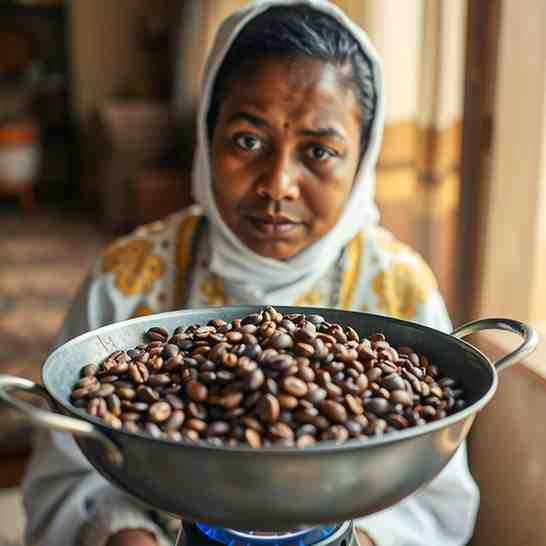
- Pan-Roast the Beans (The Key Skill)Heat a shallow, heavy-bottomed pan (like a cast-iron skillet or a traditional menkeskesha) over medium heat.
- Add your dried green coffee beans in a single layer. The key here is constant movement: stir or shake the pan continuously to ensure an even roast and prevent burning.
- Roast Checkpoints:
- 5-7 minutes: The beans will start to turn pale yellow, then light brown. You'll hear the first "crack" – this is called the "first crack" and means the beans are beginning to expand.
- 7-10 minutes: The beans will deepen in color, becoming a rich brown. A thin sheen of oil will begin to appear on the surface, and you'll hear the "second crack," which is quieter and more rapid.
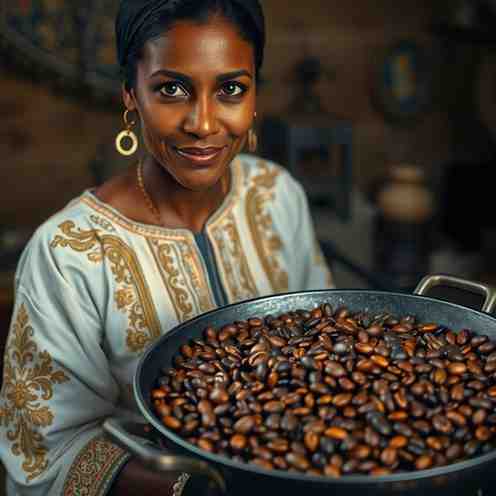
- Target End Point: For Eritrean Buna, aim for a medium-dark roast. Stop just as the beans develop that noticeable sheen, before they become very dark or oily. The air will be filled with an incredible aroma coffee beans scent.
- Cool + Remove Loose ChaffImmediately pour the roasted coffee beans onto a clean, cool surface (a baking sheet works well). Spread them out into a single layer to cool rapidly. This quick cooling prevents them from over-roasting from residual heat. As they cool, gently agitate them to help separate any loose, papery chaff that might have come off during roasting. You can lightly blow on them or use your hands to fan it away.
- GrindTraditionally, beans are ground using a mortar and pestle, which allows for a more rustic texture and connects you to the ritual. If using a modern burr grinder, aim for a medium-fine grind – it should be finer than what you’d use for a drip coffee maker, but not as fine as espresso powder. The goal is a consistency that allows for good extraction without making the final brew muddy.
- Brew in the JebenaCarefully pour the grinded coffee beans into your jebena (the traditional clay coffee pot). Add the specified amount of water. Place the jebena over medium heat. As the water heats, the coffee will begin to percolate and rise. Watch it closely! Just as it's about to boil over, remove it from the heat briefly to let the foam subside, then return it. Repeat this process a couple of times. This helps settle the grounds and control the brewing temperature, ensuring a smooth extraction.
- Rest, Then PourOnce brewed, remove the jebena from the heat and let it rest for a minute or two. This allows the coffee grounds to settle at the bottom. Traditionally, a small horsehair coil might be placed in the spout to act as a filter, but for home use, you can simply pour carefully. Hold the jebena high and pour the coffee in a continuous stream into the small finjal cups, filling each cup about two-thirds full. Serve guests in order of respect, starting with elders. Sugar is typically added to taste, if desired.
- Second and Third Rounds (Same Grounds)After the first round (Awel), don't discard the grounds! Simply add more water to the jebena and return it to the heat to brew the second round (Kale'i). This round is often considered the best, as the flavors have fully developed. For the third round (Barek'a), add water once more and brew again. Each round offers a slightly different strength and flavor profile, deepening the shared experience.
- What to Serve With BunaWhile the coffee is the star, a few simple accompaniments enhance the ceremony. Popcorn and roasted peanuts are common, as are traditional breads like himbasha or ambasha (sweet, spiced bread) or dabo kolo (small, crunchy baked pieces of dough). These offer a delightful contrast to the strong, aromatic coffee.
Eritrean Buna - Roasting Coffee Beans at Home
- Serves: 4 People
- Prepare Time: 10 minutes
- Cooking Time: 30 minutes
- Calories: -
- Difficulty: Medium
Ever wondered if there’s more to coffee than just brewing a quick cup? In Eritrea, coffee isn't just a drink; it's a beautiful, unhurried ritual of connection and hospitality. Known as "Buna," the Eritrean coffee ceremony is a cornerstone of daily life, inviting you to slow down, savor the moment, and share meaningful conversations. It's an experience that engages all your senses, from the captivating aroma of roasting coffee beans at home to the rich, smooth taste of the final brew.
This guide will walk you through the entire journey of creating your own traditional Eritrean coffee ceremony right in your kitchen. You’ll learn how to transform green coffee beans into perfectly roasted coffee beans using simple tools, master the art of grinding, brew an exquisite cup in a traditional jebena, and serve the customary three rounds of this delightful beverage. Get ready to explore a unique coffee culture and bring a piece of Eritrean tradition into your home!
Ingredients
Directions
- Before You Start (Set up your ceremony space):To truly embrace the spirit of Buna, prepare your space. Traditionally, a small mat might be laid out, often adorned with fresh grass or flowers (though this is optional for home brewing). Light some incense if you like – a lovely touch, but always ensure good ventilation and safety. Have your small finjal cups and serving tray ready, along with any simple snacks you plan to offer.
- Rinse + Dry the Green BeansPlace your green coffee beans in a fine-mesh strainer and give them a quick rinse under cool water. This simple step helps remove any dust or debris, leading to a cleaner roast and a purer aroma coffee beans experience. Pat them dry thoroughly with a clean cloth or paper towel before moving on.
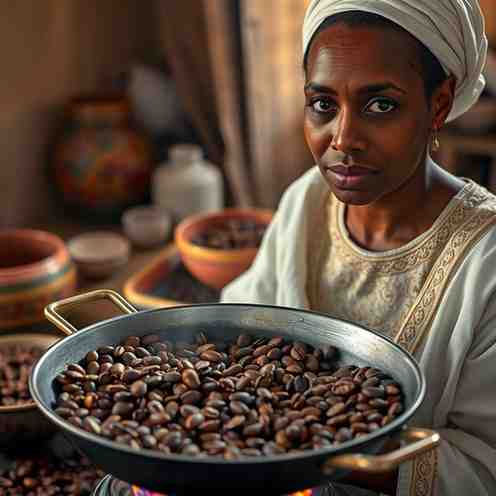
- Pan-Roast the Beans (The Key Skill)Heat a shallow, heavy-bottomed pan (like a cast-iron skillet or a traditional menkeskesha) over medium heat.
- Add your dried green coffee beans in a single layer. The key here is constant movement: stir or shake the pan continuously to ensure an even roast and prevent burning.
- Roast Checkpoints:
- 5-7 minutes: The beans will start to turn pale yellow, then light brown. You'll hear the first "crack" – this is called the "first crack" and means the beans are beginning to expand.
- 7-10 minutes: The beans will deepen in color, becoming a rich brown. A thin sheen of oil will begin to appear on the surface, and you'll hear the "second crack," which is quieter and more rapid.
- Target End Point: For Eritrean Buna, aim for a medium-dark roast. Stop just as the beans develop that noticeable sheen, before they become very dark or oily. The air will be filled with an incredible aroma coffee beans scent.
- Cool + Remove Loose ChaffImmediately pour the roasted coffee beans onto a clean, cool surface (a baking sheet works well). Spread them out into a single layer to cool rapidly. This quick cooling prevents them from over-roasting from residual heat. As they cool, gently agitate them to help separate any loose, papery chaff that might have come off during roasting. You can lightly blow on them or use your hands to fan it away.
- GrindTraditionally, beans are ground using a mortar and pestle, which allows for a more rustic texture and connects you to the ritual. If using a modern burr grinder, aim for a medium-fine grind – it should be finer than what you’d use for a drip coffee maker, but not as fine as espresso powder. The goal is a consistency that allows for good extraction without making the final brew muddy.
- Brew in the JebenaCarefully pour the grinded coffee beans into your jebena (the traditional clay coffee pot). Add the specified amount of water. Place the jebena over medium heat. As the water heats, the coffee will begin to percolate and rise. Watch it closely! Just as it's about to boil over, remove it from the heat briefly to let the foam subside, then return it. Repeat this process a couple of times. This helps settle the grounds and control the brewing temperature, ensuring a smooth extraction.
- Rest, Then PourOnce brewed, remove the jebena from the heat and let it rest for a minute or two. This allows the coffee grounds to settle at the bottom. Traditionally, a small horsehair coil might be placed in the spout to act as a filter, but for home use, you can simply pour carefully. Hold the jebena high and pour the coffee in a continuous stream into the small finjal cups, filling each cup about two-thirds full. Serve guests in order of respect, starting with elders. Sugar is typically added to taste, if desired.
- Second and Third Rounds (Same Grounds)After the first round (Awel), don't discard the grounds! Simply add more water to the jebena and return it to the heat to brew the second round (Kale'i). This round is often considered the best, as the flavors have fully developed. For the third round (Barek'a), add water once more and brew again. Each round offers a slightly different strength and flavor profile, deepening the shared experience.
- What to Serve With BunaWhile the coffee is the star, a few simple accompaniments enhance the ceremony. Popcorn and roasted peanuts are common, as are traditional breads like himbasha or ambasha (sweet, spiced bread) or dabo kolo (small, crunchy baked pieces of dough). These offer a delightful contrast to the strong, aromatic coffee.
You may also like




Hey there! I’m just someone who seriously loves good food and believes that cooking doesn’t have to be complicated to be amazing. Whether it’s a quick weeknight dinner or a cozy weekend meal, I’m all about sharing easy, tasty recipes that actually work.