
Georgian Fried Eggplant Rolls Recipe - Make Badrijani Nigvzit
Georgian Fried Eggplant Rolls Recipe - Make Badrijani Nigvzit

- Serves: 6 People
- Prepare Time: 25 minutes
- Cooking Time: 20 minutes
- Calories: -
- Difficulty: Medium
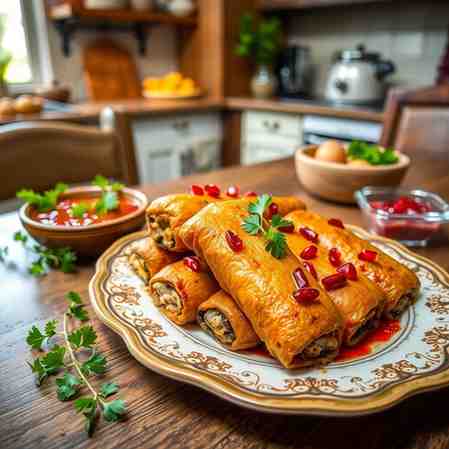
Hey there, food adventurers! Are you ready to dive into a truly exquisite culinary experience? Today, we're making Badrijani Nigvzit, often called Georgian eggplant rolls with walnut paste. This isn't just any recipe for fried eggplant; it's a traditional Georgian appetizer that perfectly balances savory, tangy, and subtly spicy flavors. Imagine tender, thinly sliced eggplant, perfectly fried, then rolled up with a rich, aromatic paste made from ground walnuts, garlic, and authentic Georgian spices. It's a dish that looks impressive but is surprisingly simple to master.
What makes this particular eggplant rolls recipe stand out? We're going straight to the heart of Georgian tradition, ensuring you get that authentic taste and texture. We'll walk you through every step, from perfectly preparing your eggplant to crafting that irresistible walnut paste, making sure your Badrijani Nigvzit is nothing short of spectacular. Whether you're a seasoned chef or just starting your cooking journey, you'll find this Georgian eggplant appetizer a delightful addition to your repertoire. So, let's get rolling!
Ingredients
Directions
- 1. Prepare the Eggplant
- Slice 'Em Up: Wash your eggplants and trim off the ends. Using a sharp knife or a mandoline (carefully!), slice the eggplants lengthwise into thin strips, about 1/8 to 1/4 inch thick. Aim for even thickness so they cook uniformly.
- Salt and Drain (The Crucial Step!): Lay the eggplant slices in a single layer on a baking sheet or large platter. Sprinkle generously with salt (about 1 tablespoon per eggplant side). Let them sit for at least 20-30 minutes. You'll see beads of moisture form on the surface.
- Why This Matters (Texture): Salting draws out excess moisture, which prevents the eggplant from becoming soggy when cooked and helps reduce bitterness. It also means the eggplant absorbs less oil during frying, leading to a much better texture.
- Rinse and Pat Dry: After draining, gently rinse the eggplant slices under cold water to remove the excess salt. Then, and this is important, thoroughly pat them dry with paper towels. You want them as dry as possible before cooking.
- 2. Cook the Eggplant
- Heat the Pan: Place a large cast-iron skillet or heavy-bottomed frying pan over medium-high heat. Add enough vegetable oil to generously coat the bottom (about 1/4 inch deep). Heat until shimmering.
- Fry 'Em Golden: Working in batches, carefully place the eggplant slices into the hot oil in a single layer. Don't overcrowd the pan, or the eggplant will steam instead of fry. Fry for 2-4 minutes per side, until golden brown, tender, and slightly caramelized.
- Visual Guidance: Look for a beautiful golden-brown color and a soft, pliable texture when gently pressed.
- Drain Excess Oil: As each batch finishes, transfer the fried eggplant slices to a plate lined with several layers of paper towels or a wire rack set over a baking sheet to drain any excess oil. Continue until all eggplant is cooked.
- Fry vs Grill vs Bake:
- Fry (Traditional): Pros: Rich flavor, crispy edges, tender interior. Cons: Can be oily if not drained well, requires more attention.
- Grill: Pros: Smoky flavor, less oil, nice char marks. Cons: Can dry out if overcooked. Times/Signs: Grill over medium-high heat for 3-5 minutes per side until tender and grill marks appear.
- Bake/Air Fry: Pros: Healthier, hands-off. Cons: Less traditional flavor, can be less tender. Times/Signs: Bake at 400°F (200°C) for 15-20 minutes, flipping halfway, until tender. Air fry at 375°F (190°C) for 10-15 minutes, shaking halfway.
- 3. Make the Walnut Paste
- Grind the Walnuts: In a food processor, combine the shelled walnuts, minced garlic, fenugreek, khmeli suneli, red pepper flakes (if using), and a pinch of salt and pepper. Pulse until the walnuts are finely ground but not oily – you want a coarse meal, not butter.
- Blender/Mortar Technique: If using a mortar and pestle, pound the walnuts first, then add spices and garlic. If using a blender, you might need to scrape down the sides frequently.
- Texture Target: The goal is a fine, slightly crumbly paste that will hold together when pressed, not a smooth butter.
- Add Wet Ingredients: Add the chopped cilantro and 2 tablespoons of white wine vinegar (or lemon juice) to the walnut mixture. Pulse again, or mix by hand, until everything is well combined and forms a thick, spreadable paste. If it's too dry, add a tiny bit more vinegar or a teaspoon of water, a little at a time, until it reaches the right consistency.
- Acidity Balance: Taste the paste. It should be tangy but not overly sour. Adjust salt, pepper, and vinegar/lemon juice as needed.
- 4. Assemble the Rolls
- Spread the Paste: Lay an eggplant slice flat on your work surface. Take about 1-2 tablespoons of the walnut paste and spread it evenly over one side of the eggplant slice, leaving a small border at one end. Don't overfill!
- Proper Spreading: Use the back of a spoon or a small offset spatula.
- Roll 'Em Up: Starting from the end with the paste spread to the edge, carefully roll the eggplant slice tightly into a cylinder.
- Rolling Technique: Roll firmly but gently. If the eggplant is too hot, it might tear; let it cool slightly if needed.
- How to Keep Rolls Tight: A slight overlap at the beginning of the roll helps secure it. The natural stickiness of the walnut paste will also help hold it together.
- Repeat: Continue this process with all the remaining eggplant slices and walnut paste.
- Finish & Serve: Arrange the assembled Badrijani Nigvzit on a serving platter.
- Garnish Ideas: Sprinkle with fresh pomegranate arils for a burst of color and tartness, a few extra cilantro leaves, or thinly sliced red onion.
- Serving Temp: These rolls are traditionally served at room temperature or slightly chilled, making them a perfect make-ahead appetizer.
Georgian Fried Eggplant Rolls Recipe - Make Badrijani Nigvzit

- Serves: 6 People
- Prepare Time: 25 minutes
- Cooking Time: 20 minutes
- Calories: -
- Difficulty: Medium
Hey there, food adventurers! Are you ready to dive into a truly exquisite culinary experience? Today, we're making Badrijani Nigvzit, often called Georgian eggplant rolls with walnut paste. This isn't just any recipe for fried eggplant; it's a traditional Georgian appetizer that perfectly balances savory, tangy, and subtly spicy flavors. Imagine tender, thinly sliced eggplant, perfectly fried, then rolled up with a rich, aromatic paste made from ground walnuts, garlic, and authentic Georgian spices. It's a dish that looks impressive but is surprisingly simple to master.
What makes this particular eggplant rolls recipe stand out? We're going straight to the heart of Georgian tradition, ensuring you get that authentic taste and texture. We'll walk you through every step, from perfectly preparing your eggplant to crafting that irresistible walnut paste, making sure your Badrijani Nigvzit is nothing short of spectacular. Whether you're a seasoned chef or just starting your cooking journey, you'll find this Georgian eggplant appetizer a delightful addition to your repertoire. So, let's get rolling!
Ingredients
Directions
- 1. Prepare the Eggplant
- Slice 'Em Up: Wash your eggplants and trim off the ends. Using a sharp knife or a mandoline (carefully!), slice the eggplants lengthwise into thin strips, about 1/8 to 1/4 inch thick. Aim for even thickness so they cook uniformly.
- Salt and Drain (The Crucial Step!): Lay the eggplant slices in a single layer on a baking sheet or large platter. Sprinkle generously with salt (about 1 tablespoon per eggplant side). Let them sit for at least 20-30 minutes. You'll see beads of moisture form on the surface.
- Why This Matters (Texture): Salting draws out excess moisture, which prevents the eggplant from becoming soggy when cooked and helps reduce bitterness. It also means the eggplant absorbs less oil during frying, leading to a much better texture.
- Rinse and Pat Dry: After draining, gently rinse the eggplant slices under cold water to remove the excess salt. Then, and this is important, thoroughly pat them dry with paper towels. You want them as dry as possible before cooking.
- 2. Cook the Eggplant
- Heat the Pan: Place a large cast-iron skillet or heavy-bottomed frying pan over medium-high heat. Add enough vegetable oil to generously coat the bottom (about 1/4 inch deep). Heat until shimmering.
- Fry 'Em Golden: Working in batches, carefully place the eggplant slices into the hot oil in a single layer. Don't overcrowd the pan, or the eggplant will steam instead of fry. Fry for 2-4 minutes per side, until golden brown, tender, and slightly caramelized.
- Visual Guidance: Look for a beautiful golden-brown color and a soft, pliable texture when gently pressed.
- Drain Excess Oil: As each batch finishes, transfer the fried eggplant slices to a plate lined with several layers of paper towels or a wire rack set over a baking sheet to drain any excess oil. Continue until all eggplant is cooked.
- Fry vs Grill vs Bake:
- Fry (Traditional): Pros: Rich flavor, crispy edges, tender interior. Cons: Can be oily if not drained well, requires more attention.
- Grill: Pros: Smoky flavor, less oil, nice char marks. Cons: Can dry out if overcooked. Times/Signs: Grill over medium-high heat for 3-5 minutes per side until tender and grill marks appear.
- Bake/Air Fry: Pros: Healthier, hands-off. Cons: Less traditional flavor, can be less tender. Times/Signs: Bake at 400°F (200°C) for 15-20 minutes, flipping halfway, until tender. Air fry at 375°F (190°C) for 10-15 minutes, shaking halfway.
- 3. Make the Walnut Paste
- Grind the Walnuts: In a food processor, combine the shelled walnuts, minced garlic, fenugreek, khmeli suneli, red pepper flakes (if using), and a pinch of salt and pepper. Pulse until the walnuts are finely ground but not oily – you want a coarse meal, not butter.
- Blender/Mortar Technique: If using a mortar and pestle, pound the walnuts first, then add spices and garlic. If using a blender, you might need to scrape down the sides frequently.
- Texture Target: The goal is a fine, slightly crumbly paste that will hold together when pressed, not a smooth butter.
- Add Wet Ingredients: Add the chopped cilantro and 2 tablespoons of white wine vinegar (or lemon juice) to the walnut mixture. Pulse again, or mix by hand, until everything is well combined and forms a thick, spreadable paste. If it's too dry, add a tiny bit more vinegar or a teaspoon of water, a little at a time, until it reaches the right consistency.
- Acidity Balance: Taste the paste. It should be tangy but not overly sour. Adjust salt, pepper, and vinegar/lemon juice as needed.
- 4. Assemble the Rolls
- Spread the Paste: Lay an eggplant slice flat on your work surface. Take about 1-2 tablespoons of the walnut paste and spread it evenly over one side of the eggplant slice, leaving a small border at one end. Don't overfill!
- Proper Spreading: Use the back of a spoon or a small offset spatula.
- Roll 'Em Up: Starting from the end with the paste spread to the edge, carefully roll the eggplant slice tightly into a cylinder.
- Rolling Technique: Roll firmly but gently. If the eggplant is too hot, it might tear; let it cool slightly if needed.
- How to Keep Rolls Tight: A slight overlap at the beginning of the roll helps secure it. The natural stickiness of the walnut paste will also help hold it together.
- Repeat: Continue this process with all the remaining eggplant slices and walnut paste.
- Finish & Serve: Arrange the assembled Badrijani Nigvzit on a serving platter.
- Garnish Ideas: Sprinkle with fresh pomegranate arils for a burst of color and tartness, a few extra cilantro leaves, or thinly sliced red onion.
- Serving Temp: These rolls are traditionally served at room temperature or slightly chilled, making them a perfect make-ahead appetizer.
You may also like


Hey there! I’m just someone who seriously loves good food and believes that cooking doesn’t have to be complicated to be amazing. Whether it’s a quick weeknight dinner or a cozy weekend meal, I’m all about sharing easy, tasty recipes that actually work.


