Gluten Free Chinese Dumplings (Jiaozi) At Home
Gluten Free Chinese Dumplings (Jiaozi) At Home
- Serves: 4 People
- Prepare Time: 60 minutes
- Cooking Time: 15 minutes
- Calories: -
- Difficulty: Medium
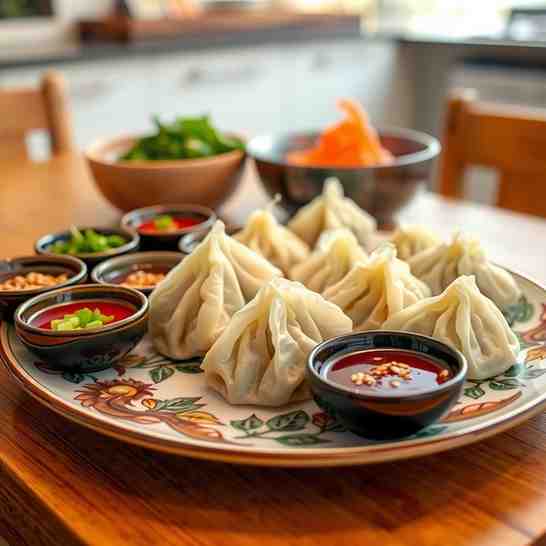
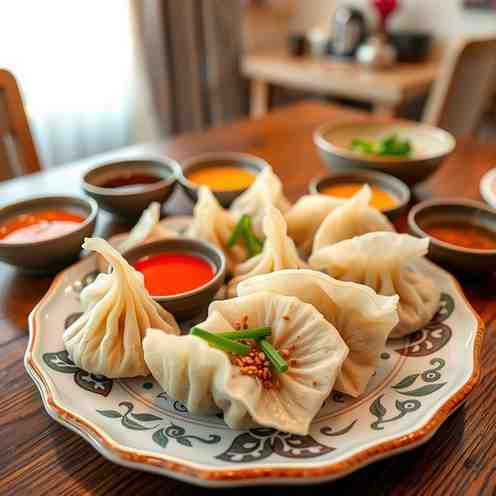
Craving authentic Chinese dumplings but think they're too tricky to make at home? Think again! This definitive guide will walk you through creating tender, flavorful Chinese dumplings (Jiaozi) from scratch, covering everything from the perfect dough to a classic pork and cabbage filling, and a balanced dipping sauce. Whether you want to boil, pan-fry, or steam your creations, we've got you covered.
We know many of you are searching for `gluten free chinese dumplings`, and while our core recipe features traditional dough, we've included simple, actionable notes on how to effortlessly adapt it for `gluten free dumplings` using `gluten free dumpling wrappers` and ingredient swaps. You'll also learn the ropes of handling `store bought dumplings` if you're in a pinch, and even how to freeze a big batch so you can enjoy these savory pockets of joy for weeks. Get ready to impress your taste buds and master the art of Jiaozi!
Ingredients
Directions
- Make the Dumpling Dough:
- In a large mixing bowl, combine the flour and salt. Gradually add the water, mixing with a spatula or your hands until a shaggy dough forms.
- Turn the dough out onto a lightly floured surface and knead for about 5-7 minutes until it's mostly smooth. It doesn't need to be perfectly smooth yet.
- Cover the dough with plastic wrap or a damp cloth and let it rest for 30 minutes. This allows the gluten to relax.
- After resting, knead for another 2-3 minutes until the dough is smooth and elastic.
- Divide the dough in half. Roll each half into a log, about 1 inch thick. Cut each log into 15-20 equal pieces (about ½ inch each). Keep these pieces covered with plastic wrap or a damp cloth to prevent them from drying out.
- Mix the Pork & Cabbage Filling:
- If you haven't already, shred your Napa cabbage, sprinkle it with a pinch of salt, and let it sit for 10-15 minutes. Then, firmly squeeze out as much excess water as possible. This step is crucial to prevent a watery filling!
- In a large bowl, combine the ground pork, sliced scallions, minced garlic, grated ginger, soy sauce, rice wine, white pepper, sesame oil, and optional sugar and egg.
- Using your hands or a sturdy spoon, mix the filling in one direction (e.g., clockwise) until it becomes sticky and emulsified. This creates a cohesive filling that won't fall apart.
- Just before you're ready to wrap, gently fold in the squeezed cabbage. Mixing too early can cause the cabbage to release more water.
- Taste Test: To ensure perfect seasoning, fry a tiny patty of the filling in a skillet until cooked through. Taste and adjust seasonings (more salt, soy sauce, or pepper) as needed.
- Set Up a Dumpling Wrapping Station:
- Arrange your workspace with a stack of dough pieces (or `store bought dumpling wrappers`), a small bowl of water (for sealing), your bowl of filling, and a large tray or baking sheet dusted with flour or lined with parchment paper for the finished dumplings.
- Keep your dough pieces or wrappers covered while you work to prevent them from drying out.
- Roll the Wrappers (if making from scratch):
- Take one dough piece and flatten it slightly with your palm.
- Using a small rolling pin (a Chinese dowel-style works great, but a standard one is fine), roll the dough into a thin, round wrapper about 3-4 inches (7.5-10 cm) in diameter.
- The trick is the "roll & turn" technique: flatten the center, then roll outwards towards the edge, turning the wrapper a little after each roll. Aim for a slightly thicker center and thinner edges; this helps with pleating and prevents the bottom from breaking during cooking.
- Stack rolled wrappers with a light dusting of flour between each to prevent sticking.
- Fill & Pleat the Dumplings:
- Hold a wrapper in the palm of one hand. Place about 1 tablespoon of filling in the center (use a small cookie scoop for consistency!).
- Dip a finger in the small bowl of water and moisten half of the wrapper's edge.
- Fold the wrapper in half to create a half-moon shape, pressing the edges firmly together at the top to seal.
- Optional Pleated Edge: For the classic look, create 3-4 small pleats along one side of the sealed edge, pressing each pleat firmly against the unpleated side as you go, working towards the center. Repeat on the other side.
- Ensure the seal is tight to prevent leaks during cooking.
- Place finished dumplings on your prepared tray, making sure they don't touch each other.
- Cook the Dumplings – Choose One Method:
- Boiled Dumplings (Shuǐ Jiǎo)
- Bring a large pot of salted water to a rolling boil.
- Carefully add the dumplings, making sure not to overcrowd the pot. Stir gently with a spoon to prevent them from sticking to the bottom.
- Once the water returns to a boil, add about ½ cup of cold water. Bring back to a boil. Repeat this "add cold water" step two more times (for a total of three boils).
- The dumplings are done when they float to the surface, look slightly translucent, and feel firm but springy. This usually takes about 8-10 minutes.
- Pan-Fried Dumplings (Potstickers / Guō Tiē)
- Heat a large non-stick skillet over medium-high heat and add a thin layer of cooking oil.
- Arrange the dumplings flat-side down in a single layer, ensuring they don't touch. Fry for 2-3 minutes until the bottoms are golden brown and crispy.
- Carefully add about ½ cup of water to the skillet (it will sizzle!). Immediately cover the skillet with a lid and reduce heat to medium. Let them steam for 6-8 minutes, or until the water has mostly evaporated and the wrappers are translucent.
- Remove the lid, increase heat back to medium-high, and cook for another 1-2 minutes until any remaining water evaporates and the bottoms are extra crispy.
- Steamed Dumplings (Zhēng Jiǎo)
- Line your steamer basket (bamboo or metal) with parchment paper, lightly oiled cabbage leaves, or carrot slices to prevent sticking.
- Arrange the dumplings in a single layer, leaving space between them for even cooking.
- Bring water to a boil in a wok or pot beneath the steamer. Once boiling, place the steamer basket over the water.
- Steam over high heat for 8-10 minutes, or until the wrappers are translucent and the filling is hot and cooked through.
- Make the Classic Dipping Sauce:
- In a small bowl, whisk together the light soy sauce (or `gluten free tamari`), Chinese black vinegar, minced garlic, chili oil, and optional sesame oil and sugar.
- Quick tweaks:
- For more tang: Add an extra splash of vinegar.
- For a milder, kid-friendly version: Skip the chili oil and add a tiny pinch of sugar.
- For `gluten free chinese dumplings`: Ensure you use `gluten free tamari` and double-check labels on your vinegar and chili oil.
Gluten Free Chinese Dumplings (Jiaozi) At Home
-At-Home.jpg)
- Serves: 4 People
- Prepare Time: 60 minutes
- Cooking Time: 15 minutes
- Calories: -
- Difficulty: Medium
Craving authentic Chinese dumplings but think they're too tricky to make at home? Think again! This definitive guide will walk you through creating tender, flavorful Chinese dumplings (Jiaozi) from scratch, covering everything from the perfect dough to a classic pork and cabbage filling, and a balanced dipping sauce. Whether you want to boil, pan-fry, or steam your creations, we've got you covered.
We know many of you are searching for `gluten free chinese dumplings`, and while our core recipe features traditional dough, we've included simple, actionable notes on how to effortlessly adapt it for `gluten free dumplings` using `gluten free dumpling wrappers` and ingredient swaps. You'll also learn the ropes of handling `store bought dumplings` if you're in a pinch, and even how to freeze a big batch so you can enjoy these savory pockets of joy for weeks. Get ready to impress your taste buds and master the art of Jiaozi!
Ingredients
Directions
- Make the Dumpling Dough:
- In a large mixing bowl, combine the flour and salt. Gradually add the water, mixing with a spatula or your hands until a shaggy dough forms.
- Turn the dough out onto a lightly floured surface and knead for about 5-7 minutes until it's mostly smooth. It doesn't need to be perfectly smooth yet.
- Cover the dough with plastic wrap or a damp cloth and let it rest for 30 minutes. This allows the gluten to relax.
- After resting, knead for another 2-3 minutes until the dough is smooth and elastic.
- Divide the dough in half. Roll each half into a log, about 1 inch thick. Cut each log into 15-20 equal pieces (about ½ inch each). Keep these pieces covered with plastic wrap or a damp cloth to prevent them from drying out.
- Mix the Pork & Cabbage Filling:
- If you haven't already, shred your Napa cabbage, sprinkle it with a pinch of salt, and let it sit for 10-15 minutes. Then, firmly squeeze out as much excess water as possible. This step is crucial to prevent a watery filling!
- In a large bowl, combine the ground pork, sliced scallions, minced garlic, grated ginger, soy sauce, rice wine, white pepper, sesame oil, and optional sugar and egg.
- Using your hands or a sturdy spoon, mix the filling in one direction (e.g., clockwise) until it becomes sticky and emulsified. This creates a cohesive filling that won't fall apart.
- Just before you're ready to wrap, gently fold in the squeezed cabbage. Mixing too early can cause the cabbage to release more water.
- Taste Test: To ensure perfect seasoning, fry a tiny patty of the filling in a skillet until cooked through. Taste and adjust seasonings (more salt, soy sauce, or pepper) as needed.
- Set Up a Dumpling Wrapping Station:
- Arrange your workspace with a stack of dough pieces (or `store bought dumpling wrappers`), a small bowl of water (for sealing), your bowl of filling, and a large tray or baking sheet dusted with flour or lined with parchment paper for the finished dumplings.
- Keep your dough pieces or wrappers covered while you work to prevent them from drying out.
- Roll the Wrappers (if making from scratch):
- Take one dough piece and flatten it slightly with your palm.
- Using a small rolling pin (a Chinese dowel-style works great, but a standard one is fine), roll the dough into a thin, round wrapper about 3-4 inches (7.5-10 cm) in diameter.
- The trick is the "roll & turn" technique: flatten the center, then roll outwards towards the edge, turning the wrapper a little after each roll. Aim for a slightly thicker center and thinner edges; this helps with pleating and prevents the bottom from breaking during cooking.
- Stack rolled wrappers with a light dusting of flour between each to prevent sticking.
- Fill & Pleat the Dumplings:
- Hold a wrapper in the palm of one hand. Place about 1 tablespoon of filling in the center (use a small cookie scoop for consistency!).
- Dip a finger in the small bowl of water and moisten half of the wrapper's edge.
- Fold the wrapper in half to create a half-moon shape, pressing the edges firmly together at the top to seal.
- Optional Pleated Edge: For the classic look, create 3-4 small pleats along one side of the sealed edge, pressing each pleat firmly against the unpleated side as you go, working towards the center. Repeat on the other side.
- Ensure the seal is tight to prevent leaks during cooking.
- Place finished dumplings on your prepared tray, making sure they don't touch each other.
- Cook the Dumplings – Choose One Method:
- Boiled Dumplings (Shuǐ Jiǎo)
- Bring a large pot of salted water to a rolling boil.
- Carefully add the dumplings, making sure not to overcrowd the pot. Stir gently with a spoon to prevent them from sticking to the bottom.
- Once the water returns to a boil, add about ½ cup of cold water. Bring back to a boil. Repeat this "add cold water" step two more times (for a total of three boils).
- The dumplings are done when they float to the surface, look slightly translucent, and feel firm but springy. This usually takes about 8-10 minutes.
- Pan-Fried Dumplings (Potstickers / Guō Tiē)
- Heat a large non-stick skillet over medium-high heat and add a thin layer of cooking oil.
- Arrange the dumplings flat-side down in a single layer, ensuring they don't touch. Fry for 2-3 minutes until the bottoms are golden brown and crispy.
- Carefully add about ½ cup of water to the skillet (it will sizzle!). Immediately cover the skillet with a lid and reduce heat to medium. Let them steam for 6-8 minutes, or until the water has mostly evaporated and the wrappers are translucent.
- Remove the lid, increase heat back to medium-high, and cook for another 1-2 minutes until any remaining water evaporates and the bottoms are extra crispy.
- Steamed Dumplings (Zhēng Jiǎo)
- Line your steamer basket (bamboo or metal) with parchment paper, lightly oiled cabbage leaves, or carrot slices to prevent sticking.
- Arrange the dumplings in a single layer, leaving space between them for even cooking.
- Bring water to a boil in a wok or pot beneath the steamer. Once boiling, place the steamer basket over the water.
- Steam over high heat for 8-10 minutes, or until the wrappers are translucent and the filling is hot and cooked through.
- Make the Classic Dipping Sauce:
- In a small bowl, whisk together the light soy sauce (or `gluten free tamari`), Chinese black vinegar, minced garlic, chili oil, and optional sesame oil and sugar.
- Quick tweaks:
- For more tang: Add an extra splash of vinegar.
- For a milder, kid-friendly version: Skip the chili oil and add a tiny pinch of sugar.
- For `gluten free chinese dumplings`: Ensure you use `gluten free tamari` and double-check labels on your vinegar and chili oil.
You may also like

Hey there! I’m just someone who seriously loves good food and believes that cooking doesn’t have to be complicated to be amazing. Whether it’s a quick weeknight dinner or a cozy weekend meal, I’m all about sharing easy, tasty recipes that actually work.