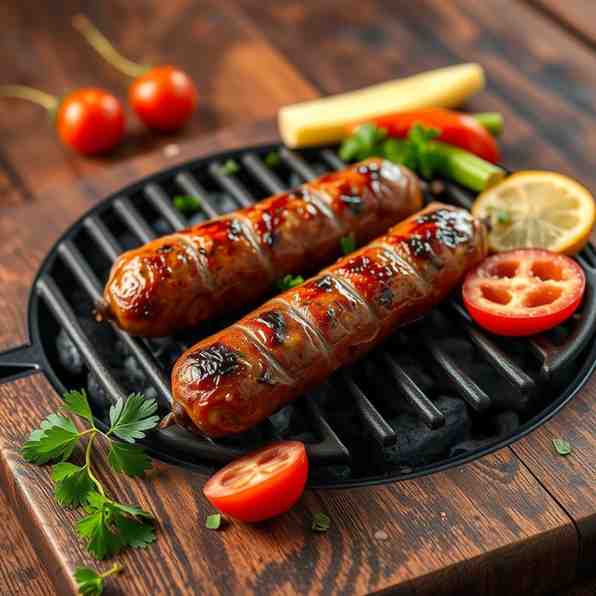
Qutab - Easy Homemade Lamb Flatbread Recipe for Any Meal
Qutab - Easy Homemade Lamb Flatbread Recipe for Any Meal
- Serves: 8 People
- Prepare Time: 40 minutes
- Cooking Time: 30 minutes
- Calories: -
- Difficulty: Medium
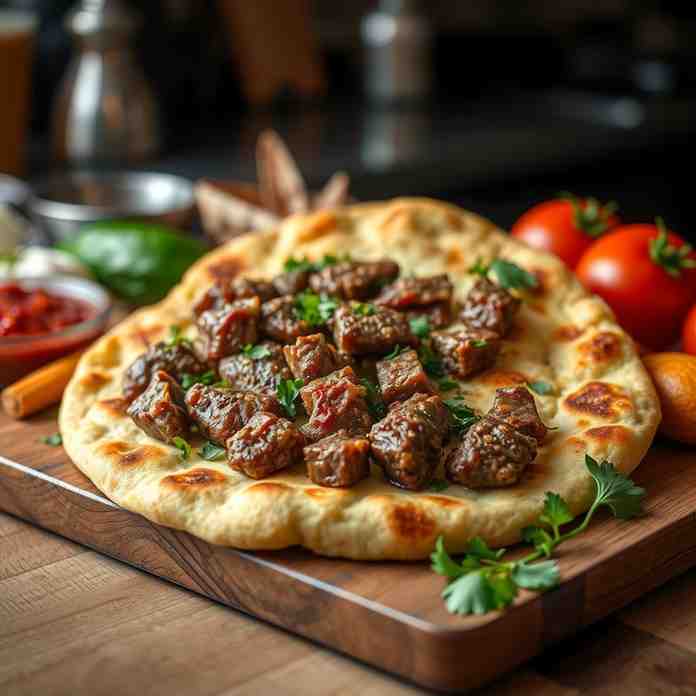
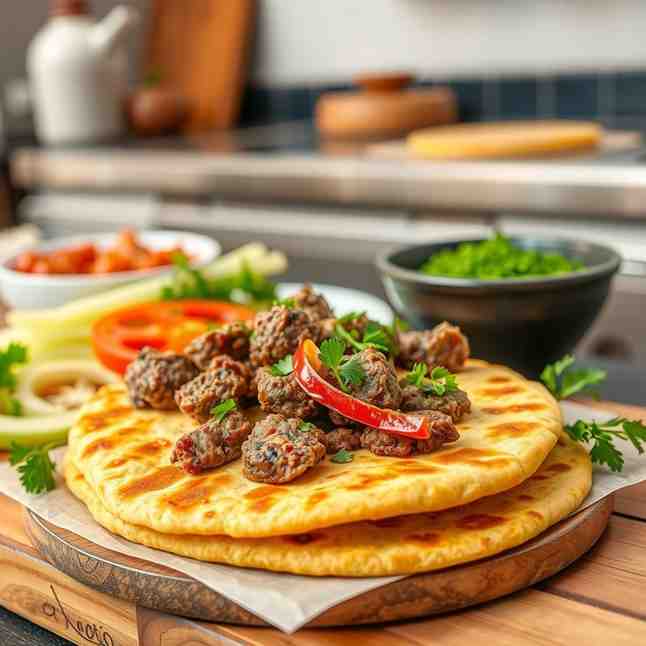
Get ready to discover your new favorite homemade flat bread! Meet Qutab (pronounced "koo-tub," sometimes spelled Kutab), a truly delectable Azerbaijani stuffed flatbread that's about to revolutionize your snack, breakfast, or even light dinner routine. Imagine a thin, pan-cooked flatbread – somewhere between a quesadilla, a stuffed tortilla, and a savory crepe – generously filled with a juicy, seasoned blend of ground lamb and fresh herbs. It’s a staple street food and beloved home dish in Azerbaijan, often enjoyed with hot tea, especially for breakfast or as an afternoon snack.
This isn't just any flatbread recipe; it's a journey into vibrant flavors and satisfying textures. You’ll absolutely love this easy flatbread recipe because it delivers thin, perfectly blistered bread cradling a mouthwatering filling, all without any special equipment or yeast for the dough. We've perfected this recipe to ensure your dough is never dry or tough, and the step-by-step process is clear, making it approachable for both beginners and experienced bakers. Plus, it’s super flexible – make it ahead, freeze it for later, and enjoy authentic flavors like sumac and pomegranate molasses, all optimized for your US kitchen. Ready to make the best flatbread you've ever tasted? Let's get cooking!
Ingredients
Directions
- Make the Hot-Water Dough
- In a large mixing bowl, combine the all-purpose flour and salt.
- Gradually pour in the very hot or just-boiled water while stirring continuously with a wooden spoon or sturdy spatula. The mixture will look shaggy and crumbly at first.
- Once the dough is cool enough to handle (it should still be warm, but not burning), add the neutral oil.
- Knead the dough directly in the bowl or on a lightly floured surface for 5-7 minutes until it forms a soft, smooth, and slightly tacky ball. It should feel softer than a traditional pizza dough, more akin to a soft tortilla dough.
- Cover the bowl tightly with plastic wrap or a damp cloth and let the dough rest at room temperature for at least 30 minutes. This resting period is crucial as it allows the gluten to relax, making the dough much easier to roll thinly without tearing.
- Mix the Lamb & Herb Filling
- If using, grate the onion and then place it in a clean kitchen towel or paper towels. Squeeze out as much excess liquid as possible. This step is important to prevent a watery filling that could make your Qutab soggy.
- In a separate large mixing bowl, combine the ground lamb, squeezed onion, finely chopped cilantro, dill, mint, pomegranate molasses, cumin (if using), coriander (if using), salt, and black pepper.
- Use your hands to thoroughly mix all the ingredients until well combined. The mixture should be thin and spreadable.
- Optional but recommended: Cook a small teaspoon of the filling in a pan for a minute or two, then taste it for seasoning. Adjust salt, pepper, or other spices as needed.
- If the filling seems overly wet, you can add a spoonful of breadcrumbs to absorb some moisture.
- Divide & Pre-Shape the Dough
- After the dough has rested, gently knead it for another minute.
- Divide the dough into 8 to 10 equal balls, depending on how large you want your Qutab to be. For an 8-inch flatbread, 8 balls work well.
- Keep the dough balls covered with plastic wrap or a damp cloth at all times to prevent them from drying out, which can make them tough and difficult to roll.
- Roll the Dough Thin
- Lightly flour your work surface and your rolling pin. Take one dough ball, flatten it slightly, and begin rolling it out.
- Roll the dough into a thin 8-inch circle, aiming for a thickness of about 1–2 millimeters. You should almost be able to see your work surface through the dough if you hold it up.
- Common mistakes: Too much flour will make the dough tough, while too little will cause it to stick and tear. Use just enough flour to prevent sticking.
- Fill & Seal the Qutab
- Once you have a thin dough circle, spread a thin, even layer of the lamb filling over half of the circle. Make sure to leave a ½-inch border around the edge of the dough free of filling. This border is crucial for a good seal.
- Carefully fold the other half of the dough over the filling to create a half-moon shape.
- Press the edges firmly together to seal the Qutab. You can use your fingers, or for an extra secure and decorative seal, crimp the edges with a fork. A tight seal prevents the filling from leaking out during cooking.
- You can prepare 2-3 Qutab at a time while the others are cooking. Keep the uncooked Qutab covered to prevent drying.
- Cook the Qutab
- Heat a large, heavy skillet or cast-iron pan over medium to medium-high heat. Do NOT add any oil to the pan for this initial cooking stage; it should be a dry skillet.
- Once the pan is hot, carefully lay one or two Qutab (depending on pan size) in the dry skillet.
- Cook for about 3-5 minutes on the first side, or until the bottom side has developed beautiful brown spots and darker blisters. The dough should look cooked through in these areas.
- Flip the Qutab and cook the other side for another 3-5 minutes, until it is also cooked through, blistered, and the filling inside is hot. You can press gently on the Qutab with a spatula to ensure even contact with the pan.
- Once cooked, transfer the Qutab to a plate. Immediately brush it lightly with melted butter or neutral oil and sprinkle with sumac.
- Keep the cooked Qutab warm (you can stack them on a plate covered with foil) while you finish cooking the rest of the batch.
Qutab - Easy Homemade Lamb Flatbread Recipe for Any Meal
- Serves: 8 People
- Prepare Time: 40 minutes
- Cooking Time: 30 minutes
- Calories: -
- Difficulty: Medium
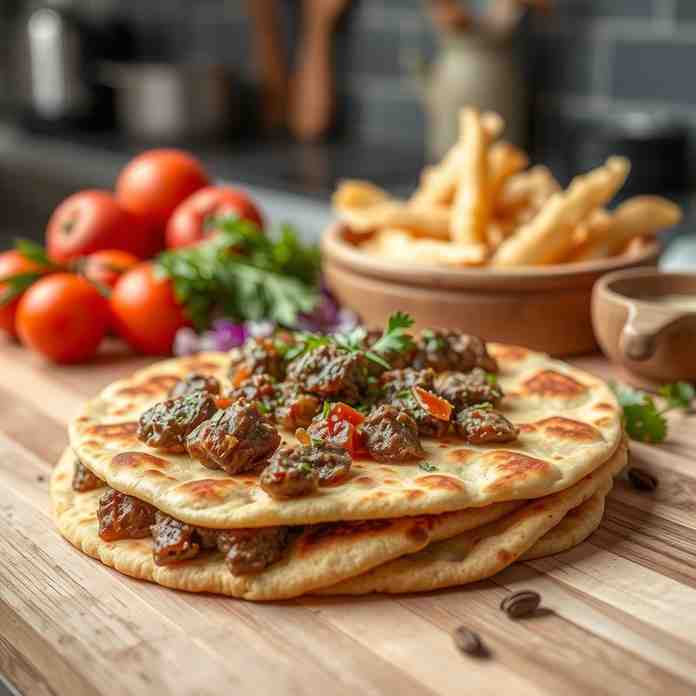
Get ready to discover your new favorite homemade flat bread! Meet Qutab (pronounced "koo-tub," sometimes spelled Kutab), a truly delectable Azerbaijani stuffed flatbread that's about to revolutionize your snack, breakfast, or even light dinner routine. Imagine a thin, pan-cooked flatbread – somewhere between a quesadilla, a stuffed tortilla, and a savory crepe – generously filled with a juicy, seasoned blend of ground lamb and fresh herbs. It’s a staple street food and beloved home dish in Azerbaijan, often enjoyed with hot tea, especially for breakfast or as an afternoon snack.
This isn't just any flatbread recipe; it's a journey into vibrant flavors and satisfying textures. You’ll absolutely love this easy flatbread recipe because it delivers thin, perfectly blistered bread cradling a mouthwatering filling, all without any special equipment or yeast for the dough. We've perfected this recipe to ensure your dough is never dry or tough, and the step-by-step process is clear, making it approachable for both beginners and experienced bakers. Plus, it’s super flexible – make it ahead, freeze it for later, and enjoy authentic flavors like sumac and pomegranate molasses, all optimized for your US kitchen. Ready to make the best flatbread you've ever tasted? Let's get cooking!
Ingredients
Directions
- Make the Hot-Water Dough
- In a large mixing bowl, combine the all-purpose flour and salt.
- Gradually pour in the very hot or just-boiled water while stirring continuously with a wooden spoon or sturdy spatula. The mixture will look shaggy and crumbly at first.
- Once the dough is cool enough to handle (it should still be warm, but not burning), add the neutral oil.
- Knead the dough directly in the bowl or on a lightly floured surface for 5-7 minutes until it forms a soft, smooth, and slightly tacky ball. It should feel softer than a traditional pizza dough, more akin to a soft tortilla dough.
- Cover the bowl tightly with plastic wrap or a damp cloth and let the dough rest at room temperature for at least 30 minutes. This resting period is crucial as it allows the gluten to relax, making the dough much easier to roll thinly without tearing.
- Mix the Lamb & Herb Filling
- If using, grate the onion and then place it in a clean kitchen towel or paper towels. Squeeze out as much excess liquid as possible. This step is important to prevent a watery filling that could make your Qutab soggy.
- In a separate large mixing bowl, combine the ground lamb, squeezed onion, finely chopped cilantro, dill, mint, pomegranate molasses, cumin (if using), coriander (if using), salt, and black pepper.
- Use your hands to thoroughly mix all the ingredients until well combined. The mixture should be thin and spreadable.
- Optional but recommended: Cook a small teaspoon of the filling in a pan for a minute or two, then taste it for seasoning. Adjust salt, pepper, or other spices as needed.
- If the filling seems overly wet, you can add a spoonful of breadcrumbs to absorb some moisture.
- Divide & Pre-Shape the Dough
- After the dough has rested, gently knead it for another minute.
- Divide the dough into 8 to 10 equal balls, depending on how large you want your Qutab to be. For an 8-inch flatbread, 8 balls work well.
- Keep the dough balls covered with plastic wrap or a damp cloth at all times to prevent them from drying out, which can make them tough and difficult to roll.
- Roll the Dough Thin
- Lightly flour your work surface and your rolling pin. Take one dough ball, flatten it slightly, and begin rolling it out.
- Roll the dough into a thin 8-inch circle, aiming for a thickness of about 1–2 millimeters. You should almost be able to see your work surface through the dough if you hold it up.
- Common mistakes: Too much flour will make the dough tough, while too little will cause it to stick and tear. Use just enough flour to prevent sticking.
- Fill & Seal the Qutab
- Once you have a thin dough circle, spread a thin, even layer of the lamb filling over half of the circle. Make sure to leave a ½-inch border around the edge of the dough free of filling. This border is crucial for a good seal.
- Carefully fold the other half of the dough over the filling to create a half-moon shape.
- Press the edges firmly together to seal the Qutab. You can use your fingers, or for an extra secure and decorative seal, crimp the edges with a fork. A tight seal prevents the filling from leaking out during cooking.
- You can prepare 2-3 Qutab at a time while the others are cooking. Keep the uncooked Qutab covered to prevent drying.
- Cook the Qutab
- Heat a large, heavy skillet or cast-iron pan over medium to medium-high heat. Do NOT add any oil to the pan for this initial cooking stage; it should be a dry skillet.
- Once the pan is hot, carefully lay one or two Qutab (depending on pan size) in the dry skillet.
- Cook for about 3-5 minutes on the first side, or until the bottom side has developed beautiful brown spots and darker blisters. The dough should look cooked through in these areas.
- Flip the Qutab and cook the other side for another 3-5 minutes, until it is also cooked through, blistered, and the filling inside is hot. You can press gently on the Qutab with a spatula to ensure even contact with the pan.
- Once cooked, transfer the Qutab to a plate. Immediately brush it lightly with melted butter or neutral oil and sprinkle with sumac.
- Keep the cooked Qutab warm (you can stack them on a plate covered with foil) while you finish cooking the rest of the batch.
You may also like



Hey there! I’m just someone who seriously loves good food and believes that cooking doesn’t have to be complicated to be amazing. Whether it’s a quick weeknight dinner or a cozy weekend meal, I’m all about sharing easy, tasty recipes that actually work.