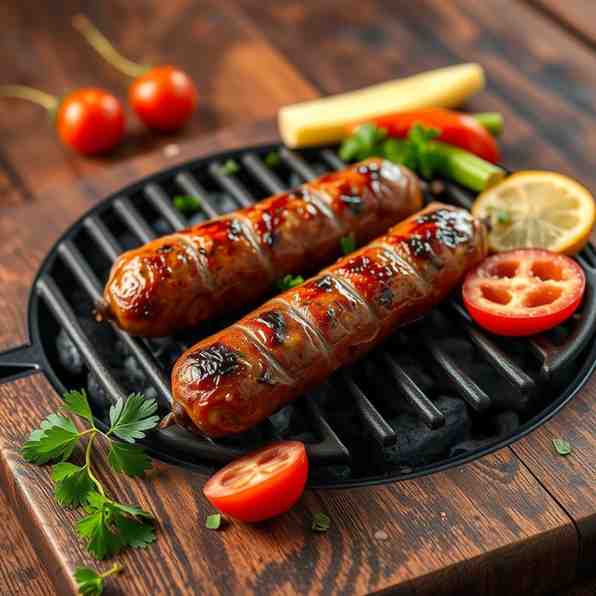
Homemade Landjäger - Classic German Sausage Recipe
Homemade Landjäger - Classic German Sausage Recipe

- Serves: 20 People
- Prepare Time: 2-3 hours
- Cooking Time: 8-12 hours
- Calories: -
- Difficulty: Hard
Ever dreamt of making your own authentic german food sausage right in your kitchen? Well, today’s your day! We’re diving deep into the world of Landjäger (pronounced "lahnd-yeh-ger"), a classic German-style, pressed, and semi-dried link sausage that’s absolutely perfect for snacking.
Landjäger is a true marvel for anyone on the go. Think about it: a portable, savory, smoky, and protein-packed snack that doesn't need refrigeration for short trips. It's an ideal companion for hikers, road-trippers, or just anyone who appreciates a hearty, flavorful bite. Forget those flimsy jerky sticks; Landjäger is the real deal!
Today, we're guiding you through creating a traditional, robust Landjäger with those signature garlic and caraway notes, beautifully balanced with a hint of red wine. Get ready to impress yourself and your friends with this incredible homemade meat sausage recipe!
Ingredients
Directions
- Chill, Cube, and Pre-freeze the MeatStart with meat that's very cold, almost frozen. Cube all your beef, pork, and fat into 1-inch pieces. Spread them on a baking sheet and place them in the freezer for 30-45 minutes. You want the meat to be firm to the touch, almost crunchy, but not solid frozen. This prevents fat smearing during grinding and ensures a clean cut.
- Grind (and Avoid Fat Smearing)Assemble your meat grinder with the coarse grinding plate (e.g., 8mm or 1/3 inch). Grind the beef, then the pork, and finally the fat. Keep the grinder parts and meat as cold as possible throughout the process. After the first grind, mix everything lightly and return to the freezer for 15-20 minutes until very cold again. Then, switch to a finer grinding plate (e.g., 4.5mm or 3/16 inch) and grind the mixture a second time. This two-step grind ensures a good texture and even fat distribution.
- Mix Until Tacky (Proper Bind)Transfer the ground meat to a large, chilled mixing bowl. Add all the Landjäger seasoning, cure, dextrose, and red wine. Using your hands (wear gloves!), mix vigorously for 5-10 minutes. You're looking for a "tacky bind" – the mixture should become sticky and cohesive, pulling away from the sides of the bowl or your hands in a single mass. If you lift a small amount, it should stretch slightly before breaking. This proper bind is crucial for the sausage's texture and prevents crumbling.
- Stuff into Casings (No Air Pockets)Thread your prepared casing onto your sausage stuffer's horn. Load the meat mixture into the stuffer. Begin stuffing slowly and evenly, ensuring no air pockets form. Aim for a firm, but not overly tight, stuffing. Overstuffing can lead to bursting, while understuffing creates a loose, crumbly product. Prick any visible air pockets with a sterile sausage pricker or needle as you go.
- Link and Size ConsistentlyOnce stuffed, gently twist the casings to form individual links. For traditional Landjäger, aim for links about 15-20 cm (6-8 inches) long, weighing roughly 100-150g (3.5-5 oz) each. Use butcher's twine to tie off the ends and between each link for added security and consistent sizing.
- Press Flat (The Landjäger Signature)This is where Landjäger gets its distinctive flat shape! Lay the linked sausages between two clean cutting boards. Place weights (e.g., bricks, heavy cans, or a Landjäger press if you have one) evenly on top of the upper board. Apply gentle but firm pressure for 12-24 hours in a cool (around 10-15°C / 50-60°F), humid (75-85% RH) environment. The goal is to flatten them uniformly without squeezing out the fat. "Good pressing" results in an even, rectangular cross-section.
- Hang/Rest to Dry the SurfaceAfter pressing, remove the weights and hang the sausages in a cool, well-ventilated area (10-15°C / 50-60°F, 75-85% RH) for 12-24 hours. This allows the surface of the casings to dry slightly, preventing "case hardening" (a dry exterior trapping moisture inside) and ensuring good smoke adhesion. Ensure good airflow around each link.
- Cold Smoke ScheduleCold smoking is crucial for Landjäger's flavor and color. Use a cold smoke generator or a smoker capable of maintaining very low temperatures (below 20°C / 68°F).
- Smoke Cycles: Apply cold smoke for 4-8 hours per day, for 2-3 days.
- Temperature Ceiling: Absolutely do not let the internal temperature of the sausage exceed 20°C (68°F) during smoking to avoid "cooking" the sausage and creating food safety issues.
- Wood Choice: Hickory, apple, or beech wood chips are excellent choices for a classic German smoke flavor.
- Dry to FinishAfter smoking, move the Landjäger to a dedicated drying chamber or a cool, well-ventilated area (10-15°C / 50-60°F, 70-75% RH). Hang them with good airflow between each link. This drying phase can take 1-3 weeks or even longer, depending on your desired firmness and the ambient conditions.
- Where to Dry: A dedicated curing fridge, a cool basement, or a temperature/humidity-controlled environment is ideal.
- What to Avoid: Rapid drying (leads to case hardening), high temperatures (spoils the sausage), and overly humid conditions (promotes unwanted mold).
- Bloom, Slice Test, and StoreOnce the Landjäger has reached your desired firmness (typically 30-40% weight loss), remove it from the drying environment. Let it "bloom" by resting at room temperature for a few hours. This allows the flavors to mellow and the color to deepen.
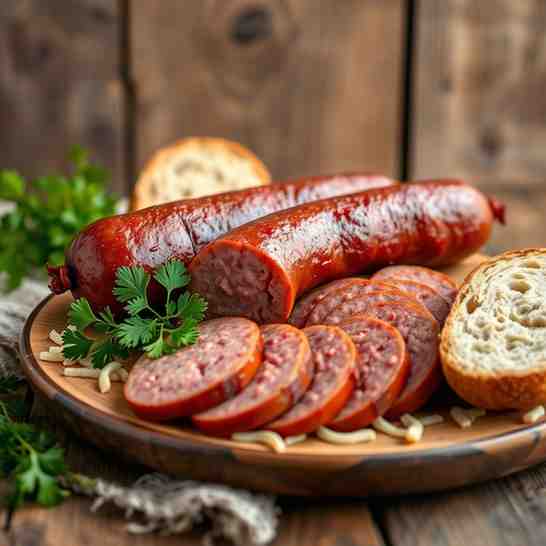
- Slice Test Cues: Slice a link. The interior should be a uniform reddish-pink, firm but not brittle, and have a pleasant, tangy, smoky aroma. There should be no grey spots or uncooked appearance.
Homemade Landjäger - Classic German Sausage Recipe
- Serves: 20 People
- Prepare Time: 2-3 hours
- Cooking Time: 8-12 hours
- Calories: -
- Difficulty: Hard
Ever dreamt of making your own authentic german food sausage right in your kitchen? Well, today’s your day! We’re diving deep into the world of Landjäger (pronounced "lahnd-yeh-ger"), a classic German-style, pressed, and semi-dried link sausage that’s absolutely perfect for snacking.
Landjäger is a true marvel for anyone on the go. Think about it: a portable, savory, smoky, and protein-packed snack that doesn't need refrigeration for short trips. It's an ideal companion for hikers, road-trippers, or just anyone who appreciates a hearty, flavorful bite. Forget those flimsy jerky sticks; Landjäger is the real deal!
Today, we're guiding you through creating a traditional, robust Landjäger with those signature garlic and caraway notes, beautifully balanced with a hint of red wine. Get ready to impress yourself and your friends with this incredible homemade meat sausage recipe!
Ingredients
Directions
- Chill, Cube, and Pre-freeze the MeatStart with meat that's very cold, almost frozen. Cube all your beef, pork, and fat into 1-inch pieces. Spread them on a baking sheet and place them in the freezer for 30-45 minutes. You want the meat to be firm to the touch, almost crunchy, but not solid frozen. This prevents fat smearing during grinding and ensures a clean cut.
- Grind (and Avoid Fat Smearing)Assemble your meat grinder with the coarse grinding plate (e.g., 8mm or 1/3 inch). Grind the beef, then the pork, and finally the fat. Keep the grinder parts and meat as cold as possible throughout the process. After the first grind, mix everything lightly and return to the freezer for 15-20 minutes until very cold again. Then, switch to a finer grinding plate (e.g., 4.5mm or 3/16 inch) and grind the mixture a second time. This two-step grind ensures a good texture and even fat distribution.
- Mix Until Tacky (Proper Bind)Transfer the ground meat to a large, chilled mixing bowl. Add all the Landjäger seasoning, cure, dextrose, and red wine. Using your hands (wear gloves!), mix vigorously for 5-10 minutes. You're looking for a "tacky bind" – the mixture should become sticky and cohesive, pulling away from the sides of the bowl or your hands in a single mass. If you lift a small amount, it should stretch slightly before breaking. This proper bind is crucial for the sausage's texture and prevents crumbling.
- Stuff into Casings (No Air Pockets)Thread your prepared casing onto your sausage stuffer's horn. Load the meat mixture into the stuffer. Begin stuffing slowly and evenly, ensuring no air pockets form. Aim for a firm, but not overly tight, stuffing. Overstuffing can lead to bursting, while understuffing creates a loose, crumbly product. Prick any visible air pockets with a sterile sausage pricker or needle as you go.
- Link and Size ConsistentlyOnce stuffed, gently twist the casings to form individual links. For traditional Landjäger, aim for links about 15-20 cm (6-8 inches) long, weighing roughly 100-150g (3.5-5 oz) each. Use butcher's twine to tie off the ends and between each link for added security and consistent sizing.
- Press Flat (The Landjäger Signature)This is where Landjäger gets its distinctive flat shape! Lay the linked sausages between two clean cutting boards. Place weights (e.g., bricks, heavy cans, or a Landjäger press if you have one) evenly on top of the upper board. Apply gentle but firm pressure for 12-24 hours in a cool (around 10-15°C / 50-60°F), humid (75-85% RH) environment. The goal is to flatten them uniformly without squeezing out the fat. "Good pressing" results in an even, rectangular cross-section.
- Hang/Rest to Dry the SurfaceAfter pressing, remove the weights and hang the sausages in a cool, well-ventilated area (10-15°C / 50-60°F, 75-85% RH) for 12-24 hours. This allows the surface of the casings to dry slightly, preventing "case hardening" (a dry exterior trapping moisture inside) and ensuring good smoke adhesion. Ensure good airflow around each link.
- Cold Smoke ScheduleCold smoking is crucial for Landjäger's flavor and color. Use a cold smoke generator or a smoker capable of maintaining very low temperatures (below 20°C / 68°F).
- Smoke Cycles: Apply cold smoke for 4-8 hours per day, for 2-3 days.
- Temperature Ceiling: Absolutely do not let the internal temperature of the sausage exceed 20°C (68°F) during smoking to avoid "cooking" the sausage and creating food safety issues.
- Wood Choice: Hickory, apple, or beech wood chips are excellent choices for a classic German smoke flavor.
- Dry to FinishAfter smoking, move the Landjäger to a dedicated drying chamber or a cool, well-ventilated area (10-15°C / 50-60°F, 70-75% RH). Hang them with good airflow between each link. This drying phase can take 1-3 weeks or even longer, depending on your desired firmness and the ambient conditions.
- Where to Dry: A dedicated curing fridge, a cool basement, or a temperature/humidity-controlled environment is ideal.
- What to Avoid: Rapid drying (leads to case hardening), high temperatures (spoils the sausage), and overly humid conditions (promotes unwanted mold).
- Bloom, Slice Test, and StoreOnce the Landjäger has reached your desired firmness (typically 30-40% weight loss), remove it from the drying environment. Let it "bloom" by resting at room temperature for a few hours. This allows the flavors to mellow and the color to deepen.
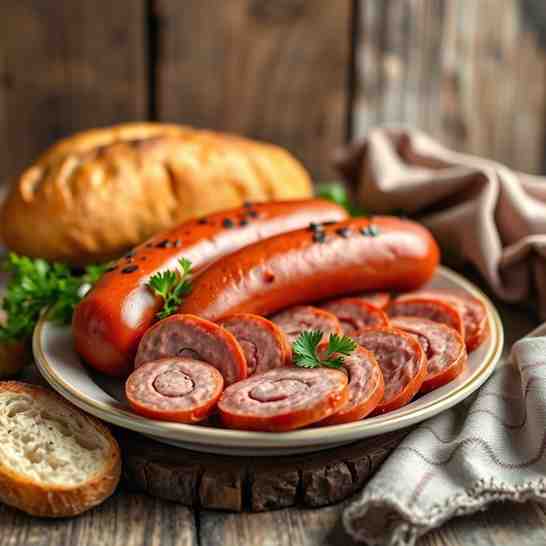
- Slice Test Cues: Slice a link. The interior should be a uniform reddish-pink, firm but not brittle, and have a pleasant, tangy, smoky aroma. There should be no grey spots or uncooked appearance.
You may also like



Hey there! I’m just someone who seriously loves good food and believes that cooking doesn’t have to be complicated to be amazing. Whether it’s a quick weeknight dinner or a cozy weekend meal, I’m all about sharing easy, tasty recipes that actually work.