
Homemade Za'atar Spice Recipe - Make Your Own Blend
Homemade Za'atar Spice Recipe - Make Your Own Blend


- Serves: 1 People
- Prepare Time: 10 minutes
- Cooking Time: 5 minutes
- Calories: -
- Difficulty: Easy
Ever wondered how to capture that incredible, tangy, herby, and nutty flavor of true Middle Eastern za’atar? This recipe for za atar spice is your ticket! Forget dusty, bland store-bought versions; making your own zaatar spice recipe at home is surprisingly easy and delivers a vibrant, fresh blend that will elevate everything from eggs to roasted veggies. It's truly a game-changer.
As someone who grew up with the aroma of freshly made Lebanese spice mix wafting from the kitchen, I’ve refined this version to be both authentic and incredibly approachable. It’s the single, canonical zaatar spice recipe you’ll turn to again and again.
At its heart, za’atar is a beloved Middle Eastern seasoning blend, a staple in kitchens across the Levant. It’s not just one thing, but a magical combination of dried herbs, toasted sesame seeds, tangy sumac, and a touch of salt.
Now, here’s where it can get a little confusing: "za’atar" is also the Arabic name for a specific wild herb (similar to oregano or thyme) that forms the base of many blends. So, when you see "za’atar" on a label, it could refer to the herb itself or the finished spice blend. For this homemade za'atar spice blend, we’re talking about the incredible mix of flavors!
What does it taste like? Imagine a bright, lemony tang from the sumac, a warm nuttiness from the sesame, and an earthy, aromatic herbaceousness that’s both familiar and exotic. It’s truly a symphony for your taste buds!
Ingredients
Directions
- Toast the sesame seeds: Place a small, dry skillet over medium-low heat. Add the sesame seeds and toast, stirring constantly with a spoon or spatula, for 3-5 minutes. Watch them carefully – they should turn a light golden color and smell distinctly nutty. Avoid burning!
- Cool completely: Immediately transfer the toasted sesame seeds to a plate or bowl and spread them out to cool completely. This is crucial to prevent them from becoming rancid later or steaming in the blend.
- Grind the herb to the right texture: If using whole dried za’atar leaves (or thyme/oregano), place them in your spice grinder or mortar and pestle. Pulse or grind until they are broken into fine flakes, similar to dried oregano flakes, but not a fine powder.
- Break up sumac clumps: Sumac can sometimes clump together. Briefly rub it between your fingers or gently press with the back of a spoon to break up any large clumps, ensuring it mixes evenly.
- Mix + taste check: In a medium bowl, combine the ground dried herb, cooled toasted sesame seeds, sumac, and salt. Stir well to ensure everything is evenly distributed. Take a small pinch and taste.
- Flavor Check (Make It Perfect Every Time)Your freshly made Lebanese spice blend should:
- Smell: Bright, tangy, earthy, and nutty.
- Taste: A balanced blend of sour (from sumac), savory (from the herb), and nutty (from sesame). It should feel vibrant on your tongue.
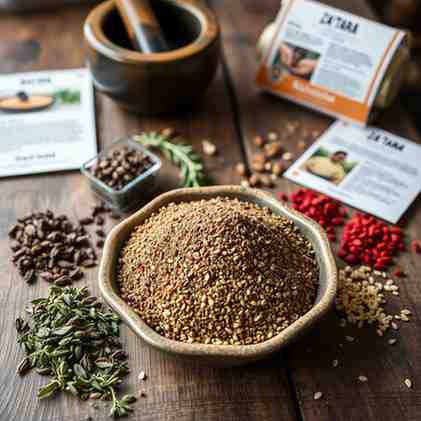
- Look: A beautiful mix of reddish-brown flakes, deep red sumac, and golden sesame seeds.
- Tiny adjustment rules: If it feels a little flat, add a tiny pinch more sumac for tang. If it needs more depth, another tiny pinch of salt can help. Avoid making big adjustments; these are powerful flavors!
Homemade Za'atar Spice Recipe - Make Your Own Blend
- Serves: 1 People
- Prepare Time: 10 minutes
- Cooking Time: 5 minutes
- Calories: -
- Difficulty: Easy
Ever wondered how to capture that incredible, tangy, herby, and nutty flavor of true Middle Eastern za’atar? This recipe for za atar spice is your ticket! Forget dusty, bland store-bought versions; making your own zaatar spice recipe at home is surprisingly easy and delivers a vibrant, fresh blend that will elevate everything from eggs to roasted veggies. It's truly a game-changer.
As someone who grew up with the aroma of freshly made Lebanese spice mix wafting from the kitchen, I’ve refined this version to be both authentic and incredibly approachable. It’s the single, canonical zaatar spice recipe you’ll turn to again and again.
At its heart, za’atar is a beloved Middle Eastern seasoning blend, a staple in kitchens across the Levant. It’s not just one thing, but a magical combination of dried herbs, toasted sesame seeds, tangy sumac, and a touch of salt.
Now, here’s where it can get a little confusing: "za’atar" is also the Arabic name for a specific wild herb (similar to oregano or thyme) that forms the base of many blends. So, when you see "za’atar" on a label, it could refer to the herb itself or the finished spice blend. For this homemade za'atar spice blend, we’re talking about the incredible mix of flavors!
What does it taste like? Imagine a bright, lemony tang from the sumac, a warm nuttiness from the sesame, and an earthy, aromatic herbaceousness that’s both familiar and exotic. It’s truly a symphony for your taste buds!
Ingredients
Directions
- Toast the sesame seeds: Place a small, dry skillet over medium-low heat. Add the sesame seeds and toast, stirring constantly with a spoon or spatula, for 3-5 minutes. Watch them carefully – they should turn a light golden color and smell distinctly nutty. Avoid burning!
- Cool completely: Immediately transfer the toasted sesame seeds to a plate or bowl and spread them out to cool completely. This is crucial to prevent them from becoming rancid later or steaming in the blend.
- Grind the herb to the right texture: If using whole dried za’atar leaves (or thyme/oregano), place them in your spice grinder or mortar and pestle. Pulse or grind until they are broken into fine flakes, similar to dried oregano flakes, but not a fine powder.
- Break up sumac clumps: Sumac can sometimes clump together. Briefly rub it between your fingers or gently press with the back of a spoon to break up any large clumps, ensuring it mixes evenly.
- Mix + taste check: In a medium bowl, combine the ground dried herb, cooled toasted sesame seeds, sumac, and salt. Stir well to ensure everything is evenly distributed. Take a small pinch and taste.
- Flavor Check (Make It Perfect Every Time)Your freshly made Lebanese spice blend should:
- Smell: Bright, tangy, earthy, and nutty.
- Taste: A balanced blend of sour (from sumac), savory (from the herb), and nutty (from sesame). It should feel vibrant on your tongue.
- Look: A beautiful mix of reddish-brown flakes, deep red sumac, and golden sesame seeds.
- Tiny adjustment rules: If it feels a little flat, add a tiny pinch more sumac for tang. If it needs more depth, another tiny pinch of salt can help. Avoid making big adjustments; these are powerful flavors!
You may also like


Hey there! I’m just someone who seriously loves good food and believes that cooking doesn’t have to be complicated to be amazing. Whether it’s a quick weeknight dinner or a cozy weekend meal, I’m all about sharing easy, tasty recipes that actually work.