
Salmon Sashimi at Home - Safe & Simple Steps
Salmon Sashimi at Home - Safe & Simple Steps
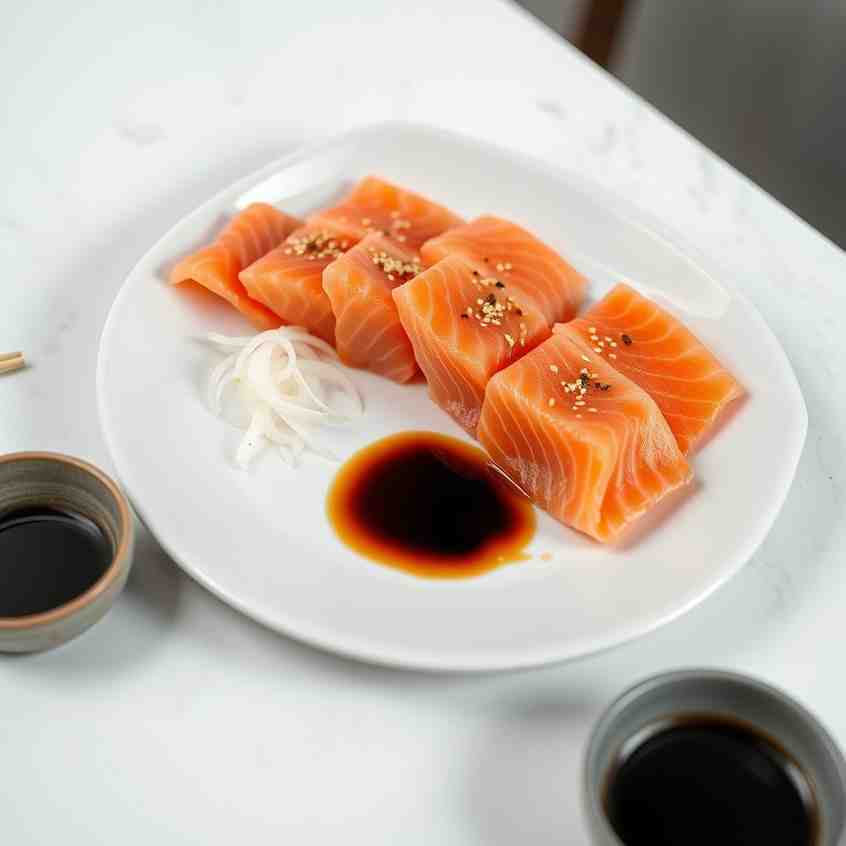

- Serves: 2 People
- Prepare Time: 25 minutes
- Cooking Time: 0 minutes
- Calories: -
- Difficulty: Medium
Dreaming of perfectly sliced, melt-in-your-mouth salmon sashimi right from your own kitchen? You're in the right place! Sashimi, the art of enjoying fresh, raw fish, is a cornerstone of Japanese cuisine and a true delight for seafood lovers. While it might seem intimidating to prepare at home, salmon is an incredible choice for beginners. Its rich, buttery texture and vibrant color make it forgiving to work with and utterly delicious. This article isn't just another cooking recipe; it's your ultimate guide to mastering restaurant-quality salmon sashimi. We'll walk you through essential techniques, crucial safety tips, and even show you how to plate it like a pro. Forget alternative workflows – we're focusing on one canonical, foolproof method to bring the authentic taste of Japanese food right to your table. Let's get slicing!
Ingredients
Directions
- Chill Your Fish & Prep Your Station: Before you even think about slicing, ensure your salmon fillet is thoroughly chilled. Place it in the coldest part of your refrigerator for at least 30 minutes. While it chills, set up your workstation. You'll need a clean cutting board, ideally one that can sit over an ice bath to keep things extra cold. Gather your yanagiba or long slicer, fish tweezers, and a clean, damp cloth for wiping your blade.
- Remove Pin Bones & Skin: Lay the chilled salmon fillet skin-side down on your cutting board. Run your fingers along the flesh to feel for any small, white pin bones. Using your fish tweezers, gently pull them out, always pulling in the direction of the grain to minimize tearing. Once the pin bones are gone, carefully slide your knife between the skin and the flesh, holding the skin taut with one hand and slicing with the other, keeping your blade as close to the skin as possible to preserve the most meat.
- Knife Prep & Steak vs. Fillet Method: Your knife needs to be impeccably sharp. A dull knife will tear the fish, not slice it cleanly. Use a sharpening stone or a ceramic rod to hone your blade. For slicing, you have two main approaches:
- Steak Method: Cut the fillet into smaller, manageable "steaks" (chunky blocks) about 1.5 to 2 inches thick. This is often easier for beginners as it provides a stable piece to work with.
- Fillet Method: Work directly with the longer fillet, slicing across its width. This requires a longer, more confident stroke. For this canonical recipe, we'll proceed with the steak method for ease and precision.
- Slice with Ideal Angles & Thickness Guide: Take one of your salmon "steaks." Position it so the grain of the fish runs away from you. Using your long slicer, make a single, continuous pulling motion towards you, slicing the fish at a slight angle (around 45 degrees). This angle increases the surface area, enhancing the texture and flavor. Aim for slices about 1/8 to 1/4 inch thick – thin enough to be delicate, but thick enough to have a satisfying chew. Wipe your blade clean with the damp cloth after every few slices to prevent sticking and ensure pristine cuts.
- Plate Restaurant-Style: Arrange your freshly sliced salmon sashimi artfully on a chilled serving plate. Overlap the slices slightly or fan them out. Garnish with your chosen accompaniments: a dollop of wasabi, a mound of pickled ginger, a lemon wedge, and perhaps some finely shredded daikon or shiso leaves for color and freshness. Serve immediately for the best experience.
Salmon Sashimi at Home - Safe & Simple Steps
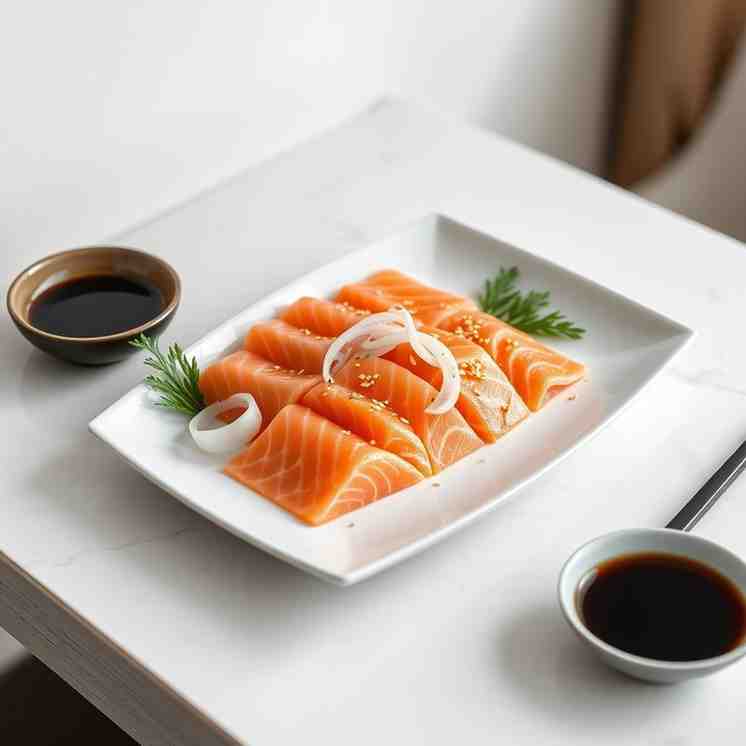
- Serves: 2 People
- Prepare Time: 25 minutes
- Cooking Time: 0 minutes
- Calories: -
- Difficulty: Medium
Dreaming of perfectly sliced, melt-in-your-mouth salmon sashimi right from your own kitchen? You're in the right place! Sashimi, the art of enjoying fresh, raw fish, is a cornerstone of Japanese cuisine and a true delight for seafood lovers. While it might seem intimidating to prepare at home, salmon is an incredible choice for beginners. Its rich, buttery texture and vibrant color make it forgiving to work with and utterly delicious. This article isn't just another cooking recipe; it's your ultimate guide to mastering restaurant-quality salmon sashimi. We'll walk you through essential techniques, crucial safety tips, and even show you how to plate it like a pro. Forget alternative workflows – we're focusing on one canonical, foolproof method to bring the authentic taste of Japanese food right to your table. Let's get slicing!
Ingredients
Directions
- Chill Your Fish & Prep Your Station: Before you even think about slicing, ensure your salmon fillet is thoroughly chilled. Place it in the coldest part of your refrigerator for at least 30 minutes. While it chills, set up your workstation. You'll need a clean cutting board, ideally one that can sit over an ice bath to keep things extra cold. Gather your yanagiba or long slicer, fish tweezers, and a clean, damp cloth for wiping your blade.
- Remove Pin Bones & Skin: Lay the chilled salmon fillet skin-side down on your cutting board. Run your fingers along the flesh to feel for any small, white pin bones. Using your fish tweezers, gently pull them out, always pulling in the direction of the grain to minimize tearing. Once the pin bones are gone, carefully slide your knife between the skin and the flesh, holding the skin taut with one hand and slicing with the other, keeping your blade as close to the skin as possible to preserve the most meat.
- Knife Prep & Steak vs. Fillet Method: Your knife needs to be impeccably sharp. A dull knife will tear the fish, not slice it cleanly. Use a sharpening stone or a ceramic rod to hone your blade. For slicing, you have two main approaches:
- Steak Method: Cut the fillet into smaller, manageable "steaks" (chunky blocks) about 1.5 to 2 inches thick. This is often easier for beginners as it provides a stable piece to work with.
- Fillet Method: Work directly with the longer fillet, slicing across its width. This requires a longer, more confident stroke. For this canonical recipe, we'll proceed with the steak method for ease and precision.
- Slice with Ideal Angles & Thickness Guide: Take one of your salmon "steaks." Position it so the grain of the fish runs away from you. Using your long slicer, make a single, continuous pulling motion towards you, slicing the fish at a slight angle (around 45 degrees). This angle increases the surface area, enhancing the texture and flavor. Aim for slices about 1/8 to 1/4 inch thick – thin enough to be delicate, but thick enough to have a satisfying chew. Wipe your blade clean with the damp cloth after every few slices to prevent sticking and ensure pristine cuts.
- Plate Restaurant-Style: Arrange your freshly sliced salmon sashimi artfully on a chilled serving plate. Overlap the slices slightly or fan them out. Garnish with your chosen accompaniments: a dollop of wasabi, a mound of pickled ginger, a lemon wedge, and perhaps some finely shredded daikon or shiso leaves for color and freshness. Serve immediately for the best experience.
You may also like



Hey there! I’m just someone who seriously loves good food and believes that cooking doesn’t have to be complicated to be amazing. Whether it’s a quick weeknight dinner or a cozy weekend meal, I’m all about sharing easy, tasty recipes that actually work.