
Melton Mowbray Pork Pie | Make Today
Melton Mowbray Pork Pie | Make Today
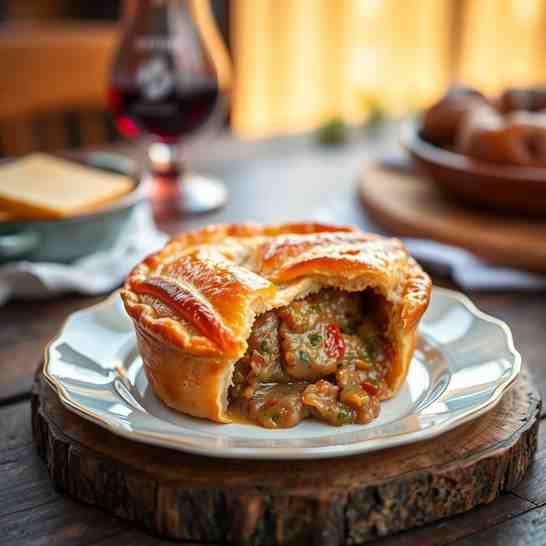
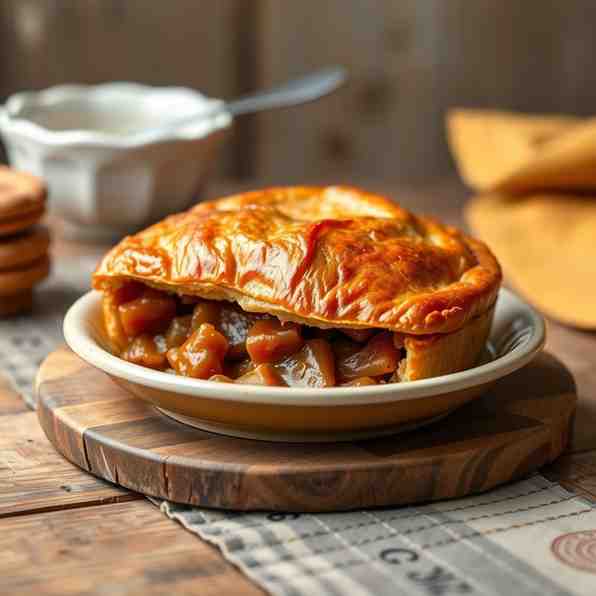
- Serves: 8 People
- Prepare Time: 3 hours 30
- Cooking Time: 1 hour 30 m
- Calories: -
- Difficulty: Hard
Ever heard of a melton mowbray pork pie and wondered what all the fuss is about? For our American friends, let's clear something up: this isn't your grandma's pot pie! A traditional British pork pie is meant to be eaten cold, a savory, self-contained meal perfect for picnics or a hearty snack. It’s a true taste of England, a culinary marvel wrapped in a rich, hot water crust pastry, bursting with seasoned, uncured pork, and finished with a delicate layer of savory jelly.
This isn't just any english pork pie; we're diving deep into the authentic Melton Mowbray style, famous for its distinctive bowed sides and richly flavored, hand-raised crust. Forget those factory-made versions – we're going from scratch, ensuring you get the real deal. We’ll show you how to master the unique hot water crust, create a perfectly seasoned pork filling, and achieve that essential jellied layer. Get ready to impress your taste buds and perhaps even your British friends with your own homemade melton mowbray pie.
The melton mowbray pork pie isn't just a name; it's a Protected Geographical Indication (PGI) in the UK, meaning only pies made in and around Melton Mowbray, Leicestershire, following strict traditional methods, can bear the name. But what does that mean for your homemade version? We're aiming for these key "identity checklist" characteristics:
Bowed Sides: The pie is "hand-raised," meaning it’s shaped without a mold, giving it a natural, slightly bowed or undulating side profile as the pastry gently sags during baking.
Uncured Grey Pork: Authentic Melton Mowbray pies use fresh, uncured pork, which means the meat remains a natural greyish-pink after cooking, not the bright pink you might see in other processed pork products. This is crucial for the traditional flavor.
Chopped Texture: The pork filling isn't finely minced or a smooth paste; it's coarsely chopped or diced, giving the pie a satisfying, meaty texture when you bite into it.
Jelly Layer: A savory, clear jelly is poured into the pie after baking. This isn't just for flavor; it fills the gap created as the meat shrinks during cooking, keeping the pie moist and preserving it.
This PGI status ensures the tradition and quality of these british meat pies are maintained, making our quest for authenticity even more rewarding!
The english meat pies tradition, especially the pork pie, has deep roots in British culinary history. Originally, these pies were a practical way for agricultural workers to carry a hearty, portable meal into the fields. The thick pastry acted as an edible container, protecting the filling. Melton Mowbray, a market town known for its pig farming, naturally became famous for its distinctive pork pies. The local hunting culture also played a role, with pies becoming popular provisions for fox hunts. The characteristics that define the melton mowbray pork pie today – like the hand-raised crust and uncured pork – are direct descendants of these historical practices, reflecting a time when practicality and local ingredients were paramount. The protected status of the pie ensures these physical characteristics, born of tradition, continue to define the product.
When you hear "pork pie," you might picture various english pork pies. However, the Melton Mowbray style stands apart:
Melton vs. Straight-Sided/Mold-Baked: Many modern pork pies are baked in tins or molds, resulting in perfectly straight sides. Our hand-raised Melton Mowbray style pie, by contrast, gets its charming, slightly bowed sides because it's shaped by hand and baked free-standing, supported only briefly until the pastry sets.
Uncured/Grey vs. Cured/Pink Pork: As mentioned, true Melton pies use fresh, uncured pork pie meat, which cooks to a natural grey. Other British pork pies might use cured pork, which retains a pinker hue after cooking. This difference significantly impacts the flavor profile, with uncured pork offering a more robust, natural pork taste.
Chopped vs. Minced: The texture of the pork pie meat is another key differentiator. Melton Mowbray pies feature coarsely chopped or diced pork, providing a satisfying bite and texture. Many other pies use finely minced pork, which can result in a smoother, more uniform filling.
"Hand-raised" in plain English simply means the pastry shell is formed by hand, usually around a shaping aid like a pork pie dolly or a jar, then baked without the continuous support of a tin. The pastry is sturdy enough to hold its shape once the initial set occurs in the oven. It's a hallmark of traditional craftsmanship!
Crafting the perfect melton mowbray pork pie requires a few specific tools, but don't worry, we've got substitutions if you don't have the exact item:
Pork pie dolly or 1-quart Mason jar: This is your canonical shaping aid. A dolly is purpose-built, but a standard 1-quart (or 1-liter) wide-mouth Mason jar works perfectly to create the initial cavity for your pie.
Parchment strip + kitchen twine: While the pastry is warm, it can be a bit delicate. A strip of parchment paper tied around the outside with twine acts as a temporary support collar, helping the pie hold its shape as it sets before baking.
Funnel for jelly fill: This is non-negotiable! Filling the pie with hot jelly through the small steam hole requires precision. A small kitchen funnel (even a plastic one) makes this task clean and efficient, preventing spills and ensuring the jelly reaches every crevice.
Instant-read thermometer: Essential for confidence and food safety. You'll use this to ensure your pork filling reaches a safe internal temperature during baking, and also to gauge the temperature of your hot water crust dough.
To truly capture the essence of a melton mowbray pork pie, pay close attention to these ingredient specifics:
Pork: This is where many go wrong. Emphasize chopped or particulate pork, not a smooth paste. Think small dice or coarse grind. A mix of lean and fatty cuts (like pork shoulder or butt) is ideal for flavor and moisture. Remember, it's uncured, so it will be grey!
Seasoning: Keep it pepper-forward. While a touch of mace or nutmeg can be traditional, the star spices are salt and plenty of freshly cracked black pepper. Don’t bury the natural pork flavor in an herb garden; subtlety is key for the classic Melton taste.
Stock/Jelly: What "jellied" means is that the stock, when chilled, sets firm. This requires a collagen-rich stock. Using pork trotters, hocks, or even a good quality chicken stock with added gelatin (if trotters aren't available) is crucial. The goal is a clear, savory jelly that isn't rubbery but has a definite set.
Making an authentic melton mowbray pork pie is a labor of love that benefits from being spread over two days. This timeline ensures each component is perfectly prepared:
Day 1: Make Stock: Prepare your collagen-rich stock. Strain it, reduce it to concentrate flavors and collagen, then chill it thoroughly overnight. This allows the jelly to set properly and be ready for the next day.
Day 2: Assemble & Bake: Make your hot water crust pastry while it’s still warm and pliable. Shape the pie shell, fill it tightly with seasoned pork, and seal it. Bake until golden and cooked through. Once cooled slightly, re-melt your chilled stock and carefully fill the pie. Chill the entire pie overnight again to allow the jelly to set completely.
Ingredients
Directions
- Make Collagen-Rich Stock (Day 1): In a large pot, combine pork trotters/hocks (or chicken stock ingredients), water, onion, carrot, celery, bay leaves, and peppercorns. Bring to a boil, then reduce heat and simmer gently for 2-3 hours, skimming any foam. Strain the stock through a fine-mesh sieve, pressing on the solids to extract all liquid. Discard solids. Reduce the strained stock by simmering until it yields about 1.5 - 2 cups (350-475ml) of concentrated liquid. Season with salt. Chill overnight until firm and jelly-like.
- Prepare the Filling (Day 2): In a large bowl, combine the coarsely chopped pork with salt, pepper, and optional mace/nutmeg. Mix well to ensure even seasoning.
- Make Hot Water Crust Pastry (Day 2): In a saucepan, combine lard (or butter), water, and salt. Heat gently until the lard melts and the mixture just comes to a boil. In a large mixing bowl, put the flour. Pour the hot liquid into the flour, stirring with a wooden spoon until a shaggy dough forms. Turn onto a lightly floured surface and knead gently for 5-7 minutes until smooth and pliable. Work quickly while it's warm. Keep unused dough covered with a warm, damp cloth to prevent it from cooling and cracking.
- Visuals: Dough texture (warm vs cooled)
- Hand-Raise the Shell: Take about two-thirds of the warm pastry dough. Shape it into a ball and press it onto your pork pie dolly or the bottom of an inverted 1-quart Mason jar. Using your thumbs and fingers, gradually work the dough up the sides of the dolly/jar, creating an even thickness (about ¼ inch or 6mm) for the pie wall. Ensure there are no tears. Gently remove the pastry shell from the mold.
- Visuals: Shell thickness close-up
- Fill and Seal: Place the pastry shell on a parchment-lined baking sheet. Pack the seasoned pork filling very tightly into the shell, mounding it slightly in the center. Roll out the remaining pastry for the lid. Brush the rim of the pie shell with a little beaten egg. Place the lid over the filling, pressing firmly to seal. Crimp the edges decoratively to ensure a strong seal. Cut a small hole (about ½ inch or 1.25 cm) in the center of the lid – this is your steam vent and jelly filling hole.
- Visuals: Proper seal/crimp
- Bake: Preheat your oven to 350°F (175°C). If desired, tie a strip of parchment paper around the pie's sides as a temporary support collar (remove after 30-40 minutes). Brush the entire pie with beaten egg wash for a golden finish. Bake for 1 hour 15 minutes to 1 hour 30 minutes, or until the pastry is deep golden brown and an instant-read thermometer inserted into the center of the filling (through the steam hole) registers 160°F (71°C).
- Cool Properly: Once baked, remove the pie from the oven. Let it cool completely at room temperature on a wire rack for several hours. This is crucial before adding the jelly.
- Re-melt Jelly Stock and Fill: Once the pie is cool, gently re-melt your chilled stock (it should be firm jelly-like) over low heat until liquid again. Using a small funnel, slowly pour the warm (not hot) liquid stock into the pie through the central hole until it's full. Allow it to settle for a few minutes, then top up if necessary as the jelly seeps into any gaps.
- Visuals: Funnel fill action shot
- Chill Overnight & Slice: Transfer the filled pie to the refrigerator and chill overnight (at least 8-12 hours) to allow the jelly to set completely. Once fully chilled, slice cleanly with a sharp knife and enjoy!
- Visuals: Cross-section showing jelly gap filled
Melton Mowbray Pork Pie | Make Today
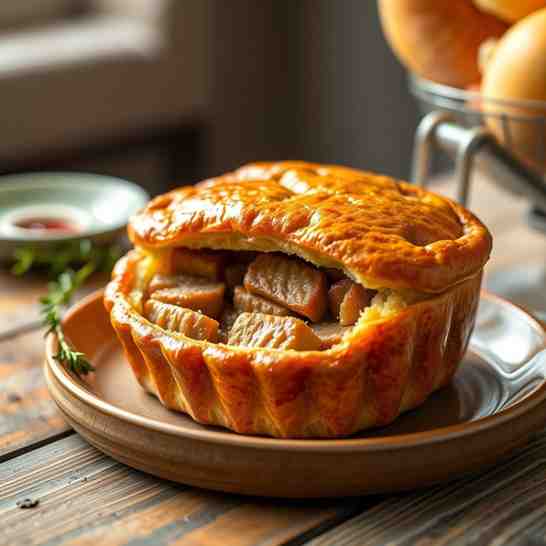
- Serves: 8 People
- Prepare Time: 3 hours 30
- Cooking Time: 1 hour 30 m
- Calories: -
- Difficulty: Hard
Ever heard of a melton mowbray pork pie and wondered what all the fuss is about? For our American friends, let's clear something up: this isn't your grandma's pot pie! A traditional British pork pie is meant to be eaten cold, a savory, self-contained meal perfect for picnics or a hearty snack. It’s a true taste of England, a culinary marvel wrapped in a rich, hot water crust pastry, bursting with seasoned, uncured pork, and finished with a delicate layer of savory jelly.
This isn't just any english pork pie; we're diving deep into the authentic Melton Mowbray style, famous for its distinctive bowed sides and richly flavored, hand-raised crust. Forget those factory-made versions – we're going from scratch, ensuring you get the real deal. We’ll show you how to master the unique hot water crust, create a perfectly seasoned pork filling, and achieve that essential jellied layer. Get ready to impress your taste buds and perhaps even your British friends with your own homemade melton mowbray pie.
The melton mowbray pork pie isn't just a name; it's a Protected Geographical Indication (PGI) in the UK, meaning only pies made in and around Melton Mowbray, Leicestershire, following strict traditional methods, can bear the name. But what does that mean for your homemade version? We're aiming for these key "identity checklist" characteristics:
Bowed Sides: The pie is "hand-raised," meaning it’s shaped without a mold, giving it a natural, slightly bowed or undulating side profile as the pastry gently sags during baking.
Uncured Grey Pork: Authentic Melton Mowbray pies use fresh, uncured pork, which means the meat remains a natural greyish-pink after cooking, not the bright pink you might see in other processed pork products. This is crucial for the traditional flavor.
Chopped Texture: The pork filling isn't finely minced or a smooth paste; it's coarsely chopped or diced, giving the pie a satisfying, meaty texture when you bite into it.
Jelly Layer: A savory, clear jelly is poured into the pie after baking. This isn't just for flavor; it fills the gap created as the meat shrinks during cooking, keeping the pie moist and preserving it.
This PGI status ensures the tradition and quality of these british meat pies are maintained, making our quest for authenticity even more rewarding!
The english meat pies tradition, especially the pork pie, has deep roots in British culinary history. Originally, these pies were a practical way for agricultural workers to carry a hearty, portable meal into the fields. The thick pastry acted as an edible container, protecting the filling. Melton Mowbray, a market town known for its pig farming, naturally became famous for its distinctive pork pies. The local hunting culture also played a role, with pies becoming popular provisions for fox hunts. The characteristics that define the melton mowbray pork pie today – like the hand-raised crust and uncured pork – are direct descendants of these historical practices, reflecting a time when practicality and local ingredients were paramount. The protected status of the pie ensures these physical characteristics, born of tradition, continue to define the product.
When you hear "pork pie," you might picture various english pork pies. However, the Melton Mowbray style stands apart:
Melton vs. Straight-Sided/Mold-Baked: Many modern pork pies are baked in tins or molds, resulting in perfectly straight sides. Our hand-raised Melton Mowbray style pie, by contrast, gets its charming, slightly bowed sides because it's shaped by hand and baked free-standing, supported only briefly until the pastry sets.
Uncured/Grey vs. Cured/Pink Pork: As mentioned, true Melton pies use fresh, uncured pork pie meat, which cooks to a natural grey. Other British pork pies might use cured pork, which retains a pinker hue after cooking. This difference significantly impacts the flavor profile, with uncured pork offering a more robust, natural pork taste.
Chopped vs. Minced: The texture of the pork pie meat is another key differentiator. Melton Mowbray pies feature coarsely chopped or diced pork, providing a satisfying bite and texture. Many other pies use finely minced pork, which can result in a smoother, more uniform filling.
"Hand-raised" in plain English simply means the pastry shell is formed by hand, usually around a shaping aid like a pork pie dolly or a jar, then baked without the continuous support of a tin. The pastry is sturdy enough to hold its shape once the initial set occurs in the oven. It's a hallmark of traditional craftsmanship!
Crafting the perfect melton mowbray pork pie requires a few specific tools, but don't worry, we've got substitutions if you don't have the exact item:
Pork pie dolly or 1-quart Mason jar: This is your canonical shaping aid. A dolly is purpose-built, but a standard 1-quart (or 1-liter) wide-mouth Mason jar works perfectly to create the initial cavity for your pie.
Parchment strip + kitchen twine: While the pastry is warm, it can be a bit delicate. A strip of parchment paper tied around the outside with twine acts as a temporary support collar, helping the pie hold its shape as it sets before baking.
Funnel for jelly fill: This is non-negotiable! Filling the pie with hot jelly through the small steam hole requires precision. A small kitchen funnel (even a plastic one) makes this task clean and efficient, preventing spills and ensuring the jelly reaches every crevice.
Instant-read thermometer: Essential for confidence and food safety. You'll use this to ensure your pork filling reaches a safe internal temperature during baking, and also to gauge the temperature of your hot water crust dough.
To truly capture the essence of a melton mowbray pork pie, pay close attention to these ingredient specifics:
Pork: This is where many go wrong. Emphasize chopped or particulate pork, not a smooth paste. Think small dice or coarse grind. A mix of lean and fatty cuts (like pork shoulder or butt) is ideal for flavor and moisture. Remember, it's uncured, so it will be grey!
Seasoning: Keep it pepper-forward. While a touch of mace or nutmeg can be traditional, the star spices are salt and plenty of freshly cracked black pepper. Don’t bury the natural pork flavor in an herb garden; subtlety is key for the classic Melton taste.
Stock/Jelly: What "jellied" means is that the stock, when chilled, sets firm. This requires a collagen-rich stock. Using pork trotters, hocks, or even a good quality chicken stock with added gelatin (if trotters aren't available) is crucial. The goal is a clear, savory jelly that isn't rubbery but has a definite set.
Making an authentic melton mowbray pork pie is a labor of love that benefits from being spread over two days. This timeline ensures each component is perfectly prepared:
Day 1: Make Stock: Prepare your collagen-rich stock. Strain it, reduce it to concentrate flavors and collagen, then chill it thoroughly overnight. This allows the jelly to set properly and be ready for the next day.
Day 2: Assemble & Bake: Make your hot water crust pastry while it’s still warm and pliable. Shape the pie shell, fill it tightly with seasoned pork, and seal it. Bake until golden and cooked through. Once cooled slightly, re-melt your chilled stock and carefully fill the pie. Chill the entire pie overnight again to allow the jelly to set completely.
Ingredients
Directions
- Make Collagen-Rich Stock (Day 1): In a large pot, combine pork trotters/hocks (or chicken stock ingredients), water, onion, carrot, celery, bay leaves, and peppercorns. Bring to a boil, then reduce heat and simmer gently for 2-3 hours, skimming any foam. Strain the stock through a fine-mesh sieve, pressing on the solids to extract all liquid. Discard solids. Reduce the strained stock by simmering until it yields about 1.5 - 2 cups (350-475ml) of concentrated liquid. Season with salt. Chill overnight until firm and jelly-like.
- Prepare the Filling (Day 2): In a large bowl, combine the coarsely chopped pork with salt, pepper, and optional mace/nutmeg. Mix well to ensure even seasoning.
- Make Hot Water Crust Pastry (Day 2): In a saucepan, combine lard (or butter), water, and salt. Heat gently until the lard melts and the mixture just comes to a boil. In a large mixing bowl, put the flour. Pour the hot liquid into the flour, stirring with a wooden spoon until a shaggy dough forms. Turn onto a lightly floured surface and knead gently for 5-7 minutes until smooth and pliable. Work quickly while it's warm. Keep unused dough covered with a warm, damp cloth to prevent it from cooling and cracking.
- Visuals: Dough texture (warm vs cooled)
- Hand-Raise the Shell: Take about two-thirds of the warm pastry dough. Shape it into a ball and press it onto your pork pie dolly or the bottom of an inverted 1-quart Mason jar. Using your thumbs and fingers, gradually work the dough up the sides of the dolly/jar, creating an even thickness (about ¼ inch or 6mm) for the pie wall. Ensure there are no tears. Gently remove the pastry shell from the mold.
- Visuals: Shell thickness close-up
- Fill and Seal: Place the pastry shell on a parchment-lined baking sheet. Pack the seasoned pork filling very tightly into the shell, mounding it slightly in the center. Roll out the remaining pastry for the lid. Brush the rim of the pie shell with a little beaten egg. Place the lid over the filling, pressing firmly to seal. Crimp the edges decoratively to ensure a strong seal. Cut a small hole (about ½ inch or 1.25 cm) in the center of the lid – this is your steam vent and jelly filling hole.
- Visuals: Proper seal/crimp
- Bake: Preheat your oven to 350°F (175°C). If desired, tie a strip of parchment paper around the pie's sides as a temporary support collar (remove after 30-40 minutes). Brush the entire pie with beaten egg wash for a golden finish. Bake for 1 hour 15 minutes to 1 hour 30 minutes, or until the pastry is deep golden brown and an instant-read thermometer inserted into the center of the filling (through the steam hole) registers 160°F (71°C).
- Cool Properly: Once baked, remove the pie from the oven. Let it cool completely at room temperature on a wire rack for several hours. This is crucial before adding the jelly.
- Re-melt Jelly Stock and Fill: Once the pie is cool, gently re-melt your chilled stock (it should be firm jelly-like) over low heat until liquid again. Using a small funnel, slowly pour the warm (not hot) liquid stock into the pie through the central hole until it's full. Allow it to settle for a few minutes, then top up if necessary as the jelly seeps into any gaps.
- Visuals: Funnel fill action shot
- Chill Overnight & Slice: Transfer the filled pie to the refrigerator and chill overnight (at least 8-12 hours) to allow the jelly to set completely. Once fully chilled, slice cleanly with a sharp knife and enjoy!
- Visuals: Cross-section showing jelly gap filled
You may also like

Hey there! I’m just someone who seriously loves good food and believes that cooking doesn’t have to be complicated to be amazing. Whether it’s a quick weeknight dinner or a cozy weekend meal, I’m all about sharing easy, tasty recipes that actually work.