Montreal-Style Smoked Meat - Jewish Brisket Recipe
Montreal-Style Smoked Meat - Jewish Brisket Recipe
- Serves: 10 People
- Prepare Time: 45 minutes
- Cooking Time: 6-12 hours
- Calories: -
- Difficulty: Easy
Ever wondered how to make that legendary, melt-in-your-mouth Montreal-style smoked meat at home? You know, Canada's answer to pastrami, a truly iconic Jewish brisket recipe that's been perfected over generations. Well, get ready, because you've found the ultimate guide! This isn't just any recipe; it's a deep dive into the art of curing, smoking, and steaming a beef brisket to achieve that unforgettable flavor and texture.
My first bite of authentic Montreal smoked meat was a revelation – tender, peppery, perfectly salty, piled high on rye bread with a smear of mustard. From that moment, I was obsessed with cracking the code to make it in my own kitchen. It's an ambitious project, yes, stretching over several days, but with this detailed, beginner-friendly guide, you'll be amazed at what you can create. Forget searching for "cheap meat to smoke" – this recipe elevates a humble brisket into a culinary masterpiece.
At a glance:
Difficulty: Ambitious, but our step-by-step guide makes it totally beginner-friendly.
Total Time: Plan for 7–10 days, including the crucial curing process.
Equipment: You'll need some fridge space, a smoker or your oven, a large roasting pan/steamer, and a reliable thermometer.
Ready to embark on this delicious journey and bring a taste of Montreal deli culture right to your table? Let's get started!
Ingredients
Directions
- Before You Start: Time & Planning
- Day 1: Trim your brisket, weigh it precisely, calculate your cure mix, apply the cure, and start the curing process.
- Days 2–7 (or 2–10): Flip the brisket daily in the fridge.
- Cure End-Day: Rinse, soak, pat dry, and apply the final rub.
- Next Day: Smoke the brisket.
- Same Day or Next: Steam until tender, rest, and slice.
- Gear You’ll Need:
- Smoker or oven
- Large airtight bag or pan for curing
- Large roasting pan with rack or steamer setup
- Instant-read meat thermometer
- Sharp carving knife
- Cutting board
- Trim & Cure the Brisket
- Trim the Brisket (Beginner-Friendly): Place your brisket fat-side up. Trim away any hard, thick pockets of fat and silver skin. Aim for an even fat cap of about ¼–⅜ inch (6-9mm) across the entire surface. This fat will render and keep the meat moist during cooking.
- Weigh Your Brisket: Use a digital kitchen scale to get the precise weight of your trimmed brisket. This is crucial for the cure calculator.
- Prepare the Cure Mix: Using the "Cure Calculator" table above, measure out all your cure ingredients precisely. Grind whole peppercorns, coriander, and mustard seeds lightly in a spice grinder or mortar and pestle. Combine all cure ingredients in a bowl and mix thoroughly.
- Apply the Cure: Pat the trimmed brisket thoroughly dry with paper towels. Sprinkle the cure mix evenly over all surfaces of the brisket, pressing it firmly into the meat. Use every bit of the cure mix.
- Bag & Store: Place the rubbed brisket into a large, heavy-duty, airtight bag (or a non-reactive container tightly wrapped in plastic wrap). Place the bag/container on a tray or in a larger pan to catch any potential leaks.
- Label & Refrigerate: Label the bag with the date you started curing and the weight of the brisket. Store the brisket in the coldest part of your refrigerator.
- Cure Time & Daily Flip Routine: Cure the brisket for a minimum of 7 days for smaller briskets (6-8 lbs) and up to 10 days for larger full packer briskets (10-12+ lbs). Each day, flip the brisket over to ensure even curing. You'll notice the meat firming up and changing color over time.
- Soak & Re-Season
- Rinse & Soak to Control Salt: Once the curing time is complete, remove the brisket from the bag. Rinse it thoroughly under cold running water to remove any surface cure and spices. Place the brisket in a large container or sink and cover it with fresh cold water. Soak the brisket for a total of 2–3 hours, changing the water every 30 minutes. This step is critical to control the final saltiness.
- Taste Test (Optional but Recommended): After soaking, cut a very thin slice from a less desirable part of the brisket. Pan-fry or boil it briefly. Taste it to check the salt level. If it's still too salty for your preference, continue soaking for another hour, changing the water again.
- Pat Dry & Apply the Rub: Thoroughly pat the brisket dry with paper towels. In a small bowl, combine all ingredients for the final rub (coarsely ground black pepper, coriander, garlic powder, onion powder, and optional smoked paprika/red pepper flakes). Sprinkle the rub evenly over all surfaces of the brisket, pressing it firmly into the meat to create a good bark. This rub adds flavor and texture, not significant extra salt.
- Smoke the Brisket (Smoker or Oven Variation)This step develops the incredible smoky flavor and delicious bark.
- Smoking in a Smoker:
- Preheat: Preheat your smoker to a stable temperature range of 225–250°F (107–121°C).
- Wood Choice: Use mild to medium hardwood like maple, apple, cherry, or oak. Avoid overly strong woods that might overpower the delicate spice profile.
- Smoke Time: Place the brisket directly on the smoker grates. Smoke until the internal temperature reaches 160–170°F (71–77°C). This typically takes 6-10 hours, depending on the brisket's size and your smoker.
- The Stall: Don't panic if your brisket's temperature seems to plateau for a few hours (the "stall"). This is normal as moisture evaporates and cools the meat. Just keep the heat consistent and be patient.
- Oven-Only Adaptation (No Smoker):
- Preheat: Preheat your oven to 250°F (121°C).
- Setup: Place a small pan of water on the bottom rack of your oven to create some humidity. If you want a hint of smokiness, you can add a tiny amount of liquid smoke to your rub (a few drops) or increase the smoked paprika.
- Cook Time: Place the rubbed brisket on a wire rack set inside a roasting pan. Cook until the internal temperature reaches 160–170°F (71–77°C), typically 6-10 hours. The rest and steaming steps are identical, and you'll still achieve a delicious, tender result.
- When to Move to Steaming: Once the brisket reaches 160–170°F (71–77°C) internally and has developed a nice, dark bark, it's ready for the next phase. You can wrap it tightly in foil for transport if you need to move it to a different setup for steaming.
- Steam Until Jiggly & TenderThis is the secret to that classic, fall-apart Montreal deli texture.
- Set Up a Home Steamer: You have a few options:
- Roasting Pan Method: Place a wire rack inside a large roasting pan. Pour about 1 inch (2.5 cm) of water into the bottom of the pan. The water should be below the rack.
- Turkey Fryer/Large Pot Method: If you have a large pot with a steamer basket, use that.
- Steam to Final Temp: Place the smoked brisket on the rack (or in the steamer basket). Cover the roasting pan tightly with foil, or put the lid on your steamer pot. Bring the water to a simmer (not a rolling boil) over medium-low heat on the stovetop, or in a 300°F (150°C) oven. Steam until the internal temperature of the brisket reaches 195–200°F (90–93°C). The meat should be "probe tender," meaning an instant-read thermometer slides into the thickest part with very little resistance, "like warm butter." This can take 3-4 hours. Add more water to the pan as needed to maintain a simmer.
- Rest Before Slicing: Once tender, remove the brisket from the steamer and let it rest, still covered, for 30–60 minutes. This allows the juices to redistribute throughout the meat, resulting in a more succulent slice. The ideal slicing temperature is warm but handleable.
- Slice & Serve
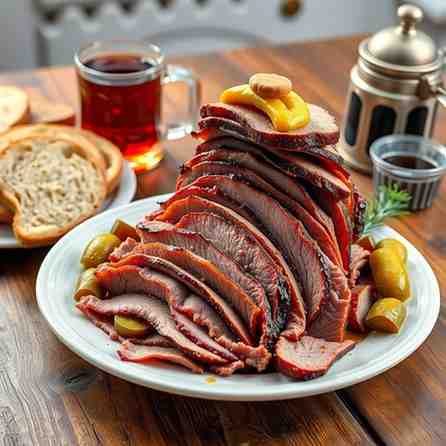
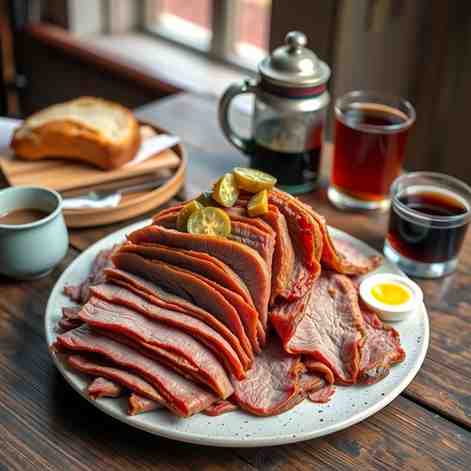
- How to Slice Like a Montreal Deli: This is key! Find the grain of the meat and slice across it. For a whole packer brisket, the grain changes direction, so you may need to cut the flat and point apart and slice them individually. Aim for thin to medium-thin slices. For a balanced texture, suggest mixing slices from both the leaner flat and the fattier point in each serving.
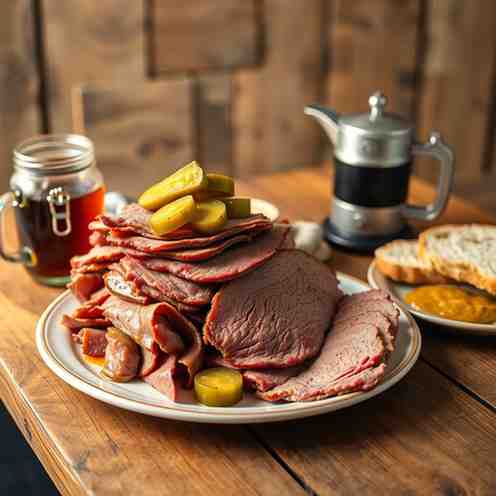
- Classic Montreal Smoked Meat Sandwich: Pile generous amounts of your freshly sliced smoked meat onto fresh rye bread, slathered with classic yellow mustard. Serve with a dill pickle spear and, if you're going full authentic, a side of coleslaw and a black cherry soda.
- Other Serving Ideas (Quick Bullets Only):
- Poutine: Top crispy fries and cheese curds with hot gravy and chopped smoked meat.
- Smoked-Meat Hash: Dice leftovers and fry with potatoes and onions, served with a fried egg.
- Smoked-Meat Mac and Cheese: Stir chopped smoked meat into your favorite mac and cheese recipe.
Montreal-Style Smoked Meat - Jewish Brisket Recipe
- Serves: 10 People
- Prepare Time: 45 minutes
- Cooking Time: 6-12 hours
- Calories: -
- Difficulty: Easy
Ever wondered how to make that legendary, melt-in-your-mouth Montreal-style smoked meat at home? You know, Canada's answer to pastrami, a truly iconic Jewish brisket recipe that's been perfected over generations. Well, get ready, because you've found the ultimate guide! This isn't just any recipe; it's a deep dive into the art of curing, smoking, and steaming a beef brisket to achieve that unforgettable flavor and texture.
My first bite of authentic Montreal smoked meat was a revelation – tender, peppery, perfectly salty, piled high on rye bread with a smear of mustard. From that moment, I was obsessed with cracking the code to make it in my own kitchen. It's an ambitious project, yes, stretching over several days, but with this detailed, beginner-friendly guide, you'll be amazed at what you can create. Forget searching for "cheap meat to smoke" – this recipe elevates a humble brisket into a culinary masterpiece.
At a glance:
Difficulty: Ambitious, but our step-by-step guide makes it totally beginner-friendly.
Total Time: Plan for 7–10 days, including the crucial curing process.
Equipment: You'll need some fridge space, a smoker or your oven, a large roasting pan/steamer, and a reliable thermometer.
Ready to embark on this delicious journey and bring a taste of Montreal deli culture right to your table? Let's get started!
Ingredients
Directions
- Before You Start: Time & Planning
- Day 1: Trim your brisket, weigh it precisely, calculate your cure mix, apply the cure, and start the curing process.
- Days 2–7 (or 2–10): Flip the brisket daily in the fridge.
- Cure End-Day: Rinse, soak, pat dry, and apply the final rub.
- Next Day: Smoke the brisket.
- Same Day or Next: Steam until tender, rest, and slice.
- Gear You’ll Need:
- Smoker or oven
- Large airtight bag or pan for curing
- Large roasting pan with rack or steamer setup
- Instant-read meat thermometer
- Sharp carving knife
- Cutting board
- Trim & Cure the Brisket
- Trim the Brisket (Beginner-Friendly): Place your brisket fat-side up. Trim away any hard, thick pockets of fat and silver skin. Aim for an even fat cap of about ¼–⅜ inch (6-9mm) across the entire surface. This fat will render and keep the meat moist during cooking.
- Weigh Your Brisket: Use a digital kitchen scale to get the precise weight of your trimmed brisket. This is crucial for the cure calculator.
- Prepare the Cure Mix: Using the "Cure Calculator" table above, measure out all your cure ingredients precisely. Grind whole peppercorns, coriander, and mustard seeds lightly in a spice grinder or mortar and pestle. Combine all cure ingredients in a bowl and mix thoroughly.
- Apply the Cure: Pat the trimmed brisket thoroughly dry with paper towels. Sprinkle the cure mix evenly over all surfaces of the brisket, pressing it firmly into the meat. Use every bit of the cure mix.
- Bag & Store: Place the rubbed brisket into a large, heavy-duty, airtight bag (or a non-reactive container tightly wrapped in plastic wrap). Place the bag/container on a tray or in a larger pan to catch any potential leaks.
- Label & Refrigerate: Label the bag with the date you started curing and the weight of the brisket. Store the brisket in the coldest part of your refrigerator.
- Cure Time & Daily Flip Routine: Cure the brisket for a minimum of 7 days for smaller briskets (6-8 lbs) and up to 10 days for larger full packer briskets (10-12+ lbs). Each day, flip the brisket over to ensure even curing. You'll notice the meat firming up and changing color over time.
- Soak & Re-Season
- Rinse & Soak to Control Salt: Once the curing time is complete, remove the brisket from the bag. Rinse it thoroughly under cold running water to remove any surface cure and spices. Place the brisket in a large container or sink and cover it with fresh cold water. Soak the brisket for a total of 2–3 hours, changing the water every 30 minutes. This step is critical to control the final saltiness.
- Taste Test (Optional but Recommended): After soaking, cut a very thin slice from a less desirable part of the brisket. Pan-fry or boil it briefly. Taste it to check the salt level. If it's still too salty for your preference, continue soaking for another hour, changing the water again.
- Pat Dry & Apply the Rub: Thoroughly pat the brisket dry with paper towels. In a small bowl, combine all ingredients for the final rub (coarsely ground black pepper, coriander, garlic powder, onion powder, and optional smoked paprika/red pepper flakes). Sprinkle the rub evenly over all surfaces of the brisket, pressing it firmly into the meat to create a good bark. This rub adds flavor and texture, not significant extra salt.
- Smoke the Brisket (Smoker or Oven Variation)This step develops the incredible smoky flavor and delicious bark.
- Smoking in a Smoker:
- Preheat: Preheat your smoker to a stable temperature range of 225–250°F (107–121°C).
- Wood Choice: Use mild to medium hardwood like maple, apple, cherry, or oak. Avoid overly strong woods that might overpower the delicate spice profile.
- Smoke Time: Place the brisket directly on the smoker grates. Smoke until the internal temperature reaches 160–170°F (71–77°C). This typically takes 6-10 hours, depending on the brisket's size and your smoker.
- The Stall: Don't panic if your brisket's temperature seems to plateau for a few hours (the "stall"). This is normal as moisture evaporates and cools the meat. Just keep the heat consistent and be patient.
- Oven-Only Adaptation (No Smoker):
- Preheat: Preheat your oven to 250°F (121°C).
- Setup: Place a small pan of water on the bottom rack of your oven to create some humidity. If you want a hint of smokiness, you can add a tiny amount of liquid smoke to your rub (a few drops) or increase the smoked paprika.
- Cook Time: Place the rubbed brisket on a wire rack set inside a roasting pan. Cook until the internal temperature reaches 160–170°F (71–77°C), typically 6-10 hours. The rest and steaming steps are identical, and you'll still achieve a delicious, tender result.
- When to Move to Steaming: Once the brisket reaches 160–170°F (71–77°C) internally and has developed a nice, dark bark, it's ready for the next phase. You can wrap it tightly in foil for transport if you need to move it to a different setup for steaming.
- Steam Until Jiggly & TenderThis is the secret to that classic, fall-apart Montreal deli texture.
- Set Up a Home Steamer: You have a few options:
- Roasting Pan Method: Place a wire rack inside a large roasting pan. Pour about 1 inch (2.5 cm) of water into the bottom of the pan. The water should be below the rack.
- Turkey Fryer/Large Pot Method: If you have a large pot with a steamer basket, use that.
- Steam to Final Temp: Place the smoked brisket on the rack (or in the steamer basket). Cover the roasting pan tightly with foil, or put the lid on your steamer pot. Bring the water to a simmer (not a rolling boil) over medium-low heat on the stovetop, or in a 300°F (150°C) oven. Steam until the internal temperature of the brisket reaches 195–200°F (90–93°C). The meat should be "probe tender," meaning an instant-read thermometer slides into the thickest part with very little resistance, "like warm butter." This can take 3-4 hours. Add more water to the pan as needed to maintain a simmer.
- Rest Before Slicing: Once tender, remove the brisket from the steamer and let it rest, still covered, for 30–60 minutes. This allows the juices to redistribute throughout the meat, resulting in a more succulent slice. The ideal slicing temperature is warm but handleable.
- Slice & Serve
- How to Slice Like a Montreal Deli: This is key! Find the grain of the meat and slice across it. For a whole packer brisket, the grain changes direction, so you may need to cut the flat and point apart and slice them individually. Aim for thin to medium-thin slices. For a balanced texture, suggest mixing slices from both the leaner flat and the fattier point in each serving.
- Classic Montreal Smoked Meat Sandwich: Pile generous amounts of your freshly sliced smoked meat onto fresh rye bread, slathered with classic yellow mustard. Serve with a dill pickle spear and, if you're going full authentic, a side of coleslaw and a black cherry soda.
- Other Serving Ideas (Quick Bullets Only):
- Poutine: Top crispy fries and cheese curds with hot gravy and chopped smoked meat.
- Smoked-Meat Hash: Dice leftovers and fry with potatoes and onions, served with a fried egg.
- Smoked-Meat Mac and Cheese: Stir chopped smoked meat into your favorite mac and cheese recipe.
You may also like




Hey there! I’m just someone who seriously loves good food and believes that cooking doesn’t have to be complicated to be amazing. Whether it’s a quick weeknight dinner or a cozy weekend meal, I’m all about sharing easy, tasty recipes that actually work.