
Sweet & Flaky Poppy Seed Roll Pastry - Bake Today
Sweet & Flaky Poppy Seed Roll Pastry - Bake Today


- Serves: 10 People
- Prepare Time: 45 minutes
- Cooking Time: 40 minutes
- Calories: -
- Difficulty: Medium
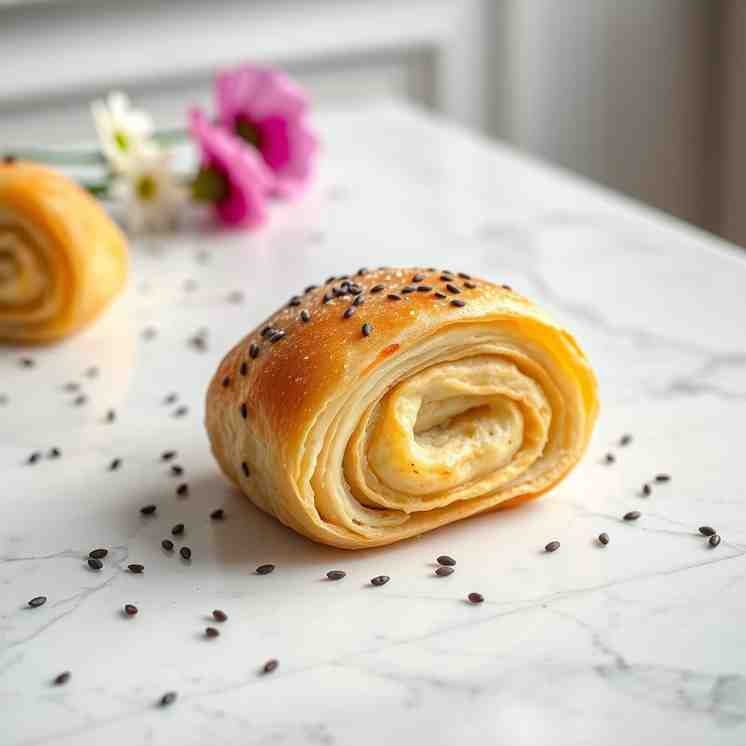
Welcome to the wonderful world of poppy seed roll pastry! If you've ever dreamt of baking a tender, sweet yeast roll with a rich, creamy poppy seed filling, you're in the right place. This traditional Eastern European delight, often called `Magones Rullis` in some regions, is a true labor of love that rewards you with an incredibly satisfying treat. Think of it as a cozy, holiday classic that brings all the comforting vibes of a homemade coffee cake, perfect for sharing with loved ones.
Now, let's set expectations: this isn't a laminated croissant-flaky pastry. Instead, it’s a soft, buttery yeast dough that cradles a generous swirl of sweet, cooked poppy seed filling. It's a different kind of magic – one that results in a tender crumb that stays moist for days. While it might look like a fancy poppy seed danish, it's actually a unique poppy seed roll experience all its own. Forget those dry poppy seed muffins; this recipe shows you how to use poppy seeds for baking in a truly spectacular way, creating a sweet, flaky roll that will become a cherished recipe in your kitchen.
Ingredients
Directions
- Make the Filling (and Cool It)
- Grind Poppy Seeds: In batches, grind the whole poppy seeds in a coffee or spice grinder until they resemble a fine meal, almost like a paste. Be careful not to over-process, or they can become oily. This step is crucial for a creamy, not gritty, filling.
- Cook Filling: In a small saucepan, combine the ground poppy seeds, milk, sugar (and/or honey), butter, citrus zest, vanilla, and pinch of salt. Bring to a gentle simmer over medium heat, stirring constantly. Cook for 5-7 minutes, stirring, until the mixture thickens into a spreadable paste. If it's too runny, stir in 1-2 tablespoons of breadcrumbs or cream of wheat until it reaches the desired consistency.
- Cool Filling: Transfer the filling to a bowl and press plastic wrap directly onto the surface to prevent a skin from forming. Cool completely to room temperature before using. This prevents the filling from melting your dough.
- Success Checkpoint: Your filling should be thick enough to spread without running and hold a ridge when a spoon is drawn through it.
- Make the Dough
- Bloom Yeast (if active dry): In the bowl of a stand mixer fitted with the dough hook (or a large mixing bowl), combine the warm milk, 1 teaspoon of the sugar, and the active dry yeast. Let it sit for 5-10 minutes until foamy. This confirms your yeast is active! (If using instant yeast, proceed directly to the next step, adding yeast with the flour).
- Mix & Knead: Add the remaining sugar, melted butter, egg, and salt to the yeast mixture. Gradually add the flour, mixing on low speed until a shaggy dough forms. Increase speed to medium-low and knead for 8-10 minutes (or 10-12 minutes by hand) until the dough is smooth, elastic, and soft. It should be slightly tacky but manageable.
- Success Checkpoint: The dough is soft and slightly tacky but doesn't stick excessively to your hands or the bowl. It should stretch without tearing immediately.
- First Rise
- Proofing: Lightly grease a large bowl. Place the dough in the bowl, turning once to coat. Cover tightly with plastic wrap or a clean kitchen towel. Let it rise in a warm spot until doubled in size, about 1.5 to 2 hours. A warm spot could be an oven that's been turned off but is still slightly warm from a pilot light, or simply a warm kitchen counter.
- Success Checkpoint: The dough is visibly doubled in size, puffy, and springs back slowly when gently poked with a finger.
- Roll + Fill + Shape
- Prepare Dough: Lightly flour a clean work surface. Gently punch down the risen dough to release the air.
- Roll to Rectangle: Roll the dough into a large rectangle, approximately 12x18 inches (30x45 cm). Aim for even thickness.
- Spread Filling: Evenly spread the cooled poppy seed filling over the dough, leaving a ½-inch (1.25 cm) border around all edges. If using, sprinkle any optional add-ins (raisins, nuts, cinnamon) over the filling.
- Roll into Log: Starting from one of the long sides, carefully roll the dough tightly into a log.
- Seal Seam & Ends: Pinch the seam firmly to seal it completely. Gently tuck the ends under to create a neat, sealed loaf.
- Success Checkpoint: The seam stays closed during rolling, and no filling squishes out.
- Second Rise
- Proofing: Line a large baking sheet with parchment paper. Carefully transfer the rolled log to the prepared baking sheet. Cover loosely with plastic wrap or a clean kitchen towel. Let it rise in a warm spot for another 45-60 minutes, or until visibly puffy and slightly increased in size.
- What "Ready to Bake" Looks Like: The roll should look plump and soft, not fully doubled, but significantly puffed.
- Finish for a Crack-Free, Glossy Roll
- Preheat Oven: While the roll finishes its second rise, preheat your oven to 350°F (175°C).
- Egg Wash: Gently brush the entire surface of the risen roll with the whisked egg wash. This gives it a beautiful, glossy, deep golden finish.
- Dock/Prick or Slash: Using a sharp knife or skewer, make several shallow slashes (about 1/4 inch deep) across the top of the roll, or prick it all over with a fork (docking). This allows steam to escape during baking, preventing the roll from cracking excessively on top.
- Bake
- Bake Time: Bake for 35-45 minutes, or until the roll is deep golden brown on top and the internal temperature reaches 200-205°F (93-96°C) when measured with an instant-read thermometer.
- Success Checkpoint: The roll is deep golden, feels set in the center, and will slice cleanly after cooling.
- Cool + Serve
- Cooling Time: Transfer the baked roll on the parchment paper to a wire rack. Let it cool completely for at least 1 hour before slicing. Don't skip this – it allows the filling to set properly!
- Optional Finish: For an extra touch, brush the warm roll with a little melted butter and dust with powdered sugar before serving.
Sweet & Flaky Poppy Seed Roll Pastry - Bake Today
- Serves: 10 People
- Prepare Time: 45 minutes
- Cooking Time: 40 minutes
- Calories: -
- Difficulty: Medium
Welcome to the wonderful world of poppy seed roll pastry! If you've ever dreamt of baking a tender, sweet yeast roll with a rich, creamy poppy seed filling, you're in the right place. This traditional Eastern European delight, often called `Magones Rullis` in some regions, is a true labor of love that rewards you with an incredibly satisfying treat. Think of it as a cozy, holiday classic that brings all the comforting vibes of a homemade coffee cake, perfect for sharing with loved ones.
Now, let's set expectations: this isn't a laminated croissant-flaky pastry. Instead, it’s a soft, buttery yeast dough that cradles a generous swirl of sweet, cooked poppy seed filling. It's a different kind of magic – one that results in a tender crumb that stays moist for days. While it might look like a fancy poppy seed danish, it's actually a unique poppy seed roll experience all its own. Forget those dry poppy seed muffins; this recipe shows you how to use poppy seeds for baking in a truly spectacular way, creating a sweet, flaky roll that will become a cherished recipe in your kitchen.
Ingredients
Directions
- Make the Filling (and Cool It)
- Grind Poppy Seeds: In batches, grind the whole poppy seeds in a coffee or spice grinder until they resemble a fine meal, almost like a paste. Be careful not to over-process, or they can become oily. This step is crucial for a creamy, not gritty, filling.
- Cook Filling: In a small saucepan, combine the ground poppy seeds, milk, sugar (and/or honey), butter, citrus zest, vanilla, and pinch of salt. Bring to a gentle simmer over medium heat, stirring constantly. Cook for 5-7 minutes, stirring, until the mixture thickens into a spreadable paste. If it's too runny, stir in 1-2 tablespoons of breadcrumbs or cream of wheat until it reaches the desired consistency.
- Cool Filling: Transfer the filling to a bowl and press plastic wrap directly onto the surface to prevent a skin from forming. Cool completely to room temperature before using. This prevents the filling from melting your dough.
- Success Checkpoint: Your filling should be thick enough to spread without running and hold a ridge when a spoon is drawn through it.
- Make the Dough
- Bloom Yeast (if active dry): In the bowl of a stand mixer fitted with the dough hook (or a large mixing bowl), combine the warm milk, 1 teaspoon of the sugar, and the active dry yeast. Let it sit for 5-10 minutes until foamy. This confirms your yeast is active! (If using instant yeast, proceed directly to the next step, adding yeast with the flour).
- Mix & Knead: Add the remaining sugar, melted butter, egg, and salt to the yeast mixture. Gradually add the flour, mixing on low speed until a shaggy dough forms. Increase speed to medium-low and knead for 8-10 minutes (or 10-12 minutes by hand) until the dough is smooth, elastic, and soft. It should be slightly tacky but manageable.
- Success Checkpoint: The dough is soft and slightly tacky but doesn't stick excessively to your hands or the bowl. It should stretch without tearing immediately.
- First Rise
- Proofing: Lightly grease a large bowl. Place the dough in the bowl, turning once to coat. Cover tightly with plastic wrap or a clean kitchen towel. Let it rise in a warm spot until doubled in size, about 1.5 to 2 hours. A warm spot could be an oven that's been turned off but is still slightly warm from a pilot light, or simply a warm kitchen counter.
- Success Checkpoint: The dough is visibly doubled in size, puffy, and springs back slowly when gently poked with a finger.
- Roll + Fill + Shape
- Prepare Dough: Lightly flour a clean work surface. Gently punch down the risen dough to release the air.
- Roll to Rectangle: Roll the dough into a large rectangle, approximately 12x18 inches (30x45 cm). Aim for even thickness.
- Spread Filling: Evenly spread the cooled poppy seed filling over the dough, leaving a ½-inch (1.25 cm) border around all edges. If using, sprinkle any optional add-ins (raisins, nuts, cinnamon) over the filling.
- Roll into Log: Starting from one of the long sides, carefully roll the dough tightly into a log.
- Seal Seam & Ends: Pinch the seam firmly to seal it completely. Gently tuck the ends under to create a neat, sealed loaf.
- Success Checkpoint: The seam stays closed during rolling, and no filling squishes out.
- Second Rise
- Proofing: Line a large baking sheet with parchment paper. Carefully transfer the rolled log to the prepared baking sheet. Cover loosely with plastic wrap or a clean kitchen towel. Let it rise in a warm spot for another 45-60 minutes, or until visibly puffy and slightly increased in size.
- What "Ready to Bake" Looks Like: The roll should look plump and soft, not fully doubled, but significantly puffed.
- Finish for a Crack-Free, Glossy Roll
- Preheat Oven: While the roll finishes its second rise, preheat your oven to 350°F (175°C).
- Egg Wash: Gently brush the entire surface of the risen roll with the whisked egg wash. This gives it a beautiful, glossy, deep golden finish.
- Dock/Prick or Slash: Using a sharp knife or skewer, make several shallow slashes (about 1/4 inch deep) across the top of the roll, or prick it all over with a fork (docking). This allows steam to escape during baking, preventing the roll from cracking excessively on top.
- Bake
- Bake Time: Bake for 35-45 minutes, or until the roll is deep golden brown on top and the internal temperature reaches 200-205°F (93-96°C) when measured with an instant-read thermometer.
- Success Checkpoint: The roll is deep golden, feels set in the center, and will slice cleanly after cooling.
- Cool + Serve
- Cooling Time: Transfer the baked roll on the parchment paper to a wire rack. Let it cool completely for at least 1 hour before slicing. Don't skip this – it allows the filling to set properly!
- Optional Finish: For an extra touch, brush the warm roll with a little melted butter and dust with powdered sugar before serving.
You may also like



Hey there! I’m just someone who seriously loves good food and believes that cooking doesn’t have to be complicated to be amazing. Whether it’s a quick weeknight dinner or a cozy weekend meal, I’m all about sharing easy, tasty recipes that actually work.