
Provencal Fougasse - Rosemary Focaccia Bread
Provencal Fougasse - Rosemary Focaccia Bread


- Serves: 8 People
- Prepare Time: 45 minutes
- Cooking Time: 20 minutes
- Calories: -
- Difficulty: Medium
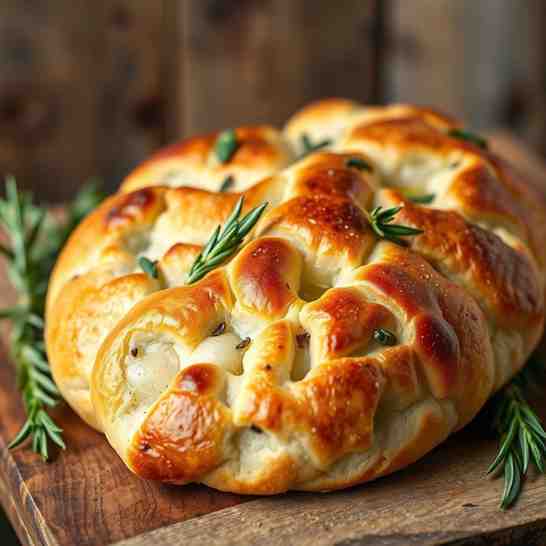
Imagine a warm, golden-brown bread, with a crispy crust and a tender, airy interior, just begging to be torn and dipped into fragrant olive oil. That, my friends, is the magic of Provencal Fougasse! Often called France's answer to rosemary focaccia bread, this beautiful, leaf-shaped flatbread is more than just a treat; it's an experience straight from the sun-drenched fields of Provence.
Our journey begins with simple ingredients: quality olive oil and herbs, fresh from the garden (or your pantry!), and a little patience. Unlike its Italian cousin, fougasse is typically thinner and crispier, with those iconic decorative cuts that aren't just for show – they create more delightful crisp edges and help it bake faster. It’s the perfect home baked bread for sharing, dipping, or simply savoring on its own. Ready to master this elegant fresh baked bread from scratch? Let's dive in!
Ingredients
Directions
- Mix + Rest (Autolyse): In a large bowl, combine the flour and lukewarm water. Mix until just combined and no dry spots remain. It will look shaggy and stiff. Cover the bowl with a clean kitchen towel or plastic wrap and let it rest for 20 minutes. This "autolyse" step allows the flour to fully hydrate, making the dough easier to work with and improving gluten development.
- Add Yeast, Salt, Olive Oil, Herbs: After the rest, sprinkle the instant yeast and fine sea salt over the dough. Drizzle in 2 tablespoons of extra virgin olive oil and add your chopped rosemary or Herbes de Provence. Mix with your hands until all ingredients are incorporated and the dough starts to come together.
- Build Strength (Stretch-and-Folds): This dough is sticky! To build strength, we'll do stretch-and-folds. Lightly oil your work surface or hands. Gently stretch a portion of the dough up and fold it over itself. Rotate the bowl a quarter turn and repeat. Do this 4-6 times until the dough feels slightly smoother. Cover and let rest for 20-30 minutes. Repeat this stretch-and-fold process 3-4 more times, with 20-30 minute rests in between. By the final set, the dough should be much smoother, more elastic, and less sticky.
- Bulk Rise: Lightly oil a clean bowl. Transfer the dough, turning it once to coat. Cover tightly with plastic wrap and let it rise at room temperature (ideally 75-80°F / 24-27°C) for 2 to 3 hours, or until it has nearly doubled in volume and is jiggly when you gently shake the bowl.
- Divide + Pre-shape (Optional): Gently turn the dough out onto a lightly floured surface. If making two smaller fougasse, divide the dough in half. Gently pat each portion into a loose oval or triangle. No need for perfection here!
- Shape the Leaf: Line a baking sheet with parchment paper. Take one dough portion and gently stretch it into an oval or triangle shape, about 1/4 to 1/2 inch thick. Transfer it to the prepared baking sheet. Using a pizza wheel or a sharp knife, make one long cut down the center, stopping about an inch from each end. Then, make 3-4 diagonal cuts on each side, angling them away from the center cut, resembling a leaf or wheat stalk.
- Open the Cuts: This is key for those beautiful open "leaves"! Dip your fingers in water and gently stretch open each cut, pulling the dough apart to create distinct holes. This prevents them from sealing up during baking.
- Final Proof: Cover the shaped fougasse loosely with a clean kitchen towel and let it proof for another 30-45 minutes at room temperature, or until it looks slightly puffy. Meanwhile, preheat your oven to 425°F (220°C) with a baking steel or stone if you have one. For extra crispness, you can place an empty oven-safe pan on the bottom rack.
- Bake Hot: Once the oven is preheated and the fougasse is puffy, transfer the baking sheet to the hot oven. If using the steam option, carefully pour about ½ cup of hot water into the empty pan on the bottom rack (be cautious of steam!). Bake for 15-20 minutes, or until deeply golden brown and crispy.
- Finish: Immediately upon removing from the oven, brush generously with the remaining 2-3 tablespoons of extra virgin olive oil and sprinkle with flaky sea salt. Let cool on the baking sheet for at least 15 minutes before tearing and enjoying.
Provencal Fougasse - Rosemary Focaccia Bread
- Serves: 8 People
- Prepare Time: 45 minutes
- Cooking Time: 20 minutes
- Calories: -
- Difficulty: Medium
Imagine a warm, golden-brown bread, with a crispy crust and a tender, airy interior, just begging to be torn and dipped into fragrant olive oil. That, my friends, is the magic of Provencal Fougasse! Often called France's answer to rosemary focaccia bread, this beautiful, leaf-shaped flatbread is more than just a treat; it's an experience straight from the sun-drenched fields of Provence.
Our journey begins with simple ingredients: quality olive oil and herbs, fresh from the garden (or your pantry!), and a little patience. Unlike its Italian cousin, fougasse is typically thinner and crispier, with those iconic decorative cuts that aren't just for show – they create more delightful crisp edges and help it bake faster. It’s the perfect home baked bread for sharing, dipping, or simply savoring on its own. Ready to master this elegant fresh baked bread from scratch? Let's dive in!
Ingredients
Directions
- Mix + Rest (Autolyse): In a large bowl, combine the flour and lukewarm water. Mix until just combined and no dry spots remain. It will look shaggy and stiff. Cover the bowl with a clean kitchen towel or plastic wrap and let it rest for 20 minutes. This "autolyse" step allows the flour to fully hydrate, making the dough easier to work with and improving gluten development.
- Add Yeast, Salt, Olive Oil, Herbs: After the rest, sprinkle the instant yeast and fine sea salt over the dough. Drizzle in 2 tablespoons of extra virgin olive oil and add your chopped rosemary or Herbes de Provence. Mix with your hands until all ingredients are incorporated and the dough starts to come together.
- Build Strength (Stretch-and-Folds): This dough is sticky! To build strength, we'll do stretch-and-folds. Lightly oil your work surface or hands. Gently stretch a portion of the dough up and fold it over itself. Rotate the bowl a quarter turn and repeat. Do this 4-6 times until the dough feels slightly smoother. Cover and let rest for 20-30 minutes. Repeat this stretch-and-fold process 3-4 more times, with 20-30 minute rests in between. By the final set, the dough should be much smoother, more elastic, and less sticky.
- Bulk Rise: Lightly oil a clean bowl. Transfer the dough, turning it once to coat. Cover tightly with plastic wrap and let it rise at room temperature (ideally 75-80°F / 24-27°C) for 2 to 3 hours, or until it has nearly doubled in volume and is jiggly when you gently shake the bowl.
- Divide + Pre-shape (Optional): Gently turn the dough out onto a lightly floured surface. If making two smaller fougasse, divide the dough in half. Gently pat each portion into a loose oval or triangle. No need for perfection here!
- Shape the Leaf: Line a baking sheet with parchment paper. Take one dough portion and gently stretch it into an oval or triangle shape, about 1/4 to 1/2 inch thick. Transfer it to the prepared baking sheet. Using a pizza wheel or a sharp knife, make one long cut down the center, stopping about an inch from each end. Then, make 3-4 diagonal cuts on each side, angling them away from the center cut, resembling a leaf or wheat stalk.
- Open the Cuts: This is key for those beautiful open "leaves"! Dip your fingers in water and gently stretch open each cut, pulling the dough apart to create distinct holes. This prevents them from sealing up during baking.
- Final Proof: Cover the shaped fougasse loosely with a clean kitchen towel and let it proof for another 30-45 minutes at room temperature, or until it looks slightly puffy. Meanwhile, preheat your oven to 425°F (220°C) with a baking steel or stone if you have one. For extra crispness, you can place an empty oven-safe pan on the bottom rack.
- Bake Hot: Once the oven is preheated and the fougasse is puffy, transfer the baking sheet to the hot oven. If using the steam option, carefully pour about ½ cup of hot water into the empty pan on the bottom rack (be cautious of steam!). Bake for 15-20 minutes, or until deeply golden brown and crispy.
- Finish: Immediately upon removing from the oven, brush generously with the remaining 2-3 tablespoons of extra virgin olive oil and sprinkle with flaky sea salt. Let cool on the baking sheet for at least 15 minutes before tearing and enjoying.
You may also like



Hey there! I’m just someone who seriously loves good food and believes that cooking doesn’t have to be complicated to be amazing. Whether it’s a quick weeknight dinner or a cozy weekend meal, I’m all about sharing easy, tasty recipes that actually work.