
Sabich - Israeli Eggplant Sandwich Recipe
Sabich - Israeli Eggplant Sandwich Recipe
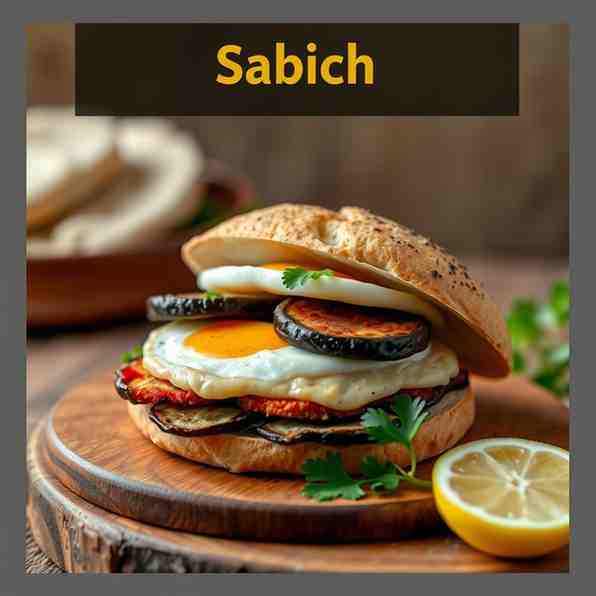
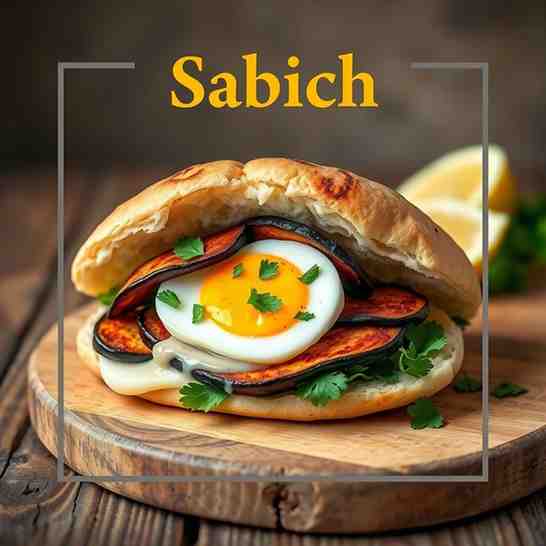
- Serves: 4 People
- Prepare Time: 30 minutes
- Cooking Time: 45 minutes
- Calories: -
- Difficulty: Medium
Ever tried a Sabich? If not, get ready for a flavor explosion! This authentic Israeli eggplant pita sandwich is seriously addictive, and for good reason. Imagine perfectly fried eggplant slices, creamy hummus and tahini sauce, crisp Israeli salad, tangy pickles, and a hard-boiled egg, all tucked into a warm, fluffy pita. It’s a symphony of textures and tastes in every single bite – crunchy, soft, creamy, tangy, and utterly satisfying.
While Sabich might sound fancy, this homemade version is designed to be totally doable in your US kitchen. We’ve kept the flavors true to their roots, ensuring you get that genuine Israeli street food experience without needing a plane ticket. Whether you're a seasoned chef or a total beginner, we'll guide you through making a vegetarian masterpiece that’ll have everyone asking for more. Let’s dive into making the best Sabich you’ve ever tasted!
At its heart, Sabich is a glorious Israeli street food sandwich, often enjoyed for breakfast or lunch. It’s a vegetarian delight that’s packed with flavor and texture. In each bite, you'll experience the warmth of a soft pita, the satisfying chew of fried eggplant, the richness of hard-boiled eggs, the creamy coolness of tahini and hummus, the refreshing crunch of a simple salad, and the zing of pickled mango (amba) or other tangy pickles. It’s a complete meal that perfectly balances salty, savory, tangy, and fresh notes.
Typically, when you grab a sabich from a stand in Israel, you’ll find these key components: fried eggplant, hard-boiled eggs, hummus, tahini sauce, Israeli salad (diced tomatoes and cucumbers), pickles (often a mix of cucumber and sometimes even potato), and a drizzle of amba (a tangy, spicy pickled mango sauce). Sometimes, you might even find thin slices of boiled potato in there for extra heartiness!
Getting the right ingredients makes all the difference, but don’t worry, we’ve got you covered with some easy swaps if you can’t find the exact traditional items.
Bread: The best is a soft, thick pita bread, or even laffa (a larger, thinner flatbread). If you can't find authentic Middle Eastern pita, look for "Greek style" pita, which tends to be thicker and softer than the very thin, pocket-less varieties. As a last resort, a soft, warmed tortilla or flatbread can work in a pinch, though it won't be quite the same.
Eggplant: Globe eggplants (the big, dark purple ones) are perfect here. Choose a medium-sized one that feels firm and heavy for its size. You want to slice it about 1/4 to 1/3 inch thick – not too thin (it'll get too crispy) and not too thick (it won't cook through).
Tahini: This is a key player! Look for a good quality tahini paste that's made from 100% hulled sesame seeds. The label should ideally just say "sesame paste." A high-quality tahini will be lighter in color, pourable (not stiff), and have a smooth, slightly nutty, but not bitter, flavor. If it's too thick or bitter, your sauce won't be as good.
Pickles: "Middle Eastern pickles" usually refers to crunchy, sour cucumber pickles, sometimes with a garlic or turmeric tint. You can find these in jars labeled "Middle Eastern" or "Kosher Dill" (the full-sour kind). If you can't find them, good quality dill pickles from your regular grocery store are a perfectly practical substitute.
Amba: This tangy, slightly spicy pickled mango sauce is what really makes sabich sing for many people. You can often find it at Middle Eastern or international grocery stores, or online. If it’s unavailable, a tiny dash of hot sauce (like sriracha or shug) mixed with a squeeze of fresh lemon juice can give a similar tangy-spicy kick, though you'll miss the unique mango flavor.
Want to make the best sabich ever? Keep these pointers in mind before you even start cooking!
How to avoid greasy eggplant: This is crucial! First, salt your eggplant slices and let them sit for 30 minutes to an hour. This draws out moisture. Pat them super dry before frying. Second, make sure your frying oil is hot enough (around 350-375°F or 175-190°C). If the oil isn't hot enough, the eggplant will just soak it up. Fry in batches so you don't overcrowd the pan and drop the oil temperature.
How to keep the pita from getting soggy: The biggest culprit for a soggy pita is watery salad. After you make your Israeli salad, let it drain in a colander for at least 15-20 minutes. You'll be surprised how much liquid comes out! Also, don't overstuff your pita, and eat your sabich soon after assembling.
How to keep flavors balanced (acid/salt/heat): Sabich is all about balance. The richness of the eggplant, egg, and tahini needs bright acidity (lemon, pickles, amba) and a good amount of salt. Don't be shy with the salt on the eggplant or in your tahini sauce. A little kick from hot sauce or amba also helps cut through the richness. Taste as you go!
Ingredients
Directions
- Prep the Eggplant: Slice the eggplant into 1/4 to 1/3-inch thick rounds. Lay them in a single layer on a cooling rack set over a baking sheet. Sprinkle generously with 1 teaspoon of salt on both sides. Let them sit for at least 30 minutes, or up to an hour. You'll see beads of moisture form – this is good! Before frying, blot them very thoroughly with paper towels to remove as much moisture as possible. This is your anti-greasy eggplant move!
- Make the Israeli Salad + Drain It: While the eggplant is sweating, combine the diced tomatoes, cucumber, minced red onion (if using), chopped parsley, lemon juice, and 1/2 teaspoon salt in a bowl. Mix well. Transfer the salad to a fine-mesh colander set over a bowl and let it drain for at least 15-20 minutes. This is the anti-sog move for your pita!
- Boil and Peel the Eggs: Place the eggs in a small saucepan and cover with about an inch of cold water. Bring to a rolling boil over high heat, then immediately turn off the heat, cover the pan, and let sit for exactly 10 minutes. While they sit, prepare an ice bath. After 10 minutes, transfer the eggs to the ice bath and let them cool completely (about 5-10 minutes). Once cool, tap the eggs gently on a hard surface to crack the shell all over, then peel under cold running water. The ice bath helps the shells release easily – your easy-peel tip! Slice them into rounds or quarters.
- Cook the Potatoes (if using): While eggs are boiling/cooling, wash and peel the potatoes. Cut them into 1/2-inch thick slices. Place in a small pot, cover with cold water, add 1/2 teaspoon salt, and bring to a boil. Cook until fork-tender, about 10-15 minutes. Drain well and set aside. You can also microwave them until tender, then slice.
- Whisk the Tahini Sauce: In a medium bowl, combine the tahini paste, lemon juice, minced garlic, and salt. Whisk vigorously. It will likely seize up and become very thick – don't panic! Gradually add the ice-cold water, a tablespoon at a time, whisking continuously. The sauce will magically thin out and become smooth and creamy. You're looking for a consistency like a thick salad dressing or pourable yogurt. You might need more or less water depending on your tahini. This gradual adding of cold water is how to prevent seizing and get that perfect texture.
- Fry the Eggplant: Heat the neutral oil in a large, heavy-bottomed skillet or Dutch oven over medium-high heat until it reaches about 350-375°F (175-190°C). If you don't have a thermometer, a small piece of eggplant should sizzle immediately when dropped in. Carefully add the dried eggplant slices in a single layer, without overcrowding the pan. Fry for 3-4 minutes per side, until golden brown and tender. Remove with tongs or a slotted spoon and place on a fresh rack lined with paper towels to drain excess oil. Sprinkle lightly with a little more salt while warm. Repeat with remaining eggplant. Keep a close eye on the oil temp – oil temp cues are key for non-greasy eggplant!
- Warm the Pita and Build the Sandwich: Gently warm the pita breads. You can do this in a dry skillet over medium heat for 30 seconds per side, in a toaster oven, or microwave for 15-20 seconds. This makes them soft and pliable for stuffing. Now, for the exact build order and how much fits:
- Carefully open each pita to create a pocket.
- Spread a generous layer of hummus inside.
- Next, layer in the fried eggplant slices.
- Add a few slices of hard-boiled egg.
- If using, tuck in some potato slices.
- Spoon in a good amount of the drained Israeli salad.
- Add a handful of pickles.
- Drizzle generously with tahini sauce.
- If using, add a spoonful of amba and/or a dash of hot sauce.
- Wrap and Serve: The secret to eating a sabich without it falling apart is often to wrap it! If your pita is large, you can fold it. Otherwise, wrap the bottom half tightly in parchment paper or foil before serving. This makes it easier to hold and prevents fillings from escaping. Serve immediately and enjoy!
- Timing Notes
- Total time with everything from scratch: Expect about 75 minutes if you're doing all the components (eggplant, eggs, potatoes, salad, tahini sauce) at a relaxed pace.
- Faster path if using store-bought hummus + amba: You can shave off about 10-15 minutes by using pre-made hummus and amba, bringing your total time down to around 60 minutes.
Sabich - Israeli Eggplant Sandwich Recipe

- Serves: 4 People
- Prepare Time: 30 minutes
- Cooking Time: 45 minutes
- Calories: -
- Difficulty: Medium
Ever tried a Sabich? If not, get ready for a flavor explosion! This authentic Israeli eggplant pita sandwich is seriously addictive, and for good reason. Imagine perfectly fried eggplant slices, creamy hummus and tahini sauce, crisp Israeli salad, tangy pickles, and a hard-boiled egg, all tucked into a warm, fluffy pita. It’s a symphony of textures and tastes in every single bite – crunchy, soft, creamy, tangy, and utterly satisfying.
While Sabich might sound fancy, this homemade version is designed to be totally doable in your US kitchen. We’ve kept the flavors true to their roots, ensuring you get that genuine Israeli street food experience without needing a plane ticket. Whether you're a seasoned chef or a total beginner, we'll guide you through making a vegetarian masterpiece that’ll have everyone asking for more. Let’s dive into making the best Sabich you’ve ever tasted!
At its heart, Sabich is a glorious Israeli street food sandwich, often enjoyed for breakfast or lunch. It’s a vegetarian delight that’s packed with flavor and texture. In each bite, you'll experience the warmth of a soft pita, the satisfying chew of fried eggplant, the richness of hard-boiled eggs, the creamy coolness of tahini and hummus, the refreshing crunch of a simple salad, and the zing of pickled mango (amba) or other tangy pickles. It’s a complete meal that perfectly balances salty, savory, tangy, and fresh notes.
Typically, when you grab a sabich from a stand in Israel, you’ll find these key components: fried eggplant, hard-boiled eggs, hummus, tahini sauce, Israeli salad (diced tomatoes and cucumbers), pickles (often a mix of cucumber and sometimes even potato), and a drizzle of amba (a tangy, spicy pickled mango sauce). Sometimes, you might even find thin slices of boiled potato in there for extra heartiness!
Getting the right ingredients makes all the difference, but don’t worry, we’ve got you covered with some easy swaps if you can’t find the exact traditional items.
Bread: The best is a soft, thick pita bread, or even laffa (a larger, thinner flatbread). If you can't find authentic Middle Eastern pita, look for "Greek style" pita, which tends to be thicker and softer than the very thin, pocket-less varieties. As a last resort, a soft, warmed tortilla or flatbread can work in a pinch, though it won't be quite the same.
Eggplant: Globe eggplants (the big, dark purple ones) are perfect here. Choose a medium-sized one that feels firm and heavy for its size. You want to slice it about 1/4 to 1/3 inch thick – not too thin (it'll get too crispy) and not too thick (it won't cook through).
Tahini: This is a key player! Look for a good quality tahini paste that's made from 100% hulled sesame seeds. The label should ideally just say "sesame paste." A high-quality tahini will be lighter in color, pourable (not stiff), and have a smooth, slightly nutty, but not bitter, flavor. If it's too thick or bitter, your sauce won't be as good.
Pickles: "Middle Eastern pickles" usually refers to crunchy, sour cucumber pickles, sometimes with a garlic or turmeric tint. You can find these in jars labeled "Middle Eastern" or "Kosher Dill" (the full-sour kind). If you can't find them, good quality dill pickles from your regular grocery store are a perfectly practical substitute.
Amba: This tangy, slightly spicy pickled mango sauce is what really makes sabich sing for many people. You can often find it at Middle Eastern or international grocery stores, or online. If it’s unavailable, a tiny dash of hot sauce (like sriracha or shug) mixed with a squeeze of fresh lemon juice can give a similar tangy-spicy kick, though you'll miss the unique mango flavor.
Want to make the best sabich ever? Keep these pointers in mind before you even start cooking!
How to avoid greasy eggplant: This is crucial! First, salt your eggplant slices and let them sit for 30 minutes to an hour. This draws out moisture. Pat them super dry before frying. Second, make sure your frying oil is hot enough (around 350-375°F or 175-190°C). If the oil isn't hot enough, the eggplant will just soak it up. Fry in batches so you don't overcrowd the pan and drop the oil temperature.
How to keep the pita from getting soggy: The biggest culprit for a soggy pita is watery salad. After you make your Israeli salad, let it drain in a colander for at least 15-20 minutes. You'll be surprised how much liquid comes out! Also, don't overstuff your pita, and eat your sabich soon after assembling.
How to keep flavors balanced (acid/salt/heat): Sabich is all about balance. The richness of the eggplant, egg, and tahini needs bright acidity (lemon, pickles, amba) and a good amount of salt. Don't be shy with the salt on the eggplant or in your tahini sauce. A little kick from hot sauce or amba also helps cut through the richness. Taste as you go!
Ingredients
Directions
- Prep the Eggplant: Slice the eggplant into 1/4 to 1/3-inch thick rounds. Lay them in a single layer on a cooling rack set over a baking sheet. Sprinkle generously with 1 teaspoon of salt on both sides. Let them sit for at least 30 minutes, or up to an hour. You'll see beads of moisture form – this is good! Before frying, blot them very thoroughly with paper towels to remove as much moisture as possible. This is your anti-greasy eggplant move!
- Make the Israeli Salad + Drain It: While the eggplant is sweating, combine the diced tomatoes, cucumber, minced red onion (if using), chopped parsley, lemon juice, and 1/2 teaspoon salt in a bowl. Mix well. Transfer the salad to a fine-mesh colander set over a bowl and let it drain for at least 15-20 minutes. This is the anti-sog move for your pita!
- Boil and Peel the Eggs: Place the eggs in a small saucepan and cover with about an inch of cold water. Bring to a rolling boil over high heat, then immediately turn off the heat, cover the pan, and let sit for exactly 10 minutes. While they sit, prepare an ice bath. After 10 minutes, transfer the eggs to the ice bath and let them cool completely (about 5-10 minutes). Once cool, tap the eggs gently on a hard surface to crack the shell all over, then peel under cold running water. The ice bath helps the shells release easily – your easy-peel tip! Slice them into rounds or quarters.
- Cook the Potatoes (if using): While eggs are boiling/cooling, wash and peel the potatoes. Cut them into 1/2-inch thick slices. Place in a small pot, cover with cold water, add 1/2 teaspoon salt, and bring to a boil. Cook until fork-tender, about 10-15 minutes. Drain well and set aside. You can also microwave them until tender, then slice.
- Whisk the Tahini Sauce: In a medium bowl, combine the tahini paste, lemon juice, minced garlic, and salt. Whisk vigorously. It will likely seize up and become very thick – don't panic! Gradually add the ice-cold water, a tablespoon at a time, whisking continuously. The sauce will magically thin out and become smooth and creamy. You're looking for a consistency like a thick salad dressing or pourable yogurt. You might need more or less water depending on your tahini. This gradual adding of cold water is how to prevent seizing and get that perfect texture.
- Fry the Eggplant: Heat the neutral oil in a large, heavy-bottomed skillet or Dutch oven over medium-high heat until it reaches about 350-375°F (175-190°C). If you don't have a thermometer, a small piece of eggplant should sizzle immediately when dropped in. Carefully add the dried eggplant slices in a single layer, without overcrowding the pan. Fry for 3-4 minutes per side, until golden brown and tender. Remove with tongs or a slotted spoon and place on a fresh rack lined with paper towels to drain excess oil. Sprinkle lightly with a little more salt while warm. Repeat with remaining eggplant. Keep a close eye on the oil temp – oil temp cues are key for non-greasy eggplant!
- Warm the Pita and Build the Sandwich: Gently warm the pita breads. You can do this in a dry skillet over medium heat for 30 seconds per side, in a toaster oven, or microwave for 15-20 seconds. This makes them soft and pliable for stuffing. Now, for the exact build order and how much fits:
- Carefully open each pita to create a pocket.
- Spread a generous layer of hummus inside.
- Next, layer in the fried eggplant slices.
- Add a few slices of hard-boiled egg.
- If using, tuck in some potato slices.
- Spoon in a good amount of the drained Israeli salad.
- Add a handful of pickles.
- Drizzle generously with tahini sauce.
- If using, add a spoonful of amba and/or a dash of hot sauce.
- Wrap and Serve: The secret to eating a sabich without it falling apart is often to wrap it! If your pita is large, you can fold it. Otherwise, wrap the bottom half tightly in parchment paper or foil before serving. This makes it easier to hold and prevents fillings from escaping. Serve immediately and enjoy!
- Timing Notes
- Total time with everything from scratch: Expect about 75 minutes if you're doing all the components (eggplant, eggs, potatoes, salad, tahini sauce) at a relaxed pace.
- Faster path if using store-bought hummus + amba: You can shave off about 10-15 minutes by using pre-made hummus and amba, bringing your total time down to around 60 minutes.
You may also like



Hey there! I’m just someone who seriously loves good food and believes that cooking doesn’t have to be complicated to be amazing. Whether it’s a quick weeknight dinner or a cozy weekend meal, I’m all about sharing easy, tasty recipes that actually work.



