Saffron Lemon Joojeh Kabob - Juicy Mediterranean Chicken Recipe
Saffron Lemon Joojeh Kabob - Juicy Mediterranean Chicken Recipe
- Serves: 4 People
- Prepare Time: 20 minutes
- Cooking Time: 15 minutes
- Calories: -
- Difficulty: Medium
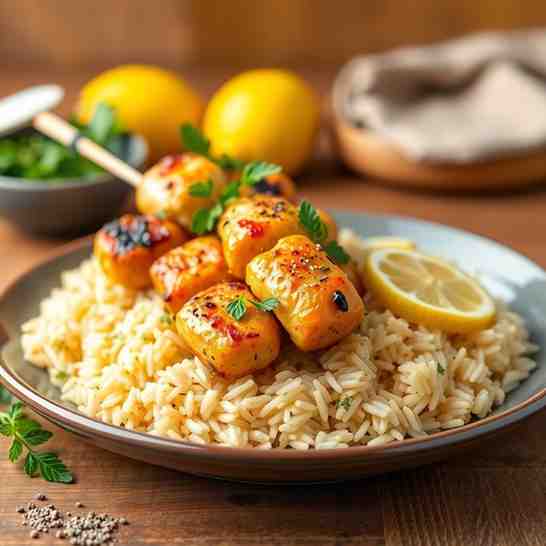
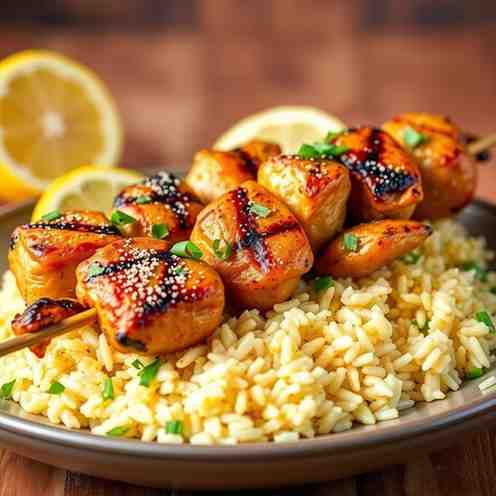
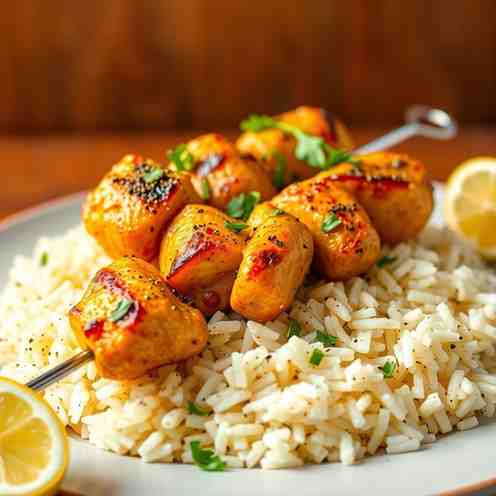
Get ready to transform your grill into a Persian culinary haven with the most succulent grilled Iranian chicken you’ve ever tasted! Our Authentic Saffron Lemon Joojeh Kabab recipe brings the vibrant flavors of Persian cuisine right to your backyard. Imagine tender, juicy pieces of boneless skinless chicken infused with the exotic aroma of saffron and the bright zest of lemon, perfectly charred on your kabobs charcoal grill. This isn't just another mediterranean chicken kabob; it's a taste of tradition, perfected for your home kitchen. What's the secret to this melt-in-your-mouth perfection? It's all in the best chicken kabob marinade, a luscious blend of greek yogurt lemon chicken goodness that works its magic, ensuring every bite is incredibly tender and flavorful. We'll show you exactly how to achieve that signature golden hue and juicy interior that makes Joojeh Kabab legendary. The best part? While the actual cooking is quick, planning ahead for an easy chicken kabob marinade and letting your chicken soak up all that goodness with an overnight marinade is key to unlocking its full potential. So, fire up that grill for kebab and prepare for an unforgettable meal!
This Saffron Lemon Joojeh Kabab recipe delivers incredibly tender, juicy, and aromatic grilled chicken skewers bursting with bright, savory flavors. Our method focuses on blooming saffron correctly and using a yogurt-based marinade that guarantees succulent results, not dry chicken. For the absolute best flavor and texture, plan to marinate your chicken overnight – it makes all the difference!
What is Joojeh Kabab? Joojeh Kabab is a classic Iranian dish featuring chicken pieces marinated in a saffron, lemon, and yogurt mixture, then grilled over charcoal or gas. "Joojeh" means "chick" or young chicken, and "kabab" refers to meat grilled on skewers. It's renowned for its vibrant color, incredible tenderness, and rich flavor.
What cut should I use? For the most forgiving and juicy results on a hot grill, we highly recommend boneless skinless chicken thighs. Their higher fat content keeps them moist. You can use chicken breast, but you'll need to be more careful with cooking times to prevent drying out.
How long to marinate? A minimum of 4 hours is good, but for truly outstanding flavor and tenderness, marinate your chicken for 12-24 hours (overnight).
How hot should the grill be? Aim for a medium-high heat, around 400-450°F (200-230°C), with a two-zone setup for best control.
Saffron Blooming = Aroma + Color That Actually Shows Up: We show you how to properly "bloom" saffron threads, releasing their maximum flavor and the beautiful golden color that actually infuses into the chicken, rather than just disappearing.
Yogurt + Onion + Citrus = Tender Chicken, Not Mush: The combination of full-fat Greek yogurt, grated onion, and lemon juice works together to tenderize the chicken without making it mushy. The lactic acid in the yogurt and enzymes in the onion gently break down muscle fibers, while the citrus brightens the flavor.
Thighs = Forgiving + Juicy on a Hot Grill: Using boneless chicken thighs is a game-changer. They stand up well to high heat, retaining their moisture and flavor, making them ideal for grilling and much less prone to drying out than breast meat.
Ingredients
Directions
- Equipment
- Grill (gas or charcoal) + tongs
- Flat metal skewers (preferred for even cooking and no spinning) OR double wooden skewers (soaked)
- Instant-read thermometer
- Small bowl for bloomed saffron
- Bloom the Saffron CorrectlyThis step is crucial for unlocking saffron's full potential.
- Grind threads: Use a mortar and pestle to gently grind the saffron threads into a very fine powder. If you don't have one, crush them between your fingers or with the back of a spoon in a small bowl.
- Add warm water: Pour 2 tablespoons of warm (not hot!) water over the ground saffron.
- Rest until deeply colored: Let it sit for at least 15-20 minutes. You'll know it's "done" when the water turns a deep, vibrant orange-red color and smells intensely floral and honey-like. This concentrate is what infuses your chicken with flavor and color.
- Prep the Onion for Maximum Flavor (and Less Burning)
- Grate onion: Grate the onion using the large holes of a box grater. This ensures the onion flavor is evenly distributed without leaving large chunks that can burn easily on the grill.
- Lightly squeeze out excess liquid: If your onion seems very watery, gently squeeze out a tablespoon or two of liquid. You want the pulp for flavor, but not excessive moisture.
- Why big onion pieces don’t work as well on skewers: Large onion pieces tend to char and burn before the chicken is cooked, and they don't impart as much flavor as finely grated onion.
- Make the Marinade
- In a large bowl, combine the full-fat Greek yogurt, bloomed saffron (including the liquid), fresh lemon juice, lemon zest, grated onion, kosher salt, and black pepper.
- Add the optional turmeric, minced garlic, and olive oil if using.
- Consistency target: Mix everything thoroughly until well combined. The marinade should be thick enough to beautifully coat the chicken pieces without being runny.
- Cut + Marinate the Chicken
- Cut size target: Cut the boneless skinless chicken thighs into roughly 1.5-inch (4 cm) cubes. Aim for uniform pieces so they cook evenly on the skewers.
- Massage marinade into chicken: Add the chicken pieces to the bowl with the marinade. Use your hands to thoroughly massage the marinade into every piece of chicken, ensuring it's completely coated.
- Marinate time: Cover the bowl and refrigerate. Marinate for a minimum of 4 hours. For the absolute best flavor and tenderization, marinate for 12-24 hours (overnight).
- Skewer Like It’s Your Job
- Pack pieces snug: Thread the marinated chicken pieces onto your skewers. Flat metal skewers are preferred as they prevent the chicken from spinning when you try to turn them. Pack the pieces snugly against each other, but don't squish them. This helps them stay juicy and cook evenly.
- Leave small gaps only if pieces are thick: If you have a few exceptionally thick pieces, you can leave a tiny gap (about 1/8 inch) between them to ensure heat penetration.
- Tip for wooden skewers: If using wooden skewers, remember to soak them in water for at least 30 minutes before threading to prevent them from burning on the grill.
- Set Up the Grill (Two-Zone Plan)
- Preheat target temp range: Preheat your grill (gas or charcoal) to a medium-high heat, aiming for 400-450°F (200-230°C).
- Two-zone setup: For charcoal, bank coals to one side for direct heat, leaving the other side empty for indirect heat. For gas, turn burners to high on one side and low or off on the other. This allows you to sear the chicken and then move it to a cooler zone if it's cooking too fast.
- Oil grates safely: Clean your grill grates with a wire brush. Then, using tongs, wipe the hot grates with a paper towel dipped in a high-smoke-point oil (like canola or grapeseed oil) to prevent sticking.
- Flare-up prevention in plain English: Keep a spray bottle of water handy. If you see flames erupting from dripping fat, spritz them lightly to extinguish without cooling the grill too much.
- Grill Temperature & Timing
- Medium-High (Direct) — Cooking Time: 3–4 minutes per side; Internal Temp: 165°F (74°C); Visual Cues: Golden-brown char on exterior, juices run clear, firm to touch
- Medium (Indirect) — Cooking Time: 5–10 minutes (if needed); Internal Temp: 165°F (74°C); Visual Cues: No pink, very tender
- Grill the Skewers
- Timing range + turning cadence: Place the skewers over the direct, medium-high heat. Grill for 3-4 minutes per side, turning occasionally, until nicely charred and golden brown.
- When to move to indirect heat: If the chicken is browning too quickly on the outside but you suspect it's not cooked through, move the skewers to the indirect heat zone to finish cooking gently.
- Doneness: internal temp + visual cues for thighs: Use an instant-read thermometer inserted into the thickest part of a chicken piece (avoiding the skewer) to check for doneness. Chicken thighs are safely cooked at 165°F (74°C). Visually, they should have a beautiful golden-brown char, and the juices should run clear.
- Rest + Finish
- Short rest for juiciness: Once cooked, transfer the skewers to a clean plate or cutting board. Tent loosely with foil and let them rest for 5-10 minutes. This allows the juices to redistribute, ensuring maximum tenderness.
- Finish with lemon squeeze: Just before serving, give the kabobs a final squeeze of fresh lemon juice for an extra burst of brightness.
Saffron Lemon Joojeh Kabob - Juicy Mediterranean Chicken Recipe
- Serves: 4 People
- Prepare Time: 20 minutes
- Cooking Time: 15 minutes
- Calories: -
- Difficulty: Medium
Get ready to transform your grill into a Persian culinary haven with the most succulent grilled Iranian chicken you’ve ever tasted! Our Authentic Saffron Lemon Joojeh Kabab recipe brings the vibrant flavors of Persian cuisine right to your backyard. Imagine tender, juicy pieces of boneless skinless chicken infused with the exotic aroma of saffron and the bright zest of lemon, perfectly charred on your kabobs charcoal grill. This isn't just another mediterranean chicken kabob; it's a taste of tradition, perfected for your home kitchen. What's the secret to this melt-in-your-mouth perfection? It's all in the best chicken kabob marinade, a luscious blend of greek yogurt lemon chicken goodness that works its magic, ensuring every bite is incredibly tender and flavorful. We'll show you exactly how to achieve that signature golden hue and juicy interior that makes Joojeh Kabab legendary. The best part? While the actual cooking is quick, planning ahead for an easy chicken kabob marinade and letting your chicken soak up all that goodness with an overnight marinade is key to unlocking its full potential. So, fire up that grill for kebab and prepare for an unforgettable meal!
This Saffron Lemon Joojeh Kabab recipe delivers incredibly tender, juicy, and aromatic grilled chicken skewers bursting with bright, savory flavors. Our method focuses on blooming saffron correctly and using a yogurt-based marinade that guarantees succulent results, not dry chicken. For the absolute best flavor and texture, plan to marinate your chicken overnight – it makes all the difference!
What is Joojeh Kabab? Joojeh Kabab is a classic Iranian dish featuring chicken pieces marinated in a saffron, lemon, and yogurt mixture, then grilled over charcoal or gas. "Joojeh" means "chick" or young chicken, and "kabab" refers to meat grilled on skewers. It's renowned for its vibrant color, incredible tenderness, and rich flavor.
What cut should I use? For the most forgiving and juicy results on a hot grill, we highly recommend boneless skinless chicken thighs. Their higher fat content keeps them moist. You can use chicken breast, but you'll need to be more careful with cooking times to prevent drying out.
How long to marinate? A minimum of 4 hours is good, but for truly outstanding flavor and tenderness, marinate your chicken for 12-24 hours (overnight).
How hot should the grill be? Aim for a medium-high heat, around 400-450°F (200-230°C), with a two-zone setup for best control.
Saffron Blooming = Aroma + Color That Actually Shows Up: We show you how to properly "bloom" saffron threads, releasing their maximum flavor and the beautiful golden color that actually infuses into the chicken, rather than just disappearing.
Yogurt + Onion + Citrus = Tender Chicken, Not Mush: The combination of full-fat Greek yogurt, grated onion, and lemon juice works together to tenderize the chicken without making it mushy. The lactic acid in the yogurt and enzymes in the onion gently break down muscle fibers, while the citrus brightens the flavor.
Thighs = Forgiving + Juicy on a Hot Grill: Using boneless chicken thighs is a game-changer. They stand up well to high heat, retaining their moisture and flavor, making them ideal for grilling and much less prone to drying out than breast meat.
Ingredients
Directions
- Equipment
- Grill (gas or charcoal) + tongs
- Flat metal skewers (preferred for even cooking and no spinning) OR double wooden skewers (soaked)
- Instant-read thermometer
- Small bowl for bloomed saffron
- Bloom the Saffron CorrectlyThis step is crucial for unlocking saffron's full potential.
- Grind threads: Use a mortar and pestle to gently grind the saffron threads into a very fine powder. If you don't have one, crush them between your fingers or with the back of a spoon in a small bowl.
- Add warm water: Pour 2 tablespoons of warm (not hot!) water over the ground saffron.
- Rest until deeply colored: Let it sit for at least 15-20 minutes. You'll know it's "done" when the water turns a deep, vibrant orange-red color and smells intensely floral and honey-like. This concentrate is what infuses your chicken with flavor and color.
- Prep the Onion for Maximum Flavor (and Less Burning)
- Grate onion: Grate the onion using the large holes of a box grater. This ensures the onion flavor is evenly distributed without leaving large chunks that can burn easily on the grill.
- Lightly squeeze out excess liquid: If your onion seems very watery, gently squeeze out a tablespoon or two of liquid. You want the pulp for flavor, but not excessive moisture.
- Why big onion pieces don’t work as well on skewers: Large onion pieces tend to char and burn before the chicken is cooked, and they don't impart as much flavor as finely grated onion.
- Make the Marinade
- In a large bowl, combine the full-fat Greek yogurt, bloomed saffron (including the liquid), fresh lemon juice, lemon zest, grated onion, kosher salt, and black pepper.
- Add the optional turmeric, minced garlic, and olive oil if using.
- Consistency target: Mix everything thoroughly until well combined. The marinade should be thick enough to beautifully coat the chicken pieces without being runny.
- Cut + Marinate the Chicken
- Cut size target: Cut the boneless skinless chicken thighs into roughly 1.5-inch (4 cm) cubes. Aim for uniform pieces so they cook evenly on the skewers.
- Massage marinade into chicken: Add the chicken pieces to the bowl with the marinade. Use your hands to thoroughly massage the marinade into every piece of chicken, ensuring it's completely coated.
- Marinate time: Cover the bowl and refrigerate. Marinate for a minimum of 4 hours. For the absolute best flavor and tenderization, marinate for 12-24 hours (overnight).
- Skewer Like It’s Your Job
- Pack pieces snug: Thread the marinated chicken pieces onto your skewers. Flat metal skewers are preferred as they prevent the chicken from spinning when you try to turn them. Pack the pieces snugly against each other, but don't squish them. This helps them stay juicy and cook evenly.
- Leave small gaps only if pieces are thick: If you have a few exceptionally thick pieces, you can leave a tiny gap (about 1/8 inch) between them to ensure heat penetration.
- Tip for wooden skewers: If using wooden skewers, remember to soak them in water for at least 30 minutes before threading to prevent them from burning on the grill.
- Set Up the Grill (Two-Zone Plan)
- Preheat target temp range: Preheat your grill (gas or charcoal) to a medium-high heat, aiming for 400-450°F (200-230°C).
- Two-zone setup: For charcoal, bank coals to one side for direct heat, leaving the other side empty for indirect heat. For gas, turn burners to high on one side and low or off on the other. This allows you to sear the chicken and then move it to a cooler zone if it's cooking too fast.
- Oil grates safely: Clean your grill grates with a wire brush. Then, using tongs, wipe the hot grates with a paper towel dipped in a high-smoke-point oil (like canola or grapeseed oil) to prevent sticking.
- Flare-up prevention in plain English: Keep a spray bottle of water handy. If you see flames erupting from dripping fat, spritz them lightly to extinguish without cooling the grill too much.
- Grill Temperature & Timing
- Medium-High (Direct) — Cooking Time: 3–4 minutes per side; Internal Temp: 165°F (74°C); Visual Cues: Golden-brown char on exterior, juices run clear, firm to touch
- Medium (Indirect) — Cooking Time: 5–10 minutes (if needed); Internal Temp: 165°F (74°C); Visual Cues: No pink, very tender
- Grill the Skewers
- Timing range + turning cadence: Place the skewers over the direct, medium-high heat. Grill for 3-4 minutes per side, turning occasionally, until nicely charred and golden brown.
- When to move to indirect heat: If the chicken is browning too quickly on the outside but you suspect it's not cooked through, move the skewers to the indirect heat zone to finish cooking gently.
- Doneness: internal temp + visual cues for thighs: Use an instant-read thermometer inserted into the thickest part of a chicken piece (avoiding the skewer) to check for doneness. Chicken thighs are safely cooked at 165°F (74°C). Visually, they should have a beautiful golden-brown char, and the juices should run clear.
- Rest + Finish
- Short rest for juiciness: Once cooked, transfer the skewers to a clean plate or cutting board. Tent loosely with foil and let them rest for 5-10 minutes. This allows the juices to redistribute, ensuring maximum tenderness.
- Finish with lemon squeeze: Just before serving, give the kabobs a final squeeze of fresh lemon juice for an extra burst of brightness.
You may also like

Hey there! I’m just someone who seriously loves good food and believes that cooking doesn’t have to be complicated to be amazing. Whether it’s a quick weeknight dinner or a cozy weekend meal, I’m all about sharing easy, tasty recipes that actually work.