
Aromatic Afghan Kabuli Pulao Best Cooking Recipes
Aromatic Afghan Kabuli Pulao Best Cooking Recipes
- Serves: 8 People
- Prepare Time: 45 minutes
- Cooking Time: 3 hours 15
- Calories: 650
- Difficulty: Medium
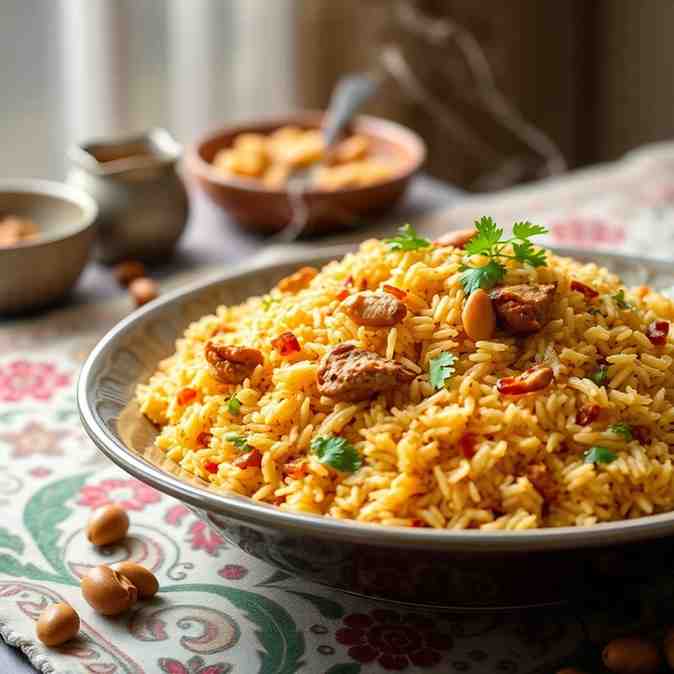
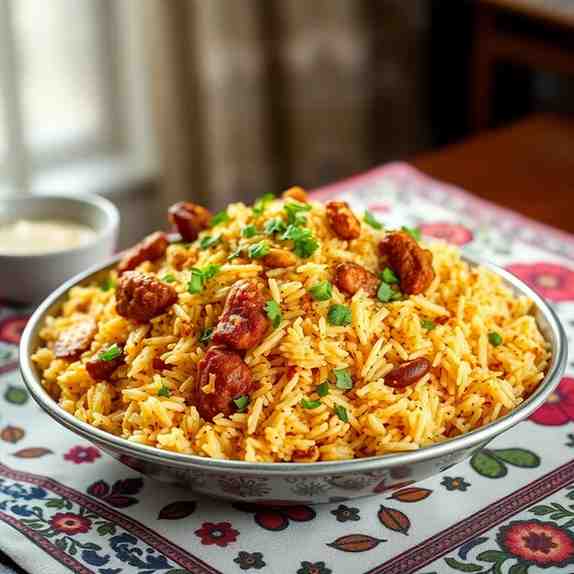
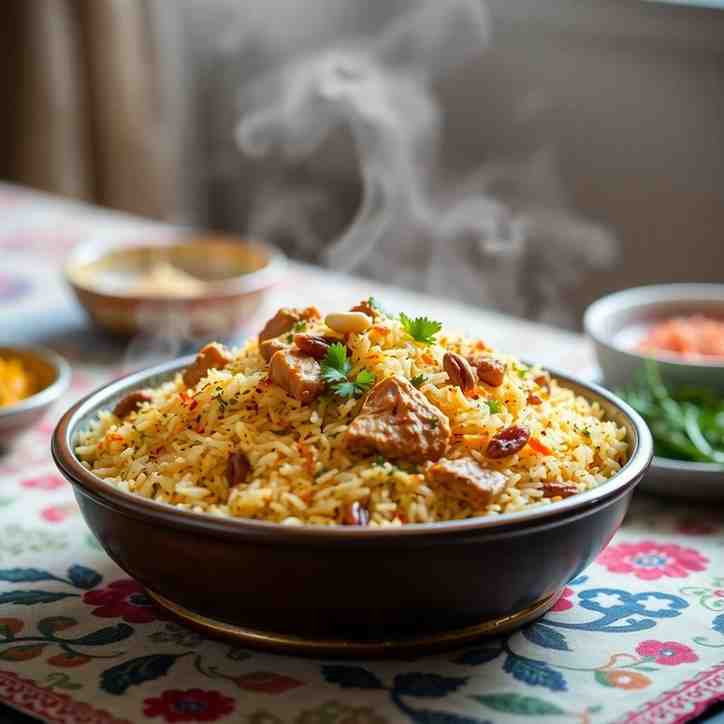
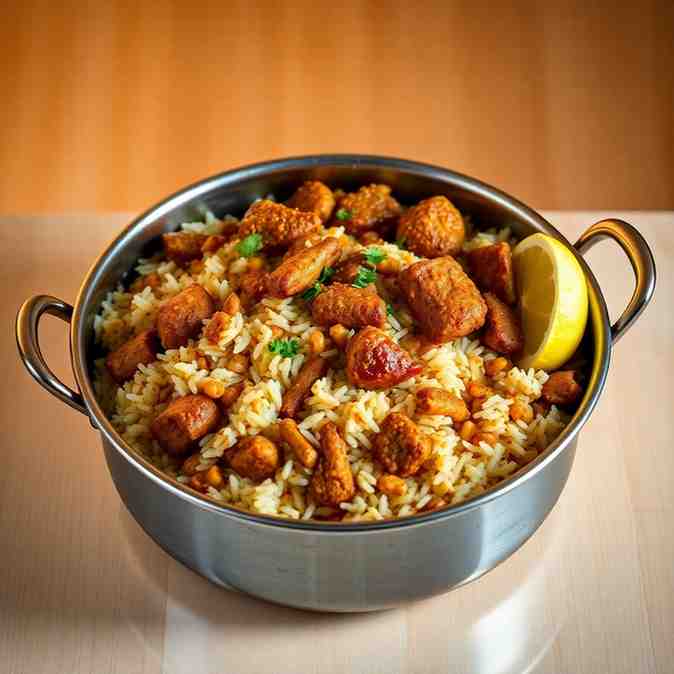
Ever wondered how to make that incredibly fragrant, sweet-savory rice dish that’s the pride of Afghan cuisine? You’re in the right place! We’re talking about Aromatic Afghan Kabuli Pulao, a truly special dish that’s perfect for celebrations or simply elevating your everyday meal. This isn't just any rice dish; it's a culinary masterpiece featuring tender lamb, sweet caramelized carrots, and plump raisins, all infused with warm, aromatic spices. If you're looking for best cooking recipes to impress, or recipes to learn a new skill, Kabuli Pulao is an experience in itself.
It’s known as the national dish of Afghanistan, cherished for its rich flavors and beautiful presentation, making it one of those
cooking food recipes you absolutely must try new recipes. Many home cooks might find it intimidating, but this guide walks you through a single, reliable recipe with clear timings, ratios, and fixes if anything goes wrong, making it approachable even for cooking for beginners recipes. Get ready to learn to cook recipes that will transport your taste buds!
Ingredients
Directions
- Rinse & Soak the Rice
- Place the Basmati rice in a large bowl. Rinse it under cold running water, gently swishing with your hands. Drain the starchy water. Repeat this process 4-5 times until the water runs mostly clear. This removes excess starch, which is key for fluffy, separate grains.
- Cover the rinsed rice with plenty of fresh, cool water and let it soak for at least 30 minutes, but no longer than 2 hours. Soaking helps the rice cook evenly and prevents breakage during steaming.
- Make the Char Masala (Quick Version)
- In a small dry skillet, lightly toast the cumin seeds, green cardamom seeds, black peppercorns, and cloves over medium-low heat for 1-2 minutes until fragrant. Be careful not to burn them.
- Transfer the toasted spices to a spice grinder or mortar and pestle and grind them into a fine powder. If using pre-ground spices, simply stir them together. Set aside. You’ll use part now for the lamb and save a little for final layering.
- Brown the Lamb & Build the Broth
- Pat the lamb pieces thoroughly dry with paper towels. This is crucial for achieving a good sear.
- Heat ¼ cup neutral oil or ghee in a large heavy-bottomed pot or Dutch oven over medium-high heat. Once hot, carefully add the lamb pieces in a single layer, working in batches if necessary to avoid overcrowding. Sear until nicely browned on all sides, about 5-7 minutes per batch. Remove the browned lamb and set aside.
- Reduce heat to medium. Add the sliced onions to the pot, scraping up any browned bits from the lamb. Sauté the onions, stirring occasionally, until deeply golden brown and softened, about 10-15 minutes. Don’t rush this step; the caramelization adds immense flavor and color to the broth.
- Add the minced garlic, whole cumin seeds, green cardamom, black cardamom, cloves, cinnamon stick, black peppercorns, and 1 teaspoon of fine salt to the onions. Cook for another minute until fragrant.
- Return the browned lamb to the pot. Sprinkle about 1 teaspoon of your prepared Char Masala over the lamb. Pour in 4-5 cups of water, enough to just cover the lamb. Bring to a boil, then reduce heat to low, cover, and simmer for 1.5 to 2 hours, or until the lamb is fork-tender and easily pulls away from the bone.
- Once the lamb is tender, carefully remove it from the broth and set aside. Skim any excess fat from the surface of the broth if desired. Measure out 2 cups of this flavorful lamb broth; you’ll need it for the rice.
- Prepare the Carrot & Raisin Topping
- In a separate skillet, heat 1 tablespoon neutral oil or ghee over medium heat. Add the matchstick carrots and sauté for 5-7 minutes until they are just tender-crisp.
- Sprinkle 2 tablespoons of granulated sugar over the carrots. Continue to sauté, stirring frequently, for another 3-5 minutes until the sugar melts and lightly caramelizes the carrots, giving them a beautiful glossy sheen.
- Add the raisins to the skillet and cook for just 1-2 minutes, stirring, until they plump up slightly. Be careful not to cook them too long or they might burst.
- Remove from heat and set aside. Keep the carrots and raisins separate for layering and garnish.
- Parboil the Rice
- Drain the soaked rice thoroughly.
- Bring a large pot of heavily salted water (like pasta water) to a rolling boil.
- Add the drained rice to the boiling water and parboil for approximately 5-7 minutes for regular basmati, or 8-10 minutes for sella basmati. The rice grains should be soft on the outside but still have a slight bite (a firm, uncooked core) when you bite into one. Don't overcook!
- Drain the parboiled rice immediately in a fine mesh strainer or colander. Briefly rinse with cool water to stop the cooking process and remove excess starch, ensuring separate grains. Let it sit in the strainer to drain thoroughly while you prepare the caramel.
- Make the Caramel Syrup (for Color & Aroma)
- In a small saucepan, add 2 tablespoons of granulated sugar and 1 tablespoon of water. Heat over medium-low heat without stirring initially. Let the sugar melt and slowly caramelize to a deep amber color. This usually takes 5-8 minutes. Watch it carefully, as it can burn quickly.
- Once amber, carefully and slowly add ¼ cup of the reserved lamb broth (from Step 3) to the caramel, stirring constantly. Be cautious, as it will bubble up vigorously. Continue to stir until the caramel dissolves into a smooth, dark syrup. This will be used to color and flavor parts of your rice.
- Layer the Rice, Lamb, and Topping
- Lightly oil the bottom of your large heavy-bottomed pot or Dutch oven (the same one used for the lamb, after cleaning if necessary, or a fresh one).
- Spread about a third of the parboiled rice evenly over the bottom of the pot.
- Arrange about half of the cooked lamb pieces over this rice layer.
- Sprinkle a pinch of the remaining Char Masala and spoon about a third of the caramel syrup mixture and a third of the remaining measured lamb broth (you should have about 1.75 cups left after making the caramel syrup) over the lamb and rice.
- Repeat with another layer of rice, the remaining lamb, more Char Masala, and broth-caramel mixture.
- Finish with the remaining rice, forming a gentle mound.
- Using the handle of a spoon or a wooden skewer, poke 4-5 holes down through the rice layers to the bottom of the pot. These "vents" allow steam to circulate evenly.
- Pour any remaining broth-caramel mixture evenly over the top of the rice, aiming for the vents.
- Create a small packet with foil or parchment paper, or simply pile the prepared carrots and raisins on top of the rice mound. This keeps them warm and prevents them from getting mushy during steaming.
- Steam the Rice to Finish
- Cover the pot tightly with its lid. For extra tight sealing and steam retention, you can wrap the lid in a clean kitchen towel before placing it on the pot, ensuring the towel doesn't touch the flame.
- Place the pot over medium heat for 5-7 minutes to bring it up to steaming temperature. You should hear gentle bubbling or see steam escaping.
- Reduce the heat to the lowest possible setting and continue to steam for 45-60 minutes. The rice grains will absorb the broth, cook through, and become beautifully fluffy and separate.
- After steaming, turn off the heat and let the pot rest, still covered, for at least 15-20 minutes. This resting period allows the steam to redistribute, resulting in perfectly fluffy rice.
- Fluff, Garnish & Serve
- Remove the lid and the carrot/raisin packet. Gently fluff the rice with a large spoon or fork, taking care not to mash the grains. You can gently fold some of the carrots and raisins into the rice if desired.
- Transfer the Kabuli Pulao to a large serving platter, forming a beautiful mound.
- Arrange the tender lamb pieces on top of the rice.
- Scatter the remaining carrots and raisins, along with toasted slivered almonds or pistachios, over the lamb and rice.
- Serve immediately with a crisp salad (like chopped cucumber and tomato), plain or garlic yogurt, and perhaps some flatbread or naan
Aromatic Afghan Kabuli Pulao Best Cooking Recipes
- Serves: 8 People
- Prepare Time: 45 minutes
- Cooking Time: 3 hours 15
- Calories: 650
- Difficulty: Medium
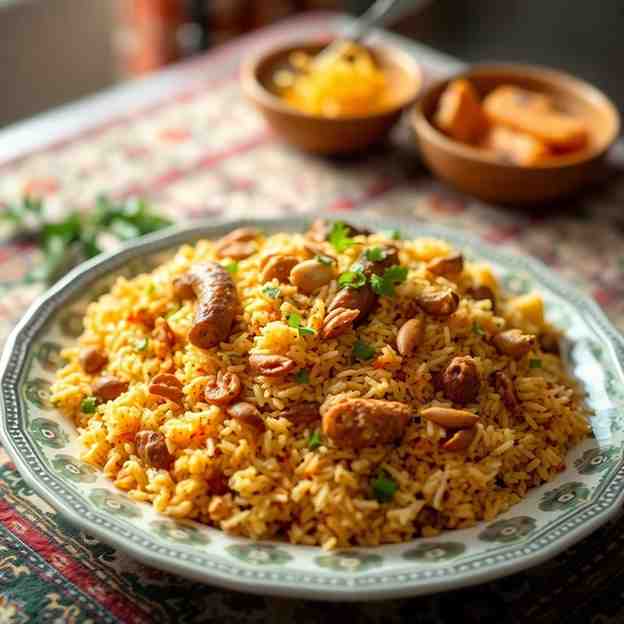
Ever wondered how to make that incredibly fragrant, sweet-savory rice dish that’s the pride of Afghan cuisine? You’re in the right place! We’re talking about Aromatic Afghan Kabuli Pulao, a truly special dish that’s perfect for celebrations or simply elevating your everyday meal. This isn't just any rice dish; it's a culinary masterpiece featuring tender lamb, sweet caramelized carrots, and plump raisins, all infused with warm, aromatic spices. If you're looking for best cooking recipes to impress, or recipes to learn a new skill, Kabuli Pulao is an experience in itself.
It’s known as the national dish of Afghanistan, cherished for its rich flavors and beautiful presentation, making it one of those
cooking food recipes you absolutely must try new recipes. Many home cooks might find it intimidating, but this guide walks you through a single, reliable recipe with clear timings, ratios, and fixes if anything goes wrong, making it approachable even for cooking for beginners recipes. Get ready to learn to cook recipes that will transport your taste buds!
Ingredients
Directions
- Rinse & Soak the Rice
- Place the Basmati rice in a large bowl. Rinse it under cold running water, gently swishing with your hands. Drain the starchy water. Repeat this process 4-5 times until the water runs mostly clear. This removes excess starch, which is key for fluffy, separate grains.
- Cover the rinsed rice with plenty of fresh, cool water and let it soak for at least 30 minutes, but no longer than 2 hours. Soaking helps the rice cook evenly and prevents breakage during steaming.
- Make the Char Masala (Quick Version)
- In a small dry skillet, lightly toast the cumin seeds, green cardamom seeds, black peppercorns, and cloves over medium-low heat for 1-2 minutes until fragrant. Be careful not to burn them.
- Transfer the toasted spices to a spice grinder or mortar and pestle and grind them into a fine powder. If using pre-ground spices, simply stir them together. Set aside. You’ll use part now for the lamb and save a little for final layering.
- Brown the Lamb & Build the Broth
- Pat the lamb pieces thoroughly dry with paper towels. This is crucial for achieving a good sear.
- Heat ¼ cup neutral oil or ghee in a large heavy-bottomed pot or Dutch oven over medium-high heat. Once hot, carefully add the lamb pieces in a single layer, working in batches if necessary to avoid overcrowding. Sear until nicely browned on all sides, about 5-7 minutes per batch. Remove the browned lamb and set aside.
- Reduce heat to medium. Add the sliced onions to the pot, scraping up any browned bits from the lamb. Sauté the onions, stirring occasionally, until deeply golden brown and softened, about 10-15 minutes. Don’t rush this step; the caramelization adds immense flavor and color to the broth.
- Add the minced garlic, whole cumin seeds, green cardamom, black cardamom, cloves, cinnamon stick, black peppercorns, and 1 teaspoon of fine salt to the onions. Cook for another minute until fragrant.
- Return the browned lamb to the pot. Sprinkle about 1 teaspoon of your prepared Char Masala over the lamb. Pour in 4-5 cups of water, enough to just cover the lamb. Bring to a boil, then reduce heat to low, cover, and simmer for 1.5 to 2 hours, or until the lamb is fork-tender and easily pulls away from the bone.
- Once the lamb is tender, carefully remove it from the broth and set aside. Skim any excess fat from the surface of the broth if desired. Measure out 2 cups of this flavorful lamb broth; you’ll need it for the rice.
- Prepare the Carrot & Raisin Topping
- In a separate skillet, heat 1 tablespoon neutral oil or ghee over medium heat. Add the matchstick carrots and sauté for 5-7 minutes until they are just tender-crisp.
- Sprinkle 2 tablespoons of granulated sugar over the carrots. Continue to sauté, stirring frequently, for another 3-5 minutes until the sugar melts and lightly caramelizes the carrots, giving them a beautiful glossy sheen.
- Add the raisins to the skillet and cook for just 1-2 minutes, stirring, until they plump up slightly. Be careful not to cook them too long or they might burst.
- Remove from heat and set aside. Keep the carrots and raisins separate for layering and garnish.
- Parboil the Rice
- Drain the soaked rice thoroughly.
- Bring a large pot of heavily salted water (like pasta water) to a rolling boil.
- Add the drained rice to the boiling water and parboil for approximately 5-7 minutes for regular basmati, or 8-10 minutes for sella basmati. The rice grains should be soft on the outside but still have a slight bite (a firm, uncooked core) when you bite into one. Don't overcook!
- Drain the parboiled rice immediately in a fine mesh strainer or colander. Briefly rinse with cool water to stop the cooking process and remove excess starch, ensuring separate grains. Let it sit in the strainer to drain thoroughly while you prepare the caramel.
- Make the Caramel Syrup (for Color & Aroma)
- In a small saucepan, add 2 tablespoons of granulated sugar and 1 tablespoon of water. Heat over medium-low heat without stirring initially. Let the sugar melt and slowly caramelize to a deep amber color. This usually takes 5-8 minutes. Watch it carefully, as it can burn quickly.
- Once amber, carefully and slowly add ¼ cup of the reserved lamb broth (from Step 3) to the caramel, stirring constantly. Be cautious, as it will bubble up vigorously. Continue to stir until the caramel dissolves into a smooth, dark syrup. This will be used to color and flavor parts of your rice.
- Layer the Rice, Lamb, and Topping
- Lightly oil the bottom of your large heavy-bottomed pot or Dutch oven (the same one used for the lamb, after cleaning if necessary, or a fresh one).
- Spread about a third of the parboiled rice evenly over the bottom of the pot.
- Arrange about half of the cooked lamb pieces over this rice layer.
- Sprinkle a pinch of the remaining Char Masala and spoon about a third of the caramel syrup mixture and a third of the remaining measured lamb broth (you should have about 1.75 cups left after making the caramel syrup) over the lamb and rice.
- Repeat with another layer of rice, the remaining lamb, more Char Masala, and broth-caramel mixture.
- Finish with the remaining rice, forming a gentle mound.
- Using the handle of a spoon or a wooden skewer, poke 4-5 holes down through the rice layers to the bottom of the pot. These "vents" allow steam to circulate evenly.
- Pour any remaining broth-caramel mixture evenly over the top of the rice, aiming for the vents.
- Create a small packet with foil or parchment paper, or simply pile the prepared carrots and raisins on top of the rice mound. This keeps them warm and prevents them from getting mushy during steaming.
- Steam the Rice to Finish
- Cover the pot tightly with its lid. For extra tight sealing and steam retention, you can wrap the lid in a clean kitchen towel before placing it on the pot, ensuring the towel doesn't touch the flame.
- Place the pot over medium heat for 5-7 minutes to bring it up to steaming temperature. You should hear gentle bubbling or see steam escaping.
- Reduce the heat to the lowest possible setting and continue to steam for 45-60 minutes. The rice grains will absorb the broth, cook through, and become beautifully fluffy and separate.
- After steaming, turn off the heat and let the pot rest, still covered, for at least 15-20 minutes. This resting period allows the steam to redistribute, resulting in perfectly fluffy rice.
- Fluff, Garnish & Serve
- Remove the lid and the carrot/raisin packet. Gently fluff the rice with a large spoon or fork, taking care not to mash the grains. You can gently fold some of the carrots and raisins into the rice if desired.
- Transfer the Kabuli Pulao to a large serving platter, forming a beautiful mound.
- Arrange the tender lamb pieces on top of the rice.
- Scatter the remaining carrots and raisins, along with toasted slivered almonds or pistachios, over the lamb and rice.
- Serve immediately with a crisp salad (like chopped cucumber and tomato), plain or garlic yogurt, and perhaps some flatbread or naan
The following nutritional values are per serving (one piece of cake) Calories 550-650 kcal Carbohydrates 60-70g Protein 30-40g Fat 20-30g Tools and ingredients that can help you cook more easily and consistently. Problem: Achieving perfectly fluffy, separate rice grains can be tricky, especially if your pot heats unevenly. Problem: Grinding whole spices for the char masala takes extra time and effort. Problem: Draining soaked or parboiled rice thoroughly is crucial, but a regular colander can sometimes leave grains behind or break delicate basmati. Click any ingredient for detailed nutritional information:Recipe Nutritional Values
Additional Information
Recipe Success Tips
Pro Tips for Perfect Kabuli Pulao
Kabuli Pulao Cooking Timeline & Ratios (Cheat Sheet)
Frequently Asked Questions
Recommended Kitchen Tools
Time-Saving Tools & Ingredients
Agitate: A thin-bottomed pot can lead to burnt rice at the bottom and undercooked grains on top, ruining your beautiful Kabuli Pulao!
Solution: Invest in a heavy-bottomed pot or Dutch oven. Its even heat distribution is a game-changer for steaming rice beautifully and preventing scorching.Time-Saving Tools & Ingredients
Agitate: When you're eager to get that amazing aroma filling your kitchen, fiddling with a spice grinder can feel like a chore.
Solution: Use pre-ground versions of the individual spices (cumin, cardamom, cloves, cinnamon, black pepper) to quickly assemble your char masala. Just make sure they're fresh for the best flavor!Time-Saving Tools & Ingredients
Agitate: Mushy, waterlogged rice is the enemy of a perfect pulao, and nobody wants to lose precious grains down the drain!
Solution: A fine-mesh strainer or colander ensures all the water drains away efficiently without losing or damaging your rice, setting you up for fluffy success.Calories per Ingredient
Resources & References
You may also like

Hey there! I’m just someone who seriously loves good food and believes that cooking doesn’t have to be complicated to be amazing. Whether it’s a quick weeknight dinner or a cozy weekend meal, I’m all about sharing easy, tasty recipes that actually work.