
Baccalà alla Napoletana Recipe - Salted Cod Fish
Baccalà alla Napoletana Recipe - Salted Cod Fish

- Serves: 4 People
- Prepare Time: 20 minutes
- Cooking Time: 40 minutes
- Calories: -
- Difficulty: Medium
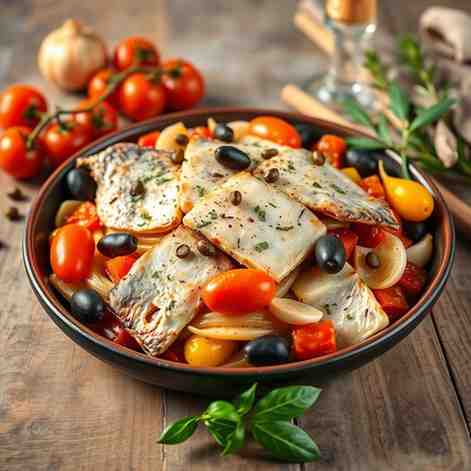
Welcome to the heart of Neapolitan tradition, where simple ingredients transform into a symphony of flavors! Today, we're diving into Baccalà alla Napoletana, a truly special dish featuring salted cod fish braised in a vibrant tomato sauce. Imagine tender, flaky cod infused with the bright acidity of tomatoes, the briny punch of olives and capers, and a hint of garlic—it’s a taste that transports you straight to the bustling streets of Naples.
While Baccalà alla Napoletana is a beloved staple for Christmas Eve seafood feasts, it's a wonderfully comforting and impressive meal you can enjoy any time of year. Don't let the idea of salted cod fish intimidate you; the secret to success lies in proper preparation. Yes, it needs a good soak, but the cooking itself is surprisingly straightforward, making this authentic Italian cooking recipe accessible to everyone. Get ready to master one of the most cherished special Italian dishes!
What You’ll Need: A large skillet or Dutch oven, a mixing bowl
Ingredients
Directions
- Part 1: How to Prepare Salt Cod for Cooking (Soak It the Right Way)
- What to Buy (US Shopper Version): When buying salted cod fish where to buy, look for thick, white pieces of baccalà, ideally center-cut, with minimal bones. Avoid overly shredded or thin pieces, as they can become mushy. "Pre-soaked baccalà" is an option for convenience, but be aware it might still need a final rinse or shorter soak; always taste a tiny piece before cooking.
- Initial Rinse: When you first get your dry salted cod fish, rinse it thoroughly under cold running water to remove any surface salt.
- The Soaking Method: Place the rinsed cod in a large bowl and submerge it completely in cold water. Cover the bowl and refrigerate it.Water Change Cadence: Change the water every 6-8 hours (or at least twice a day) for 2-3 days. This consistent water exchange is vital for drawing out the salt.
- Minimum vs. Ideal Time: The minimum soaking time is usually 24 hours, but 48-72 hours is ideal. The exact time depends on the thickness of your cod and how heavily it was salted. Thicker pieces and very salty brands will need longer.
- How to Tell When It’s Ready (The Competitors Skip This!): This is the most important step!
- The Test-Bite Method: After 24-36 hours, snip off a tiny (pea-sized) piece of cod from the thickest part. Simmer it in a small pot of unsalted water for 1-2 minutes until cooked through. Let it cool slightly, then taste it.
- What You’re Tasting For: It should taste pleasantly salty, like a seasoned piece of fish, but not overwhelmingly so. If it’s still too salty, continue soaking and changing the water. If it's bland (which can happen with pre-soaked fish), you'll need to add more seasoning to your sauce later.
- Texture Cues: The fish should be rehydrated, plump, and flexible, not stiff or dry.
- Troubleshooting Soaking:
- Still too salty? Extend the soaking time by another 12-24 hours, continuing to change the water. You can also reduce or omit additional briny ingredients (like olives and capers) in the sauce.
- Too bland? If your test bite reveals under-salted fish, don't worry! You can always adjust the seasoning of your sauce at the end of cooking.
- Part 2: Making Baccalà alla Napoletana
- Final Prep the Fish: Once your salted cod fish is perfectly desalted, drain it well and pat it thoroughly dry with paper towels. This helps prevent splattering and ensures the sauce adheres well. Inspect for any remaining bones or skin and remove them if desired. Portion the cod into even, 2-inch thick pieces. If using the optional flour dusting, lightly dredge each piece in flour, shaking off any excess.
- Build the Sauce:
- Heat the olive oil in a large skillet or Dutch oven over medium-low heat. Add the sliced garlic and red pepper flakes (and anchovies, if using). Gently cook, stirring occasionally, until the garlic is fragrant and golden, not brown—about 3-4 minutes. Burnt garlic will make your sauce bitter.
- Pour in the crushed tomatoes. Stir well and bring the sauce to a gentle simmer. Reduce the heat to low, cover partially, and let it simmer for 15-20 minutes, stirring occasionally, until it thickens to a spoon-coating sauce before adding fish.
- Stir in the olives and capers (and white wine, if using) during the last 5 minutes of the sauce's thickening. These briny ingredients (olives/capers) should be added deliberately to meld their flavors.
- Braise the Fish Gently (The Main Method):
- Carefully nestle the prepared cod pieces into the simmering tomato sauce in a single layer. Make sure the fish is mostly submerged.
- Keep the heat at a bare simmer; do not stir the fish once it's in the sauce, as this can cause it to break apart.
- Cover the pan and cook for 10-15 minutes, or until the fish is just cooked through. The exact timing will depend on the thickness of your cod.
- How to Know When the Fish Is Done (Without Overcooking It):
- Best Method: The internal temperature should reach 145°F (63°C) at its thickest point.
- Visual Cues: The fish will become opaque throughout and flake easily with a fork. It should still be moist and tender, not dry or stringy.
- What Overcooked Baccalà Looks Like: Dry, stringy, and crumbly. To avoid this, err on the side of slightly undercooking, as it will continue to cook a bit from residual heat.
- Finish + Balance:
- Remove the pan from the heat. Sprinkle generously with fresh parsley.
- Taste the sauce and a small piece of the fish. Only at this point, if needed, add a pinch of salt. Remember, the cod, olives, and capers all contribute saltiness, so it's best to season carefully at the end.
Baccalà alla Napoletana Recipe - Salted Cod Fish
- Serves: 4 People
- Prepare Time: 20 minutes
- Cooking Time: 40 minutes
- Calories: -
- Difficulty: Medium
Welcome to the heart of Neapolitan tradition, where simple ingredients transform into a symphony of flavors! Today, we're diving into Baccalà alla Napoletana, a truly special dish featuring salted cod fish braised in a vibrant tomato sauce. Imagine tender, flaky cod infused with the bright acidity of tomatoes, the briny punch of olives and capers, and a hint of garlic—it’s a taste that transports you straight to the bustling streets of Naples.
While Baccalà alla Napoletana is a beloved staple for Christmas Eve seafood feasts, it's a wonderfully comforting and impressive meal you can enjoy any time of year. Don't let the idea of salted cod fish intimidate you; the secret to success lies in proper preparation. Yes, it needs a good soak, but the cooking itself is surprisingly straightforward, making this authentic Italian cooking recipe accessible to everyone. Get ready to master one of the most cherished special Italian dishes!
What You’ll Need: A large skillet or Dutch oven, a mixing bowl
Ingredients
Directions
- Part 1: How to Prepare Salt Cod for Cooking (Soak It the Right Way)
- What to Buy (US Shopper Version): When buying salted cod fish where to buy, look for thick, white pieces of baccalà, ideally center-cut, with minimal bones. Avoid overly shredded or thin pieces, as they can become mushy. "Pre-soaked baccalà" is an option for convenience, but be aware it might still need a final rinse or shorter soak; always taste a tiny piece before cooking.
- Initial Rinse: When you first get your dry salted cod fish, rinse it thoroughly under cold running water to remove any surface salt.
- The Soaking Method: Place the rinsed cod in a large bowl and submerge it completely in cold water. Cover the bowl and refrigerate it.Water Change Cadence: Change the water every 6-8 hours (or at least twice a day) for 2-3 days. This consistent water exchange is vital for drawing out the salt.
- Minimum vs. Ideal Time: The minimum soaking time is usually 24 hours, but 48-72 hours is ideal. The exact time depends on the thickness of your cod and how heavily it was salted. Thicker pieces and very salty brands will need longer.
- How to Tell When It’s Ready (The Competitors Skip This!): This is the most important step!
- The Test-Bite Method: After 24-36 hours, snip off a tiny (pea-sized) piece of cod from the thickest part. Simmer it in a small pot of unsalted water for 1-2 minutes until cooked through. Let it cool slightly, then taste it.
- What You’re Tasting For: It should taste pleasantly salty, like a seasoned piece of fish, but not overwhelmingly so. If it’s still too salty, continue soaking and changing the water. If it's bland (which can happen with pre-soaked fish), you'll need to add more seasoning to your sauce later.
- Texture Cues: The fish should be rehydrated, plump, and flexible, not stiff or dry.
- Troubleshooting Soaking:
- Still too salty? Extend the soaking time by another 12-24 hours, continuing to change the water. You can also reduce or omit additional briny ingredients (like olives and capers) in the sauce.
- Too bland? If your test bite reveals under-salted fish, don't worry! You can always adjust the seasoning of your sauce at the end of cooking.
- Part 2: Making Baccalà alla Napoletana
- Final Prep the Fish: Once your salted cod fish is perfectly desalted, drain it well and pat it thoroughly dry with paper towels. This helps prevent splattering and ensures the sauce adheres well. Inspect for any remaining bones or skin and remove them if desired. Portion the cod into even, 2-inch thick pieces. If using the optional flour dusting, lightly dredge each piece in flour, shaking off any excess.
- Build the Sauce:
- Heat the olive oil in a large skillet or Dutch oven over medium-low heat. Add the sliced garlic and red pepper flakes (and anchovies, if using). Gently cook, stirring occasionally, until the garlic is fragrant and golden, not brown—about 3-4 minutes. Burnt garlic will make your sauce bitter.
- Pour in the crushed tomatoes. Stir well and bring the sauce to a gentle simmer. Reduce the heat to low, cover partially, and let it simmer for 15-20 minutes, stirring occasionally, until it thickens to a spoon-coating sauce before adding fish.
- Stir in the olives and capers (and white wine, if using) during the last 5 minutes of the sauce's thickening. These briny ingredients (olives/capers) should be added deliberately to meld their flavors.
- Braise the Fish Gently (The Main Method):
- Carefully nestle the prepared cod pieces into the simmering tomato sauce in a single layer. Make sure the fish is mostly submerged.
- Keep the heat at a bare simmer; do not stir the fish once it's in the sauce, as this can cause it to break apart.
- Cover the pan and cook for 10-15 minutes, or until the fish is just cooked through. The exact timing will depend on the thickness of your cod.
- How to Know When the Fish Is Done (Without Overcooking It):
- Best Method: The internal temperature should reach 145°F (63°C) at its thickest point.
- Visual Cues: The fish will become opaque throughout and flake easily with a fork. It should still be moist and tender, not dry or stringy.
- What Overcooked Baccalà Looks Like: Dry, stringy, and crumbly. To avoid this, err on the side of slightly undercooking, as it will continue to cook a bit from residual heat.
- Finish + Balance:
- Remove the pan from the heat. Sprinkle generously with fresh parsley.
- Taste the sauce and a small piece of the fish. Only at this point, if needed, add a pinch of salt. Remember, the cod, olives, and capers all contribute saltiness, so it's best to season carefully at the end.
You may also like



Hey there! I’m just someone who seriously loves good food and believes that cooking doesn’t have to be complicated to be amazing. Whether it’s a quick weeknight dinner or a cozy weekend meal, I’m all about sharing easy, tasty recipes that actually work.