Crispy Pork Belly Griot - Haitian Feast
Crispy Pork Belly Griot - Haitian Feast
- Serves: 6 People
- Prepare Time: 1 hour 15 m
- Cooking Time: 2 hours
- Calories: -
- Difficulty: Medium
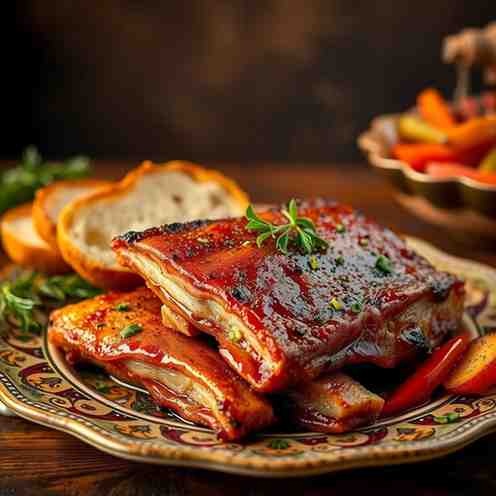
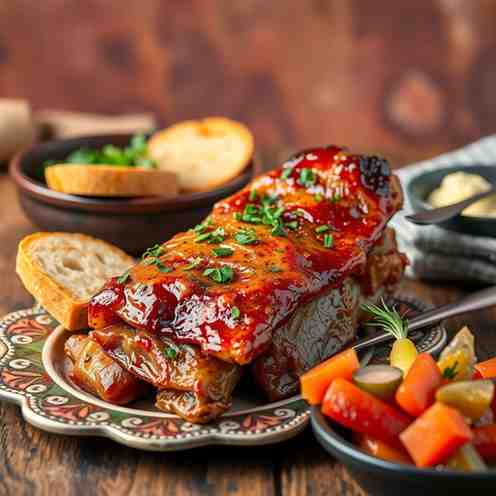
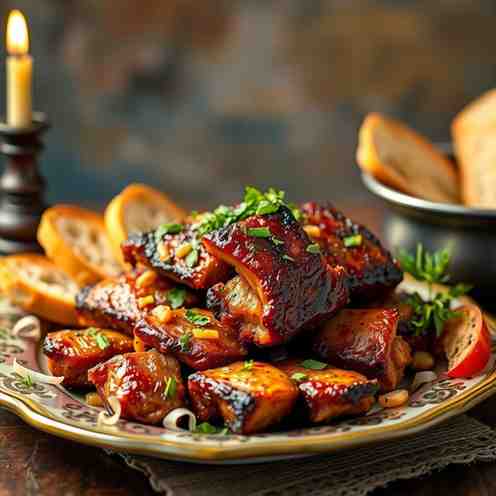
Welcome to the heart of Haitian cuisine! Today, we're diving into an iconic plate that’s a true celebration of flavor and texture: Haitian Griot with Bannann Peze and Pikliz. Imagine perfectly crispy pork belly that’s tender and juicy inside, served alongside golden, fried plantains (bannann peze), and bright, spicy pickled cabbage (pikliz). This isn't just a meal; it's an experience – a symphony of savory, tangy, and spicy notes that will transport your taste buds straight to the Caribbean.
Crispy outside / juicy inside pork: The secret to truly irresistible griot.
Properly seasoned, crisp plantains: No bland or soggy bannann peze here!
Bright, spicy pikliz that makes the plate: The tangy counterpoint that cuts through the richness and elevates every bite.
Haitian Griot is a beloved national dish featuring marinated, braised, and then fried pork. It’s renowned for its incredible texture – incredibly tender on the inside with a gloriously crispy pork belly exterior. It’s almost always served as part of a complete plate, traditionally accompanied by bannann peze (double-fried green plantains) and pikliz (a spicy, tangy pickled cabbage slaw). This trio is a match made in culinary heaven: the rich, savory pork is balanced by the starchy, slightly sweet plantains, while the vibrant, acidic pikliz cuts through the richness, refreshing your palate with every bite.
Let’s define a few key terms:
Griot: The star of the show – succulent, fried pork belly that's been marinated and braised to perfection.
Epis: The aromatic seasoning paste that forms the flavor base for much of Haitian cooking, including griot. It's a blend of herbs, garlic, peppers, and citrus.
Pikliz: A spicy, tangy relish made from shredded cabbage, carrots, bell peppers, Scotch bonnet peppers, and vinegar. It’s essential for balancing the richness of griot.
Bannann Peze: Double-fried green plantains, flattened and served as a starchy, slightly sweet accompaniment.
Making authentic Haitian Griot with Bannann Peze and Pikliz is a process that rewards patience. Here’s a quick overview of how to manage your time:
3 days before: Make the pikliz. This allows the flavors to meld and the spice to mellow slightly, making it truly exceptional.
Night before (or 3+ hours): Blend your epis, then marinate the pork. This long soak is crucial for infusing flavor deep into the meat.
Cooking day: Braise the pork until tender, then thoroughly dry it for maximum crispness. Fry the pork, then prepare and double-fry the plantains just before serving.
Same-day note: While pikliz is best after 3 days, even a few hours of resting in the fridge helps the flavors develop. If you’re short on time, you can make it the same day, but plan ahead if possible!
Ingredients
Directions
- Make the epis (5 minutes)
- Roughly chop all epis ingredients: garlic, onion, bell peppers, parsley, thyme, cilantro, and Scotch bonnet(s).
- Combine all chopped ingredients in a blender or food processor with the white vinegar, lime juice, salt, and black pepper.
- Process until a thick, somewhat chunky paste forms. The "right texture" is not perfectly smooth like a sauce, but rather finely minced and integrated, with a slight texture remaining.
- What to do with extra: This recipe makes about 1.5 cups of epis. You'll use 1/2 cup for the griot. Store any extra epis in an airtight container in the fridge for up to 1 week, or freeze in ice cube trays for up to 3 months for future use.
- Marinate the pork (Night before or 3+ hours)
- Optional “quick clean” step: Place the cut pork shoulder pieces in a bowl. Add a few tablespoons of lime juice or vinegar and enough water to cover. Swish around, then drain and rinse thoroughly under cold water. Pat dry with paper towels. This traditional step helps remove impurities and any gamey smell.
- Cut the pork shoulder into approximately 2-inch pieces. The "cut size" matters because uniform pieces will braise and fry more evenly. Too small, and they might dry out; too large, and they won't crisp up properly.
- In a large bowl, combine the cleaned and dried pork pieces with 1/2 cup of the prepared epis, 1/2 cup fresh lime juice, 2 sprigs fresh thyme, 2 sprigs fresh parsley, 1 teaspoon salt, and 1/2 teaspoon black pepper.
- Massage the marinade thoroughly into the pork. Cover the bowl and refrigerate.
- Marinating time: For best flavor, marinate for at least 3 hours, but ideally "overnight" (8-12 hours). What changes overnight is that the flavors penetrate deeper into the meat, resulting in a more robustly seasoned griot.
- Start the pikliz (3 days before serving)
- Prepare the vegetables: Very thinly slice the cabbage, carrots, onion/shallots, and Scotch bonnet peppers. The "thin slicing targets" are key for the pikliz to absorb the brine quickly and achieve the right crisp-tender texture.
- In a clean, large glass jar (or a bowl that can be covered), layer the prepared vegetables. Add the fresh thyme sprigs and optional whole spices.
- In a separate bowl, whisk together the white vinegar, lime juice, and salt until the salt dissolves.
- Pour the liquid over the vegetables, ensuring the "covering liquid rule" is met – the vegetables should be fully submerged. You may need to press them down gently.
- Seal the jar tightly and refrigerate. For optimal flavor development, give the jar a gentle shake once or twice a day. The "shaking schedule" helps distribute the brine and ensures all vegetables are evenly pickled.
- Braise/simmer the pork until tender (Cooking day)
- Transfer the marinated pork (including all marinade) to a heavy-bottomed pot or Dutch oven.
- Add just enough water or chicken broth to reach a "liquid level guidance" of about halfway up the pork pieces. You want to simmer, not boil, the pork.
- Bring to a gentle simmer over medium heat, then reduce heat to low, cover, and cook for 1 to 1.5 hours, or until the pork is fork-tender.
- Tenderness checkpoint: The pork should easily pull apart with a fork. For an "internal temp checkpoint," it should reach at least 190-200°F (88-93°C) for optimal tenderness.
- Once tender, remove the pork pieces from the pot and set aside.
- Reduce braising juices for serving: Bring the remaining braising liquid in the pot to a vigorous simmer over medium-high heat. Cook, stirring occasionally, until the liquid has reduced by about half and thickened slightly into a flavorful glaze. This reduction adds incredible "flavor + shine" when drizzled over the finished griot.
- Dry the pork (this is the crispness hack)
- Carefully "drain" the braised pork pieces, letting any excess liquid drip off.
- Arrange the pork in a single layer on a "wire rack set over a baking sheet."
- Using paper towels, gently "blot" each piece of pork thoroughly. You want them as dry as possible.
- Why this prevents splatter and greasy crust: This crucial step removes surface moisture. Moisture causes oil to splatter violently during frying and prevents the pork from forming a truly crisp, non-greasy crust.
- Fry the griot to crisp (Cooking day)
- In the same heavy pot or Dutch oven (cleaned if necessary), add 4-6 cups of vegetable oil, ensuring it's at least 2-3 inches deep. Heat the oil over medium-high heat until it reaches a "oil temp target range" of 350-375°F (175-190°C). Use a meat thermometer to monitor.
- Carefully add the dried pork pieces to the hot oil in "batch frying." Do not overcrowd the pot, as this will lower the oil temperature and result in soggy pork. Fry in batches until deeply golden brown and wonderfully crisp, about 5-8 minutes per batch.
- Remove the fried griot with a slotted spoon and place it back on the wire rack over the baking sheet to drain excess oil. This is how to "keep crisp" – don't drain on paper towels, as this can trap steam and make them soggy.
- Once all the griot is fried, you can "toss or drizzle with reduced juices" from Step 4. Use just enough to coat lightly, not to soften the crust.
- Cook bannann peze last (so it stays crisp)
- Peel method + safe handling: Cut off both ends of the green plantain. Score the skin lengthwise in 3-4 places, just through the peel. Use your thumb to pry off the strips of peel. The plantains will be firm and starchy.
- Cut the peeled plantains into 1-inch thick rounds.
- In a bowl, combine 1 cup water, 1 teaspoon salt, and 1/4 cup vinegar or lime juice. This is your seasoned bath.
- Heat the vegetable oil in the same pot (or a separate pan) to 325-350°F (160-175°C).
- First fry: Carefully add the plantain rounds to the hot oil in batches. Fry for 3-4 minutes until "lightly golden" and softened, but not browned or crispy.
- Remove the plantains from the oil and place them on a cutting board. Immediately use a plantain press (tostonera) to flatten each piece to about 1/4-inch "press thickness target." If you don't have a press, use the bottom of a heavy, flat-bottomed pan.
- Quick dip in seasoned bath: Briefly dip each flattened plantain piece into the seasoned water bath for 10-15 seconds. This adds flavor and helps create a crispier exterior.
- Increase the oil temperature to 375°F (190°C).
- Second fry: Return the flattened, dipped plantains to the hot oil in batches. Fry for another 2-3 minutes per side, or until "deep golden + crisp."
- Remove from oil and immediately place on a wire rack. "Salt immediately" while hot.
- Plate and serve
- Arrange the crispy griot, golden bannann peze, and a generous side of pikliz on a plate.
- How Haitians commonly eat it: It's traditional to dip the griot into the tangy, spicy juices of the pikliz before taking a bite – it’s a flavor explosion!
- Optional sauces mentioned briefly: While the plate is perfect as is, you could offer a side of a simple lime wedge or a store-bought hot sauce if desired, but no extra recipe is needed.
Crispy Pork Belly Griot - Haitian Feast
- Serves: 6 People
- Prepare Time: 1 hour 15 m
- Cooking Time: 2 hours
- Calories: -
- Difficulty: Medium
Welcome to the heart of Haitian cuisine! Today, we're diving into an iconic plate that’s a true celebration of flavor and texture: Haitian Griot with Bannann Peze and Pikliz. Imagine perfectly crispy pork belly that’s tender and juicy inside, served alongside golden, fried plantains (bannann peze), and bright, spicy pickled cabbage (pikliz). This isn't just a meal; it's an experience – a symphony of savory, tangy, and spicy notes that will transport your taste buds straight to the Caribbean.
Crispy outside / juicy inside pork: The secret to truly irresistible griot.
Properly seasoned, crisp plantains: No bland or soggy bannann peze here!
Bright, spicy pikliz that makes the plate: The tangy counterpoint that cuts through the richness and elevates every bite.
Haitian Griot is a beloved national dish featuring marinated, braised, and then fried pork. It’s renowned for its incredible texture – incredibly tender on the inside with a gloriously crispy pork belly exterior. It’s almost always served as part of a complete plate, traditionally accompanied by bannann peze (double-fried green plantains) and pikliz (a spicy, tangy pickled cabbage slaw). This trio is a match made in culinary heaven: the rich, savory pork is balanced by the starchy, slightly sweet plantains, while the vibrant, acidic pikliz cuts through the richness, refreshing your palate with every bite.
Let’s define a few key terms:
Griot: The star of the show – succulent, fried pork belly that's been marinated and braised to perfection.
Epis: The aromatic seasoning paste that forms the flavor base for much of Haitian cooking, including griot. It's a blend of herbs, garlic, peppers, and citrus.
Pikliz: A spicy, tangy relish made from shredded cabbage, carrots, bell peppers, Scotch bonnet peppers, and vinegar. It’s essential for balancing the richness of griot.
Bannann Peze: Double-fried green plantains, flattened and served as a starchy, slightly sweet accompaniment.
Making authentic Haitian Griot with Bannann Peze and Pikliz is a process that rewards patience. Here’s a quick overview of how to manage your time:
3 days before: Make the pikliz. This allows the flavors to meld and the spice to mellow slightly, making it truly exceptional.
Night before (or 3+ hours): Blend your epis, then marinate the pork. This long soak is crucial for infusing flavor deep into the meat.
Cooking day: Braise the pork until tender, then thoroughly dry it for maximum crispness. Fry the pork, then prepare and double-fry the plantains just before serving.
Same-day note: While pikliz is best after 3 days, even a few hours of resting in the fridge helps the flavors develop. If you’re short on time, you can make it the same day, but plan ahead if possible!
Ingredients
Directions
- Make the epis (5 minutes)
- Roughly chop all epis ingredients: garlic, onion, bell peppers, parsley, thyme, cilantro, and Scotch bonnet(s).
- Combine all chopped ingredients in a blender or food processor with the white vinegar, lime juice, salt, and black pepper.
- Process until a thick, somewhat chunky paste forms. The "right texture" is not perfectly smooth like a sauce, but rather finely minced and integrated, with a slight texture remaining.
- What to do with extra: This recipe makes about 1.5 cups of epis. You'll use 1/2 cup for the griot. Store any extra epis in an airtight container in the fridge for up to 1 week, or freeze in ice cube trays for up to 3 months for future use.
- Marinate the pork (Night before or 3+ hours)
- Optional “quick clean” step: Place the cut pork shoulder pieces in a bowl. Add a few tablespoons of lime juice or vinegar and enough water to cover. Swish around, then drain and rinse thoroughly under cold water. Pat dry with paper towels. This traditional step helps remove impurities and any gamey smell.
- Cut the pork shoulder into approximately 2-inch pieces. The "cut size" matters because uniform pieces will braise and fry more evenly. Too small, and they might dry out; too large, and they won't crisp up properly.
- In a large bowl, combine the cleaned and dried pork pieces with 1/2 cup of the prepared epis, 1/2 cup fresh lime juice, 2 sprigs fresh thyme, 2 sprigs fresh parsley, 1 teaspoon salt, and 1/2 teaspoon black pepper.
- Massage the marinade thoroughly into the pork. Cover the bowl and refrigerate.
- Marinating time: For best flavor, marinate for at least 3 hours, but ideally "overnight" (8-12 hours). What changes overnight is that the flavors penetrate deeper into the meat, resulting in a more robustly seasoned griot.
- Start the pikliz (3 days before serving)
- Prepare the vegetables: Very thinly slice the cabbage, carrots, onion/shallots, and Scotch bonnet peppers. The "thin slicing targets" are key for the pikliz to absorb the brine quickly and achieve the right crisp-tender texture.
- In a clean, large glass jar (or a bowl that can be covered), layer the prepared vegetables. Add the fresh thyme sprigs and optional whole spices.
- In a separate bowl, whisk together the white vinegar, lime juice, and salt until the salt dissolves.
- Pour the liquid over the vegetables, ensuring the "covering liquid rule" is met – the vegetables should be fully submerged. You may need to press them down gently.
- Seal the jar tightly and refrigerate. For optimal flavor development, give the jar a gentle shake once or twice a day. The "shaking schedule" helps distribute the brine and ensures all vegetables are evenly pickled.
- Braise/simmer the pork until tender (Cooking day)
- Transfer the marinated pork (including all marinade) to a heavy-bottomed pot or Dutch oven.
- Add just enough water or chicken broth to reach a "liquid level guidance" of about halfway up the pork pieces. You want to simmer, not boil, the pork.
- Bring to a gentle simmer over medium heat, then reduce heat to low, cover, and cook for 1 to 1.5 hours, or until the pork is fork-tender.
- Tenderness checkpoint: The pork should easily pull apart with a fork. For an "internal temp checkpoint," it should reach at least 190-200°F (88-93°C) for optimal tenderness.
- Once tender, remove the pork pieces from the pot and set aside.
- Reduce braising juices for serving: Bring the remaining braising liquid in the pot to a vigorous simmer over medium-high heat. Cook, stirring occasionally, until the liquid has reduced by about half and thickened slightly into a flavorful glaze. This reduction adds incredible "flavor + shine" when drizzled over the finished griot.
- Dry the pork (this is the crispness hack)
- Carefully "drain" the braised pork pieces, letting any excess liquid drip off.
- Arrange the pork in a single layer on a "wire rack set over a baking sheet."
- Using paper towels, gently "blot" each piece of pork thoroughly. You want them as dry as possible.
- Why this prevents splatter and greasy crust: This crucial step removes surface moisture. Moisture causes oil to splatter violently during frying and prevents the pork from forming a truly crisp, non-greasy crust.
- Fry the griot to crisp (Cooking day)
- In the same heavy pot or Dutch oven (cleaned if necessary), add 4-6 cups of vegetable oil, ensuring it's at least 2-3 inches deep. Heat the oil over medium-high heat until it reaches a "oil temp target range" of 350-375°F (175-190°C). Use a meat thermometer to monitor.
- Carefully add the dried pork pieces to the hot oil in "batch frying." Do not overcrowd the pot, as this will lower the oil temperature and result in soggy pork. Fry in batches until deeply golden brown and wonderfully crisp, about 5-8 minutes per batch.
- Remove the fried griot with a slotted spoon and place it back on the wire rack over the baking sheet to drain excess oil. This is how to "keep crisp" – don't drain on paper towels, as this can trap steam and make them soggy.
- Once all the griot is fried, you can "toss or drizzle with reduced juices" from Step 4. Use just enough to coat lightly, not to soften the crust.
- Cook bannann peze last (so it stays crisp)
- Peel method + safe handling: Cut off both ends of the green plantain. Score the skin lengthwise in 3-4 places, just through the peel. Use your thumb to pry off the strips of peel. The plantains will be firm and starchy.
- Cut the peeled plantains into 1-inch thick rounds.
- In a bowl, combine 1 cup water, 1 teaspoon salt, and 1/4 cup vinegar or lime juice. This is your seasoned bath.
- Heat the vegetable oil in the same pot (or a separate pan) to 325-350°F (160-175°C).
- First fry: Carefully add the plantain rounds to the hot oil in batches. Fry for 3-4 minutes until "lightly golden" and softened, but not browned or crispy.
- Remove the plantains from the oil and place them on a cutting board. Immediately use a plantain press (tostonera) to flatten each piece to about 1/4-inch "press thickness target." If you don't have a press, use the bottom of a heavy, flat-bottomed pan.
- Quick dip in seasoned bath: Briefly dip each flattened plantain piece into the seasoned water bath for 10-15 seconds. This adds flavor and helps create a crispier exterior.
- Increase the oil temperature to 375°F (190°C).
- Second fry: Return the flattened, dipped plantains to the hot oil in batches. Fry for another 2-3 minutes per side, or until "deep golden + crisp."
- Remove from oil and immediately place on a wire rack. "Salt immediately" while hot.
- Plate and serve
- Arrange the crispy griot, golden bannann peze, and a generous side of pikliz on a plate.
- How Haitians commonly eat it: It's traditional to dip the griot into the tangy, spicy juices of the pikliz before taking a bite – it’s a flavor explosion!
- Optional sauces mentioned briefly: While the plate is perfect as is, you could offer a side of a simple lime wedge or a store-bought hot sauce if desired, but no extra recipe is needed.
You may also like


Hey there! I’m just someone who seriously loves good food and believes that cooking doesn’t have to be complicated to be amazing. Whether it’s a quick weeknight dinner or a cozy weekend meal, I’m all about sharing easy, tasty recipes that actually work.