
Fabada Asturiana - Best Ham Hock & Bean Soup Recipe
Fabada Asturiana - Best Ham Hock & Bean Soup Recipe
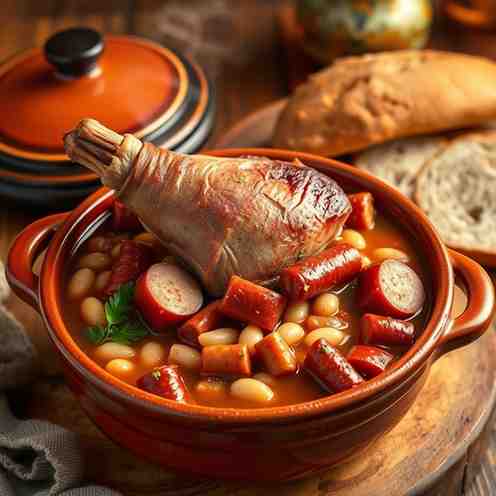
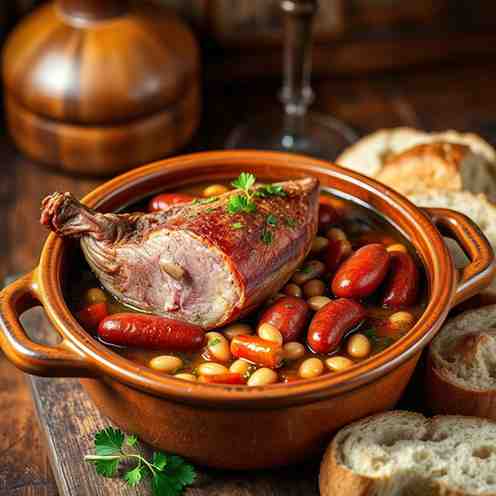
- Serves: 6 People
- Prepare Time: 20 minutes
- Cooking Time: 2.5 - 3 hou
- Calories: -
- Difficulty: Medium
Get ready to transport your taste buds straight to the heart of Spain's Asturias region with a truly authentic Fabada Asturiana! This isn't just any `ham hock and bean soup`; it's a legendary, hearty `bean stew recipe` that embodies comfort, tradition, and incredible flavor. Imagine perfectly cooked, `creamy white beans` slow-simmered with a luxurious trio of Spanish cured meats – smoky chorizo, rich morcilla (Spanish blood sausage), and tender pork like lacón or a `pork ham hock`. The result? A deeply satisfying, intensely flavorful `white bean soup` that warms you from the inside out.
Fabada is more than just a meal; it's a celebration of simple, high-quality ingredients transformed by time and gentle heat into something truly extraordinary. While it might sound fancy, our recipe is designed for home cooks who crave the real deal – a genuine taste of Asturias without needing a plane ticket. We'll guide you through every step, ensuring your first (or fiftieth!) attempt at this traditional Spanish masterpiece is a resounding success. Get ready for a rich, smoky, and unbelievably comforting experience!
What makes this version authentic: This recipe focuses on the traditional trinity: authentic Asturian beans (or best US subs), the `compango` (chorizo, morcilla, pork component), and the essential slow-simmering technique that yields incredibly creamy beans and a rich, complex broth.
Ingredients
Directions
- Soak the beans The secret to tender, creamy beans starts here! Place your `dried cannellini beans` (or chosen large white beans) in a large bowl. Cover them with at least 3-4 inches of cold water (they'll expand quite a bit!). Let them soak for a minimum of 8 hours, or ideally, overnight (12 hours). Properly soaked beans will be noticeably plump and rehydrated. Drain and rinse them thoroughly before cooking.
- Start the stew (cold water + gentle heat) In a large, heavy-bottomed pot or Dutch oven (a 5-6 quart pot is ideal), add the drained beans, the whole onion, whole garlic cloves, bay leaves, and all the `compango` meats (chorizo, morcilla, and your chosen pork component like `pork ham hock`). Pour in 8 cups of fresh cold water, ensuring everything is submerged. Add the olive oil. Place the pot over medium-high heat and bring it slowly to a gentle boil. As it heats, you'll likely see some foam rise to the surface; use a skimmer or large spoon to remove and discard this. Reducing the foam helps keep the broth clear and clean-tasting.
- Low simmer (the heart of Fabada) Once the stew reaches a gentle boil, reduce the heat immediately to the lowest setting possible, so it maintains a very gentle simmer. You should see just tiny bubbles breaking the surface, not a rolling boil. This slow, steady simmer is crucial for keeping the beans intact and allowing them to become incredibly creamy without splitting. Avoid aggressive stirring, which can break the delicate skins of the beans. Let the stew simmer, uncovered or partially covered, for 2 to 3 hours, or until the beans are completely tender. Check the water level periodically; if the beans start to peek out, add small amounts of cold water to keep them submerged. Adding cold water helps maintain the gentle simmer and prevents the beans from seizing up.
- Seasoning + finish When the beans are almost done (tender but not mushy), remove the chorizo, morcilla, and pork component from the pot and set them aside. If using saffron, steep a pinch in a tablespoon of warm water for a few minutes, then add it to the stew. If using smoked paprika, stir it directly into the pot. Now, it's time to salt. Because the cured meats are salty, taste the broth before adding any salt. Add salt gradually, tasting as you go, until the seasoning is perfect. The broth should be rich and slightly thickened from the natural starches of the beans. If it seems too thin, you can gently mash a small handful of beans against the side of the pot to release more starch, or let it simmer for another 15-20 minutes, uncovered, to reduce slightly.
- Rest + serve Once the beans are perfectly tender and the broth is seasoned, let the Fabada rest off the heat for at least 15-30 minutes. This resting period allows the flavors to meld and the stew to thicken slightly, making it even better. While it rests, slice the reserved chorizo and morcilla into thick rounds, and cut the pork component into bite-sized pieces. You can either return the sliced meats to the pot or serve them alongside the stew, allowing everyone to add as much as they like. Ladle generous portions of the rich `ham hock bean soup` into bowls.
- Serving suggestions Fabada Asturiana is a meal in itself, but it truly shines when served simply. A crusty loaf of bread is essential for soaking up every last drop of the glorious broth. A light, simple green salad dressed with vinaigrette makes a perfect fresh counterpoint. For a truly authentic experience, pair it with a crisp Asturian cider or a robust Spanish red wine.
Fabada Asturiana - Best Ham Hock & Bean Soup Recipe
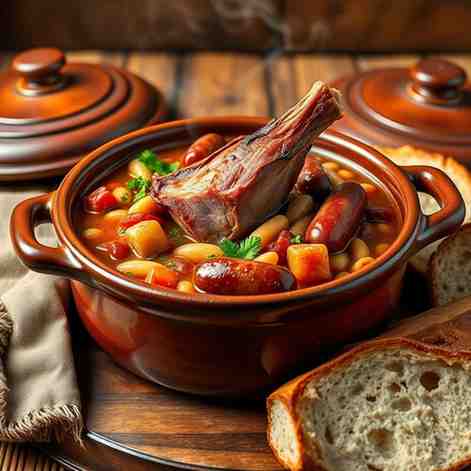
- Serves: 6 People
- Prepare Time: 20 minutes
- Cooking Time: 2.5 - 3 hou
- Calories: -
- Difficulty: Medium
Get ready to transport your taste buds straight to the heart of Spain's Asturias region with a truly authentic Fabada Asturiana! This isn't just any `ham hock and bean soup`; it's a legendary, hearty `bean stew recipe` that embodies comfort, tradition, and incredible flavor. Imagine perfectly cooked, `creamy white beans` slow-simmered with a luxurious trio of Spanish cured meats – smoky chorizo, rich morcilla (Spanish blood sausage), and tender pork like lacón or a `pork ham hock`. The result? A deeply satisfying, intensely flavorful `white bean soup` that warms you from the inside out.
Fabada is more than just a meal; it's a celebration of simple, high-quality ingredients transformed by time and gentle heat into something truly extraordinary. While it might sound fancy, our recipe is designed for home cooks who crave the real deal – a genuine taste of Asturias without needing a plane ticket. We'll guide you through every step, ensuring your first (or fiftieth!) attempt at this traditional Spanish masterpiece is a resounding success. Get ready for a rich, smoky, and unbelievably comforting experience!
What makes this version authentic: This recipe focuses on the traditional trinity: authentic Asturian beans (or best US subs), the `compango` (chorizo, morcilla, pork component), and the essential slow-simmering technique that yields incredibly creamy beans and a rich, complex broth.
Ingredients
Directions
- Soak the beans The secret to tender, creamy beans starts here! Place your `dried cannellini beans` (or chosen large white beans) in a large bowl. Cover them with at least 3-4 inches of cold water (they'll expand quite a bit!). Let them soak for a minimum of 8 hours, or ideally, overnight (12 hours). Properly soaked beans will be noticeably plump and rehydrated. Drain and rinse them thoroughly before cooking.
- Start the stew (cold water + gentle heat) In a large, heavy-bottomed pot or Dutch oven (a 5-6 quart pot is ideal), add the drained beans, the whole onion, whole garlic cloves, bay leaves, and all the `compango` meats (chorizo, morcilla, and your chosen pork component like `pork ham hock`). Pour in 8 cups of fresh cold water, ensuring everything is submerged. Add the olive oil. Place the pot over medium-high heat and bring it slowly to a gentle boil. As it heats, you'll likely see some foam rise to the surface; use a skimmer or large spoon to remove and discard this. Reducing the foam helps keep the broth clear and clean-tasting.
- Low simmer (the heart of Fabada) Once the stew reaches a gentle boil, reduce the heat immediately to the lowest setting possible, so it maintains a very gentle simmer. You should see just tiny bubbles breaking the surface, not a rolling boil. This slow, steady simmer is crucial for keeping the beans intact and allowing them to become incredibly creamy without splitting. Avoid aggressive stirring, which can break the delicate skins of the beans. Let the stew simmer, uncovered or partially covered, for 2 to 3 hours, or until the beans are completely tender. Check the water level periodically; if the beans start to peek out, add small amounts of cold water to keep them submerged. Adding cold water helps maintain the gentle simmer and prevents the beans from seizing up.
- Seasoning + finish When the beans are almost done (tender but not mushy), remove the chorizo, morcilla, and pork component from the pot and set them aside. If using saffron, steep a pinch in a tablespoon of warm water for a few minutes, then add it to the stew. If using smoked paprika, stir it directly into the pot. Now, it's time to salt. Because the cured meats are salty, taste the broth before adding any salt. Add salt gradually, tasting as you go, until the seasoning is perfect. The broth should be rich and slightly thickened from the natural starches of the beans. If it seems too thin, you can gently mash a small handful of beans against the side of the pot to release more starch, or let it simmer for another 15-20 minutes, uncovered, to reduce slightly.
- Rest + serve Once the beans are perfectly tender and the broth is seasoned, let the Fabada rest off the heat for at least 15-30 minutes. This resting period allows the flavors to meld and the stew to thicken slightly, making it even better. While it rests, slice the reserved chorizo and morcilla into thick rounds, and cut the pork component into bite-sized pieces. You can either return the sliced meats to the pot or serve them alongside the stew, allowing everyone to add as much as they like. Ladle generous portions of the rich `ham hock bean soup` into bowls.
- Serving suggestions Fabada Asturiana is a meal in itself, but it truly shines when served simply. A crusty loaf of bread is essential for soaking up every last drop of the glorious broth. A light, simple green salad dressed with vinaigrette makes a perfect fresh counterpoint. For a truly authentic experience, pair it with a crisp Asturian cider or a robust Spanish red wine.
You may also like



Hey there! I’m just someone who seriously loves good food and believes that cooking doesn’t have to be complicated to be amazing. Whether it’s a quick weeknight dinner or a cozy weekend meal, I’m all about sharing easy, tasty recipes that actually work.