Flaky Israeli Potato Bourekas - Best Baked Cheese Pastries
Flaky Israeli Potato Bourekas - Best Baked Cheese Pastries
- Serves: 12 People
- Prepare Time: 45 minutes
- Cooking Time: 25 minutes
- Calories: -
- Difficulty: Medium
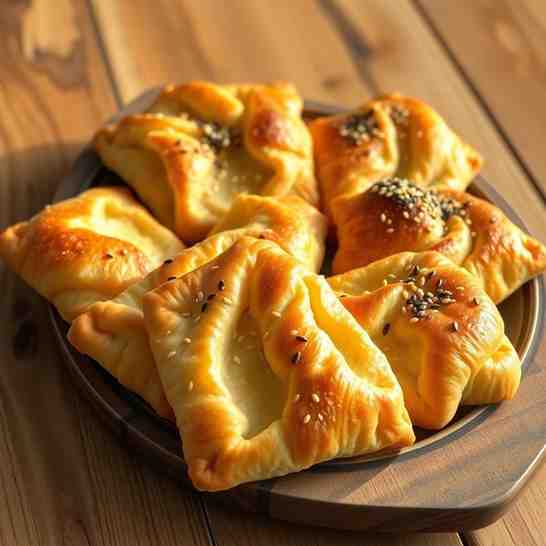
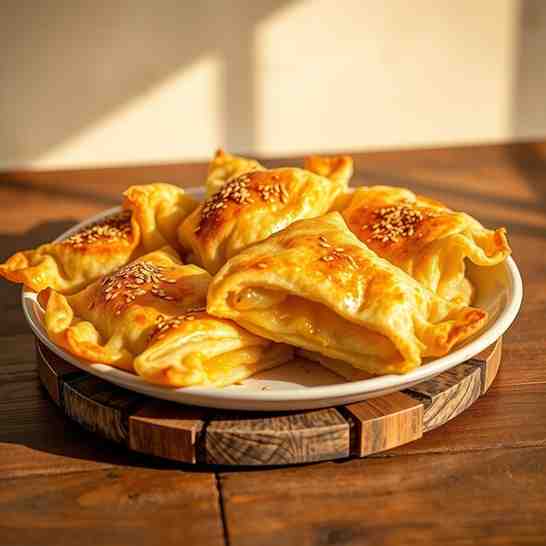
Get ready to transform your kitchen into an Israeli bakery! These flaky Israeli Potato Bourekas are the ultimate savory pastry, featuring a golden, crisp puff pastry exterior cradling a rich, creamy filling of mashed potatoes and sweet, caramelized onions. They're a staple in Israeli cuisine, perfect for breakfast, a light lunch, or a snack any time of day. While you might associate bourekas with cheese, this potato and caramelized onion version offers a deeply satisfying, comforting twist. And don't worry, making these bakery-style beauties at home is easier than you think, especially with our simple puff pastry shortcut. Ready to bake up some magic?
Bourekas are a beloved savory pastry, deeply rooted in Israeli and Mediterranean cuisine. They’re essentially flaky pockets of dough filled with all sorts of deliciousness, from cheeses to vegetables. You'll find them in every bakery, street market, and home across Israel, cherished for their versatility and incredible texture. While traditional bourekas often use a homemade dough, we’re taking an easy route today with store-bought puff pastry sheets, making these iconic treats totally achievable for the home baker without sacrificing that signature flakiness.
While our recipe today focuses on the classic potato and caramelized onion filling, bourekas come in a wonderful variety! Here are some common fillings you might encounter:
Cheese: Often a blend of feta, ricotta, and/or kashkaval. A popular baked cheese option.
Spinach & Feta: A savory combination, sometimes with a touch of onion or herbs.
Mushroom: Earthy and rich, often with sautéed onions.
Pizza: A kid-friendly favorite with tomato sauce, cheese, and sometimes olives.
Potato: Our star today, typically mashed with onions and spices.
Sweet Potato: A slightly sweeter, often spicier alternative to regular potato.
You can often tell the filling by the shape of the boureka! It's a fun little convention:
Potato bourekas are frequently rectangular.
Cheese bourekas are usually triangular.
Spinach-feta bourekas might be round or half-moon shaped.
Ingredients
Directions
- Thaw and prep the puff pastry (the “don’t mess this up” step)
- Fridge Thaw: For best results, transfer your frozen puff pastry sheets to the refrigerator 8-12 hours before you plan to bake. This allows for a slow, even thaw.
- Counter Thaw: If you're short on time, let the frozen pastry sit at room temperature for 30-40 minutes. It should be pliable but still cold.
- Keep it Cold: Once thawed, unfold one sheet of puff pastry onto a lightly floured surface. Keep the other sheet in the fridge until you're ready to use it to prevent it from getting too warm and sticky.
- Make the potato filling
- Boil Potatoes: Place the potato chunks in a medium pot and cover with cold water by about an inch. Add a generous pinch of salt. Bring to a boil, then reduce heat and simmer until fork-tender, about 15-20 minutes.
- Dry Out Potatoes: Drain the potatoes very well. Return them to the hot, empty pot over low heat for 1-2 minutes, shaking occasionally, to help any remaining moisture evaporate. This step prevents a soggy filling.
- Caramelize Onions: While potatoes boil, heat olive oil in a large skillet over medium-low heat. Add the thinly sliced onion and cook slowly, stirring occasionally, for 20-30 minutes, or until the onions are deeply golden brown and very soft. Don't rush this; true caramelization builds flavor.
- Combine & Cool: Mash the dried potatoes until smooth (a potato ricer works wonders here!). Stir in the caramelized onions, ½ teaspoon salt, ¼ teaspoon black pepper, and nutmeg (if using). Mix well. Taste and adjust seasoning as needed. The filling must cool completely before you use it, otherwise, it will melt the butter in the puff pastry and make it difficult to work with. You can speed this up by spreading it on a plate and refrigerating.
- Cut and portion
- Unfold and Cut: On a lightly floured surface, gently unfold one sheet of puff pastry. Using a sharp knife or pizza cutter, cut the sheet into 6 equal rectangles (you'll get 3 rows by 2 columns). Each rectangle should be approximately 3.5 x 5 inches.
- Portion Filling: Place about 1.5-2 tablespoons of the cooled potato filling onto one half of each puff pastry rectangle, leaving a small border around the edges.
- Fill, seal, and crimp
- Seal Method: Lightly brush the edges of the pastry rectangles with a little water (or the egg wash you'll make in the next step). Fold the empty half of the pastry over the filling to create a closed rectangle.
- Press Firmly: Gently press down around the edges to seal the boureka, ensuring no gaps.
- Fork-Crimp: Use the tines of a fork to crimp the edges firmly, creating a decorative seal that also helps prevent leaks.
- Optional Venting: If your bourekas are very full, you can make 1-2 small slits on top with a sharp knife to allow steam to escape, which helps the pastry puff evenly.
- Egg wash + seeds
- Prepare Egg Wash: In a small bowl, whisk together the 1 large egg and 1 tablespoon of water until well combined.
- Brush & Top: Place the sealed bourekas on a baking sheet lined with parchment paper. Lightly brush the tops of each boureka with the egg wash. You want just enough to give a golden sheen, not so much that it pools. Sprinkle generously with sesame seeds or nigella seeds.
- Bake until deep golden
- Preheat Oven: Preheat your oven to 400°F (200°C).
- Rack Placement: Bake on the middle rack for even cooking.
- Bake Time: Bake for 20-25 minutes, or until the bourekas are deeply golden brown, puffed up, and look irresistibly flaky.
- Rotate Timing: If your oven bakes unevenly, rotate the baking sheet halfway through the baking time.
- Doneness Cues: The bottom should also be golden brown and crisp. If they're browning too fast on top, you can loosely tent them with foil for the last few minutes.
Flaky Israeli Potato Bourekas - Best Baked Cheese Pastries
- Serves: 12 People
- Prepare Time: 45 minutes
- Cooking Time: 25 minutes
- Calories: -
- Difficulty: Medium
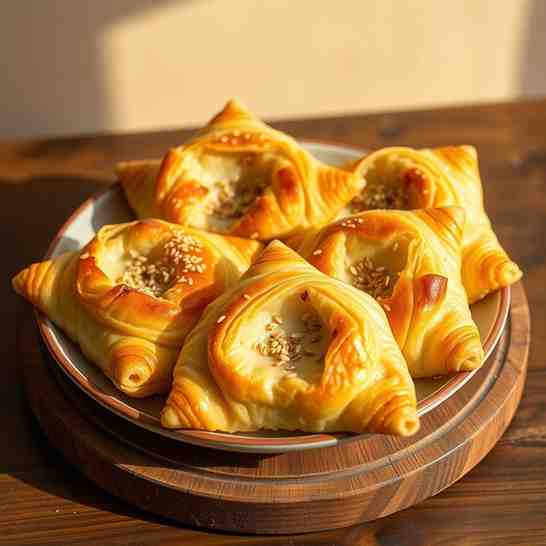
Get ready to transform your kitchen into an Israeli bakery! These flaky Israeli Potato Bourekas are the ultimate savory pastry, featuring a golden, crisp puff pastry exterior cradling a rich, creamy filling of mashed potatoes and sweet, caramelized onions. They're a staple in Israeli cuisine, perfect for breakfast, a light lunch, or a snack any time of day. While you might associate bourekas with cheese, this potato and caramelized onion version offers a deeply satisfying, comforting twist. And don't worry, making these bakery-style beauties at home is easier than you think, especially with our simple puff pastry shortcut. Ready to bake up some magic?
Bourekas are a beloved savory pastry, deeply rooted in Israeli and Mediterranean cuisine. They’re essentially flaky pockets of dough filled with all sorts of deliciousness, from cheeses to vegetables. You'll find them in every bakery, street market, and home across Israel, cherished for their versatility and incredible texture. While traditional bourekas often use a homemade dough, we’re taking an easy route today with store-bought puff pastry sheets, making these iconic treats totally achievable for the home baker without sacrificing that signature flakiness.
While our recipe today focuses on the classic potato and caramelized onion filling, bourekas come in a wonderful variety! Here are some common fillings you might encounter:
Cheese: Often a blend of feta, ricotta, and/or kashkaval. A popular baked cheese option.
Spinach & Feta: A savory combination, sometimes with a touch of onion or herbs.
Mushroom: Earthy and rich, often with sautéed onions.
Pizza: A kid-friendly favorite with tomato sauce, cheese, and sometimes olives.
Potato: Our star today, typically mashed with onions and spices.
Sweet Potato: A slightly sweeter, often spicier alternative to regular potato.
You can often tell the filling by the shape of the boureka! It's a fun little convention:
Potato bourekas are frequently rectangular.
Cheese bourekas are usually triangular.
Spinach-feta bourekas might be round or half-moon shaped.
Ingredients
Directions
- Thaw and prep the puff pastry (the “don’t mess this up” step)
- Fridge Thaw: For best results, transfer your frozen puff pastry sheets to the refrigerator 8-12 hours before you plan to bake. This allows for a slow, even thaw.
- Counter Thaw: If you're short on time, let the frozen pastry sit at room temperature for 30-40 minutes. It should be pliable but still cold.
- Keep it Cold: Once thawed, unfold one sheet of puff pastry onto a lightly floured surface. Keep the other sheet in the fridge until you're ready to use it to prevent it from getting too warm and sticky.
- Make the potato filling
- Boil Potatoes: Place the potato chunks in a medium pot and cover with cold water by about an inch. Add a generous pinch of salt. Bring to a boil, then reduce heat and simmer until fork-tender, about 15-20 minutes.
- Dry Out Potatoes: Drain the potatoes very well. Return them to the hot, empty pot over low heat for 1-2 minutes, shaking occasionally, to help any remaining moisture evaporate. This step prevents a soggy filling.
- Caramelize Onions: While potatoes boil, heat olive oil in a large skillet over medium-low heat. Add the thinly sliced onion and cook slowly, stirring occasionally, for 20-30 minutes, or until the onions are deeply golden brown and very soft. Don't rush this; true caramelization builds flavor.
- Combine & Cool: Mash the dried potatoes until smooth (a potato ricer works wonders here!). Stir in the caramelized onions, ½ teaspoon salt, ¼ teaspoon black pepper, and nutmeg (if using). Mix well. Taste and adjust seasoning as needed. The filling must cool completely before you use it, otherwise, it will melt the butter in the puff pastry and make it difficult to work with. You can speed this up by spreading it on a plate and refrigerating.
- Cut and portion
- Unfold and Cut: On a lightly floured surface, gently unfold one sheet of puff pastry. Using a sharp knife or pizza cutter, cut the sheet into 6 equal rectangles (you'll get 3 rows by 2 columns). Each rectangle should be approximately 3.5 x 5 inches.
- Portion Filling: Place about 1.5-2 tablespoons of the cooled potato filling onto one half of each puff pastry rectangle, leaving a small border around the edges.
- Fill, seal, and crimp
- Seal Method: Lightly brush the edges of the pastry rectangles with a little water (or the egg wash you'll make in the next step). Fold the empty half of the pastry over the filling to create a closed rectangle.
- Press Firmly: Gently press down around the edges to seal the boureka, ensuring no gaps.
- Fork-Crimp: Use the tines of a fork to crimp the edges firmly, creating a decorative seal that also helps prevent leaks.
- Optional Venting: If your bourekas are very full, you can make 1-2 small slits on top with a sharp knife to allow steam to escape, which helps the pastry puff evenly.
- Egg wash + seeds
- Prepare Egg Wash: In a small bowl, whisk together the 1 large egg and 1 tablespoon of water until well combined.
- Brush & Top: Place the sealed bourekas on a baking sheet lined with parchment paper. Lightly brush the tops of each boureka with the egg wash. You want just enough to give a golden sheen, not so much that it pools. Sprinkle generously with sesame seeds or nigella seeds.
- Bake until deep golden
- Preheat Oven: Preheat your oven to 400°F (200°C).
- Rack Placement: Bake on the middle rack for even cooking.
- Bake Time: Bake for 20-25 minutes, or until the bourekas are deeply golden brown, puffed up, and look irresistibly flaky.
- Rotate Timing: If your oven bakes unevenly, rotate the baking sheet halfway through the baking time.
- Doneness Cues: The bottom should also be golden brown and crisp. If they're browning too fast on top, you can loosely tent them with foil for the last few minutes.
You may also like



Hey there! I’m just someone who seriously loves good food and believes that cooking doesn’t have to be complicated to be amazing. Whether it’s a quick weeknight dinner or a cozy weekend meal, I’m all about sharing easy, tasty recipes that actually work.