
Easy Kashk-e Bademjan - Creamy Persian Eggplant Dip Recipe
Easy Kashk-e Bademjan - Creamy Persian Eggplant Dip Recipe


- Serves: 6 People
- Prepare Time: 20 minutes
- Cooking Time: 45 minutes
- Calories: -
- Difficulty: Easy
Get ready for Kashk-e Bademjan, a creamy, tangy, and deeply satisfying Persian eggplant dip that hits all the right notes with its caramelized onion and mint vibes! This traditional Persian dish is a vibrant blend of smoky eggplant, sweet onions, and the unique, tangy flavor of kashk, often served warm or at room temperature. You might also see it spelled "kashk o bademjan" or "kashk-e bademjan," but no matter the spelling, the deliciousness remains!
Why will you absolutely love making this easy Persian recipe? First off, the flavor profile is out of this world: you get that lovely smoky-ish eggplant, the rich sweetness of caramelized onions, the tangy and salty kick from the kashk, and a refreshing lift from dried mint. It’s perfect for almost any occasion—whether you’re hosting a lively party, putting together a cozy meze night, or simply looking for a delicious side to accompany your rice and kebabs. This particular persian food recipe stands out from other eggplant dips, offering a truly distinctive taste and texture that you won't soon forget, making it one of those must-try persian dish recipes you'll want to add to your repertoire.
So, what exactly is Kashk-e Bademjan? In plain English, it's a luscious eggplant dip made with tender, mashed eggplant, sautéed onions, garlic, and a generous swirl of kashk. While it’s commonly scooped up with warm bread as a dip or easy dips for pita chips, it's versatile enough to be plated as a delightful appetizer or even as a substantial part of a larger meal. It’s a cornerstone of Persian cuisine recipes, offering both comfort and exotic flavor in every spoonful.
Before you dive into this incredible persian food recipe, let's talk about kashk. Simply put, kashk is a fermented whey product, often described as a tangy, salty dairy sauce or paste. It's a staple in Persian cooking and provides that distinct, irresistible tang to Kashk-e Bademjan.
You'll typically find kashk in two forms in the US: liquid or dried. For convenience, liquid kashk is often easier to work with. Look for it in Middle Eastern grocery stores or the international aisle of larger supermarkets. If you find dried kashk, you'll need to rehydrate it. To do this, soak the dried kashk in warm water for a few hours, then blend it with more water until it reaches a thick-pourable, yogurt-like consistency – think slightly thicker than heavy cream, definitely not watery. You want it rich and creamy!
Substitution Note (short): If you absolutely can't find kashk, you can substitute it with thick Greek yogurt or sour cream. Just be aware that the flavor will differ quite a bit; kashk has a unique fermented tang that's hard to replicate perfectly. However, it will still yield a delicious creamy eggplant dip!
Ingredients
Directions
- Prep the Eggplant
- Wash your eggplants. You can either peel them completely or partially peel them (leaving strips of skin for some texture and color).
- Slice the eggplants into thick planks or rounds, about 1/2 to 3/4 inch thick.
- Optional salt-rest: Lay the eggplant slices on a baking sheet, sprinkle generously with salt, and let them sit for 30 minutes. This draws out bitterness and excess moisture, leading to a creamier, less watery dip. After resting, pat them thoroughly dry with paper towels.
- Sear the Eggplant (Your Main Texture Builder)
- Heat about 1/4 cup of olive oil in a large skillet or wide pan over medium-high heat.
- Working in batches to avoid overcrowding the pan, add the eggplant slices. Sear them for 4-6 minutes per side, or until they are deeply golden brown and softened, but not mushy. You want them browned and tender, not just lightly cooked. This searing step is crucial for developing flavor and a lovely texture.
- (Imagine a short video here showing the eggplant browning to a perfect golden hue, soft but not mushy, and a series of 2-3 step photos demonstrating the ideal browning level.)
- Remove the seared eggplant and set aside on a plate lined with paper towels to drain any excess oil. Add more oil to the pan between batches if needed.
- Build the Onion-Mint Base
- In the same skillet (adding a little more oil if necessary, but usually the residual oil is enough), reduce the heat to medium.
- Add the sliced onions and sauté them, stirring occasionally, until they turn golden brown and begin to caramelize, about 8-10 minutes. This brings out their natural sweetness.
- Add the minced garlic, turmeric, and dried mint to the pan. Cook for just 30-60 seconds, stirring constantly, until fragrant. Be careful not to burn the mint, as it can turn bitter quickly. Keep the heat low during this step.
- Finish Cooking + Mash
- Return the seared eggplant to the skillet with the onion mixture.
- Add a small, measured splash of water or vegetable stock (about 1/4 cup).
- Cover the pan and let it simmer on low heat for 15-20 minutes, or until the eggplant is incredibly tender and collapses easily when pressed.
- Remove the lid and, using a potato masher or a sturdy fork, mash the eggplant directly in the pan. Mash to your desired texture: some prefer it mostly creamy with just a few small bits of eggplant visible, while others like it smoother.
- (Visualize a step photo here showing the mashed eggplant, creamy with small tender bits.)
- Add Kashk (Don't Rush This)
- Lower the heat to its absolute minimum.
- Gradually stir in the liquid kashk (or rehydrated kashk) into the eggplant mixture. Stir gently until it's well combined and heated through.
- Important: Taste the Kashk-e Bademjan after adding the kashk, then adjust for salt. Kashk can be quite salty on its own, so you might not need much, if any, additional salt.
- Make the Mint Oil Topping
- In a small pan or a heatproof measuring cup, warm 2 tablespoons of olive oil over low heat.
- Once warm, add 1 tablespoon of dried mint and a tiny pinch of turmeric.
- Cook for just a few seconds until the mint becomes fragrant. It happens very quickly, almost immediately after adding the mint to the warm oil. Do not let it sizzle or burn. This infused oil is called "naeena dagh" and adds a beautiful aroma and visual appeal.
- (Imagine a short GIF here showing how quickly the mint oil comes together, cooking for mere seconds.)
- Garnish + Serve
- Transfer the Kashk-e Bademjan to a serving dish.
- Drizzle generously with the fragrant mint oil topping.
- If using, scatter the reserved caramelized onions, chopped walnuts, and a little extra swirl of kashk on top for garnish. A few strands of bloomed saffron can also add a touch of elegance.
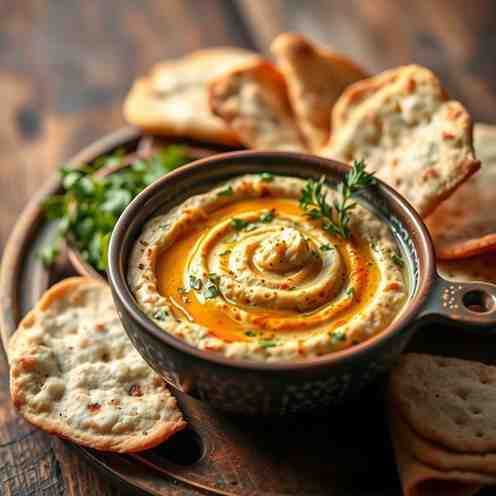
- Serve warm or at room temperature with plenty of warm bread (like lavash, barbari, or pita) and fresh herbs like basil, mint, and tarragon. Enjoy this delightful persian cuisine recipe!
Easy Kashk-e Bademjan - Creamy Persian Eggplant Dip Recipe
- Serves: 6 People
- Prepare Time: 20 minutes
- Cooking Time: 45 minutes
- Calories: -
- Difficulty: Easy
Get ready for Kashk-e Bademjan, a creamy, tangy, and deeply satisfying Persian eggplant dip that hits all the right notes with its caramelized onion and mint vibes! This traditional Persian dish is a vibrant blend of smoky eggplant, sweet onions, and the unique, tangy flavor of kashk, often served warm or at room temperature. You might also see it spelled "kashk o bademjan" or "kashk-e bademjan," but no matter the spelling, the deliciousness remains!
Why will you absolutely love making this easy Persian recipe? First off, the flavor profile is out of this world: you get that lovely smoky-ish eggplant, the rich sweetness of caramelized onions, the tangy and salty kick from the kashk, and a refreshing lift from dried mint. It’s perfect for almost any occasion—whether you’re hosting a lively party, putting together a cozy meze night, or simply looking for a delicious side to accompany your rice and kebabs. This particular persian food recipe stands out from other eggplant dips, offering a truly distinctive taste and texture that you won't soon forget, making it one of those must-try persian dish recipes you'll want to add to your repertoire.
So, what exactly is Kashk-e Bademjan? In plain English, it's a luscious eggplant dip made with tender, mashed eggplant, sautéed onions, garlic, and a generous swirl of kashk. While it’s commonly scooped up with warm bread as a dip or easy dips for pita chips, it's versatile enough to be plated as a delightful appetizer or even as a substantial part of a larger meal. It’s a cornerstone of Persian cuisine recipes, offering both comfort and exotic flavor in every spoonful.
Before you dive into this incredible persian food recipe, let's talk about kashk. Simply put, kashk is a fermented whey product, often described as a tangy, salty dairy sauce or paste. It's a staple in Persian cooking and provides that distinct, irresistible tang to Kashk-e Bademjan.
You'll typically find kashk in two forms in the US: liquid or dried. For convenience, liquid kashk is often easier to work with. Look for it in Middle Eastern grocery stores or the international aisle of larger supermarkets. If you find dried kashk, you'll need to rehydrate it. To do this, soak the dried kashk in warm water for a few hours, then blend it with more water until it reaches a thick-pourable, yogurt-like consistency – think slightly thicker than heavy cream, definitely not watery. You want it rich and creamy!
Substitution Note (short): If you absolutely can't find kashk, you can substitute it with thick Greek yogurt or sour cream. Just be aware that the flavor will differ quite a bit; kashk has a unique fermented tang that's hard to replicate perfectly. However, it will still yield a delicious creamy eggplant dip!
Ingredients
Directions
- Prep the Eggplant
- Wash your eggplants. You can either peel them completely or partially peel them (leaving strips of skin for some texture and color).
- Slice the eggplants into thick planks or rounds, about 1/2 to 3/4 inch thick.
- Optional salt-rest: Lay the eggplant slices on a baking sheet, sprinkle generously with salt, and let them sit for 30 minutes. This draws out bitterness and excess moisture, leading to a creamier, less watery dip. After resting, pat them thoroughly dry with paper towels.
- Sear the Eggplant (Your Main Texture Builder)
- Heat about 1/4 cup of olive oil in a large skillet or wide pan over medium-high heat.
- Working in batches to avoid overcrowding the pan, add the eggplant slices. Sear them for 4-6 minutes per side, or until they are deeply golden brown and softened, but not mushy. You want them browned and tender, not just lightly cooked. This searing step is crucial for developing flavor and a lovely texture.
- (Imagine a short video here showing the eggplant browning to a perfect golden hue, soft but not mushy, and a series of 2-3 step photos demonstrating the ideal browning level.)
- Remove the seared eggplant and set aside on a plate lined with paper towels to drain any excess oil. Add more oil to the pan between batches if needed.
- Build the Onion-Mint Base
- In the same skillet (adding a little more oil if necessary, but usually the residual oil is enough), reduce the heat to medium.
- Add the sliced onions and sauté them, stirring occasionally, until they turn golden brown and begin to caramelize, about 8-10 minutes. This brings out their natural sweetness.
- Add the minced garlic, turmeric, and dried mint to the pan. Cook for just 30-60 seconds, stirring constantly, until fragrant. Be careful not to burn the mint, as it can turn bitter quickly. Keep the heat low during this step.
- Finish Cooking + Mash
- Return the seared eggplant to the skillet with the onion mixture.
- Add a small, measured splash of water or vegetable stock (about 1/4 cup).
- Cover the pan and let it simmer on low heat for 15-20 minutes, or until the eggplant is incredibly tender and collapses easily when pressed.
- Remove the lid and, using a potato masher or a sturdy fork, mash the eggplant directly in the pan. Mash to your desired texture: some prefer it mostly creamy with just a few small bits of eggplant visible, while others like it smoother.
- (Visualize a step photo here showing the mashed eggplant, creamy with small tender bits.)
- Add Kashk (Don't Rush This)
- Lower the heat to its absolute minimum.
- Gradually stir in the liquid kashk (or rehydrated kashk) into the eggplant mixture. Stir gently until it's well combined and heated through.
- Important: Taste the Kashk-e Bademjan after adding the kashk, then adjust for salt. Kashk can be quite salty on its own, so you might not need much, if any, additional salt.
- Make the Mint Oil Topping
- In a small pan or a heatproof measuring cup, warm 2 tablespoons of olive oil over low heat.
- Once warm, add 1 tablespoon of dried mint and a tiny pinch of turmeric.
- Cook for just a few seconds until the mint becomes fragrant. It happens very quickly, almost immediately after adding the mint to the warm oil. Do not let it sizzle or burn. This infused oil is called "naeena dagh" and adds a beautiful aroma and visual appeal.
- (Imagine a short GIF here showing how quickly the mint oil comes together, cooking for mere seconds.)
- Garnish + Serve
- Transfer the Kashk-e Bademjan to a serving dish.
- Drizzle generously with the fragrant mint oil topping.
- If using, scatter the reserved caramelized onions, chopped walnuts, and a little extra swirl of kashk on top for garnish. A few strands of bloomed saffron can also add a touch of elegance.
- Serve warm or at room temperature with plenty of warm bread (like lavash, barbari, or pita) and fresh herbs like basil, mint, and tarragon. Enjoy this delightful persian cuisine recipe!
You may also like


Hey there! I’m just someone who seriously loves good food and believes that cooking doesn’t have to be complicated to be amazing. Whether it’s a quick weeknight dinner or a cozy weekend meal, I’m all about sharing easy, tasty recipes that actually work.