
Morning Easy Kippers for Breakfast (Manx Recipe)
Morning Easy Kippers for Breakfast (Manx Recipe)
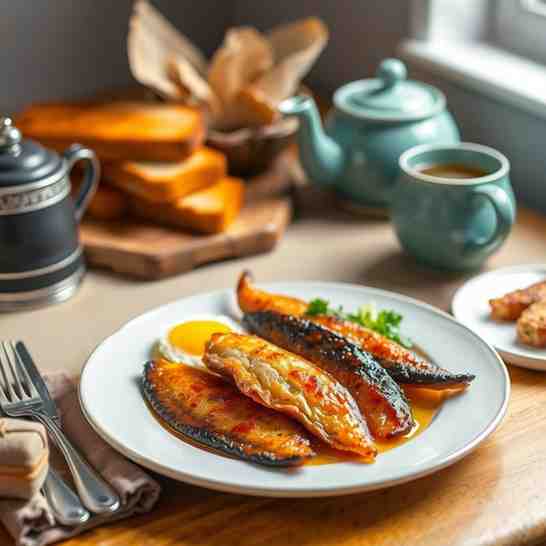

- Serves: 1 People
- Prepare Time: 5 minutes
- Cooking Time: 5 minutes
- Calories: -
- Difficulty: Easy
Craving a cozy, flavorful breakfast that’s ready in a flash? Look no further than kippers for breakfast! These smoky, salty delights are a traditional British favorite, and we’re here to show you just how easy it is to whip up a satisfying meal for one. Forget complicated preparations – our foolproof recipe focuses on Isle of Man kippers, gently poached in milk for a tender, moist result every time. Whether you’re new to smoked herring fish or a seasoned pro looking for a quick fix, this guide will walk you through everything from what to buy to how to enjoy your delicious smoked herring fillets in about 10 minutes. If you’ve never cooked kippers before, you’re in the right place – get ready for your new favorite healthy meal for one recipe!
Kippers are essentially whole herring, split open (butterflied), gutted, salted, and then cold-smoked. This process gives them their distinctive savory, smoky flavor and firm texture. When you see "Manx" or "Isle of Man" kippers, it usually means they've been traditionally smoked over oak or hardwood chips on the Isle of Man, an island in the Irish Sea. This traditional method often results in a deeper, more authentic smoke flavor, and many Manx kippers are undyed, showcasing their natural golden-brown hue rather than an artificial orange color.
So, what do they taste and smell like? Kippers have a robust, salty, and intensely smoky flavor. The smell can be quite strong – think smoky campfire meets the sea. Don't panic! This is normal for a high-quality kipper. Once cooked, the aroma mellows into something rich and appetizing. They have a flaky, tender texture, especially when gently poached.
Finding good kippers in the US can sometimes be a bit of a treasure hunt, but it's worth it! Here’s what to look for:
Undyed if possible: While dyed kippers are common, undyed ones often indicate a more traditional smoking process and a truer flavor. The color should be a natural golden-brown.
Plump flesh: Look for fish that feel firm and full, not thin or dried out.
Smoky smell (not sour): A good kipper will have a strong, pleasant smoky aroma, not a fishy or sour smell.
Intact package: Ensure the vacuum seal or packaging is fully intact to maintain freshness.
Common forms: You'll usually find them as whole butterflied kippers (bone-in) or as smoked herring fillets (boneless, which are easier to eat and still delicious). Either works for this recipe!
If frozen: Kippers are often sold frozen. To thaw safely, transfer them to the refrigerator overnight. Avoid thawing at room temperature to maintain quality and safety.
You don't need any fancy gadgets to make delicious kippers for breakfast! Here’s the simple setup:
Small skillet or shallow saucepan with lid: Crucial for gently poaching the fish and containing the aroma.
Tongs or spatula: For carefully handling the delicate fish.
Plate + paper towels: For patting the fish dry and serving.
Optional: Fish tweezers: Nice to have if you're particular about removing any stray pin bones, but definitely not required.
Ingredients
Directions
- Prep the fish: Carefully unwrap your kipper. Give it a quick check for any obvious pin bones you might want to remove with tweezers, though most are fine to eat around. Gently pat the kipper dry with paper towels, especially if it feels wet.
- Warm the milk gently: Place your small skillet or shallow saucepan over low heat. Pour in the milk, just enough to come about halfway up the thickness of your kipper. You want the milk to warm slowly, aiming for a gentle steaming or just-barely simmering, not a rolling boil.
- Poach the kipper: Once the milk is steaming (you’ll see tiny bubbles forming around the edges), carefully place the kipper into the pan, skin-side down if it has skin. Cover the pan with a lid. Let it poach for just a few minutes, typically 3-5 minutes, until the fish is warmed through and opaque.
- Doneness Cues: The flesh should turn opaque and flake easily with a fork. It should be hot but still juicy and tender, not curling up tightly or shrinking excessively. Overcooking will make it dry and rubbery.
- Finish & serve: Using tongs or a spatula, carefully lift the cooked kipper from the milk and place it onto your serving plate. Immediately top it with the tablespoon of butter, allowing it to melt into the warm fish. Squeeze the lemon wedge generously over the kipper, and finish with a grind of fresh black pepper. Serve alongside your favorite slice of toast.
- Serving Suggestions: While toast and lemon are classic, you can also enjoy your kipper with a soft-boiled or fried egg on the side for an extra protein boost.
Morning Easy Kippers for Breakfast (Manx Recipe)
.jpg)
- Serves: 1 People
- Prepare Time: 5 minutes
- Cooking Time: 5 minutes
- Calories: -
- Difficulty: Easy
Craving a cozy, flavorful breakfast that’s ready in a flash? Look no further than kippers for breakfast! These smoky, salty delights are a traditional British favorite, and we’re here to show you just how easy it is to whip up a satisfying meal for one. Forget complicated preparations – our foolproof recipe focuses on Isle of Man kippers, gently poached in milk for a tender, moist result every time. Whether you’re new to smoked herring fish or a seasoned pro looking for a quick fix, this guide will walk you through everything from what to buy to how to enjoy your delicious smoked herring fillets in about 10 minutes. If you’ve never cooked kippers before, you’re in the right place – get ready for your new favorite healthy meal for one recipe!
Kippers are essentially whole herring, split open (butterflied), gutted, salted, and then cold-smoked. This process gives them their distinctive savory, smoky flavor and firm texture. When you see "Manx" or "Isle of Man" kippers, it usually means they've been traditionally smoked over oak or hardwood chips on the Isle of Man, an island in the Irish Sea. This traditional method often results in a deeper, more authentic smoke flavor, and many Manx kippers are undyed, showcasing their natural golden-brown hue rather than an artificial orange color.
So, what do they taste and smell like? Kippers have a robust, salty, and intensely smoky flavor. The smell can be quite strong – think smoky campfire meets the sea. Don't panic! This is normal for a high-quality kipper. Once cooked, the aroma mellows into something rich and appetizing. They have a flaky, tender texture, especially when gently poached.
Finding good kippers in the US can sometimes be a bit of a treasure hunt, but it's worth it! Here’s what to look for:
Undyed if possible: While dyed kippers are common, undyed ones often indicate a more traditional smoking process and a truer flavor. The color should be a natural golden-brown.
Plump flesh: Look for fish that feel firm and full, not thin or dried out.
Smoky smell (not sour): A good kipper will have a strong, pleasant smoky aroma, not a fishy or sour smell.
Intact package: Ensure the vacuum seal or packaging is fully intact to maintain freshness.
Common forms: You'll usually find them as whole butterflied kippers (bone-in) or as smoked herring fillets (boneless, which are easier to eat and still delicious). Either works for this recipe!
If frozen: Kippers are often sold frozen. To thaw safely, transfer them to the refrigerator overnight. Avoid thawing at room temperature to maintain quality and safety.
You don't need any fancy gadgets to make delicious kippers for breakfast! Here’s the simple setup:
Small skillet or shallow saucepan with lid: Crucial for gently poaching the fish and containing the aroma.
Tongs or spatula: For carefully handling the delicate fish.
Plate + paper towels: For patting the fish dry and serving.
Optional: Fish tweezers: Nice to have if you're particular about removing any stray pin bones, but definitely not required.
Ingredients
Directions
- Prep the fish: Carefully unwrap your kipper. Give it a quick check for any obvious pin bones you might want to remove with tweezers, though most are fine to eat around. Gently pat the kipper dry with paper towels, especially if it feels wet.
- Warm the milk gently: Place your small skillet or shallow saucepan over low heat. Pour in the milk, just enough to come about halfway up the thickness of your kipper. You want the milk to warm slowly, aiming for a gentle steaming or just-barely simmering, not a rolling boil.
- Poach the kipper: Once the milk is steaming (you’ll see tiny bubbles forming around the edges), carefully place the kipper into the pan, skin-side down if it has skin. Cover the pan with a lid. Let it poach for just a few minutes, typically 3-5 minutes, until the fish is warmed through and opaque.
- Doneness Cues: The flesh should turn opaque and flake easily with a fork. It should be hot but still juicy and tender, not curling up tightly or shrinking excessively. Overcooking will make it dry and rubbery.
- Finish & serve: Using tongs or a spatula, carefully lift the cooked kipper from the milk and place it onto your serving plate. Immediately top it with the tablespoon of butter, allowing it to melt into the warm fish. Squeeze the lemon wedge generously over the kipper, and finish with a grind of fresh black pepper. Serve alongside your favorite slice of toast.
- Serving Suggestions: While toast and lemon are classic, you can also enjoy your kipper with a soft-boiled or fried egg on the side for an extra protein boost.
You may also like




Hey there! I’m just someone who seriously loves good food and believes that cooking doesn’t have to be complicated to be amazing. Whether it’s a quick weeknight dinner or a cozy weekend meal, I’m all about sharing easy, tasty recipes that actually work.