
Naengmyeon - Korean Cold Noodles at Home
Naengmyeon - Korean Cold Noodles at Home
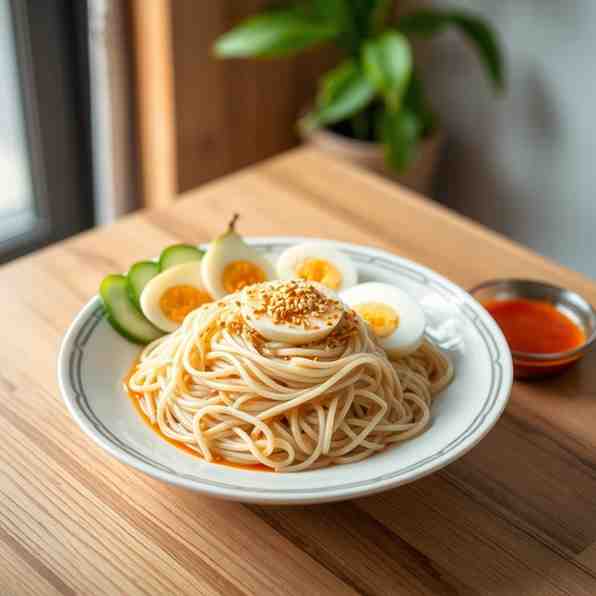
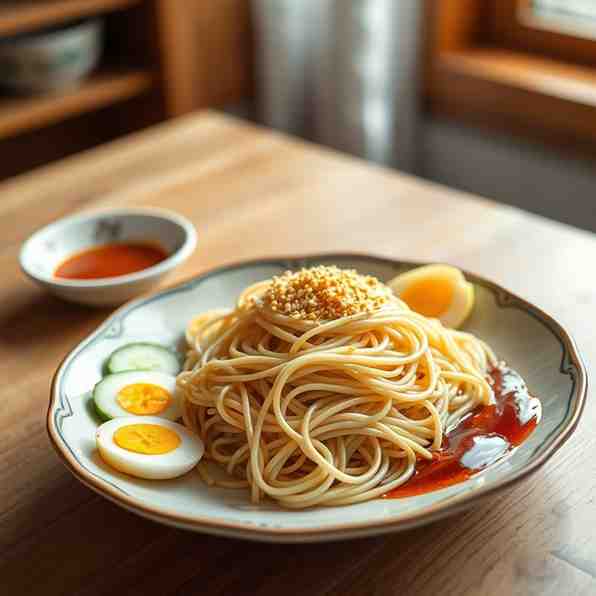
- Serves: 4 People
- Prepare Time: 45 minutes
- Cooking Time: 2 hours (br
- Calories: -
- Difficulty: Medium
When the weather heats up, there's nothing quite like a bowl of korean cold noodles to cool you down and tantalize your taste buds. We're talking about Naengmyeon, a truly refreshing and unique dish that’s a staple in Korean cuisine. Imagine thin, chewy buckwheat noodles swimming in an icy, savory broth, topped with crisp veggies, a hard-boiled egg, and often a touch of tender, thin slice beef. It’s not just a meal; it's an experience, delivering a burst of flavor and an instant chill.
This recipe goes beyond the basics, showing you how to achieve that perfect balance of icy broth, springy noodles, and a vibrant, spicy Naengmyeon sauce. We’ll guide you through making a rich, clear beef broth from scratch, ensuring it's robust enough to stand up to the cold, and then how to craft a customizable spicy sauce that adds just the right kick.
Whether you're a seasoned home cook looking to master authentic korean food noodles or a first-timer eager to try something new without needing special equipment, this guide is for you. We’ve broken down every step to make this seemingly complex dish approachable and incredibly rewarding, helping you create the best tasting broth and a truly unforgettable bowl of Naengmyeon. Get ready to dive into the art of making this quintessential beef and noodle soup!
Ingredients
Directions
- Make the Beef Broth
- Blanch & Rinse Beef (Optional but Recommended): Place beef bones/meat in a large stock pot. Cover with cold water and bring to a rolling boil over high heat. Boil for 5-10 minutes. This blanching step helps remove impurities, leading to a much cleaner and clearer broth. Drain the water, then thoroughly rinse the beef bones/meat under cold running water, scrubbing off any scum or residue. Clean the pot as well.
- Simmer & Skim: Return the rinsed beef to the clean stock pot. Add 12-14 cups of fresh cold water. Bring to a boil, then immediately reduce the heat to low, cover, and simmer gently for 1.5 to 2 hours. As it simmers, keep an eye out for any foam or scum rising to the surface. Use a fine-mesh strainer or ladle to diligently skim it off – this is key to a clear broth.
- Add Aromatics: After the initial 1.5-2 hours of simmering, add the quartered onion, smashed garlic, sliced ginger, and white parts of the scallions to the pot. Continue to simmer for another 30-45 minutes. Adding aromatics later prevents them from becoming bitter or overpowering the delicate beef flavor.
- Strain: Carefully remove the beef and aromatics from the pot. Strain the broth through a fine-mesh strainer or a cheesecloth-lined colander into a large, heat-proof bowl. Discard the aromatics. Reserve the cooked beef for slicing and serving as a topping.
- Chill & De-fat the Broth
- Fast Chill or Overnight Chill: For the quickest chilling, place the strained broth in an ice bath (a larger bowl filled with ice and water) and stir occasionally until it's cold. Alternatively, and preferably, let the broth cool to room temperature, then cover and refrigerate overnight. Chilling overnight allows the fat to solidify at the top, making removal much easier.
- Remove Fat Cleanly: Once the broth is thoroughly chilled and the fat has solidified on top, use a spoon, ladle, or a fat separator to carefully remove and discard the layer of fat. This de-fatting step is crucial for achieving that "refreshing" quality of Naengmyeon; fat is the enemy of a clean, cold broth experience.
- Final Seasoning: Taste the cold broth. Remember, cold mutes flavor, so it needs to be seasoned a little stronger than a hot broth. Add salt, soy sauce, sugar, and rice vinegar korean to taste, adjusting until you reach a perfectly balanced, savory, slightly tangy, and robust flavor. The broth should be assertive.
- Make the Spicy Sauce (Bibimjang)
- Whisk to Smooth Consistency: In a small bowl, combine gochujang, apple cider vinegar, sugar or honey, soy sauce, minced garlic, toasted sesame oil, and toasted sesame seeds. Whisk well until all ingredients are thoroughly combined and the sauce is smooth.
- Taste Targets: Taste the sauce and adjust to your preference. It should be a balance of sweet, tangy, and spicy. If you prefer more tang, add a bit more vinegar. For more heat, a touch more gochujang.
- Make-Ahead Storage: The spicy sauce can be made ahead and stored in an airtight container in the refrigerator for up to a week. Its flavors will meld and deepen over time.
- Cook and Chill the Noodles
- Boil Time Cues: Bring a large pot of water to a rolling boil. Add the Naengmyeon noodles and cook according to package directions, typically 2-3 minutes. These noodles cook very quickly, so don't overcook them, or they'll become gummy.
- Rinse Hard: Immediately drain the cooked noodles into a colander. Rinse them aggressively under very cold running water, rubbing them gently between your hands, until the water runs mostly clear. This removes excess starch, preventing them from clumping and ensuring that signature chewy texture.
- Ice Bath Chill & Drain Well: Transfer the rinsed noodles to a large bowl filled with ice water. Let them chill for a few minutes. This ensures they are perfectly cold and firm. Drain them very well before assembling, squeezing out excess water, so your bowl doesn't turn watery.
- Assemble Bowls
- Noodles First: Divide the well-drained, chilled noodles evenly among four large serving bowls.
- Pour Icy Broth: Gently pour the thoroughly chilled and seasoned beef broth over the noodles. The broth should be icy cold, almost slushy if possible.
- Add Toppings: Arrange the julienned cucumber, thinly sliced Korean pear (or apple), hard-boiled egg halves, and the reserved sliced cooked beef (from the broth) attractively on top of the noodles. Add optional pickled radish if using.
- Add Spicy Sauce to Taste: Place a generous dollop of the spicy Naengmyeon sauce (Bibimjang) on top of the toppings, allowing each person to mix it in to their desired level of spice. This way, the broth stays balanced for those who prefer less heat.
- Serve with Optional Condiments: Serve immediately with optional extra rice vinegar korean and Korean mustard paste on the side, allowing diners to customize their bowls even further.
Naengmyeon - Korean Cold Noodles at Home
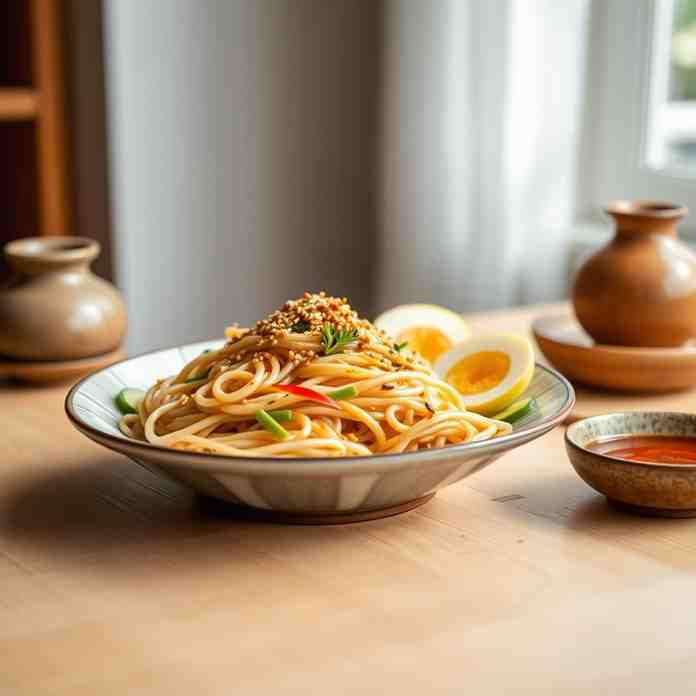
- Serves: 4 People
- Prepare Time: 45 minutes
- Cooking Time: 2 hours (br
- Calories: -
- Difficulty: Medium
When the weather heats up, there's nothing quite like a bowl of korean cold noodles to cool you down and tantalize your taste buds. We're talking about Naengmyeon, a truly refreshing and unique dish that’s a staple in Korean cuisine. Imagine thin, chewy buckwheat noodles swimming in an icy, savory broth, topped with crisp veggies, a hard-boiled egg, and often a touch of tender, thin slice beef. It’s not just a meal; it's an experience, delivering a burst of flavor and an instant chill.
This recipe goes beyond the basics, showing you how to achieve that perfect balance of icy broth, springy noodles, and a vibrant, spicy Naengmyeon sauce. We’ll guide you through making a rich, clear beef broth from scratch, ensuring it's robust enough to stand up to the cold, and then how to craft a customizable spicy sauce that adds just the right kick.
Whether you're a seasoned home cook looking to master authentic korean food noodles or a first-timer eager to try something new without needing special equipment, this guide is for you. We’ve broken down every step to make this seemingly complex dish approachable and incredibly rewarding, helping you create the best tasting broth and a truly unforgettable bowl of Naengmyeon. Get ready to dive into the art of making this quintessential beef and noodle soup!
Ingredients
Directions
- Make the Beef Broth
- Blanch & Rinse Beef (Optional but Recommended): Place beef bones/meat in a large stock pot. Cover with cold water and bring to a rolling boil over high heat. Boil for 5-10 minutes. This blanching step helps remove impurities, leading to a much cleaner and clearer broth. Drain the water, then thoroughly rinse the beef bones/meat under cold running water, scrubbing off any scum or residue. Clean the pot as well.
- Simmer & Skim: Return the rinsed beef to the clean stock pot. Add 12-14 cups of fresh cold water. Bring to a boil, then immediately reduce the heat to low, cover, and simmer gently for 1.5 to 2 hours. As it simmers, keep an eye out for any foam or scum rising to the surface. Use a fine-mesh strainer or ladle to diligently skim it off – this is key to a clear broth.
- Add Aromatics: After the initial 1.5-2 hours of simmering, add the quartered onion, smashed garlic, sliced ginger, and white parts of the scallions to the pot. Continue to simmer for another 30-45 minutes. Adding aromatics later prevents them from becoming bitter or overpowering the delicate beef flavor.
- Strain: Carefully remove the beef and aromatics from the pot. Strain the broth through a fine-mesh strainer or a cheesecloth-lined colander into a large, heat-proof bowl. Discard the aromatics. Reserve the cooked beef for slicing and serving as a topping.
- Chill & De-fat the Broth
- Fast Chill or Overnight Chill: For the quickest chilling, place the strained broth in an ice bath (a larger bowl filled with ice and water) and stir occasionally until it's cold. Alternatively, and preferably, let the broth cool to room temperature, then cover and refrigerate overnight. Chilling overnight allows the fat to solidify at the top, making removal much easier.
- Remove Fat Cleanly: Once the broth is thoroughly chilled and the fat has solidified on top, use a spoon, ladle, or a fat separator to carefully remove and discard the layer of fat. This de-fatting step is crucial for achieving that "refreshing" quality of Naengmyeon; fat is the enemy of a clean, cold broth experience.
- Final Seasoning: Taste the cold broth. Remember, cold mutes flavor, so it needs to be seasoned a little stronger than a hot broth. Add salt, soy sauce, sugar, and rice vinegar korean to taste, adjusting until you reach a perfectly balanced, savory, slightly tangy, and robust flavor. The broth should be assertive.
- Make the Spicy Sauce (Bibimjang)
- Whisk to Smooth Consistency: In a small bowl, combine gochujang, apple cider vinegar, sugar or honey, soy sauce, minced garlic, toasted sesame oil, and toasted sesame seeds. Whisk well until all ingredients are thoroughly combined and the sauce is smooth.
- Taste Targets: Taste the sauce and adjust to your preference. It should be a balance of sweet, tangy, and spicy. If you prefer more tang, add a bit more vinegar. For more heat, a touch more gochujang.
- Make-Ahead Storage: The spicy sauce can be made ahead and stored in an airtight container in the refrigerator for up to a week. Its flavors will meld and deepen over time.
- Cook and Chill the Noodles
- Boil Time Cues: Bring a large pot of water to a rolling boil. Add the Naengmyeon noodles and cook according to package directions, typically 2-3 minutes. These noodles cook very quickly, so don't overcook them, or they'll become gummy.
- Rinse Hard: Immediately drain the cooked noodles into a colander. Rinse them aggressively under very cold running water, rubbing them gently between your hands, until the water runs mostly clear. This removes excess starch, preventing them from clumping and ensuring that signature chewy texture.
- Ice Bath Chill & Drain Well: Transfer the rinsed noodles to a large bowl filled with ice water. Let them chill for a few minutes. This ensures they are perfectly cold and firm. Drain them very well before assembling, squeezing out excess water, so your bowl doesn't turn watery.
- Assemble Bowls
- Noodles First: Divide the well-drained, chilled noodles evenly among four large serving bowls.
- Pour Icy Broth: Gently pour the thoroughly chilled and seasoned beef broth over the noodles. The broth should be icy cold, almost slushy if possible.
- Add Toppings: Arrange the julienned cucumber, thinly sliced Korean pear (or apple), hard-boiled egg halves, and the reserved sliced cooked beef (from the broth) attractively on top of the noodles. Add optional pickled radish if using.
- Add Spicy Sauce to Taste: Place a generous dollop of the spicy Naengmyeon sauce (Bibimjang) on top of the toppings, allowing each person to mix it in to their desired level of spice. This way, the broth stays balanced for those who prefer less heat.
- Serve with Optional Condiments: Serve immediately with optional extra rice vinegar korean and Korean mustard paste on the side, allowing diners to customize their bowls even further.
You may also like


Hey there! I’m just someone who seriously loves good food and believes that cooking doesn’t have to be complicated to be amazing. Whether it’s a quick weeknight dinner or a cozy weekend meal, I’m all about sharing easy, tasty recipes that actually work.