
Nordic Crunch - Danish Dark Bread Croutons Recipe
Nordic Crunch - Danish Dark Bread Croutons Recipe
- Serves: 6 People
- Prepare Time: 10 minutes
- Cooking Time: 25 minutes
- Calories: -
- Difficulty: Easy
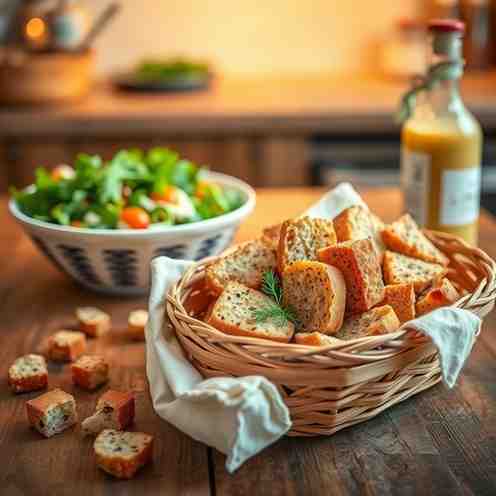
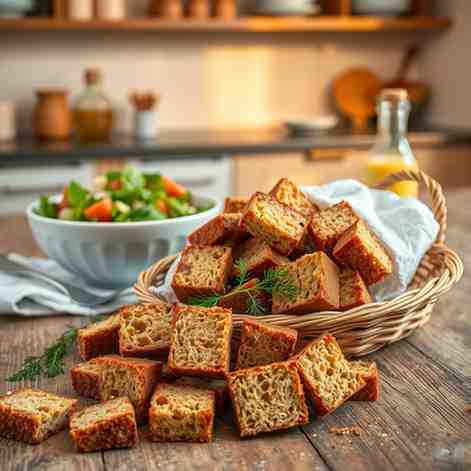
Ever find yourself with leftover danish dark bread (rugbrød) and wonder what to do with it? Don't even think about tossing it! We're about to show you how to transform that dense, wholesome bread whole grains goodness into the most incredibly crunchy, flavorful Nordic croutons you've ever tasted. Forget those bland, store-bought cubes; these homemade rugbrød croutons are a game-changer, packed with deep rye flavor and a satisfying bite. It's the perfect recipe using bread that not only reduces food waste but also elevates your meals to a whole new level of deliciousness.
In this guide, you'll discover:
How to make a fool-proof batch of these amazing Danish rye bread croutons right in your own kitchen.
Clever ways to turn even the stalest rugbrød into something crave-worthy, proving that old bread and olive oil can create magic.
Easy, Nordic-inspired ideas to use your crunchy creations in salads, soups, and even as a delightful snack.
Ready to get your crunch on? Let's dive in!
These aren't just any croutons; they're a celebration of Danish culinary tradition and clever cooking. You're taking humble, leftover danish dark bread – a staple known for its dense texture and rich, slightly sour flavor – and giving it a new, exciting life. Infused with a hint of olive oil for bread and a touch of seasoning, these rugbrød croutons become super-crunchy Nordic gems, perfect for adding texture and a unique flavor profile to almost anything. They're miles ahead of generic croutons, offering a satisfying depth that only real rye bread can provide, all while being a fantastic way to tackle food waste.
Before you get cubing, let's talk about the star of our show: rugbrød.
What is rugbrød? Danish rye bread, or rugbrød, is a dense, often seedy, whole-grain bread with a distinctive dark color and a wonderfully complex, slightly sour taste. It's nothing like fluffy white bread! Its firm texture and robust flavor make it ideal for croutons, providing a much more substantial crunch and nutritional punch than a standard baguette.
Fresh vs. stale rugbrød: For the best croutons, rugbrød that's 1-3 days old and slightly dry at the edges is perfect. It holds its shape well and crisps up beautifully.
Handling very fresh rugbrød: If your rugbrød is super fresh and moist, cube it first, then spread the cubes on a baking sheet and let them air-dry for an hour or two, or lightly toast them in a low oven (around 200°F/95°C) for 10-15 minutes before oiling. This removes excess moisture and ensures maximum crunch.
Handling very hard/dry rugbrød: If your bread is already rock-hard, cut the cubes a bit smaller (e.g., ½ inch). You can also lightly mist them with a tiny bit of water or extra oil before tossing to prevent them from becoming too brittle.
Bread variations:
Whether you're using store-bought rye or your own homemade rugbrød, the method remains the same. Just note that homemade loaves can sometimes be moister, requiring a quick pre-drying step.
If your loaf is heavily seeded, keep an eye on it in the oven, as seeds can toast and darken faster than the bread itself.
Ingredients
Directions
- Cube the bread
- Prep your rugbrød: Using a sharp serrated knife, cut your leftover danish dark bread into ½ to ¾-inch (1.25-2 cm) cubes. Aim for relatively uniform sizes to ensure even baking. A tip: cutting against the grain of the bread can help the cubes hold their shape better. You can trim the crusts if you prefer, but we love keeping them on for extra crunch and rustic charm!
- Toss with oil and seasoning
- Combine & coat: Place all your bread cubes into a large mixing bowl. Drizzle generously with the measured olive oil for bread, then sprinkle with salt, pepper, and any optional spices like caraway, dill, or dried herbs.
- Toss for even coating: Use your hands or a large spatula to gently but thoroughly toss the bread cubes. Make sure every single cube gets lightly coated in the oil and seasonings. You want them glistening, not soggy, so if you see any dry patches, add a tiny bit more oil and toss again.
- Bake until crisp
- Preheat & arrange: Preheat your oven to 350°F (175°C). Line a large baking sheet with parchment paper for easy cleanup. Spread the seasoned rugbrød cubes in a single layer across the baking sheet. Don't overcrowd the pan; use two sheets if necessary. This ensures they crisp up rather than steam.
- Bake to perfection: Bake for 20-30 minutes, or until the croutons are deeply golden brown, crisp, and dry to the touch.
- Visual cues: The edges should be dark and crisp, and the centers should feel firm and dry. If using seeded bread, the seeds will be toasted but not burnt.
- Mid-bake toss: Halfway through baking (around 10-15 minutes), give the pan a good shake or use a spatula to toss the croutons. This promotes even browning and helps avoid hot spots in your oven. You might also rotate the pan.
- Cool for maximum crunch
- Cool completely: Once baked to your desired crispness, remove the baking sheet from the oven. Leave the croutons on the baking sheet to cool completely. As they cool, they'll continue to crisp up (this is called carry-over crisping!). Cooling them on the tray allows any residual moisture to evaporate, ensuring that ultimate crunch. They're ready to eat when cool, and ready to store once fully at room temperature.
Nordic Crunch - Danish Dark Bread Croutons Recipe
- Serves: 6 People
- Prepare Time: 10 minutes
- Cooking Time: 25 minutes
- Calories: -
- Difficulty: Easy
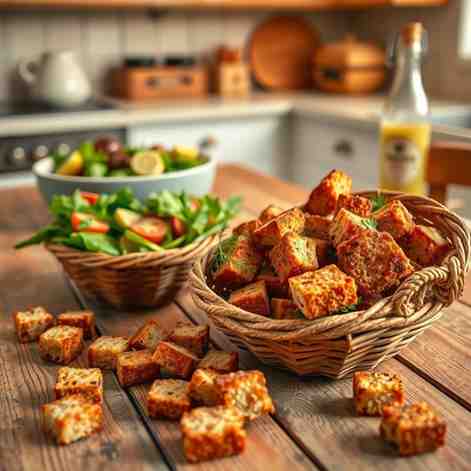
Ever find yourself with leftover danish dark bread (rugbrød) and wonder what to do with it? Don't even think about tossing it! We're about to show you how to transform that dense, wholesome bread whole grains goodness into the most incredibly crunchy, flavorful Nordic croutons you've ever tasted. Forget those bland, store-bought cubes; these homemade rugbrød croutons are a game-changer, packed with deep rye flavor and a satisfying bite. It's the perfect recipe using bread that not only reduces food waste but also elevates your meals to a whole new level of deliciousness.
In this guide, you'll discover:
How to make a fool-proof batch of these amazing Danish rye bread croutons right in your own kitchen.
Clever ways to turn even the stalest rugbrød into something crave-worthy, proving that old bread and olive oil can create magic.
Easy, Nordic-inspired ideas to use your crunchy creations in salads, soups, and even as a delightful snack.
Ready to get your crunch on? Let's dive in!
These aren't just any croutons; they're a celebration of Danish culinary tradition and clever cooking. You're taking humble, leftover danish dark bread – a staple known for its dense texture and rich, slightly sour flavor – and giving it a new, exciting life. Infused with a hint of olive oil for bread and a touch of seasoning, these rugbrød croutons become super-crunchy Nordic gems, perfect for adding texture and a unique flavor profile to almost anything. They're miles ahead of generic croutons, offering a satisfying depth that only real rye bread can provide, all while being a fantastic way to tackle food waste.
Before you get cubing, let's talk about the star of our show: rugbrød.
What is rugbrød? Danish rye bread, or rugbrød, is a dense, often seedy, whole-grain bread with a distinctive dark color and a wonderfully complex, slightly sour taste. It's nothing like fluffy white bread! Its firm texture and robust flavor make it ideal for croutons, providing a much more substantial crunch and nutritional punch than a standard baguette.
Fresh vs. stale rugbrød: For the best croutons, rugbrød that's 1-3 days old and slightly dry at the edges is perfect. It holds its shape well and crisps up beautifully.
Handling very fresh rugbrød: If your rugbrød is super fresh and moist, cube it first, then spread the cubes on a baking sheet and let them air-dry for an hour or two, or lightly toast them in a low oven (around 200°F/95°C) for 10-15 minutes before oiling. This removes excess moisture and ensures maximum crunch.
Handling very hard/dry rugbrød: If your bread is already rock-hard, cut the cubes a bit smaller (e.g., ½ inch). You can also lightly mist them with a tiny bit of water or extra oil before tossing to prevent them from becoming too brittle.
Bread variations:
Whether you're using store-bought rye or your own homemade rugbrød, the method remains the same. Just note that homemade loaves can sometimes be moister, requiring a quick pre-drying step.
If your loaf is heavily seeded, keep an eye on it in the oven, as seeds can toast and darken faster than the bread itself.
Ingredients
Directions
- Cube the bread
- Prep your rugbrød: Using a sharp serrated knife, cut your leftover danish dark bread into ½ to ¾-inch (1.25-2 cm) cubes. Aim for relatively uniform sizes to ensure even baking. A tip: cutting against the grain of the bread can help the cubes hold their shape better. You can trim the crusts if you prefer, but we love keeping them on for extra crunch and rustic charm!
- Toss with oil and seasoning
- Combine & coat: Place all your bread cubes into a large mixing bowl. Drizzle generously with the measured olive oil for bread, then sprinkle with salt, pepper, and any optional spices like caraway, dill, or dried herbs.
- Toss for even coating: Use your hands or a large spatula to gently but thoroughly toss the bread cubes. Make sure every single cube gets lightly coated in the oil and seasonings. You want them glistening, not soggy, so if you see any dry patches, add a tiny bit more oil and toss again.
- Bake until crisp
- Preheat & arrange: Preheat your oven to 350°F (175°C). Line a large baking sheet with parchment paper for easy cleanup. Spread the seasoned rugbrød cubes in a single layer across the baking sheet. Don't overcrowd the pan; use two sheets if necessary. This ensures they crisp up rather than steam.
- Bake to perfection: Bake for 20-30 minutes, or until the croutons are deeply golden brown, crisp, and dry to the touch.
- Visual cues: The edges should be dark and crisp, and the centers should feel firm and dry. If using seeded bread, the seeds will be toasted but not burnt.
- Mid-bake toss: Halfway through baking (around 10-15 minutes), give the pan a good shake or use a spatula to toss the croutons. This promotes even browning and helps avoid hot spots in your oven. You might also rotate the pan.
- Cool for maximum crunch
- Cool completely: Once baked to your desired crispness, remove the baking sheet from the oven. Leave the croutons on the baking sheet to cool completely. As they cool, they'll continue to crisp up (this is called carry-over crisping!). Cooling them on the tray allows any residual moisture to evaporate, ensuring that ultimate crunch. They're ready to eat when cool, and ready to store once fully at room temperature.
You may also like



Hey there! I’m just someone who seriously loves good food and believes that cooking doesn’t have to be complicated to be amazing. Whether it’s a quick weeknight dinner or a cozy weekend meal, I’m all about sharing easy, tasty recipes that actually work.



