
Saffron Risotto - Cook with White Wine for Creamy Perfection
Saffron Risotto - Cook with White Wine for Creamy Perfection

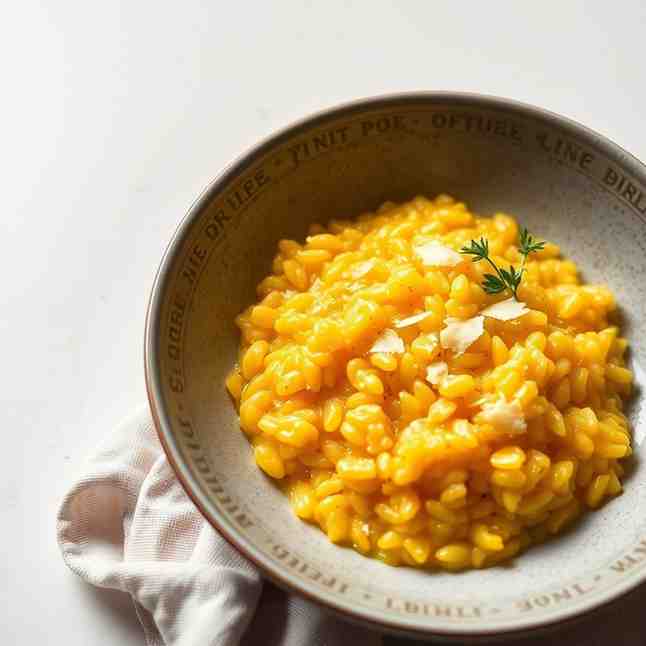
- Serves: 4 People
- Prepare Time: 15 minutes
- Cooking Time: 30 minutes
- Calories: -
- Difficulty: Easy
Ever dreamt of whisking up a restaurant-quality Italian dish right in your own kitchen? Get ready to make that dream a delicious reality with this Saffron Risotto recipe! Also known as Risotto alla Milanese, this iconic dish is a golden, creamy masterpiece that's surprisingly simple to master. Imagine tender Arborio rice infused with the luxurious aroma and vibrant color of saffron, brought to life with the subtle brightness of cooking with white wine. Each spoonful is pure comfort, a testament to the magic of simple, high-quality ingredients transformed into something truly special. It’s the kind of homemade food that warms your soul and impresses your guests, perfect for every day cooking or a special occasion. Forget heavy cream; the secret to its velvety texture lies in patient stirring and the natural starches of the rice. Get ready to create a truly unforgettable meal with this simple and delicious recipe.
What you’ll love: Creamy texture without cream, golden saffron aroma, classic Italian comfort
Saffron Risotto, or Risotto alla Milanese, is a classic dish hailing from Lombardy, specifically the city of Milan in northern Italy. Its signature golden hue comes from the precious saffron threads, which also impart a uniquely earthy, slightly floral aroma and flavor. What makes it "Milanese" distinct from other risottos? It's primarily its saffron-forward character, often finished with a generous swirl of butter and Parmesan cheese, creating an incredibly rich yet balanced profile. It's a cornerstone of Milanese cuisine, often served alongside another regional specialty, Osso Buco. This recipe focuses on creating that authentic, creamy Italian experience right in your home.
Ingredients
Directions
- Bloom the Saffron: In a small bowl, combine the saffron threads with about 2 tablespoons of warm (not hot) stock or water. Let it sit for at least 10-15 minutes, or up to an hour, to allow the saffron to release its vibrant color and aroma. The liquid should turn a deep golden-orange.
- Warm the Stock and Keep it Hot: Pour the remaining stock into a small saucepan and bring it to a gentle simmer over medium-low heat. Keep it warm throughout the entire cooking with white wine process – this is crucial for the rice to absorb the liquid evenly and maintain a consistent temperature. "Hot" means it's gently steaming, not boiling rapidly.
- Sauté the Shallot: In a wide, heavy-bottomed pan or Dutch oven (a wide pan allows for even cooking and stirring surface), heat the olive oil over medium heat. Add the finely chopped shallot and cook gently for 3-4 minutes, stirring occasionally, until softened and translucent. Be careful not to let it brown, as this can add bitterness.
- Toast the Rice: Add the Arborio rice to the pan with the shallots. Stir constantly for 2-3 minutes until the edges of the rice grains become slightly translucent, and you can smell a nutty aroma. This "toasting" step helps the grains hold their shape and prevents them from becoming mushy.
- Add Wine, Cook Off: Pour in the dry white wine. Stir continuously until the wine is almost completely absorbed by the rice and the pan is nearly dry. You should no longer smell a harsh alcohol scent, only a pleasant aroma. This step adds depth and acidity.
- Add Stock Gradually + Stir: Now, begin adding the warm stock, one ladleful (about ½ cup) at a time. Stir frequently, but not constantly, allowing the rice to absorb most of the liquid before adding the next ladleful. Maintain a gentle bubble in the pan – not a furious boil. "Mostly absorbed" means you can drag your wooden spoon across the bottom of the pan and see the pan for a moment before the liquid flows back. This process takes about 18-20 minutes. Midway through, taste a grain – it should still be quite firm, and the pan consistency should be creamy but not too thick.
- Add Saffron at the Right Time: Once you've added about half of the stock, stir in the bloomed saffron mixture. Watch as the rice gradually takes on that beautiful, characteristic golden color. Continue adding stock ladle by ladle, stirring and tasting, until the rice is al dente – tender but with a slight, pleasant chew in the center. You might not use all the stock, or you might need a little more; adjust by feel.
- Finish Off-Heat: Butter + Cheese Emulsification: Remove the pan from the heat. Stir in the cold, cubed butter and the grated Parmesan cheese vigorously. This is the "mantecatura" step, which creates the incredibly creamy, emulsified texture. Stir until the butter and cheese are fully incorporated and the risotto is luscious and flowing. Perform the "wave test": tilt the pan slightly, and the risotto should gently undulate like a wave. If it seems too tight, add another splash of hot stock or water until it reaches the desired consistency.
- Serve Immediately: Risotto is best enjoyed fresh from the pan. Serve immediately in warm bowls, garnished with extra Parmesan and a grind of black pepper.
Saffron Risotto - Cook with White Wine for Creamy Perfection

- Serves: 4 People
- Prepare Time: 15 minutes
- Cooking Time: 30 minutes
- Calories: -
- Difficulty: Easy
Ever dreamt of whisking up a restaurant-quality Italian dish right in your own kitchen? Get ready to make that dream a delicious reality with this Saffron Risotto recipe! Also known as Risotto alla Milanese, this iconic dish is a golden, creamy masterpiece that's surprisingly simple to master. Imagine tender Arborio rice infused with the luxurious aroma and vibrant color of saffron, brought to life with the subtle brightness of cooking with white wine. Each spoonful is pure comfort, a testament to the magic of simple, high-quality ingredients transformed into something truly special. It’s the kind of homemade food that warms your soul and impresses your guests, perfect for every day cooking or a special occasion. Forget heavy cream; the secret to its velvety texture lies in patient stirring and the natural starches of the rice. Get ready to create a truly unforgettable meal with this simple and delicious recipe.
What you’ll love: Creamy texture without cream, golden saffron aroma, classic Italian comfort
Saffron Risotto, or Risotto alla Milanese, is a classic dish hailing from Lombardy, specifically the city of Milan in northern Italy. Its signature golden hue comes from the precious saffron threads, which also impart a uniquely earthy, slightly floral aroma and flavor. What makes it "Milanese" distinct from other risottos? It's primarily its saffron-forward character, often finished with a generous swirl of butter and Parmesan cheese, creating an incredibly rich yet balanced profile. It's a cornerstone of Milanese cuisine, often served alongside another regional specialty, Osso Buco. This recipe focuses on creating that authentic, creamy Italian experience right in your home.
Ingredients
Directions
- Bloom the Saffron: In a small bowl, combine the saffron threads with about 2 tablespoons of warm (not hot) stock or water. Let it sit for at least 10-15 minutes, or up to an hour, to allow the saffron to release its vibrant color and aroma. The liquid should turn a deep golden-orange.
- Warm the Stock and Keep it Hot: Pour the remaining stock into a small saucepan and bring it to a gentle simmer over medium-low heat. Keep it warm throughout the entire cooking with white wine process – this is crucial for the rice to absorb the liquid evenly and maintain a consistent temperature. "Hot" means it's gently steaming, not boiling rapidly.
- Sauté the Shallot: In a wide, heavy-bottomed pan or Dutch oven (a wide pan allows for even cooking and stirring surface), heat the olive oil over medium heat. Add the finely chopped shallot and cook gently for 3-4 minutes, stirring occasionally, until softened and translucent. Be careful not to let it brown, as this can add bitterness.
- Toast the Rice: Add the Arborio rice to the pan with the shallots. Stir constantly for 2-3 minutes until the edges of the rice grains become slightly translucent, and you can smell a nutty aroma. This "toasting" step helps the grains hold their shape and prevents them from becoming mushy.
- Add Wine, Cook Off: Pour in the dry white wine. Stir continuously until the wine is almost completely absorbed by the rice and the pan is nearly dry. You should no longer smell a harsh alcohol scent, only a pleasant aroma. This step adds depth and acidity.
- Add Stock Gradually + Stir: Now, begin adding the warm stock, one ladleful (about ½ cup) at a time. Stir frequently, but not constantly, allowing the rice to absorb most of the liquid before adding the next ladleful. Maintain a gentle bubble in the pan – not a furious boil. "Mostly absorbed" means you can drag your wooden spoon across the bottom of the pan and see the pan for a moment before the liquid flows back. This process takes about 18-20 minutes. Midway through, taste a grain – it should still be quite firm, and the pan consistency should be creamy but not too thick.
- Add Saffron at the Right Time: Once you've added about half of the stock, stir in the bloomed saffron mixture. Watch as the rice gradually takes on that beautiful, characteristic golden color. Continue adding stock ladle by ladle, stirring and tasting, until the rice is al dente – tender but with a slight, pleasant chew in the center. You might not use all the stock, or you might need a little more; adjust by feel.
- Finish Off-Heat: Butter + Cheese Emulsification: Remove the pan from the heat. Stir in the cold, cubed butter and the grated Parmesan cheese vigorously. This is the "mantecatura" step, which creates the incredibly creamy, emulsified texture. Stir until the butter and cheese are fully incorporated and the risotto is luscious and flowing. Perform the "wave test": tilt the pan slightly, and the risotto should gently undulate like a wave. If it seems too tight, add another splash of hot stock or water until it reaches the desired consistency.
- Serve Immediately: Risotto is best enjoyed fresh from the pan. Serve immediately in warm bowls, garnished with extra Parmesan and a grind of black pepper.
You may also like



Hey there! I’m just someone who seriously loves good food and believes that cooking doesn’t have to be complicated to be amazing. Whether it’s a quick weeknight dinner or a cozy weekend meal, I’m all about sharing easy, tasty recipes that actually work.