
Haitian Cabrit Stew - Goat Meat Perfection
Haitian Cabrit Stew - Goat Meat Perfection


- Serves: 6 People
- Prepare Time: 30 minutes
- Cooking Time: 2 hours 30
- Calories: -
- Difficulty: Medium
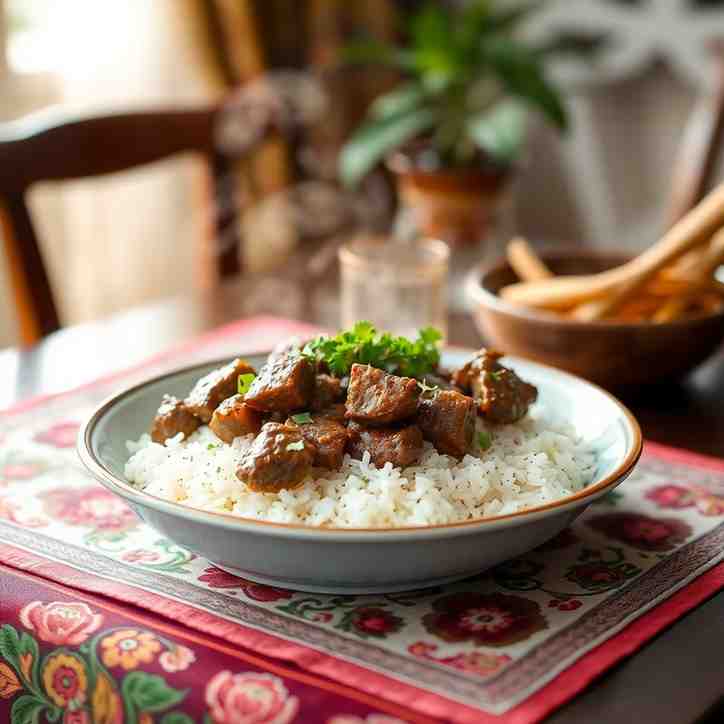
Welcome to the heart of Haitian comfort food: Haitian Cabrit Stew! If you're looking to dive into a dish that’s rich in flavor, history, and soul, you’ve found it. "Cabrit" simply means goat in Haitian Creole, and this isn't just any goat stew; it's a culinary journey.
Imagine succulent goat meat stewed with spices and vegetables, infused with the vibrant essence of `epis seasoning` – the aromatic green seasoning blend that forms the backbone of Haitian cooking. This `Haitian goat meat stew` boasts a savory, aromatic, and gently spicy profile, beautifully brightened by a hint of citrus. We'll show you how to achieve that perfectly fork-tender goat and a glossy, rich broth right in your own kitchen, ensuring an authentic taste with smart techniques for home cooks. Get ready to master `how to cook goat meat tender` and create a truly unforgettable meal!
Ingredients
Directions
- Equipment You'll Need:
- A heavy pot with a lid (a 5-6 quart Dutch oven is ideal, or a heavy stockpot)
- Tongs
- Cutting board and a sharp knife
- Measuring spoons and cups
- Prep (Set Yourself Up for Success):
- Trim the Goat: Carefully remove any large bits of surface fat or silverskin from the goat meat pieces. A little fat is fine for flavor, but excessive amounts can make the stew greasy.
- Pat Dry (Critical!): Thoroughly pat the goat meat dry with paper towels. This step is crucial for achieving a good brown crust.
- Optional Acidic Rinse: For an extra layer of freshness (and to help mitigate any "goaty" flavor), you can quickly rinse the goat meat in a bowl of water with a splash of lime juice or vinegar. Rinse it off under cold water immediately afterward and pat dry again, very thoroughly.
- Marinate with Aromatics: In a large bowl, combine the trimmed, dried goat meat with about half of the chopped onion, bell pepper, minced garlic, scallion whites, fresh thyme leaves (stripped from sprigs), and half of the chopped parsley. Add 1 tablespoon of lime or sour orange juice, a pinch of salt, and a few grinds of black pepper. Mix well to coat every piece. Cover and refrigerate for at least 2 hours, or ideally overnight (up to 24 hours) for the best flavor penetration.
- Cooking Method:
- Season + Brown the Goat in Batches:
- Remove the marinated goat from the fridge 30 minutes before cooking.
- Heat 1 tablespoon of neutral oil in your Dutch oven or heavy pot over medium-high heat until shimmering.
- Working in batches, add the goat meat, ensuring not to crowd the pot. Overcrowding will steam the meat instead of browning it, preventing that crucial deep flavor development.
- Sear each piece until it’s deeply browned on all sides (what "good brown" looks like). This browning creates rich, complex flavors. Remove browned goat to a plate and set aside. Repeat with remaining goat, adding more oil if needed.
- Sauté Aromatics + Build the Base:
- Reduce heat to medium. Add the remaining 1 tablespoon of oil to the pot (if needed).
- Add the remaining chopped onion and bell pepper (if you didn't use it all for marinating, otherwise add fresh). Sauté for 5-7 minutes until softened.
- Stir in the remaining minced garlic, scallion whites, and tomato paste. Cook for 1-2 minutes, stirring constantly, until the garlic is fragrant and the tomato paste darkens slightly. This toasts the tomato paste, deepening its flavor.
- Deglaze:
- Pour in about 1 cup of beef or chicken broth. Use a wooden spoon to scrape up all the browned bits (fond) from the bottom of the pot. These bits are pure flavor!
- Braise Low and Slow:
- Return the browned goat meat (and any accumulated juices) to the pot. Add the fresh thyme sprigs, whole cloves or allspice, and the whole Scotch bonnet pepper (if using).
- Pour in the remaining broth until the meat is mostly submerged. Bring the liquid to a gentle simmer.
- Cover the pot, reduce the heat to low, and let it braise for 2 to 2.5 hours. The simmer should be very gentle, with just small bubbles breaking the surface. Check periodically to ensure the liquid isn't evaporating too quickly.
- The goat should be fork-tender when done. If it's still tough, continue simmering for another 30-60 minutes, checking every 20 minutes.
- Add Vegetables at the Right Time:
- After the goat has been simmering for about 1.5 hours (or when it's starting to become tender), add the carrots and celery/cabbage to the pot. If using potatoes, add them now too.
- Continue to simmer, covered, for another 30-45 minutes, or until the vegetables are tender but not mushy. This staggered addition prevents softer vegetables from overcooking.
- Finish + Adjust:
- Once the goat is fork-tender and the vegetables are cooked, carefully remove the whole Scotch bonnet pepper (if used) and discard it. Remove the thyme sprigs as well.
- Stir in the remaining fresh parsley and scallion greens.
- Taste the stew and adjust seasoning with salt and black pepper as needed. Add the remaining lime or sour orange juice (or lime + vinegar) to brighten the flavors. This is your "acid check"—it balances the richness.
- If the broth is too thin, you can uncover the pot and simmer for another 10-15 minutes to reduce it slightly. Only if absolutely necessary, you can make a cornstarch slurry (1 tablespoon cornstarch mixed with 2 tablespoons cold water) and stir it into the simmering stew to thicken.
- For an optional glossy finish, stir in a teaspoon of butter or a spoon of neutral oil just before serving.
- What "Done" Looks Like:
- Goat: The meat should be incredibly fork-tender, easily pulling away from the bone, with all connective tissue softened.
- Broth: The sauce should be glossy, rich, and lightly thick, coating the back of a spoon.
- Vegetables: They should be tender, but still hold their shape without being mushy.
Haitian Cabrit Stew - Goat Meat Perfection

- Serves: 6 People
- Prepare Time: 30 minutes
- Cooking Time: 2 hours 30
- Calories: -
- Difficulty: Medium
Welcome to the heart of Haitian comfort food: Haitian Cabrit Stew! If you're looking to dive into a dish that’s rich in flavor, history, and soul, you’ve found it. "Cabrit" simply means goat in Haitian Creole, and this isn't just any goat stew; it's a culinary journey.
Imagine succulent goat meat stewed with spices and vegetables, infused with the vibrant essence of `epis seasoning` – the aromatic green seasoning blend that forms the backbone of Haitian cooking. This `Haitian goat meat stew` boasts a savory, aromatic, and gently spicy profile, beautifully brightened by a hint of citrus. We'll show you how to achieve that perfectly fork-tender goat and a glossy, rich broth right in your own kitchen, ensuring an authentic taste with smart techniques for home cooks. Get ready to master `how to cook goat meat tender` and create a truly unforgettable meal!
Ingredients
Directions
- Equipment You'll Need:
- A heavy pot with a lid (a 5-6 quart Dutch oven is ideal, or a heavy stockpot)
- Tongs
- Cutting board and a sharp knife
- Measuring spoons and cups
- Prep (Set Yourself Up for Success):
- Trim the Goat: Carefully remove any large bits of surface fat or silverskin from the goat meat pieces. A little fat is fine for flavor, but excessive amounts can make the stew greasy.
- Pat Dry (Critical!): Thoroughly pat the goat meat dry with paper towels. This step is crucial for achieving a good brown crust.
- Optional Acidic Rinse: For an extra layer of freshness (and to help mitigate any "goaty" flavor), you can quickly rinse the goat meat in a bowl of water with a splash of lime juice or vinegar. Rinse it off under cold water immediately afterward and pat dry again, very thoroughly.
- Marinate with Aromatics: In a large bowl, combine the trimmed, dried goat meat with about half of the chopped onion, bell pepper, minced garlic, scallion whites, fresh thyme leaves (stripped from sprigs), and half of the chopped parsley. Add 1 tablespoon of lime or sour orange juice, a pinch of salt, and a few grinds of black pepper. Mix well to coat every piece. Cover and refrigerate for at least 2 hours, or ideally overnight (up to 24 hours) for the best flavor penetration.
- Cooking Method:
- Season + Brown the Goat in Batches:
- Remove the marinated goat from the fridge 30 minutes before cooking.
- Heat 1 tablespoon of neutral oil in your Dutch oven or heavy pot over medium-high heat until shimmering.
- Working in batches, add the goat meat, ensuring not to crowd the pot. Overcrowding will steam the meat instead of browning it, preventing that crucial deep flavor development.
- Sear each piece until it’s deeply browned on all sides (what "good brown" looks like). This browning creates rich, complex flavors. Remove browned goat to a plate and set aside. Repeat with remaining goat, adding more oil if needed.
- Sauté Aromatics + Build the Base:
- Reduce heat to medium. Add the remaining 1 tablespoon of oil to the pot (if needed).
- Add the remaining chopped onion and bell pepper (if you didn't use it all for marinating, otherwise add fresh). Sauté for 5-7 minutes until softened.
- Stir in the remaining minced garlic, scallion whites, and tomato paste. Cook for 1-2 minutes, stirring constantly, until the garlic is fragrant and the tomato paste darkens slightly. This toasts the tomato paste, deepening its flavor.
- Deglaze:
- Pour in about 1 cup of beef or chicken broth. Use a wooden spoon to scrape up all the browned bits (fond) from the bottom of the pot. These bits are pure flavor!
- Braise Low and Slow:
- Return the browned goat meat (and any accumulated juices) to the pot. Add the fresh thyme sprigs, whole cloves or allspice, and the whole Scotch bonnet pepper (if using).
- Pour in the remaining broth until the meat is mostly submerged. Bring the liquid to a gentle simmer.
- Cover the pot, reduce the heat to low, and let it braise for 2 to 2.5 hours. The simmer should be very gentle, with just small bubbles breaking the surface. Check periodically to ensure the liquid isn't evaporating too quickly.
- The goat should be fork-tender when done. If it's still tough, continue simmering for another 30-60 minutes, checking every 20 minutes.
- Add Vegetables at the Right Time:
- After the goat has been simmering for about 1.5 hours (or when it's starting to become tender), add the carrots and celery/cabbage to the pot. If using potatoes, add them now too.
- Continue to simmer, covered, for another 30-45 minutes, or until the vegetables are tender but not mushy. This staggered addition prevents softer vegetables from overcooking.
- Finish + Adjust:
- Once the goat is fork-tender and the vegetables are cooked, carefully remove the whole Scotch bonnet pepper (if used) and discard it. Remove the thyme sprigs as well.
- Stir in the remaining fresh parsley and scallion greens.
- Taste the stew and adjust seasoning with salt and black pepper as needed. Add the remaining lime or sour orange juice (or lime + vinegar) to brighten the flavors. This is your "acid check"—it balances the richness.
- If the broth is too thin, you can uncover the pot and simmer for another 10-15 minutes to reduce it slightly. Only if absolutely necessary, you can make a cornstarch slurry (1 tablespoon cornstarch mixed with 2 tablespoons cold water) and stir it into the simmering stew to thicken.
- For an optional glossy finish, stir in a teaspoon of butter or a spoon of neutral oil just before serving.
- What "Done" Looks Like:
- Goat: The meat should be incredibly fork-tender, easily pulling away from the bone, with all connective tissue softened.
- Broth: The sauce should be glossy, rich, and lightly thick, coating the back of a spoon.
- Vegetables: They should be tender, but still hold their shape without being mushy.
You may also like



Hey there! I’m just someone who seriously loves good food and believes that cooking doesn’t have to be complicated to be amazing. Whether it’s a quick weeknight dinner or a cozy weekend meal, I’m all about sharing easy, tasty recipes that actually work.