Algerian Zlabia Fritters Sweet Spiral Recipe - mini funnel cake
Algerian Zlabia Fritters Sweet Spiral Recipe - mini funnel cake
- Serves: 18 People
- Prepare Time: 30 minutes
- Cooking Time: 30 minutes
- Calories: -
- Difficulty: Medium
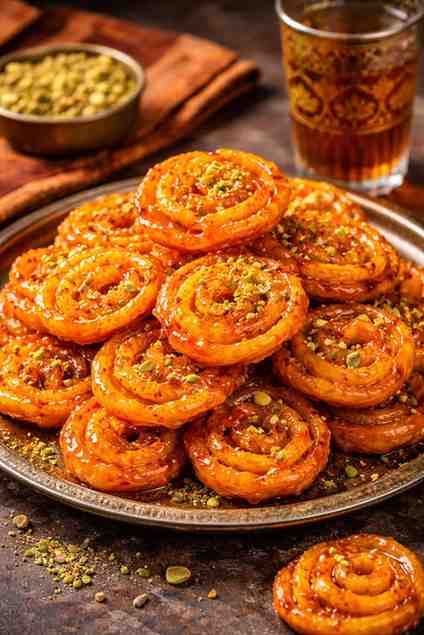
If you’re looking for a crispy, sticky, sweet spiral fritter — the kind you see piled high during Ramadan in Algeria — this is it! Here you’ll find an authentic Zlabia Algerian sweet spiral fritter recipe, learn how to make Algerian sweet fritters at home, and understand the traditional preparation from batter to syrup. This definitive Zlabia recipe has been tested for home cooks, ensuring you get perfect, syrup-soaked spirals every time. Get ready to discover this delightful sweet spiral fried dough and bring a taste of Algeria to your kitchen!
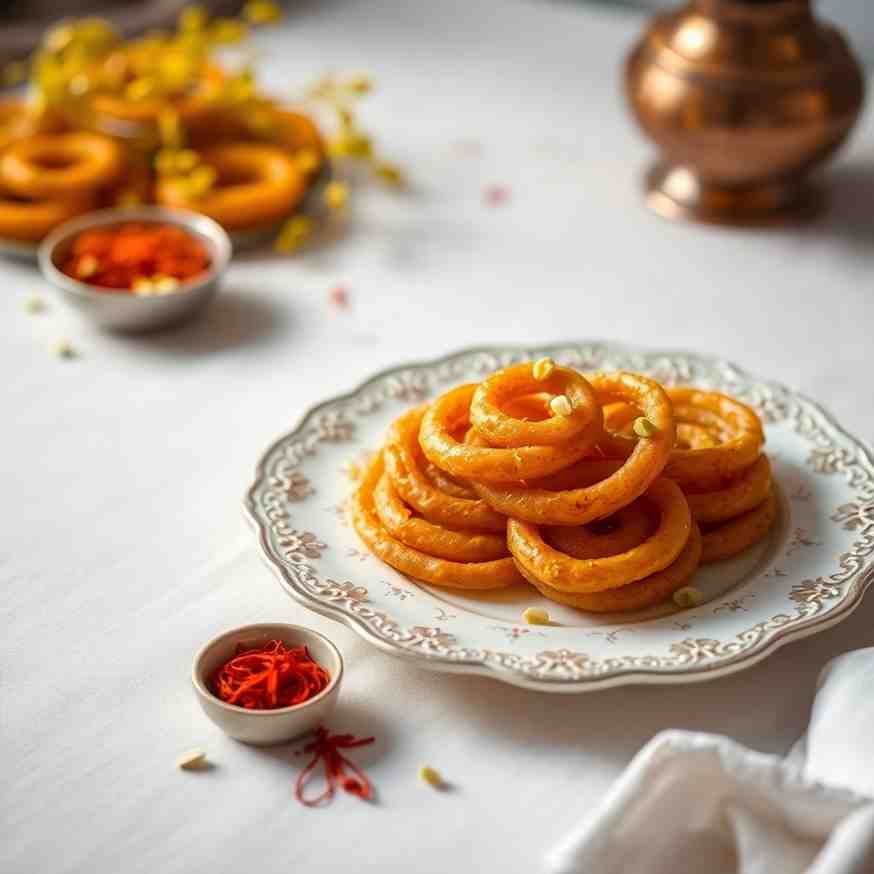
Zlabia (also spelled zalabia, zlebia, zulbia) is a spiral of fermented batter, deep-fried until golden and crisp, then immediately soaked in an aromatic sugar syrup. It's a beloved sweet treat across North Africa and West Asia, related to the broader family of jalebi and zalabiyeh.
While Zlabia shares similarities with jalebi found in South Asia, it has its own distinct characteristics. The concept of deep-fried, syrup-soaked dough is ancient and widespread, with regional variations evolving over centuries.
Algerian Zlabia stands out with its slightly thicker, crispier spirals, offering a satisfying crunch. It boasts a bold honeyed sweetness, often infused with the delicate aroma of orange blossom water. This special sweet is commonly enjoyed at sunset during Ramadan, marking the breaking of the fast, and is also a staple for other special occasions and celebrations.
Zlabia vs Griwech: Zlabia features spiral shapes made from a pourable batter, while Griwech consists of intricately braided pieces made from a stiffer dough. Both are fried and syrup-soaked, but their textures and preparation differ.
Zlabia vs Mushabbak: Mushabbak is a Levantine fried sweet, very similar in batter and syrup to Zlabia, but often with slightly different spice or aroma profiles. Algerian Zlabia typically emphasizes orange blossom water.
Zlabia vs jam fritters/doughnuts: Zlabia are syrup-soaked spirals, distinct from jam fritters or doughnuts, which are typically rings or balls filled with jam or cream.
Special Equipment:Piping bag with a round tip, squeeze bottle, or zip-top bag with a small corner snipped
Heavy-bottomed pot or deep fryer
Candy/deep-fry thermometer (recommended for best results, but visual cues are provided)
This Zlabia recipe delivers an irresistible contrast: an ultra-crisp outside that gives way to a wonderfully syrup-soaked, tender inside. While best enjoyed fresh, it holds its texture remarkably well for a few hours. Plus, it uses basic pantry ingredients, with orange blossom water being the star for its signature fragrant touch.
Ingredients
Directions
- Make the syrupBegin by preparing the syrup, as it needs to cool slightly and thicken before the Zlabia are ready to be soaked.
- In a medium saucepan, combine the granulated sugar and water. Bring to a simmer over medium heat, stirring until the sugar completely dissolves.
- Once simmering, add the lemon juice. Continue to cook for about 8-10 minutes, without stirring, until the syrup slightly thickens. It should coat the back of a spoon and fall in a slow, thick stream. You're aiming for a "light thread stage" (when a drop forms a thin thread between your fingers).
- Remove the syrup from the heat and stir in the orange blossom water. Set aside to cool to lukewarm.
- Mix the batter
- In a large bowl, whisk together the all-purpose flour, fine semolina (if using), yeast, sugar, and salt.
- Gradually whisk in the warm water (and milk, if using) until the batter is completely smooth and lump-free.
- Batter consistency note: The batter should be thick but pourable, similar to a loose pancake batter. When you lift the whisk, the batter should ribbon back into the bowl and slowly disappear.
- Ferment the batter
- Cover the bowl with plastic wrap or a clean kitchen towel and let it rise in a warm room temperature environment.
- Fermentation will take approximately 45-90 minutes, depending on the warmth of your kitchen.
- What to look for: The batter’s volume should increase by about 30-50%, and you’ll notice small bubbles on the surface, along with a slightly tangy, yeasty smell.
- Prep for frying
- While the batter finishes fermenting, heat about 3-4 inches of neutral vegetable oil (like canola or sunflower oil) in a heavy-bottomed pot or deep fryer over medium-high heat.
- Heat the oil to approximately 350-360°F (175-182°C). If you don’t have a thermometer, test the oil by dropping a tiny bit of batter in: it should rise quickly to the surface and bubble vigorously without immediately browning.
- Carefully transfer the fermented batter into a piping bag fitted with a round tip, a squeeze bottle, or a zip-top bag with a small corner snipped off (about ¼ inch opening).
- Pipe the spirals
- Hold the piping bag or squeeze bottle steady over the hot oil, not too high (to prevent splattering and maintain control).
- Working quickly, pipe tight spirals into the hot oil, starting from the center and moving outwards. Aim for spirals about 3-4 inches in diameter.
- Fry 1-3 spirals at a time, depending on the size of your pot, to avoid overcrowding and dropping the oil temperature.
- Fry to golden and crisp
- Fry the Zlabia for 1-2 minutes per side, or until they are a deep golden brown and appear crisp.
- Visual cues: The spirals should hold their shape well, the edges should be defined, and there should be no pale, raw-looking patches. Use tongs to flip them if needed for even browning.
- Soak in syrup
- Using tongs, immediately transfer the hot, freshly fried Zlabia directly into the lukewarm syrup.
- Let them soak for 1-3 minutes, ensuring they are fully coated and absorb the sweet syrup.
- Remove the Zlabia from the syrup and place them on a wire rack set over a baking tray to allow any excess syrup to drip off.
- Finish & serve
- If desired, sprinkle with crushed pistachios or chopped almonds, or drizzle with a little extra honey.
- Serve your Zlabia warm or at room temperature. They are traditionally enjoyed with a glass of refreshing mint tea or a strong espresso, as is common in Algerian households.
Algerian Zlabia Fritters Sweet Spiral Recipe - mini funnel cake
- Serves: 18 People
- Prepare Time: 30 minutes
- Cooking Time: 30 minutes
- Calories: -
- Difficulty: Medium
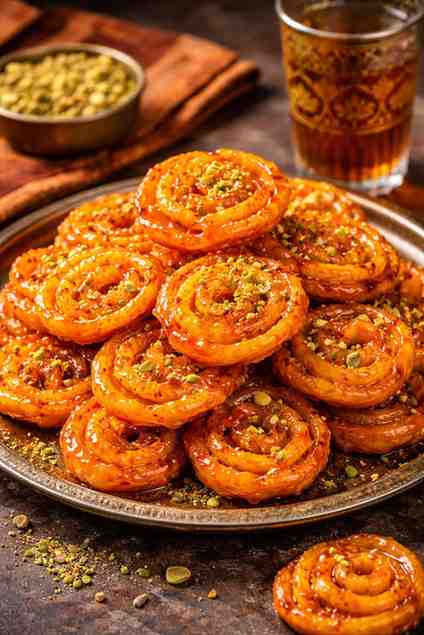
If you’re looking for a crispy, sticky, sweet spiral fritter — the kind you see piled high during Ramadan in Algeria — this is it! Here you’ll find an authentic Zlabia Algerian sweet spiral fritter recipe, learn how to make Algerian sweet fritters at home, and understand the traditional preparation from batter to syrup. This definitive Zlabia recipe has been tested for home cooks, ensuring you get perfect, syrup-soaked spirals every time. Get ready to discover this delightful sweet spiral fried dough and bring a taste of Algeria to your kitchen!
Zlabia (also spelled zalabia, zlebia, zulbia) is a spiral of fermented batter, deep-fried until golden and crisp, then immediately soaked in an aromatic sugar syrup. It's a beloved sweet treat across North Africa and West Asia, related to the broader family of jalebi and zalabiyeh.
While Zlabia shares similarities with jalebi found in South Asia, it has its own distinct characteristics. The concept of deep-fried, syrup-soaked dough is ancient and widespread, with regional variations evolving over centuries.
Algerian Zlabia stands out with its slightly thicker, crispier spirals, offering a satisfying crunch. It boasts a bold honeyed sweetness, often infused with the delicate aroma of orange blossom water. This special sweet is commonly enjoyed at sunset during Ramadan, marking the breaking of the fast, and is also a staple for other special occasions and celebrations.
Zlabia vs Griwech: Zlabia features spiral shapes made from a pourable batter, while Griwech consists of intricately braided pieces made from a stiffer dough. Both are fried and syrup-soaked, but their textures and preparation differ.
Zlabia vs Mushabbak: Mushabbak is a Levantine fried sweet, very similar in batter and syrup to Zlabia, but often with slightly different spice or aroma profiles. Algerian Zlabia typically emphasizes orange blossom water.
Zlabia vs jam fritters/doughnuts: Zlabia are syrup-soaked spirals, distinct from jam fritters or doughnuts, which are typically rings or balls filled with jam or cream.
Special Equipment:Piping bag with a round tip, squeeze bottle, or zip-top bag with a small corner snipped
Heavy-bottomed pot or deep fryer
Candy/deep-fry thermometer (recommended for best results, but visual cues are provided)
This Zlabia recipe delivers an irresistible contrast: an ultra-crisp outside that gives way to a wonderfully syrup-soaked, tender inside. While best enjoyed fresh, it holds its texture remarkably well for a few hours. Plus, it uses basic pantry ingredients, with orange blossom water being the star for its signature fragrant touch.
Ingredients
Directions
- Make the syrupBegin by preparing the syrup, as it needs to cool slightly and thicken before the Zlabia are ready to be soaked.
- In a medium saucepan, combine the granulated sugar and water. Bring to a simmer over medium heat, stirring until the sugar completely dissolves.
- Once simmering, add the lemon juice. Continue to cook for about 8-10 minutes, without stirring, until the syrup slightly thickens. It should coat the back of a spoon and fall in a slow, thick stream. You're aiming for a "light thread stage" (when a drop forms a thin thread between your fingers).
- Remove the syrup from the heat and stir in the orange blossom water. Set aside to cool to lukewarm.
- Mix the batter
- In a large bowl, whisk together the all-purpose flour, fine semolina (if using), yeast, sugar, and salt.
- Gradually whisk in the warm water (and milk, if using) until the batter is completely smooth and lump-free.
- Batter consistency note: The batter should be thick but pourable, similar to a loose pancake batter. When you lift the whisk, the batter should ribbon back into the bowl and slowly disappear.
- Ferment the batter
- Cover the bowl with plastic wrap or a clean kitchen towel and let it rise in a warm room temperature environment.
- Fermentation will take approximately 45-90 minutes, depending on the warmth of your kitchen.
- What to look for: The batter’s volume should increase by about 30-50%, and you’ll notice small bubbles on the surface, along with a slightly tangy, yeasty smell.
- Prep for frying
- While the batter finishes fermenting, heat about 3-4 inches of neutral vegetable oil (like canola or sunflower oil) in a heavy-bottomed pot or deep fryer over medium-high heat.
- Heat the oil to approximately 350-360°F (175-182°C). If you don’t have a thermometer, test the oil by dropping a tiny bit of batter in: it should rise quickly to the surface and bubble vigorously without immediately browning.
- Carefully transfer the fermented batter into a piping bag fitted with a round tip, a squeeze bottle, or a zip-top bag with a small corner snipped off (about ¼ inch opening).
- Pipe the spirals
- Hold the piping bag or squeeze bottle steady over the hot oil, not too high (to prevent splattering and maintain control).
- Working quickly, pipe tight spirals into the hot oil, starting from the center and moving outwards. Aim for spirals about 3-4 inches in diameter.
- Fry 1-3 spirals at a time, depending on the size of your pot, to avoid overcrowding and dropping the oil temperature.
- Fry to golden and crisp
- Fry the Zlabia for 1-2 minutes per side, or until they are a deep golden brown and appear crisp.
- Visual cues: The spirals should hold their shape well, the edges should be defined, and there should be no pale, raw-looking patches. Use tongs to flip them if needed for even browning.
- Soak in syrup
- Using tongs, immediately transfer the hot, freshly fried Zlabia directly into the lukewarm syrup.
- Let them soak for 1-3 minutes, ensuring they are fully coated and absorb the sweet syrup.
- Remove the Zlabia from the syrup and place them on a wire rack set over a baking tray to allow any excess syrup to drip off.
- Finish & serve
- If desired, sprinkle with crushed pistachios or chopped almonds, or drizzle with a little extra honey.
- Serve your Zlabia warm or at room temperature. They are traditionally enjoyed with a glass of refreshing mint tea or a strong espresso, as is common in Algerian households.
The following nutritional values are per serving (one piece of cake) Calories ~200-250 kcal Carbohydrates ~30-40g Protein ~2-3g Fat ~8-12g Sometimes, a little help goes a long way in the kitchen! While you absolutely don't need fancy equipment to make amazing Zlabia, these tools can certainly make the process smoother and more enjoyable. Problem: Getting those perfect, consistent spirals can be tricky and messy when pouring batter freehand. Problem: Maintaining a consistent oil temperature for frying can be a real challenge, leading to unevenly cooked fritters. Problem: Guessing the oil temperature is a recipe for disaster, often resulting in either soggy or scorched fritters. Click any ingredient for detailed nutritional information:Recipe Nutritional Values
Additional Information
Recipe Success Tips
Getting the Batter Right
Oil and Frying Issues
Syrup Issues
Ingredient Substitutions & Variations
Cultural Variations
Make-Ahead & Storage Instructions
Frequently Asked Questions
Recommended Kitchen Tools
Piping Bag or Squeeze Bottle
Agitate: Ever tried to get that beautiful Zlabia swirl, only for it to fall apart or look lopsided in the hot oil? It’s frustrating when your delicious batter turns into a shapeless blob.
Solution: A simple piping bag with a round tip (or even a sturdy zip-top bag with a corner snipped off!) or a squeeze bottle gives you precision and control. This makes piping gorgeous, uniform spirals a breeze, ensuring your Zlabia looks as good as it tastes.Heavy-Bottomed Pot or Deep Fryer
Agitate: Nothing's worse than Zlabia that's either too pale and greasy because the oil was too cool, or burnt on the outside and raw inside because it was too hot. Who wants a batch that isn't perfectly crisp and cooked through?
Solution: A heavy-bottomed pot (like a Dutch oven) or a dedicated deep fryer helps stabilize your oil temperature. This consistent heat ensures your Zlabia fries evenly to that beautiful golden crispness every single time, giving you perfect results without the constant temperature battle.Oil/Candy Thermometer
Agitate: Frying without a thermometer means you're constantly guessing, battling between undercooked and overcooked Zlabia. It's tough to get that ideal crunch without knowing the exact heat.
Solution: An oil or candy thermometer takes all the guesswork out of frying. Hitting that sweet spot of 350-360°F (175-182°C) means your Zlabia will cook perfectly, absorb just the right amount of syrup, and come out beautifully crisp without the stress.Calories per Ingredient
Resources & References
You may also like

Hey there! I’m just someone who seriously loves good food and believes that cooking doesn’t have to be complicated to be amazing. Whether it’s a quick weeknight dinner or a cozy weekend meal, I’m all about sharing easy, tasty recipes that actually work.