
Anmitsu - Japanese Desserts at Home | Make It Today
Anmitsu - Japanese Desserts at Home | Make It Today
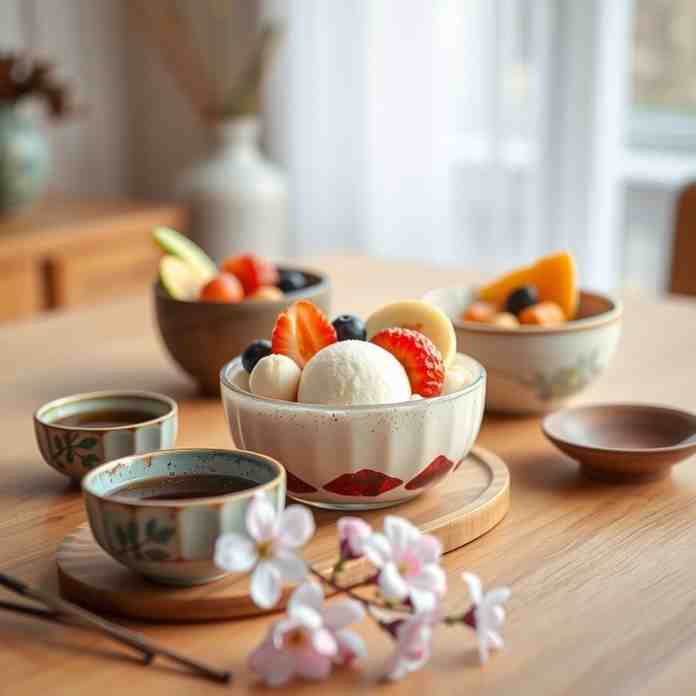
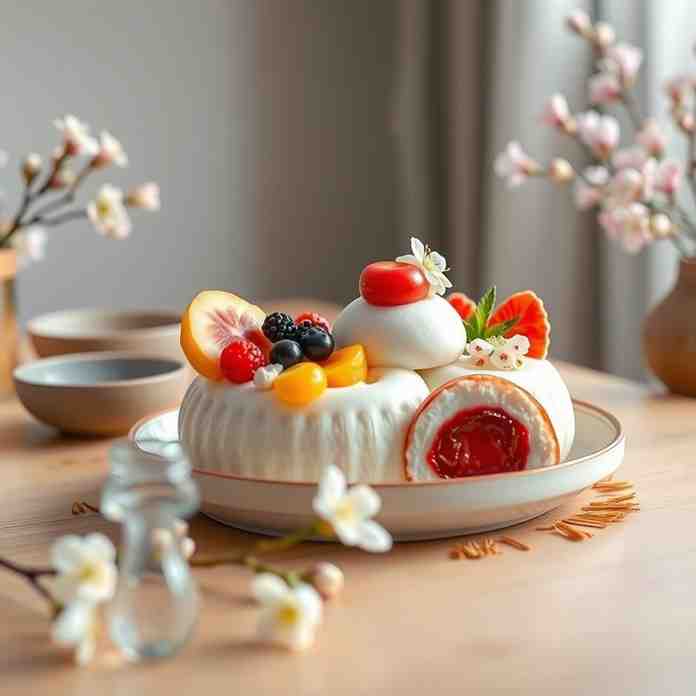
- Serves: 4 People
- Prepare Time: 25 minutes
- Cooking Time: 15 minutes
- Calories: -
- Difficulty: Easy
Ever wished you could whip up truly authentic japanese meals at home without needing a whole culinary degree? Well, get ready to dive into the delightful world of Anmitsu! This isn't just any dessert; it's like a Japanese sundae, but way lighter and super refreshing, making it one of those quick and delicious treats you'll want on repeat.
What makes Anmitsu feel so genuinely Japanese? It's all about the perfect trio: the clear, bouncy kanten jelly, the sweet red bean paste (anko), and the rich black sugar syrup (kuromitsu). Don't let those names scare you off! This dessert is surprisingly doable for anyone looking for easy recipes for one or a small crowd. Most of the components can be made ahead of time, leaving you with a super fast assembly when that sweet craving hits. It’s also naturally a fantastic option for easy vegan healthy recipes and vegan gluten free recipes, making it a versatile choice for almost anyone at your table. Get ready to `make your own food` that's both elegant and incredibly simple!
Vegan/Gluten-Free Note: Naturally vegan and gluten-free, just double-check your anko ingredients for any hidden animal products and ensure no cross-contamination if severe allergies are a concern.
Anmitsu is a traditional Japanese dessert that's a feast for the eyes and the palate. At its heart, it consists of four core components:
Kanten Jelly: Clear, firm jelly cubes made from agar-agar, a plant-based gelatin alternative.
Anko: Sweet red bean paste, a staple in Japanese sweets.
Fruit: Often fresh seasonal fruits like mandarins, peaches, or strawberries, but sometimes canned fruit like peaches or cherries.
Kuromitsu: A rich, dark syrup made from Okinawan black sugar, similar to molasses but with a unique caramel-like depth.
You'll often find classic optional additions like chewy shiratama dango (small mochi balls), sweet simmered red peas (mitsumame), and a scoop of ice cream (matcha or vanilla are popular choices).
Just a quick note: What's the difference between Anmitsu and Mitsumame? Mitsumame is essentially Anmitsu without the 'an'—meaning no anko (red bean paste). Anmitsu adds that delicious sweet bean element!
Kanten / Agar-agar: This is the magic behind the jelly! It's a plant-based gelling agent derived from seaweed. You can find it as powder or sticks. Powder is usually easier to measure and dissolves faster. What matters most is dissolving it completely for clear, firm jelly.
Anko: Sweet red bean paste. You can buy it pre-made (check Asian grocery stores!) or make it from scratch. There are two main types: tsubuan (chunky, with whole bean bits) and koshian (smooth). We generally prefer tsubuan for Anmitsu for that rustic texture, but either works!
Kuromitsu: This is a black sugar syrup, often made from Okinawan black sugar. It has a deep, complex sweetness, almost like a cross between molasses and brown sugar syrup. If you can't find Okinawan black sugar, you can make a delicious substitute with dark brown sugar and a tiny touch of molasses.
Shiratamako (optional): This is a type of glutinous rice flour used to make shiratama dango (those chewy mochi balls). It gives them a wonderfully soft, bouncy texture that regular rice flour might not achieve.
Small saucepan
Whisk or spatula
Fine-mesh strainer
Shallow container or mold (a rectangular baking dish works great for the kanten)
Knife (for cutting jelly)
Bowls or glasses for serving
Ingredients
Directions
- Combine the dark brown sugar (or black sugar) and water in a small saucepan. If using, add the optional molasses.
- Heat over medium heat, stirring occasionally, until the sugar is completely dissolved and the mixture comes to a gentle boil.
- Remove from heat and let it cool completely. It will thicken slightly as it cools. Store in an airtight container in the fridge.
- Kanten Jelly Ingredients
- 2 cups (480ml) water
- 1 teaspoon agar-agar powder (or 1 stick kanten, broken into pieces)
- 2 tablespoons granulated sugar
- Kanten Jelly Step-by-Step Instructions
- In a small saucepan, combine the water and agar-agar powder (or kanten sticks). Whisk well to ensure there are no lumps.
- Bring the mixture to a boil over medium-high heat, whisking constantly. Once boiling, reduce heat to low and simmer for 2-3 minutes, continuing to whisk, until the agar-agar is fully dissolved. You shouldn't see any specks.
- Add the granulated sugar and stir until it completely dissolves.
- Carefully pour the hot kanten mixture through a fine-mesh strainer into your shallow container or mold. This helps remove any remaining undissolved bits and ensures a super clear jelly.
- Let it cool at room temperature for about 30 minutes, then transfer to the refrigerator to chill and set completely, usually 1-2 hours.
- Once firm, invert the mold onto a cutting board. Using a sharp knife, cut the kanten into small, bite-sized cubes (about 1/2 to 3/4 inch).
- Optional Shiratama Dango Ingredients
- 1/2 cup (60g) shiratamako (glutinous rice flour)
- 4-5 tablespoons water (adjust as needed)
- Optional Shiratama Dango Step-by-Step Instructions
- In a medium bowl, combine the shiratamako with 4 tablespoons of water. Mix with your hands, gradually adding more water a tiny bit at a time, until a soft, pliable dough forms. It should be like earlobe consistency – not too sticky, not too dry.
- Roll the dough into small, marble-sized balls. You can gently press a small indentation in the center of each ball (this helps them cook evenly).
- Bring a pot of water to a boil. Gently drop the dango balls into the boiling water.
- Cook for about 2-3 minutes, or until the dango float to the surface. Continue to cook for another 30 seconds to 1 minute after they float to ensure they are cooked through.
- Using a slotted spoon, transfer the cooked dango to a bowl of ice water to cool them down and prevent them from sticking together. Keep them in the water until ready to serve to maintain their softness.
- Assembly for Anmitsu
- Prep Fruit: If using canned fruit, drain it well. For fresh, watery fruits like strawberries, gently pat them dry.
- Assemble Each Bowl: In your chosen serving bowl or glass, arrange a generous portion of kanten jelly cubes.
- Artfully place your chosen fruits around the jelly.
- Add a dollop of anko (sweet red bean paste).
- If using, add the optional shiratama dango (drained from their water), sweet red peas, or a scoop of ice cream.
- Serve the kuromitsu-style syrup on the side, or drizzle it generously over the top just before eating. Enjoy your homemade japanese meals at home masterpiece!
Anmitsu - Japanese Desserts at Home | Make It Today
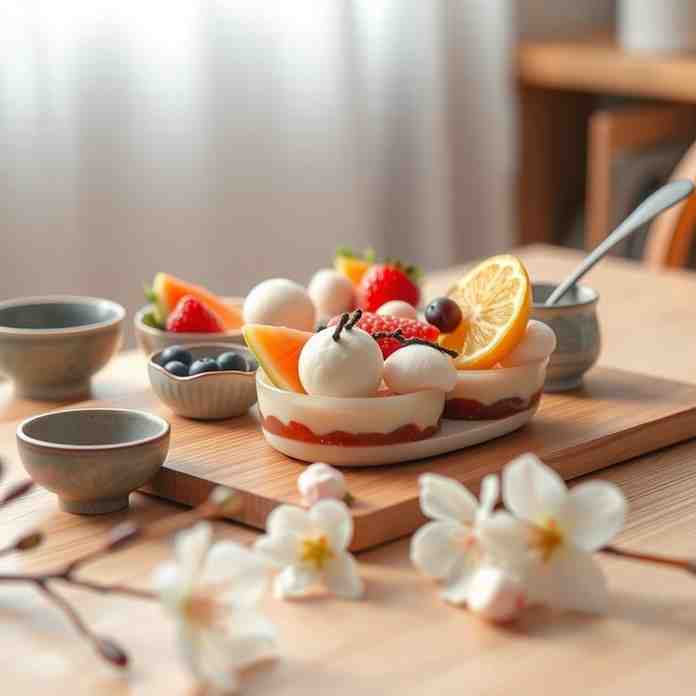
- Serves: 4 People
- Prepare Time: 25 minutes
- Cooking Time: 15 minutes
- Calories: -
- Difficulty: Easy
Ever wished you could whip up truly authentic japanese meals at home without needing a whole culinary degree? Well, get ready to dive into the delightful world of Anmitsu! This isn't just any dessert; it's like a Japanese sundae, but way lighter and super refreshing, making it one of those quick and delicious treats you'll want on repeat.
What makes Anmitsu feel so genuinely Japanese? It's all about the perfect trio: the clear, bouncy kanten jelly, the sweet red bean paste (anko), and the rich black sugar syrup (kuromitsu). Don't let those names scare you off! This dessert is surprisingly doable for anyone looking for easy recipes for one or a small crowd. Most of the components can be made ahead of time, leaving you with a super fast assembly when that sweet craving hits. It’s also naturally a fantastic option for easy vegan healthy recipes and vegan gluten free recipes, making it a versatile choice for almost anyone at your table. Get ready to `make your own food` that's both elegant and incredibly simple!
Vegan/Gluten-Free Note: Naturally vegan and gluten-free, just double-check your anko ingredients for any hidden animal products and ensure no cross-contamination if severe allergies are a concern.
Anmitsu is a traditional Japanese dessert that's a feast for the eyes and the palate. At its heart, it consists of four core components:
Kanten Jelly: Clear, firm jelly cubes made from agar-agar, a plant-based gelatin alternative.
Anko: Sweet red bean paste, a staple in Japanese sweets.
Fruit: Often fresh seasonal fruits like mandarins, peaches, or strawberries, but sometimes canned fruit like peaches or cherries.
Kuromitsu: A rich, dark syrup made from Okinawan black sugar, similar to molasses but with a unique caramel-like depth.
You'll often find classic optional additions like chewy shiratama dango (small mochi balls), sweet simmered red peas (mitsumame), and a scoop of ice cream (matcha or vanilla are popular choices).
Just a quick note: What's the difference between Anmitsu and Mitsumame? Mitsumame is essentially Anmitsu without the 'an'—meaning no anko (red bean paste). Anmitsu adds that delicious sweet bean element!
Kanten / Agar-agar: This is the magic behind the jelly! It's a plant-based gelling agent derived from seaweed. You can find it as powder or sticks. Powder is usually easier to measure and dissolves faster. What matters most is dissolving it completely for clear, firm jelly.
Anko: Sweet red bean paste. You can buy it pre-made (check Asian grocery stores!) or make it from scratch. There are two main types: tsubuan (chunky, with whole bean bits) and koshian (smooth). We generally prefer tsubuan for Anmitsu for that rustic texture, but either works!
Kuromitsu: This is a black sugar syrup, often made from Okinawan black sugar. It has a deep, complex sweetness, almost like a cross between molasses and brown sugar syrup. If you can't find Okinawan black sugar, you can make a delicious substitute with dark brown sugar and a tiny touch of molasses.
Shiratamako (optional): This is a type of glutinous rice flour used to make shiratama dango (those chewy mochi balls). It gives them a wonderfully soft, bouncy texture that regular rice flour might not achieve.
Small saucepan
Whisk or spatula
Fine-mesh strainer
Shallow container or mold (a rectangular baking dish works great for the kanten)
Knife (for cutting jelly)
Bowls or glasses for serving
Ingredients
Directions
- Combine the dark brown sugar (or black sugar) and water in a small saucepan. If using, add the optional molasses.
- Heat over medium heat, stirring occasionally, until the sugar is completely dissolved and the mixture comes to a gentle boil.
- Remove from heat and let it cool completely. It will thicken slightly as it cools. Store in an airtight container in the fridge.
- Kanten Jelly Ingredients
- 2 cups (480ml) water
- 1 teaspoon agar-agar powder (or 1 stick kanten, broken into pieces)
- 2 tablespoons granulated sugar
- Kanten Jelly Step-by-Step Instructions
- In a small saucepan, combine the water and agar-agar powder (or kanten sticks). Whisk well to ensure there are no lumps.
- Bring the mixture to a boil over medium-high heat, whisking constantly. Once boiling, reduce heat to low and simmer for 2-3 minutes, continuing to whisk, until the agar-agar is fully dissolved. You shouldn't see any specks.
- Add the granulated sugar and stir until it completely dissolves.
- Carefully pour the hot kanten mixture through a fine-mesh strainer into your shallow container or mold. This helps remove any remaining undissolved bits and ensures a super clear jelly.
- Let it cool at room temperature for about 30 minutes, then transfer to the refrigerator to chill and set completely, usually 1-2 hours.
- Once firm, invert the mold onto a cutting board. Using a sharp knife, cut the kanten into small, bite-sized cubes (about 1/2 to 3/4 inch).
- Optional Shiratama Dango Ingredients
- 1/2 cup (60g) shiratamako (glutinous rice flour)
- 4-5 tablespoons water (adjust as needed)
- Optional Shiratama Dango Step-by-Step Instructions
- In a medium bowl, combine the shiratamako with 4 tablespoons of water. Mix with your hands, gradually adding more water a tiny bit at a time, until a soft, pliable dough forms. It should be like earlobe consistency – not too sticky, not too dry.
- Roll the dough into small, marble-sized balls. You can gently press a small indentation in the center of each ball (this helps them cook evenly).
- Bring a pot of water to a boil. Gently drop the dango balls into the boiling water.
- Cook for about 2-3 minutes, or until the dango float to the surface. Continue to cook for another 30 seconds to 1 minute after they float to ensure they are cooked through.
- Using a slotted spoon, transfer the cooked dango to a bowl of ice water to cool them down and prevent them from sticking together. Keep them in the water until ready to serve to maintain their softness.
- Assembly for Anmitsu
- Prep Fruit: If using canned fruit, drain it well. For fresh, watery fruits like strawberries, gently pat them dry.
- Assemble Each Bowl: In your chosen serving bowl or glass, arrange a generous portion of kanten jelly cubes.
- Artfully place your chosen fruits around the jelly.
- Add a dollop of anko (sweet red bean paste).
- If using, add the optional shiratama dango (drained from their water), sweet red peas, or a scoop of ice cream.
- Serve the kuromitsu-style syrup on the side, or drizzle it generously over the top just before eating. Enjoy your homemade japanese meals at home masterpiece!
You may also like




Hey there! I’m just someone who seriously loves good food and believes that cooking doesn’t have to be complicated to be amazing. Whether it’s a quick weeknight dinner or a cozy weekend meal, I’m all about sharing easy, tasty recipes that actually work.