Beef Jerky - Somali Oodkac Recipe
Beef Jerky - Somali Oodkac Recipe
- Serves: 6 People
- Prepare Time: 20 minutes
- Cooking Time: 2-3 hours
- Calories: -
- Difficulty: Medium
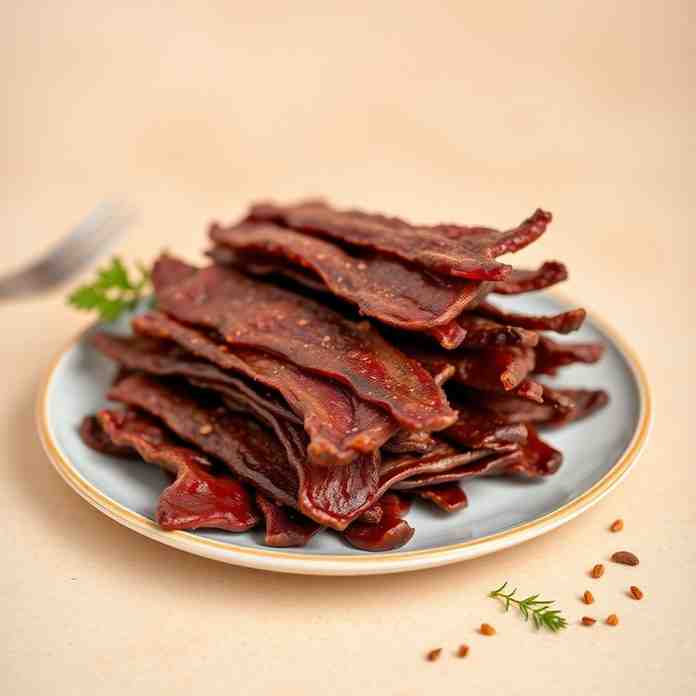
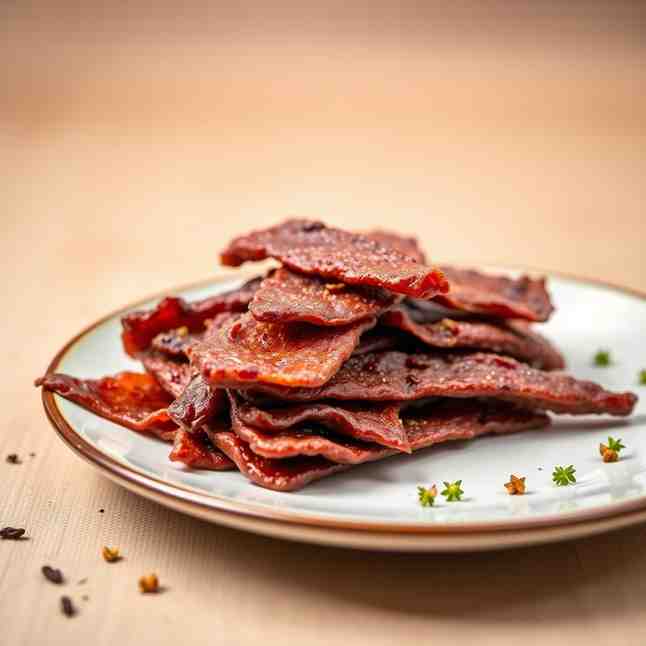
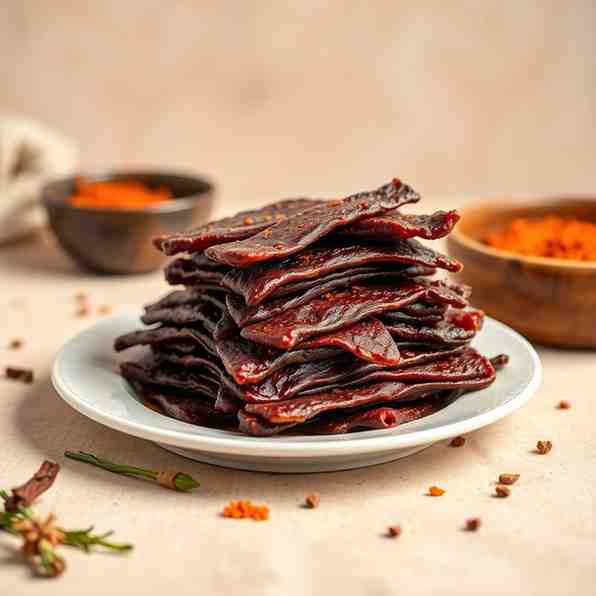
Ever wondered about authentic beef jerky that's truly different from the store-bought strips? Get ready to discover Oodkac (pronounced "ood-kac"), also known as Muqmad, a beloved Somali dried beef snack that’s packed with bold flavors and a wonderfully unique texture. Unlike the thinly sliced, often heavily processed jerky you might be used to, Oodkac features hearty, chewy-tender beef cubes, traditionally preserved in rich, flavorful ghee.
This isn't just another jerky recipe; it's a journey into a culinary tradition designed to preserve meat for long periods, making it a staple in Somali households. You'll learn how to transform simple ingredients into a deeply spiced, satisfying snack or a versatile meal component. Prepare for a practical, rewarding cooking experience that yields incredibly flavorful results, perfect for both beginners eager to try something new and experienced bakers (or rather, cooks!) looking to expand their repertoire.
Ingredients
Directions
- Prepare the Beef: Begin by trimming any visible fat or connective tissue from your lean beef. Fat is the enemy of shelf-stable jerky, so be thorough! Cut the beef into small, uniform bite-sized cubes, roughly 1/2 to 3/4 inch (1.25 to 2 cm). Uniformity is key for even cooking and drying.
- Initial Cook & Evaporation: Place the beef cubes in a heavy-bottomed pot or deep skillet over medium-high heat. You don't need to add any oil at this stage; the meat will release its own moisture. Cook, stirring occasionally, allowing the water to render out gently and then evaporate. This is the "drying" process for Oodkac. You'll see steam decreasing, the water disappearing, and the meat starting to look darker and tighter. Reduce heat if the meat starts to stick or scorch before the water is fully gone.
- Season the Meat: Once most of the water has evaporated and the meat is drying, but before it starts to truly brown, reduce the heat to medium-low. Add the salt, black pepper, cardamom, cumin, and coriander. If using, add the optional minced garlic, diced onion, and chili flakes now. Stir well to coat all the beef pieces evenly. Seasoning at this stage prevents the spices from scorching in dry heat and allows them to infuse deeply into the meat.
- Finish in Ghee: Increase the heat back to medium. Pour in about 1 cup of ghee, ensuring the beef cubes are mostly submerged. Continue to fry the beef in the ghee, stirring frequently, until the outside of the meat is beautifully browned and the cubes are noticeably drier and firmer to the touch. The sizzling will change from a watery boil to a more consistent, crispier fry as the last bits of moisture are driven out. This step renders the meat shelf-stable and infuses it with rich flavor.
- Cool Completely: Carefully remove the Oodkac from the heat. Using a slotted spoon, transfer the meat cubes to a plate lined with paper towels to drain any excess ghee. It is absolutely critical that the Oodkac cools completely to room temperature before storage. This prevents condensation and potential spoilage.
- Store for Freshness: Once cooled, pack the Oodkac into a clean, airtight jar or container. For traditional long-term storage, melt additional ghee and pour it over the packed Oodkac until the meat is fully submerged. This creates an oxygen barrier. Alternatively, for shorter-term storage, simply pack into an airtight container and refrigerate.
Beef Jerky - Somali Oodkac Recipe
- Serves: 6 People
- Prepare Time: 20 minutes
- Cooking Time: 2-3 hours
- Calories: -
- Difficulty: Medium
Ever wondered about authentic beef jerky that's truly different from the store-bought strips? Get ready to discover Oodkac (pronounced "ood-kac"), also known as Muqmad, a beloved Somali dried beef snack that’s packed with bold flavors and a wonderfully unique texture. Unlike the thinly sliced, often heavily processed jerky you might be used to, Oodkac features hearty, chewy-tender beef cubes, traditionally preserved in rich, flavorful ghee.
This isn't just another jerky recipe; it's a journey into a culinary tradition designed to preserve meat for long periods, making it a staple in Somali households. You'll learn how to transform simple ingredients into a deeply spiced, satisfying snack or a versatile meal component. Prepare for a practical, rewarding cooking experience that yields incredibly flavorful results, perfect for both beginners eager to try something new and experienced bakers (or rather, cooks!) looking to expand their repertoire.
Ingredients
Directions
- Prepare the Beef: Begin by trimming any visible fat or connective tissue from your lean beef. Fat is the enemy of shelf-stable jerky, so be thorough! Cut the beef into small, uniform bite-sized cubes, roughly 1/2 to 3/4 inch (1.25 to 2 cm). Uniformity is key for even cooking and drying.
- Initial Cook & Evaporation: Place the beef cubes in a heavy-bottomed pot or deep skillet over medium-high heat. You don't need to add any oil at this stage; the meat will release its own moisture. Cook, stirring occasionally, allowing the water to render out gently and then evaporate. This is the "drying" process for Oodkac. You'll see steam decreasing, the water disappearing, and the meat starting to look darker and tighter. Reduce heat if the meat starts to stick or scorch before the water is fully gone.
- Season the Meat: Once most of the water has evaporated and the meat is drying, but before it starts to truly brown, reduce the heat to medium-low. Add the salt, black pepper, cardamom, cumin, and coriander. If using, add the optional minced garlic, diced onion, and chili flakes now. Stir well to coat all the beef pieces evenly. Seasoning at this stage prevents the spices from scorching in dry heat and allows them to infuse deeply into the meat.
- Finish in Ghee: Increase the heat back to medium. Pour in about 1 cup of ghee, ensuring the beef cubes are mostly submerged. Continue to fry the beef in the ghee, stirring frequently, until the outside of the meat is beautifully browned and the cubes are noticeably drier and firmer to the touch. The sizzling will change from a watery boil to a more consistent, crispier fry as the last bits of moisture are driven out. This step renders the meat shelf-stable and infuses it with rich flavor.
- Cool Completely: Carefully remove the Oodkac from the heat. Using a slotted spoon, transfer the meat cubes to a plate lined with paper towels to drain any excess ghee. It is absolutely critical that the Oodkac cools completely to room temperature before storage. This prevents condensation and potential spoilage.
- Store for Freshness: Once cooled, pack the Oodkac into a clean, airtight jar or container. For traditional long-term storage, melt additional ghee and pour it over the packed Oodkac until the meat is fully submerged. This creates an oxygen barrier. Alternatively, for shorter-term storage, simply pack into an airtight container and refrigerate.
You may also like

Hey there! I’m just someone who seriously loves good food and believes that cooking doesn’t have to be complicated to be amazing. Whether it’s a quick weeknight dinner or a cozy weekend meal, I’m all about sharing easy, tasty recipes that actually work.