Julia Child's Beef Bourguignon - Classic Recipe
Julia Child's Beef Bourguignon - Classic Recipe
- Serves: 6 People
- Prepare Time: 45 minutes
- Cooking Time: 3 hours 30
- Calories: -
- Difficulty: Medium
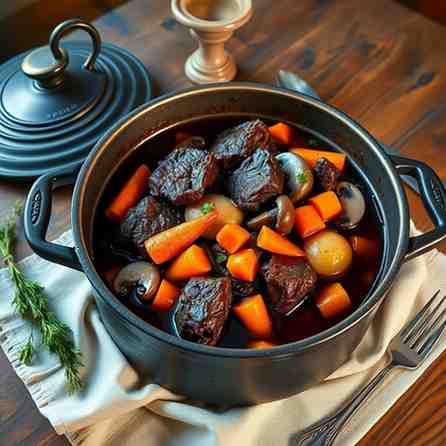
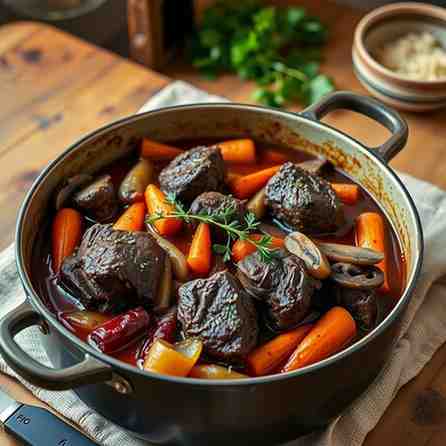
There are few dishes that capture the essence of French comfort quite like Bœuf Bourguignon. This isn't just any beef stew; it's a rich, deeply flavorful masterpiece, often associated with the legendary Julia Child. If you've ever dreamed of creating a dish that tastes like it came straight from a cozy French bistro, this beef bourguignon Julia Child's inspired recipe is your ticket. It takes a little time, but every moment spent is an investment in incredibly tender beef, a velvety sauce, and an unforgettable meal. Trust us, it’s absolutely worth it!
Equipment: Dutch oven + large skillet
Make-Ahead Friendly: Yes, it’s even better the next day!
What makes it "Bourguignon"? It's a French beef stew braised in red Burgundy wine, often with bacon, mushrooms, and pearl onions.
Jump Links: Jump to Recipe • Ingredients • Step-by-step • Wine • Best Beef Cut • Troubleshooting • FAQs
At its heart, Bœuf Bourguignon is a classic French beef stew. But calling it "regular beef stew" is like calling a grand opera "just a song." What sets it apart is its rich heritage and specific ingredients, rooted in the Burgundy region of France. The traditional core elements include generous chunks of beef (usually chuck) slowly braised in a robust red Burgundy wine, often with lardons (thick-cut bacon), a fragrant bouquet garni (herbs tied together), and finished with sautéed mushrooms and pearl onions. It’s a dish of patience and profound flavor, where every component plays a crucial role in building an incredible depth that a simple stew just can't match.
Achieving that authentic French bistro flavor isn't magic; it's all about technique. Here are the five non-negotiable steps that elevate your Bœuf Bourguignon from good to absolutely glorious:
1. Browning (Fond) = Flavor: Don't just sear the beef; truly brown it. Those dark, caramelized bits stuck to the bottom of your pot (the "fond") are pure flavor gold. They'll deglaze later and infuse the entire sauce with incredible depth.
2. Wine Reduction = Not "Boozy": Adding wine and letting it simmer and reduce isn't just about cooking out the alcohol. It concentrates the wine's complex flavors, transforming it from something potentially sharp or "boozy" into a smooth, integrated part of the sauce.
3. Low-and-Slow Braise = Tender Beef: This isn't a quick stovetop simmer. A long, gentle braise in the oven allows tough cuts of beef to break down slowly, becoming melt-in-your-mouth tender without turning to mush. Patience is key here!
4. Separate Mushroom/Onion Finish = Better Texture: While tempting to just toss them in, sautéing the mushrooms and pearl onions separately and adding them at the end ensures they retain their distinct textures and flavors. Mushrooms get beautifully browned, and onions stay sweet and slightly firm, rather than becoming soggy.
5. Resting Overnight = Deeper Flavor + Easier Defatting: This is the "secret step" many pros swear by. Letting the stew cool completely and rest overnight in the fridge allows the flavors to meld and deepen dramatically. Plus, the fat solidifies on top, making it super easy to skim off for a cleaner, richer sauce.
Choosing the right beef is crucial for a tender, flavorful stew. Don't fall for those "stew meat" mystery packs! Here's your no-stress guide:
Best Overall: Chuck Roast. This is your MVP. Chuck roast comes from the shoulder, a well-worked muscle that's full of connective tissue. When braised low and slow, this tissue breaks down into gelatin, making the beef incredibly tender and the sauce rich and silky. It has a great balance of fat and lean meat.
Great Upgrades:
Short Rib: For an even richer, more luxurious stew, short ribs are fantastic. They have more fat and connective tissue, yielding an intensely flavorful result.
Brisket: If you like silky, shreddable beef, brisket can be a wonderful choice. Opt for the flat cut for easier cubing.
Avoid:
"Stew Meat" Mystery Packs: These often contain various cuts, some of which might be too lean or tough for a long braise, leading to inconsistent results.
Lean Roasts (like Eye of Round or Sirloin Tip): These cuts don't have enough fat or connective tissue to become tender through braising and will likely turn dry and chewy.
What to Look For In-Store: Seek out a chuck roast with good marbling (streaks of fat throughout the meat) and visible fat seams. These are indicators of flavor and tenderness. Don't be afraid to ask the butcher for a whole chuck roast so you can cut it yourself.
How Big to Cut: Aim for 2-inch cubes. If they're too small, they can overcook and shred. If too large, they won't cook evenly or absorb enough flavor. Two-inch cubes give you that perfect, substantial bite.
The wine is more than just liquid; it's a key flavor builder. You don't need to break the bank, but picking the right type makes a huge difference.
What You Want: Dry, fruity, low-to-medium tannin red wine.
Easy Picks Most US Grocery Stores Have:
Pinot Noir: This is often the top choice, as it's the primary grape of Burgundy. Look for an affordable, unoaked version.
Gamay (Beaujolais): Another great option, especially if you can find a Beaujolais-Villages or Cru Beaujolais.
Côtes du Rhône: A blend that often hits the right notes of fruitiness and moderate tannins.
What to Avoid:
Over-oaked or Super Tannic Wines: Think heavily oaked Cabernet Sauvignon or Syrah/Shiraz. These can make your stew bitter or astringent.
Very Sweet Wines: Dessert wines or anything labeled "sweet red" will throw off the savory balance.
"I Don't Want to Waste Wine" Guidance: You absolutely don't need a fancy bottle. A decent $10–$20 bottle is perfect. The rule of thumb is: if you wouldn't drink it, don't cook with it. It should be palatable on its own, not just "cooking wine."
What Wine Does in the Pot: It adds incredible flavor depth, provides crucial acidity to tenderize the beef, and contributes to the stew's beautiful, rich color. As it reduces, its complex notes concentrate and meld with the other ingredients.
Having the right tools makes the process smoother and ensures the best results.
Dutch Oven: This is your primary vessel. Its heavy construction and tight-fitting lid are ideal for even heat distribution and long, slow braising in the oven. Cast iron (enameled or not) is perfect.
Skillet: A separate large skillet is essential for finishing the mushrooms and pearl onions. This allows you to get a good sear on them without overcrowding the Dutch oven, ensuring better texture and flavor.
Fine Mesh Strainer (Optional): If you want an incredibly smooth, refined sauce, you can strain it after braising. This isn't strictly necessary for a rustic stew, but it does make for a more elegant presentation.
Ingredients
Directions
- One unified method: Dutch oven + oven braise.
- Prep + Dry the Beef (Browning Starts Here): Pat your beef cubes very dry with paper towels. This is critical for browning, not steaming. Season generously with salt and freshly ground black pepper.
- Render Bacon / Build the Fat Base: In your large Dutch oven, cook the diced bacon over medium heat until crispy. Use a slotted spoon to transfer the crispy bacon (lardons) to a plate, leaving the rendered fat in the pot.
- Sear Beef in Batches (Don't Steam It): Increase heat to medium-high. Add a splash of olive oil to the bacon fat if needed. Sear the beef in small batches, ensuring not to overcrowd the pot. Let each side get a deep, rich brown crust. This creates the "fond" – crucial flavor! Transfer seared beef to the plate with the bacon.
- Visual Cue: Look for deep brown edges on the beef, not gray. This might take 3-5 minutes per side.
- Sweat Onions + Carrots; Add Garlic + Tomato Paste: Reduce heat to medium. Add the chopped onion and sliced carrots to the Dutch oven, scraping up any browned bits from the bottom. Cook until softened, about 5-7 minutes. Add the minced garlic and tomato paste; cook for another 2 minutes, stirring constantly.
- Visual Cue: The tomato paste will darken slightly and develop a richer aroma.
- Add Flour and Cook It Out (No Raw Flour Taste): Sprinkle the flour over the vegetables and stir well. Cook for 2-3 minutes, stirring, to cook out the raw flour taste. This creates a roux that will thicken the sauce.
- Deglaze with Wine; Scrape Up Fond: Pour in the red wine. Bring to a simmer, scraping vigorously with a wooden spoon to release all those flavorful browned bits (the fond) from the bottom of the pot. Let the wine simmer for 5-7 minutes to reduce slightly and cook off some of the alcohol.
- Cue: The wine should simmer steadily, and the sharp alcohol smell will soften into a rich, fruity aroma.
- Add Stock + Herbs; Return Beef + Bacon; Braise Low and Slow: Stir in the beef stock and add the bouquet garni. Return the seared beef and reserved bacon to the Dutch oven. Bring the liquid to a gentle simmer on the stovetop. Cover the Dutch oven tightly and transfer it to a preheated oven at 325°F (160°C). Braise for 2.5 to 3 hours, or until the beef is fork-tender.
- Cue at 2 hours: The beef should be starting to relax and become more tender, and the sauce will have darkened and thickened.
- Finish: Sauté Mushrooms + Pearl Onions Separately: About 20-30 minutes before the stew is done, heat a separate skillet over medium-high heat with a little oil. Sauté the quartered mushrooms until deeply browned. Add the thawed pearl onions and cook until lightly caramelized. Set aside.
- Skim Fat + Adjust Sauce Thickness: Carefully remove the Dutch oven from the oven. Discard the bouquet garni. If the sauce seems too thin, remove the beef and vegetables, and reduce the sauce gently on the stovetop over medium heat until it thickens to your liking. If it’s too thick, add a splash of beef stock. Skim any excess fat from the surface.
- Rest (The Secret Step): For best results, let the stew rest for at least 15-30 minutes before serving. Even better, make it the day before!
- Serve Now vs. Best-Next-Day Instructions: You can absolutely serve it immediately, but for truly profound flavor and easier defatting, cover and refrigerate overnight. Reheat gently on the stovetop or in the oven.
- How to Know It’s Done
- Beef: The beef should be undeniably fork-tender. When you press a fork into a piece, it should yield easily and practically fall apart, but it shouldn't be completely shredded mush. It should still hold its shape but be incredibly soft.
- Sauce: The sauce should be glossy, rich, and thick enough to lightly coat the back of a spoon. Taste it – it should be perfectly balanced, deeply savory, and not harsh or overtly "winey."
- What to Serve With Bœuf BourguignonThis hearty stew is a meal in itself, but a few simple accompaniments can make it even more satisfying.
- Mashed Potatoes: Creamy mashed potatoes are the classic pairing, perfect for soaking up every last drop of that incredible sauce.
- Buttered Noodles: Egg noodles tossed in butter are another wonderful option that provides a soft, comforting base.
- Crusty Bread: A fresh baguette is essential for dipping and wiping the bowl clean.
- Simple Side Salad / Green Veg: A light, crisp green salad with a vinaigrette or some steamed green beans can provide a refreshing contrast to the richness of the stew.
Julia Child's Beef Bourguignon - Classic Recipe
- Serves: 6 People
- Prepare Time: 45 minutes
- Cooking Time: 3 hours 30
- Calories: -
- Difficulty: Medium
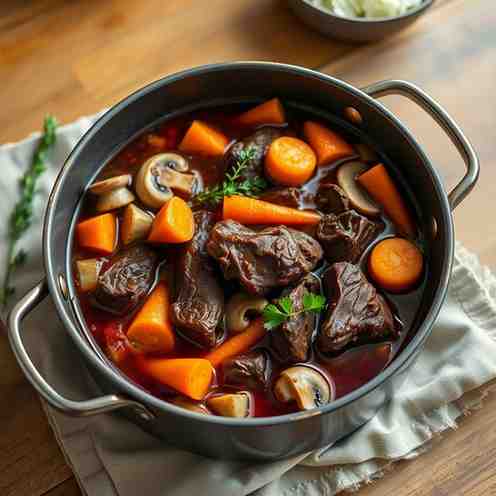
There are few dishes that capture the essence of French comfort quite like Bœuf Bourguignon. This isn't just any beef stew; it's a rich, deeply flavorful masterpiece, often associated with the legendary Julia Child. If you've ever dreamed of creating a dish that tastes like it came straight from a cozy French bistro, this beef bourguignon Julia Child's inspired recipe is your ticket. It takes a little time, but every moment spent is an investment in incredibly tender beef, a velvety sauce, and an unforgettable meal. Trust us, it’s absolutely worth it!
Equipment: Dutch oven + large skillet
Make-Ahead Friendly: Yes, it’s even better the next day!
What makes it "Bourguignon"? It's a French beef stew braised in red Burgundy wine, often with bacon, mushrooms, and pearl onions.
Jump Links: Jump to Recipe • Ingredients • Step-by-step • Wine • Best Beef Cut • Troubleshooting • FAQs
At its heart, Bœuf Bourguignon is a classic French beef stew. But calling it "regular beef stew" is like calling a grand opera "just a song." What sets it apart is its rich heritage and specific ingredients, rooted in the Burgundy region of France. The traditional core elements include generous chunks of beef (usually chuck) slowly braised in a robust red Burgundy wine, often with lardons (thick-cut bacon), a fragrant bouquet garni (herbs tied together), and finished with sautéed mushrooms and pearl onions. It’s a dish of patience and profound flavor, where every component plays a crucial role in building an incredible depth that a simple stew just can't match.
Achieving that authentic French bistro flavor isn't magic; it's all about technique. Here are the five non-negotiable steps that elevate your Bœuf Bourguignon from good to absolutely glorious:
1. Browning (Fond) = Flavor: Don't just sear the beef; truly brown it. Those dark, caramelized bits stuck to the bottom of your pot (the "fond") are pure flavor gold. They'll deglaze later and infuse the entire sauce with incredible depth.
2. Wine Reduction = Not "Boozy": Adding wine and letting it simmer and reduce isn't just about cooking out the alcohol. It concentrates the wine's complex flavors, transforming it from something potentially sharp or "boozy" into a smooth, integrated part of the sauce.
3. Low-and-Slow Braise = Tender Beef: This isn't a quick stovetop simmer. A long, gentle braise in the oven allows tough cuts of beef to break down slowly, becoming melt-in-your-mouth tender without turning to mush. Patience is key here!
4. Separate Mushroom/Onion Finish = Better Texture: While tempting to just toss them in, sautéing the mushrooms and pearl onions separately and adding them at the end ensures they retain their distinct textures and flavors. Mushrooms get beautifully browned, and onions stay sweet and slightly firm, rather than becoming soggy.
5. Resting Overnight = Deeper Flavor + Easier Defatting: This is the "secret step" many pros swear by. Letting the stew cool completely and rest overnight in the fridge allows the flavors to meld and deepen dramatically. Plus, the fat solidifies on top, making it super easy to skim off for a cleaner, richer sauce.
Choosing the right beef is crucial for a tender, flavorful stew. Don't fall for those "stew meat" mystery packs! Here's your no-stress guide:
Best Overall: Chuck Roast. This is your MVP. Chuck roast comes from the shoulder, a well-worked muscle that's full of connective tissue. When braised low and slow, this tissue breaks down into gelatin, making the beef incredibly tender and the sauce rich and silky. It has a great balance of fat and lean meat.
Great Upgrades:
Short Rib: For an even richer, more luxurious stew, short ribs are fantastic. They have more fat and connective tissue, yielding an intensely flavorful result.
Brisket: If you like silky, shreddable beef, brisket can be a wonderful choice. Opt for the flat cut for easier cubing.
Avoid:
"Stew Meat" Mystery Packs: These often contain various cuts, some of which might be too lean or tough for a long braise, leading to inconsistent results.
Lean Roasts (like Eye of Round or Sirloin Tip): These cuts don't have enough fat or connective tissue to become tender through braising and will likely turn dry and chewy.
What to Look For In-Store: Seek out a chuck roast with good marbling (streaks of fat throughout the meat) and visible fat seams. These are indicators of flavor and tenderness. Don't be afraid to ask the butcher for a whole chuck roast so you can cut it yourself.
How Big to Cut: Aim for 2-inch cubes. If they're too small, they can overcook and shred. If too large, they won't cook evenly or absorb enough flavor. Two-inch cubes give you that perfect, substantial bite.
The wine is more than just liquid; it's a key flavor builder. You don't need to break the bank, but picking the right type makes a huge difference.
What You Want: Dry, fruity, low-to-medium tannin red wine.
Easy Picks Most US Grocery Stores Have:
Pinot Noir: This is often the top choice, as it's the primary grape of Burgundy. Look for an affordable, unoaked version.
Gamay (Beaujolais): Another great option, especially if you can find a Beaujolais-Villages or Cru Beaujolais.
Côtes du Rhône: A blend that often hits the right notes of fruitiness and moderate tannins.
What to Avoid:
Over-oaked or Super Tannic Wines: Think heavily oaked Cabernet Sauvignon or Syrah/Shiraz. These can make your stew bitter or astringent.
Very Sweet Wines: Dessert wines or anything labeled "sweet red" will throw off the savory balance.
"I Don't Want to Waste Wine" Guidance: You absolutely don't need a fancy bottle. A decent $10–$20 bottle is perfect. The rule of thumb is: if you wouldn't drink it, don't cook with it. It should be palatable on its own, not just "cooking wine."
What Wine Does in the Pot: It adds incredible flavor depth, provides crucial acidity to tenderize the beef, and contributes to the stew's beautiful, rich color. As it reduces, its complex notes concentrate and meld with the other ingredients.
Having the right tools makes the process smoother and ensures the best results.
Dutch Oven: This is your primary vessel. Its heavy construction and tight-fitting lid are ideal for even heat distribution and long, slow braising in the oven. Cast iron (enameled or not) is perfect.
Skillet: A separate large skillet is essential for finishing the mushrooms and pearl onions. This allows you to get a good sear on them without overcrowding the Dutch oven, ensuring better texture and flavor.
Fine Mesh Strainer (Optional): If you want an incredibly smooth, refined sauce, you can strain it after braising. This isn't strictly necessary for a rustic stew, but it does make for a more elegant presentation.
Ingredients
Directions
- One unified method: Dutch oven + oven braise.
- Prep + Dry the Beef (Browning Starts Here): Pat your beef cubes very dry with paper towels. This is critical for browning, not steaming. Season generously with salt and freshly ground black pepper.
- Render Bacon / Build the Fat Base: In your large Dutch oven, cook the diced bacon over medium heat until crispy. Use a slotted spoon to transfer the crispy bacon (lardons) to a plate, leaving the rendered fat in the pot.
- Sear Beef in Batches (Don't Steam It): Increase heat to medium-high. Add a splash of olive oil to the bacon fat if needed. Sear the beef in small batches, ensuring not to overcrowd the pot. Let each side get a deep, rich brown crust. This creates the "fond" – crucial flavor! Transfer seared beef to the plate with the bacon.
- Visual Cue: Look for deep brown edges on the beef, not gray. This might take 3-5 minutes per side.
- Sweat Onions + Carrots; Add Garlic + Tomato Paste: Reduce heat to medium. Add the chopped onion and sliced carrots to the Dutch oven, scraping up any browned bits from the bottom. Cook until softened, about 5-7 minutes. Add the minced garlic and tomato paste; cook for another 2 minutes, stirring constantly.
- Visual Cue: The tomato paste will darken slightly and develop a richer aroma.
- Add Flour and Cook It Out (No Raw Flour Taste): Sprinkle the flour over the vegetables and stir well. Cook for 2-3 minutes, stirring, to cook out the raw flour taste. This creates a roux that will thicken the sauce.
- Deglaze with Wine; Scrape Up Fond: Pour in the red wine. Bring to a simmer, scraping vigorously with a wooden spoon to release all those flavorful browned bits (the fond) from the bottom of the pot. Let the wine simmer for 5-7 minutes to reduce slightly and cook off some of the alcohol.
- Cue: The wine should simmer steadily, and the sharp alcohol smell will soften into a rich, fruity aroma.
- Add Stock + Herbs; Return Beef + Bacon; Braise Low and Slow: Stir in the beef stock and add the bouquet garni. Return the seared beef and reserved bacon to the Dutch oven. Bring the liquid to a gentle simmer on the stovetop. Cover the Dutch oven tightly and transfer it to a preheated oven at 325°F (160°C). Braise for 2.5 to 3 hours, or until the beef is fork-tender.
- Cue at 2 hours: The beef should be starting to relax and become more tender, and the sauce will have darkened and thickened.
- Finish: Sauté Mushrooms + Pearl Onions Separately: About 20-30 minutes before the stew is done, heat a separate skillet over medium-high heat with a little oil. Sauté the quartered mushrooms until deeply browned. Add the thawed pearl onions and cook until lightly caramelized. Set aside.
- Skim Fat + Adjust Sauce Thickness: Carefully remove the Dutch oven from the oven. Discard the bouquet garni. If the sauce seems too thin, remove the beef and vegetables, and reduce the sauce gently on the stovetop over medium heat until it thickens to your liking. If it’s too thick, add a splash of beef stock. Skim any excess fat from the surface.
- Rest (The Secret Step): For best results, let the stew rest for at least 15-30 minutes before serving. Even better, make it the day before!
- Serve Now vs. Best-Next-Day Instructions: You can absolutely serve it immediately, but for truly profound flavor and easier defatting, cover and refrigerate overnight. Reheat gently on the stovetop or in the oven.
- How to Know It’s Done
- Beef: The beef should be undeniably fork-tender. When you press a fork into a piece, it should yield easily and practically fall apart, but it shouldn't be completely shredded mush. It should still hold its shape but be incredibly soft.
- Sauce: The sauce should be glossy, rich, and thick enough to lightly coat the back of a spoon. Taste it – it should be perfectly balanced, deeply savory, and not harsh or overtly "winey."
- What to Serve With Bœuf BourguignonThis hearty stew is a meal in itself, but a few simple accompaniments can make it even more satisfying.
- Mashed Potatoes: Creamy mashed potatoes are the classic pairing, perfect for soaking up every last drop of that incredible sauce.
- Buttered Noodles: Egg noodles tossed in butter are another wonderful option that provides a soft, comforting base.
- Crusty Bread: A fresh baguette is essential for dipping and wiping the bowl clean.
- Simple Side Salad / Green Veg: A light, crisp green salad with a vinaigrette or some steamed green beans can provide a refreshing contrast to the richness of the stew.
You may also like


Hey there! I’m just someone who seriously loves good food and believes that cooking doesn’t have to be complicated to be amazing. Whether it’s a quick weeknight dinner or a cozy weekend meal, I’m all about sharing easy, tasty recipes that actually work.