
Easy Pork Stew with Kolokasi - Cypriot
Easy Pork Stew with Kolokasi - Cypriot
- Serves: 6 People
- Prepare Time: 25 minutes
- Cooking Time: 1 hour 45 m
- Calories: -
- Difficulty: Medium
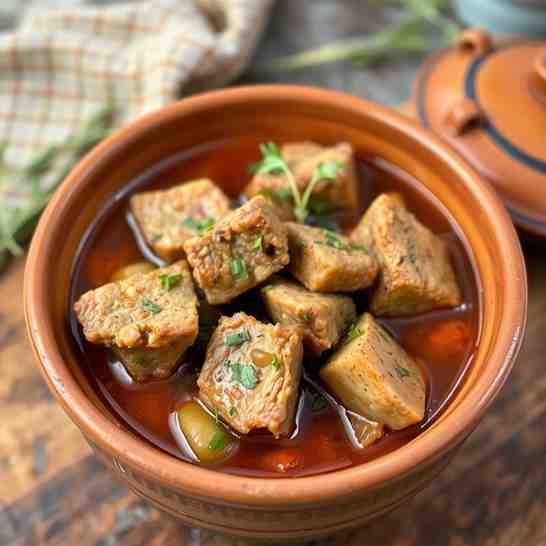
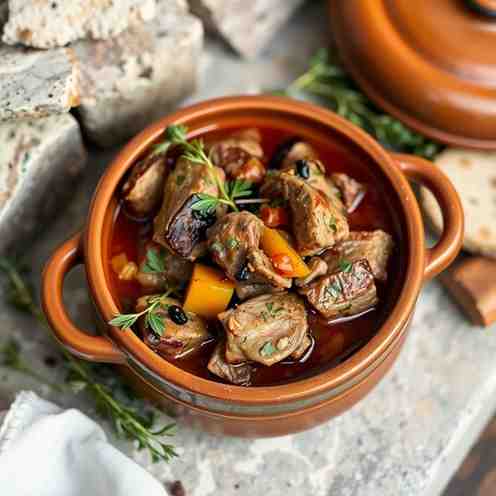
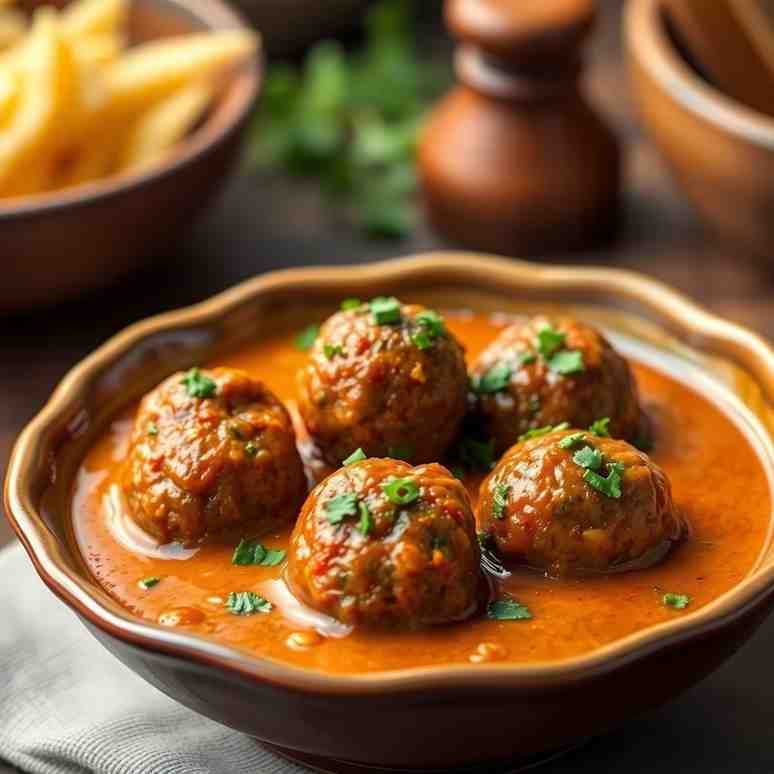
Welcome to the heart of Cypriot cuisine, where easy recipes for pork stew meat transform into something truly special! Today, we’re diving into the wonderful world of Kolokasi with Pork, a beloved traditional dish that’s as comforting as it is flavorful. If you're searching for a hearty meat and vegetable stew that’s both healthy and easy to make, you've found your next culinary adventure. Kolokasi, known as taro in many parts of the world, has graced Cypriot tables for centuries, offering a unique, earthy flavor and satisfying texture. Paired traditionally with succulent pork, this stew is a staple in my Greek kitchen, embodying the essence of Greek healthy food and Cypriot hospitality. Get ready to explore a dish that’s rich in history and bursting with deliciousness!
Ingredients
Directions
- Preparing the Kolokasi (Taro)
- Safety First: Kolokasi contains calcium oxalate crystals, which can cause skin irritation. It’s highly recommended to wear gloves when peeling and cutting.
- Peeling: Use a sturdy vegetable peeler or a sharp knife to carefully remove the thick, brown skin.
- The "Cracking" Method: This is the traditional Cypriot way to prepare kolokasi and is crucial for its texture and ability to absorb flavors. Instead of cutting with a knife, after peeling, hold the kolokasi firmly and use a sharp knife or even your hands to "crack" or break off irregular, roughly 1.5 to 2-inch pieces. This creates rough edges that help the kolokasi thicken the stew naturally and become wonderfully tender without turning mushy.
- Rinse: Briefly rinse the cracked kolokasi pieces under cold water and set aside. Do not soak for long, as it can become watery.
- Preparing the Pork
- Cut the Pork: If your pork isn't already cubed, trim any excess fat and cut the pork stew meat into uniform 1.5-inch pieces. Uniformity ensures even cooking.
- Season: Season the pork generously with salt and freshly ground black pepper.
- Optional Marinade: For an extra layer of flavor, you can marinate the pork for 30 minutes to 2 hours in a mix of a tablespoon of olive oil, a pinch of dried oregano, and a splash of red wine. This isn't strictly necessary but enhances the depth.
- Sautéing the Ingredients
- Heat Oil: Heat 3 tablespoons of olive oil to cook with in a large, heavy-bottomed pot or Dutch oven over medium-high heat. You want it hot enough to fry with olive oil and sear the meat.
- Sear Pork: Working in batches if necessary to avoid overcrowding the pot, add the pork and sear until well browned on all sides. This creates a rich base for your stew. Remove the browned pork with a slotted spoon and set aside.
- Sauté Aromatics: Add the remaining 2 tablespoons of olive oil (if needed) to the pot. Add the chopped onions and celery and cook, stirring occasionally, until softened and translucent, about 5-7 minutes.
- Add Garlic: Stir in the minced garlic and cook for another minute until fragrant, being careful not to burn it.
- Deglaze (Optional): If using, pour in the red wine and scrape up any browned bits from the bottom of the pot with a wooden spoon. Let it simmer for 2-3 minutes until the alcohol scent cooks off.
- Adding the Kolokasi and Simmering
- Combine: Return the seared pork to the pot with the sautéed vegetables.
- Add Kolokasi: Add the prepared kolokasi pieces to the pot.
- Tomatoes & Liquid: Pour in the crushed whole peeled tomatoes and the hot water or chicken broth. Stir everything gently to combine.
- Season: Bring the stew to a boil, then reduce the heat to low, cover the pot, and let it simmer gently.
- Simmering Time & Tips:
- Initial Simmer: Simmer for at least 1 hour, or until the pork is starting to become tender.
- Checking Consistency: After 1 hour, check the tenderness of the pork and kolokasi. The kolokasi should be fork-tender but not mushy, and the pork should be easy to pull apart. If the stew seems too thick, add a little more hot water or broth. If it's too thin, remove the lid for the last 15-20 minutes of cooking to allow some liquid to evaporate.
- Troubleshooting:
- Undercooked Pork: If the pork is still tough, simply continue simmering with the lid on, checking every 15-20 minutes, until it reaches desired tenderness. Toughness usually means it needs more time.
- Overcooked Kolokasi: Kolokasi can become mushy if overcooked or cut too small. The cracking method helps prevent this, but if it starts to break down too much, remove it from the heat immediately. A little breakdown is good for thickening, but you want distinct pieces.
- Final Touches: Once the pork and kolokasi are tender, stir in the fresh lemon juice, half of the chopped cilantro, and half of the parsley. Taste and adjust seasoning (salt and pepper) as needed.
- Serving & Presentation
- Rest: Let the stew rest for 10-15 minutes off the heat before serving; this allows the flavors to meld beautifully.
- Garnish: Ladle the stew of meat and kolokasi into bowls. Garnish generously with the remaining fresh cilantro and parsley. A few black olives on the side make a traditional Cypriot pairing.
- Side Dishes: Cyprus Kolokasi with Pork is delicious on its own, but it pairs wonderfully with a simple side of fluffy white rice or crusty bread to soak up all the flavorful sauce. A fresh green salad makes a perfect complement.
Easy Pork Stew with Kolokasi - Cypriot
- Serves: 6 People
- Prepare Time: 25 minutes
- Cooking Time: 1 hour 45 m
- Calories: -
- Difficulty: Medium
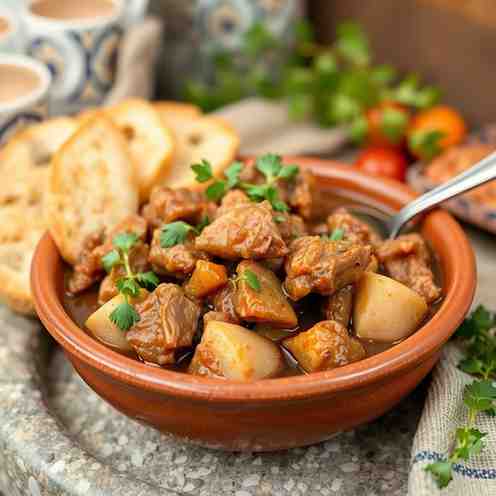
Welcome to the heart of Cypriot cuisine, where easy recipes for pork stew meat transform into something truly special! Today, we’re diving into the wonderful world of Kolokasi with Pork, a beloved traditional dish that’s as comforting as it is flavorful. If you're searching for a hearty meat and vegetable stew that’s both healthy and easy to make, you've found your next culinary adventure. Kolokasi, known as taro in many parts of the world, has graced Cypriot tables for centuries, offering a unique, earthy flavor and satisfying texture. Paired traditionally with succulent pork, this stew is a staple in my Greek kitchen, embodying the essence of Greek healthy food and Cypriot hospitality. Get ready to explore a dish that’s rich in history and bursting with deliciousness!
Ingredients
Directions
- Preparing the Kolokasi (Taro)
- Safety First: Kolokasi contains calcium oxalate crystals, which can cause skin irritation. It’s highly recommended to wear gloves when peeling and cutting.
- Peeling: Use a sturdy vegetable peeler or a sharp knife to carefully remove the thick, brown skin.
- The "Cracking" Method: This is the traditional Cypriot way to prepare kolokasi and is crucial for its texture and ability to absorb flavors. Instead of cutting with a knife, after peeling, hold the kolokasi firmly and use a sharp knife or even your hands to "crack" or break off irregular, roughly 1.5 to 2-inch pieces. This creates rough edges that help the kolokasi thicken the stew naturally and become wonderfully tender without turning mushy.
- Rinse: Briefly rinse the cracked kolokasi pieces under cold water and set aside. Do not soak for long, as it can become watery.
- Preparing the Pork
- Cut the Pork: If your pork isn't already cubed, trim any excess fat and cut the pork stew meat into uniform 1.5-inch pieces. Uniformity ensures even cooking.
- Season: Season the pork generously with salt and freshly ground black pepper.
- Optional Marinade: For an extra layer of flavor, you can marinate the pork for 30 minutes to 2 hours in a mix of a tablespoon of olive oil, a pinch of dried oregano, and a splash of red wine. This isn't strictly necessary but enhances the depth.
- Sautéing the Ingredients
- Heat Oil: Heat 3 tablespoons of olive oil to cook with in a large, heavy-bottomed pot or Dutch oven over medium-high heat. You want it hot enough to fry with olive oil and sear the meat.
- Sear Pork: Working in batches if necessary to avoid overcrowding the pot, add the pork and sear until well browned on all sides. This creates a rich base for your stew. Remove the browned pork with a slotted spoon and set aside.
- Sauté Aromatics: Add the remaining 2 tablespoons of olive oil (if needed) to the pot. Add the chopped onions and celery and cook, stirring occasionally, until softened and translucent, about 5-7 minutes.
- Add Garlic: Stir in the minced garlic and cook for another minute until fragrant, being careful not to burn it.
- Deglaze (Optional): If using, pour in the red wine and scrape up any browned bits from the bottom of the pot with a wooden spoon. Let it simmer for 2-3 minutes until the alcohol scent cooks off.
- Adding the Kolokasi and Simmering
- Combine: Return the seared pork to the pot with the sautéed vegetables.
- Add Kolokasi: Add the prepared kolokasi pieces to the pot.
- Tomatoes & Liquid: Pour in the crushed whole peeled tomatoes and the hot water or chicken broth. Stir everything gently to combine.
- Season: Bring the stew to a boil, then reduce the heat to low, cover the pot, and let it simmer gently.
- Simmering Time & Tips:
- Initial Simmer: Simmer for at least 1 hour, or until the pork is starting to become tender.
- Checking Consistency: After 1 hour, check the tenderness of the pork and kolokasi. The kolokasi should be fork-tender but not mushy, and the pork should be easy to pull apart. If the stew seems too thick, add a little more hot water or broth. If it's too thin, remove the lid for the last 15-20 minutes of cooking to allow some liquid to evaporate.
- Troubleshooting:
- Undercooked Pork: If the pork is still tough, simply continue simmering with the lid on, checking every 15-20 minutes, until it reaches desired tenderness. Toughness usually means it needs more time.
- Overcooked Kolokasi: Kolokasi can become mushy if overcooked or cut too small. The cracking method helps prevent this, but if it starts to break down too much, remove it from the heat immediately. A little breakdown is good for thickening, but you want distinct pieces.
- Final Touches: Once the pork and kolokasi are tender, stir in the fresh lemon juice, half of the chopped cilantro, and half of the parsley. Taste and adjust seasoning (salt and pepper) as needed.
- Serving & Presentation
- Rest: Let the stew rest for 10-15 minutes off the heat before serving; this allows the flavors to meld beautifully.
- Garnish: Ladle the stew of meat and kolokasi into bowls. Garnish generously with the remaining fresh cilantro and parsley. A few black olives on the side make a traditional Cypriot pairing.
- Side Dishes: Cyprus Kolokasi with Pork is delicious on its own, but it pairs wonderfully with a simple side of fluffy white rice or crusty bread to soak up all the flavorful sauce. A fresh green salad makes a perfect complement.
You may also like


Hey there! I’m just someone who seriously loves good food and believes that cooking doesn’t have to be complicated to be amazing. Whether it’s a quick weeknight dinner or a cozy weekend meal, I’m all about sharing easy, tasty recipes that actually work.