Make Homemade Tamales - Cuban Recipe
Make Homemade Tamales - Cuban Recipe


- Serves: 12 People
- Prepare Time: 1 hour 15 m
- Cooking Time: 2 hours
- Calories: -
- Difficulty: Medium
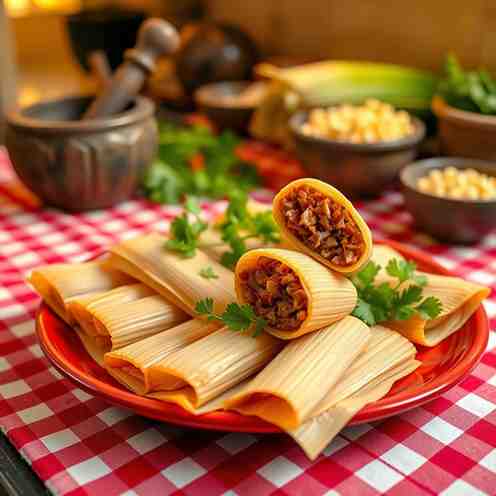
Welcome, fellow food lovers! Are you ready to dive into the vibrant world of Cuban cuisine and learn how to make homemade tamales? Forget everything you thought you knew about tamales, because Cuban tamales are a delightful departure from their Mexican counterparts. Instead of a dry, crumbly masa, our `easy recipe for tamales` features a creamy, rich blend of fresh corn and masa harina, often combined with tender, savory pork. It's truly the `best recipe for tamales` you'll find for this unique style.
This isn't just any tamale recipe; it's the canonical guide, optimized for clarity, authenticity, and perfect for both beginners and experienced cooks. We'll walk you through every step, from mastering the `masa harina tamales recipe` and preparing the succulent `meat for tamales pork` to assembling them with `corn husks for tamales` and `cooking tamales in a steamer` to perfection. Get ready to impress your family and friends with these incredibly flavorful, melt-in-your-mouth Cuban tamales, served with traditional Cuban-style sides!
Ingredients
Directions
- Equipment Needed: Large pot or Dutch oven, blender or food processor, large mixing bowl, steamer basket or tall pot with a lid, kitchen twine, measuring cups/spoons.
- Prep Notes (Before You Start):
- Soak Corn Husks: Place dried corn husks in a large bowl or pot, cover with very warm water, and weigh down with a plate to keep them submerged. Let them soak for at least 30-60 minutes, or until pliable.
- Thaw Corn: If using frozen corn, ensure it's fully thawed.
- Prep Pork: Cut pork shoulder into 1-inch cubes.
- Measure Ingredients: Have all your ingredients pre-measured and ready.
- Cook the Pork Filling
- Heat olive oil in a large pot or Dutch oven over medium-high heat. Add the pork cubes (and optional diced chorizo) and brown on all sides, about 8-10 minutes.
- Reduce heat to medium. Add the diced onion, minced garlic, and diced bell pepper to the pot. Sauté until softened, about 5-7 minutes.
- Stir in the salt, black pepper, ground cumin, oregano, and bay leaf. Cook for 1 minute until fragrant.
- Pour in the white wine or broth. Bring to a simmer, then reduce heat to low, cover, and cook for 1.5 to 2 hours, or until the pork is fork-tender.
- Remove the pork from the pot. Once cool enough to handle, shred or cut the pork into very small pieces.
- Crucially: Skim any excess fat from the cooking liquid, then reserve the flavorful liquid. You'll use this for the masa!
- Prepare the Corn-Masa Base
- In a blender or food processor, add the fresh or thawed corn kernels. Pulse until coarsely pureed, retaining some texture. Do not blend until completely smooth; you want a rustic consistency.
- In a large mixing bowl, combine the masa harina, softened lard (or butter/shortening), and salt (and optional baking powder).
- Add the coarse-pureed corn to the masa mixture.
- Gradually pour in the warmed reserved pork cooking liquid (or broth) while mixing with your hands or a sturdy spoon. Continue mixing until a soft, pliable dough forms. It should be thick and spoonable, but not sticky.
- Consistency Test: Drop a small piece of the masa dough into a glass of water. If it floats, it's ready! If it sinks, mix in a tiny bit more liquid (1 tablespoon at a time) and re-test until it floats. This indicates the masa has enough air incorporated.
- Combine Masa & Meat Filling
- Add the shredded pork (and chorizo) mixture into the corn-masa base.
- Fold gently until the meat is evenly distributed throughout the masa. The mixture should be thick, moist, and spoonable, but not runny.
- Soak & Prepare Corn Husks
- Once soaked, drain the corn husks and pat them dry with a clean kitchen towel. They should be pliable but not dripping wet.
- Inspect the husks. If any are too small or torn, you can overlap two smaller husks to create one larger, sturdy wrapper. Trim any very thick or stiff ends if needed for easier folding.
- Assemble the Tamales
- Lay out two prepared corn husks, slightly overlapping, to create a strong base. The wider ends should be at the top.
- Take about ¼ to ⅓ cup of the corn-masa-pork mixture and place it in the center of the husks, closer to the wider end. Spread it slightly into a rectangle or oval, leaving ample space at the sides and bottom. You want to fill them about ¾ full.
- Fold one long side of the husks over the filling, then fold the other long side over, overlapping them to fully enclose the filling.
- Fold the bottom (narrower) flap of the husks up towards the center.
- Using kitchen twine, tie the tamale securely but not too tightly. You can tie it width-wise in the middle and then length-wise, leaving room for the masa to expand during cooking. This traditional Cuban method helps hold their shape.
- Tamale Assembly Checklist:
- Two overlapping husks for security.
- Fill ¾ full with mixture.
- Fold sides over, then bottom flap up.
- Tie securely with kitchen twine, allowing for expansion.
- Steam the Tamales
- Option A (Traditional Cuban Method - Upright): Place a steamer basket or a rack at the bottom of a large, tall pot. Add about 2-3 inches of water, ensuring the water level is below the rack/basket and won't touch the tamales. Arrange the assembled tamales upright (open end facing up) in the pot, packing them snugly but not overly tight. You can use extra corn husks or a damp kitchen towel placed over the tamales before covering with the lid to help trap steam.
- Option B (Steamer Basket): If using a dedicated steamer, arrange tamales in a single layer or stacked, ensuring good steam circulation. Avoid overcrowding.
- Bring the water to a boil, then reduce heat to a steady simmer. Steam for 1 to 1.5 hours. Check the water level periodically and add more hot water if needed to prevent the pot from boiling dry.
- Tamales are done when the masa easily pulls away from the corn husk.
- Cooling, Unwrapping, Serving
- Once steamed, remove the tamales from the pot and let them rest for at least 30-60 minutes before unwrapping. This crucial step allows the masa to set properly, making them easier to handle and preventing them from falling apart.
- To serve, simply unwrap, remove the twine, and enjoy!
- Serve with traditional Cuban sides like black beans and rice, fried plantains (tostones or maduros), sliced avocado, a dollop of sour cream or crema, and a drizzle of your favorite hot sauce or homemade mojo.
Make Homemade Tamales - Cuban Recipe
- Serves: 12 People
- Prepare Time: 1 hour 15 m
- Cooking Time: 2 hours
- Calories: -
- Difficulty: Medium
Welcome, fellow food lovers! Are you ready to dive into the vibrant world of Cuban cuisine and learn how to make homemade tamales? Forget everything you thought you knew about tamales, because Cuban tamales are a delightful departure from their Mexican counterparts. Instead of a dry, crumbly masa, our `easy recipe for tamales` features a creamy, rich blend of fresh corn and masa harina, often combined with tender, savory pork. It's truly the `best recipe for tamales` you'll find for this unique style.
This isn't just any tamale recipe; it's the canonical guide, optimized for clarity, authenticity, and perfect for both beginners and experienced cooks. We'll walk you through every step, from mastering the `masa harina tamales recipe` and preparing the succulent `meat for tamales pork` to assembling them with `corn husks for tamales` and `cooking tamales in a steamer` to perfection. Get ready to impress your family and friends with these incredibly flavorful, melt-in-your-mouth Cuban tamales, served with traditional Cuban-style sides!
Ingredients
Directions
- Equipment Needed: Large pot or Dutch oven, blender or food processor, large mixing bowl, steamer basket or tall pot with a lid, kitchen twine, measuring cups/spoons.
- Prep Notes (Before You Start):
- Soak Corn Husks: Place dried corn husks in a large bowl or pot, cover with very warm water, and weigh down with a plate to keep them submerged. Let them soak for at least 30-60 minutes, or until pliable.
- Thaw Corn: If using frozen corn, ensure it's fully thawed.
- Prep Pork: Cut pork shoulder into 1-inch cubes.
- Measure Ingredients: Have all your ingredients pre-measured and ready.
- Cook the Pork Filling
- Heat olive oil in a large pot or Dutch oven over medium-high heat. Add the pork cubes (and optional diced chorizo) and brown on all sides, about 8-10 minutes.
- Reduce heat to medium. Add the diced onion, minced garlic, and diced bell pepper to the pot. Sauté until softened, about 5-7 minutes.
- Stir in the salt, black pepper, ground cumin, oregano, and bay leaf. Cook for 1 minute until fragrant.
- Pour in the white wine or broth. Bring to a simmer, then reduce heat to low, cover, and cook for 1.5 to 2 hours, or until the pork is fork-tender.
- Remove the pork from the pot. Once cool enough to handle, shred or cut the pork into very small pieces.
- Crucially: Skim any excess fat from the cooking liquid, then reserve the flavorful liquid. You'll use this for the masa!
- Prepare the Corn-Masa Base
- In a blender or food processor, add the fresh or thawed corn kernels. Pulse until coarsely pureed, retaining some texture. Do not blend until completely smooth; you want a rustic consistency.
- In a large mixing bowl, combine the masa harina, softened lard (or butter/shortening), and salt (and optional baking powder).
- Add the coarse-pureed corn to the masa mixture.
- Gradually pour in the warmed reserved pork cooking liquid (or broth) while mixing with your hands or a sturdy spoon. Continue mixing until a soft, pliable dough forms. It should be thick and spoonable, but not sticky.
- Consistency Test: Drop a small piece of the masa dough into a glass of water. If it floats, it's ready! If it sinks, mix in a tiny bit more liquid (1 tablespoon at a time) and re-test until it floats. This indicates the masa has enough air incorporated.
- Combine Masa & Meat Filling
- Add the shredded pork (and chorizo) mixture into the corn-masa base.
- Fold gently until the meat is evenly distributed throughout the masa. The mixture should be thick, moist, and spoonable, but not runny.
- Soak & Prepare Corn Husks
- Once soaked, drain the corn husks and pat them dry with a clean kitchen towel. They should be pliable but not dripping wet.
- Inspect the husks. If any are too small or torn, you can overlap two smaller husks to create one larger, sturdy wrapper. Trim any very thick or stiff ends if needed for easier folding.
- Assemble the Tamales
- Lay out two prepared corn husks, slightly overlapping, to create a strong base. The wider ends should be at the top.
- Take about ¼ to ⅓ cup of the corn-masa-pork mixture and place it in the center of the husks, closer to the wider end. Spread it slightly into a rectangle or oval, leaving ample space at the sides and bottom. You want to fill them about ¾ full.
- Fold one long side of the husks over the filling, then fold the other long side over, overlapping them to fully enclose the filling.
- Fold the bottom (narrower) flap of the husks up towards the center.
- Using kitchen twine, tie the tamale securely but not too tightly. You can tie it width-wise in the middle and then length-wise, leaving room for the masa to expand during cooking. This traditional Cuban method helps hold their shape.
- Tamale Assembly Checklist:
- Two overlapping husks for security.
- Fill ¾ full with mixture.
- Fold sides over, then bottom flap up.
- Tie securely with kitchen twine, allowing for expansion.
- Steam the Tamales
- Option A (Traditional Cuban Method - Upright): Place a steamer basket or a rack at the bottom of a large, tall pot. Add about 2-3 inches of water, ensuring the water level is below the rack/basket and won't touch the tamales. Arrange the assembled tamales upright (open end facing up) in the pot, packing them snugly but not overly tight. You can use extra corn husks or a damp kitchen towel placed over the tamales before covering with the lid to help trap steam.
- Option B (Steamer Basket): If using a dedicated steamer, arrange tamales in a single layer or stacked, ensuring good steam circulation. Avoid overcrowding.
- Bring the water to a boil, then reduce heat to a steady simmer. Steam for 1 to 1.5 hours. Check the water level periodically and add more hot water if needed to prevent the pot from boiling dry.
- Tamales are done when the masa easily pulls away from the corn husk.
- Cooling, Unwrapping, Serving
- Once steamed, remove the tamales from the pot and let them rest for at least 30-60 minutes before unwrapping. This crucial step allows the masa to set properly, making them easier to handle and preventing them from falling apart.
- To serve, simply unwrap, remove the twine, and enjoy!
- Serve with traditional Cuban sides like black beans and rice, fried plantains (tostones or maduros), sliced avocado, a dollop of sour cream or crema, and a drizzle of your favorite hot sauce or homemade mojo.
You may also like



Hey there! I’m just someone who seriously loves good food and believes that cooking doesn’t have to be complicated to be amazing. Whether it’s a quick weeknight dinner or a cozy weekend meal, I’m all about sharing easy, tasty recipes that actually work.