
Haitian Conch Stew Recipe - Make Tender Lambi Boukannen
Haitian Conch Stew Recipe - Make Tender Lambi Boukannen

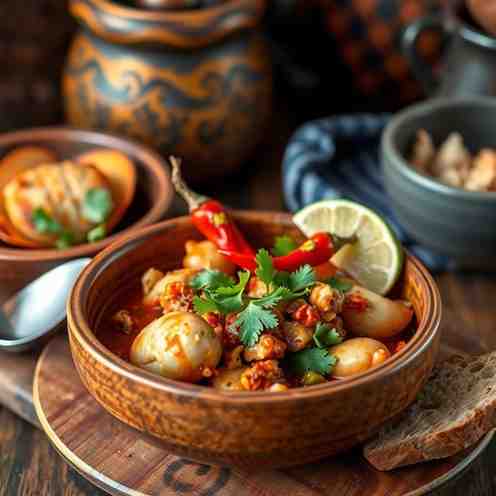
- Serves: 4 People
- Prepare Time: 30 minutes
- Cooking Time: 1 hour 30 m
- Calories: -
- Difficulty: Medium
Hey there, fellow food adventurers! Get ready to discover a true Haitian treasure: Lambi Boukannen, also known as Haitian Conch Stew. This isn't just any seafood stew recipe; it's a vibrant, bold, and utterly delicious dish that brings the sunny, spice-filled flavors of the Caribbean right to your kitchen. Imagine tender pieces of conch swimming in a rich, tomatoey sauce, infused with aromatic ground allspice, fresh thyme, and just the right kick from a scotch bonnet pepper. It’s hearty, incredibly flavorful, and surprisingly approachable.
This recipe is your go-to guide, whether you're a first-timer cooking with conch or you're simply craving an authentic, nutritious meal recipe that feels like a warm hug. We'll walk you through everything, from how to pick the best conch to making sure it’s perfectly tender, not rubbery. So, if you're looking for an easy healthy meal at home that’s big on flavor and perfect for meal planning recipes, you’ve found it. Let's get cooking!
Here’s a quick snapshot:
Spice Level: Medium to Hot (you control the heat!)
What makes it Haitian? The secret is in the blend of fresh herbs (like thyme), aromatic ground allspice, and the distinct warmth of a scotch bonnet pepper or habanero, all building on a flavorful tomato base.
Serve it with: Traditionally, this stew shines brightest with a side of fluffy white rice, Haitian black rice, or boiled plantains.
Conch (pronounced "konk") is a large sea snail, and in Haiti, it's called "lambi." It's a staple in Caribbean cuisine, prized for its firm, slightly chewy texture and mild, sweet, ocean-like flavor. Think of it as a cross between clam and calamari, but with its own unique character.
When you're looking to buy conch in the US, you'll most commonly find it in these forms:
Frozen: This is your best bet for quality and availability in most places. It’s usually already cleaned and sometimes even pre-tenderized. Look for individually frozen pieces or blocks in Asian, Caribbean, or Latin American markets.
Fresh: If you live near a coast with a good seafood market, you might get lucky! Fresh conch is fantastic but often requires more intense cleaning and tenderizing.
Canned: While convenient, canned conch tends to be softer and lacks the vibrant flavor and firm texture of fresh or frozen. It can work in a pinch, but for this recipe, we highly recommend frozen or fresh.
How much to buy: Plan for about 1 pound of conch for 4 servings. Keep in mind that 1 pound of conch will shrink a bit once trimmed and cooked, so it yields a good portion for a hearty stew.
What conch should smell/look like: Fresh conch should have a clean, subtle ocean scent – like a gentle sea breeze, not overtly fishy or ammoniated. It should look firm and have a slight pearly sheen. If it smells strongly fishy or off, pass on it.
The key to delicious conch is proper preparation. Without it, you might end up with something tough and chewy. Here’s how to avoid that common pitfall:
Cleaning basics: If your conch isn't already cleaned, you'll need to remove any dark membranes or gritty bits. Rinse it thoroughly under cold water, scrubbing gently. A little lemon or lime juice can help with any lingering "ocean" smell during this initial rinse.
Cutting guidance: Once clean, cut the conch into bite-sized pieces, roughly 1/2 to 3/4 inch cubes. Aim for even sizes so they cook uniformly.
Tenderizing (meat mallet): This is crucial! Place the conch pieces between two sheets of plastic wrap or in a freezer bag. Using a meat mallet (the flat side, not the spiked side), gently pound the conch until it's slightly flattened and softened, but not shredded. You want to break down those tough fibers. This usually takes just a few taps per piece. If you don't have a mallet, the bottom of a heavy pot or a rolling pin can work in a pinch.
The #1 mistake: too much acid too long. While a quick splash of lemon or lime is great for cleaning or at the very end of cooking, marinating conch in a highly acidic mixture for too long can actually toughen it. We'll use acid sparingly and at the right times to ensure tenderness.
Ingredients
Directions
- Clean + Tenderize the ConchIf using frozen conch, thaw it completely. Rinse the conch under cold water, removing any dark bits. Cut it into even, bite-sized pieces (about 1/2 to 3/4 inch). Place the conch pieces between two sheets of plastic wrap and gently pound them with a meat mallet until they are slightly flattened and softened, but not torn.
- Make the Seasoning Base (Fast “Epis-Style” Blend)In a small food processor or by hand, finely chop or blend the chopped shallot/onion, minced garlic, 1 tablespoon of olive oil, and 1/2 teaspoon of salt until it forms a coarse paste. This is our quick "epis-style" base!
- Marinate (Quick, with an Overnight Option)In a bowl, toss the tenderized conch with the seasoning base from Step 2 and a squeeze of lemon or lime juice (about 1 teaspoon). Let it marinate for at least 15-30 minutes at room temperature. For deeper flavor, you can cover and refrigerate it for up to 4 hours, or even overnight.
- Build Flavor in the PotHeat the remaining 1 tablespoon of olive oil in a large heavy-bottomed pot or Dutch oven over medium heat. Add the marinated conch (scraping all the seasoning from the bowl into the pot) and sauté for 3-5 minutes until the conch starts to turn opaque. Push the conch to one side, then add the tomato paste to the empty side of the pot. Cook the tomato paste for 2-3 minutes, stirring constantly, until it darkens in color and becomes fragrant. This deepens its flavor significantly.
- Simmer Low and Slow Until TenderStir the tomato paste into the conch. Add the water (or broth), fresh thyme sprigs, ground allspice, bouillon cube/base, and the whole scotch bonnet pepper (if using, leave it whole for controlled heat – don't cut it open unless you want serious spice!). Bring the stew to a gentle simmer. Reduce the heat to low, cover the pot, and let it simmer for 1 to 1.5 hours, or until the conch is fork-tender.
- How to tell when conch is tender: It should yield easily when poked with a fork, much like well-cooked calamari or clams. It shouldn't be rubbery or tough.
- What to do if it’s still tough: Don't panic! Conch simply needs more time. Continue to simmer, covered, for another 30-60 minutes, checking every 15 minutes. Add a splash more water if the stew gets too thick. Patience is key!
- Finish and BalanceOnce the conch is tender, remove the thyme sprigs and the whole scotch bonnet pepper (if you don't want it to get spicier). Squeeze in the juice from the remaining lemon or lime half (about 1-2 tablespoons). Stir well. Taste and adjust the salt and black pepper as needed. If the stew is thinner than you'd like, you can simmer it uncovered for 10-15 minutes to allow it to thicken slightly.
- ServeLadle the hot Haitian Conch Stew into bowls. Garnish with fresh parsley or scallions, if desired. Serve immediately with fluffy white rice, Haitian black rice, boiled plantains, or crispy fried plantains (bannann peze).
Haitian Conch Stew Recipe - Make Tender Lambi Boukannen

- Serves: 4 People
- Prepare Time: 30 minutes
- Cooking Time: 1 hour 30 m
- Calories: -
- Difficulty: Medium
Hey there, fellow food adventurers! Get ready to discover a true Haitian treasure: Lambi Boukannen, also known as Haitian Conch Stew. This isn't just any seafood stew recipe; it's a vibrant, bold, and utterly delicious dish that brings the sunny, spice-filled flavors of the Caribbean right to your kitchen. Imagine tender pieces of conch swimming in a rich, tomatoey sauce, infused with aromatic ground allspice, fresh thyme, and just the right kick from a scotch bonnet pepper. It’s hearty, incredibly flavorful, and surprisingly approachable.
This recipe is your go-to guide, whether you're a first-timer cooking with conch or you're simply craving an authentic, nutritious meal recipe that feels like a warm hug. We'll walk you through everything, from how to pick the best conch to making sure it’s perfectly tender, not rubbery. So, if you're looking for an easy healthy meal at home that’s big on flavor and perfect for meal planning recipes, you’ve found it. Let's get cooking!
Here’s a quick snapshot:
Spice Level: Medium to Hot (you control the heat!)
What makes it Haitian? The secret is in the blend of fresh herbs (like thyme), aromatic ground allspice, and the distinct warmth of a scotch bonnet pepper or habanero, all building on a flavorful tomato base.
Serve it with: Traditionally, this stew shines brightest with a side of fluffy white rice, Haitian black rice, or boiled plantains.
Conch (pronounced "konk") is a large sea snail, and in Haiti, it's called "lambi." It's a staple in Caribbean cuisine, prized for its firm, slightly chewy texture and mild, sweet, ocean-like flavor. Think of it as a cross between clam and calamari, but with its own unique character.
When you're looking to buy conch in the US, you'll most commonly find it in these forms:
Frozen: This is your best bet for quality and availability in most places. It’s usually already cleaned and sometimes even pre-tenderized. Look for individually frozen pieces or blocks in Asian, Caribbean, or Latin American markets.
Fresh: If you live near a coast with a good seafood market, you might get lucky! Fresh conch is fantastic but often requires more intense cleaning and tenderizing.
Canned: While convenient, canned conch tends to be softer and lacks the vibrant flavor and firm texture of fresh or frozen. It can work in a pinch, but for this recipe, we highly recommend frozen or fresh.
How much to buy: Plan for about 1 pound of conch for 4 servings. Keep in mind that 1 pound of conch will shrink a bit once trimmed and cooked, so it yields a good portion for a hearty stew.
What conch should smell/look like: Fresh conch should have a clean, subtle ocean scent – like a gentle sea breeze, not overtly fishy or ammoniated. It should look firm and have a slight pearly sheen. If it smells strongly fishy or off, pass on it.
The key to delicious conch is proper preparation. Without it, you might end up with something tough and chewy. Here’s how to avoid that common pitfall:
Cleaning basics: If your conch isn't already cleaned, you'll need to remove any dark membranes or gritty bits. Rinse it thoroughly under cold water, scrubbing gently. A little lemon or lime juice can help with any lingering "ocean" smell during this initial rinse.
Cutting guidance: Once clean, cut the conch into bite-sized pieces, roughly 1/2 to 3/4 inch cubes. Aim for even sizes so they cook uniformly.
Tenderizing (meat mallet): This is crucial! Place the conch pieces between two sheets of plastic wrap or in a freezer bag. Using a meat mallet (the flat side, not the spiked side), gently pound the conch until it's slightly flattened and softened, but not shredded. You want to break down those tough fibers. This usually takes just a few taps per piece. If you don't have a mallet, the bottom of a heavy pot or a rolling pin can work in a pinch.
The #1 mistake: too much acid too long. While a quick splash of lemon or lime is great for cleaning or at the very end of cooking, marinating conch in a highly acidic mixture for too long can actually toughen it. We'll use acid sparingly and at the right times to ensure tenderness.
Ingredients
Directions
- Clean + Tenderize the ConchIf using frozen conch, thaw it completely. Rinse the conch under cold water, removing any dark bits. Cut it into even, bite-sized pieces (about 1/2 to 3/4 inch). Place the conch pieces between two sheets of plastic wrap and gently pound them with a meat mallet until they are slightly flattened and softened, but not torn.
- Make the Seasoning Base (Fast “Epis-Style” Blend)In a small food processor or by hand, finely chop or blend the chopped shallot/onion, minced garlic, 1 tablespoon of olive oil, and 1/2 teaspoon of salt until it forms a coarse paste. This is our quick "epis-style" base!
- Marinate (Quick, with an Overnight Option)In a bowl, toss the tenderized conch with the seasoning base from Step 2 and a squeeze of lemon or lime juice (about 1 teaspoon). Let it marinate for at least 15-30 minutes at room temperature. For deeper flavor, you can cover and refrigerate it for up to 4 hours, or even overnight.
- Build Flavor in the PotHeat the remaining 1 tablespoon of olive oil in a large heavy-bottomed pot or Dutch oven over medium heat. Add the marinated conch (scraping all the seasoning from the bowl into the pot) and sauté for 3-5 minutes until the conch starts to turn opaque. Push the conch to one side, then add the tomato paste to the empty side of the pot. Cook the tomato paste for 2-3 minutes, stirring constantly, until it darkens in color and becomes fragrant. This deepens its flavor significantly.
- Simmer Low and Slow Until TenderStir the tomato paste into the conch. Add the water (or broth), fresh thyme sprigs, ground allspice, bouillon cube/base, and the whole scotch bonnet pepper (if using, leave it whole for controlled heat – don't cut it open unless you want serious spice!). Bring the stew to a gentle simmer. Reduce the heat to low, cover the pot, and let it simmer for 1 to 1.5 hours, or until the conch is fork-tender.
- How to tell when conch is tender: It should yield easily when poked with a fork, much like well-cooked calamari or clams. It shouldn't be rubbery or tough.
- What to do if it’s still tough: Don't panic! Conch simply needs more time. Continue to simmer, covered, for another 30-60 minutes, checking every 15 minutes. Add a splash more water if the stew gets too thick. Patience is key!
- Finish and BalanceOnce the conch is tender, remove the thyme sprigs and the whole scotch bonnet pepper (if you don't want it to get spicier). Squeeze in the juice from the remaining lemon or lime half (about 1-2 tablespoons). Stir well. Taste and adjust the salt and black pepper as needed. If the stew is thinner than you'd like, you can simmer it uncovered for 10-15 minutes to allow it to thicken slightly.
- ServeLadle the hot Haitian Conch Stew into bowls. Garnish with fresh parsley or scallions, if desired. Serve immediately with fluffy white rice, Haitian black rice, boiled plantains, or crispy fried plantains (bannann peze).
You may also like

Hey there! I’m just someone who seriously loves good food and believes that cooking doesn’t have to be complicated to be amazing. Whether it’s a quick weeknight dinner or a cozy weekend meal, I’m all about sharing easy, tasty recipes that actually work.